


Dark Wood Hand Mirror
A dark wood hand mirror is a tactile dressing-table essential, prized for its deep grain and the solid feel of carved timber in the palm.
Dark Wood Hand Mirror
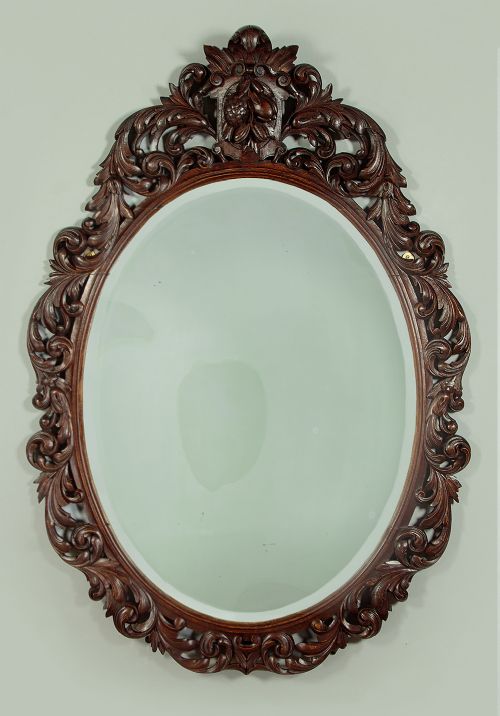
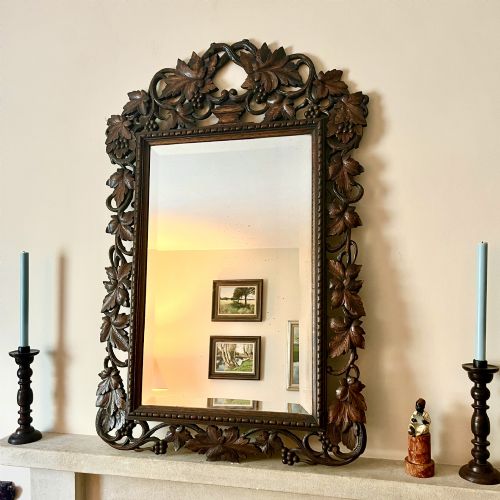
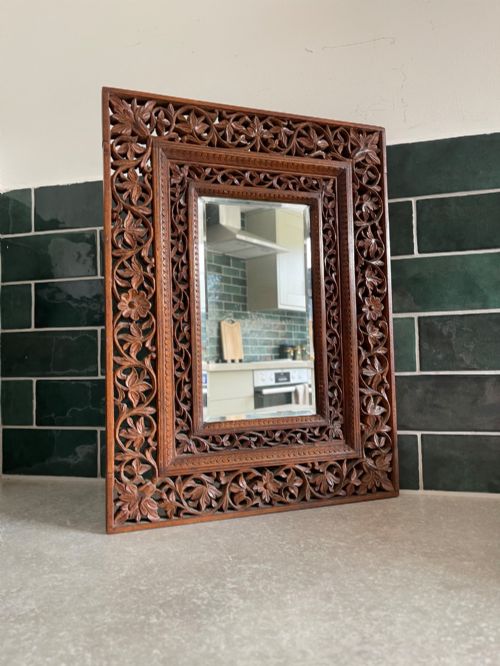
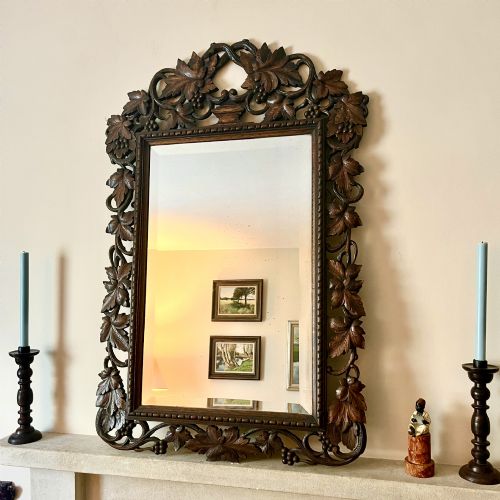
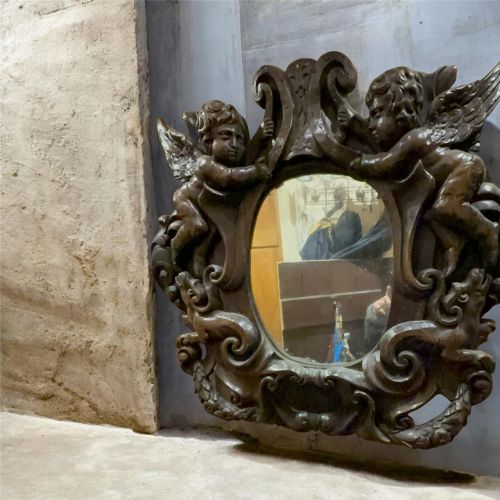
A dark wood hand mirror brings together functional personal reflection and the rich, warm tones of timber such as walnut, oak, and mahogany. These pieces range from restrained Regency designs to deeply carved Victorian and Black Forest interpretations.
The versions most commonly met in daily handling combine a bevelled or plain mirror glass with a shaped wooden frame and an integrated handle. Carved motifs, folk art elements, and regional details often define the character of each individual looking glass.
While many related forms survive as wall mirrors or larger console pieces, the hand-held vanity mirror remains a direct link to personal grooming habits of the eighteenth and nineteenth centuries. Collectors encounter these objects as expressions of period craftsmanship applied to everyday implements.
Materials and Making
Makers utilised dense timbers such as walnut, mahogany, and oak, selecting boards with strong grain patterns that could withstand deep relief carving. These woods were shaped by hand, employing gouges and chisels to create floral, avian, or geometric motifs along the back and handle.
Mirror glass was set securely into a rebated channel within the wooden frame, often held by small pins or wooden slips. The glass itself frequently featured a slight bevel to the edge, catching the light differently than modern float glass.
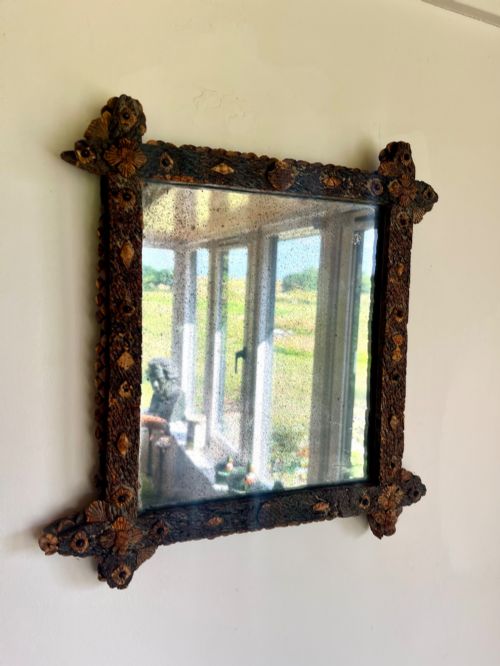
Design styles represented in the current selection include Victorian, Regency, Gothic Revival, Black Forest, and folk art tramp traditions.
Distinguishing Quality
The distinction between standard examples and superior pieces rests upon the crispness of the timber carving and the harmonious integration of the handle with the frame. Master carvers achieved depth and fluidity without splintering the underlying grain.
Condition of the reflective surface and the tightness of the joinery also dictate standing. Pieces where the wood has shrunk evenly around the glass retain their structural integrity far better than those showing loose joints or replaced backing boards.
The Dark Wood Hand Mirror Glossary
- Bevel
- An angled edge ground around the perimeter of the mirror glass. This treatment adds a decorative prism effect and indicates traditional manufacturing methods.
- Black Forest
- A regional carving style originating in Switzerland and Germany during the nineteenth century. It is characterised by realistic depictions of animals, foliage, and naturalistic textures.
- Tramp Art
- A form of folk art created by self-taught makers using notched and layered scrap wood. Pieces in this style display intricate geometric relief patterns built up from simple materials.
- Regency
- A British architectural and decorative style spanning the early nineteenth century. It draws heavily on classical Greco-Roman motifs with restrained, elegant proportions.
- Walnut
- A heavy, durable timber prized for its rich brown colour and complex grain figures. It was widely utilised in high-status furniture and mirror frames.
Dark Wood Hand Mirror: Frequently Asked Questions
How do I clean a vintage mirror?
Use a soft, dry cloth to remove dust from the timber frame, avoiding harsh chemical polishes that can strip the original finish. For the glass, apply a small amount of neutral cleaner to a cloth rather than directly onto the surface to protect the silvering.
Take care to prevent moisture from seeping behind the wooden rebate where it might damage the foil backing of the mirror plate.
Are these mirrors meant for daily use?
These pieces function adequately for reflection, but their age requires a gentle touch during handling. Storing them flat on a padded surface or displaying them securely prevents accidental drops that could stress the joint between handle and frame.
Treat them as historic artefacts that reward careful appreciation rather than robust utilitarian service.
How can I tell the period of the wood?
Period identification relies on observing tool marks, timber selection, and the specific style of carving applied to the frame. Eighteenth-century examples often display simpler, hand-planed contours, while Victorian and later pieces show heavier machine assistance or deep relief work.
Comparing the patina and wear patterns around the handle offers further clues to the age of the object.
What causes dark spots on old mirror glass?
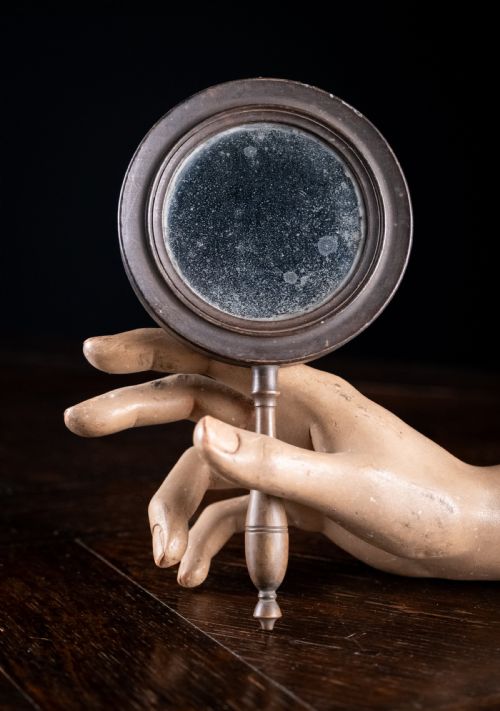
Foxing and dark spots occur when moisture slowly oxidises the silver or mercury backing behind the glass over many decades. This chemical ageing process is natural and often confirms the genuine antiquity of the mirror plate.
Many collectors value this characteristic as proof of age, provided it does not obscure the reflection entirely.