


Georgian Urn Table
A georgian urn table is a slender, elevated stand designed to hold a hot water vessel or tea urn, offering collectors a refined display surface.
Georgian Urn Table
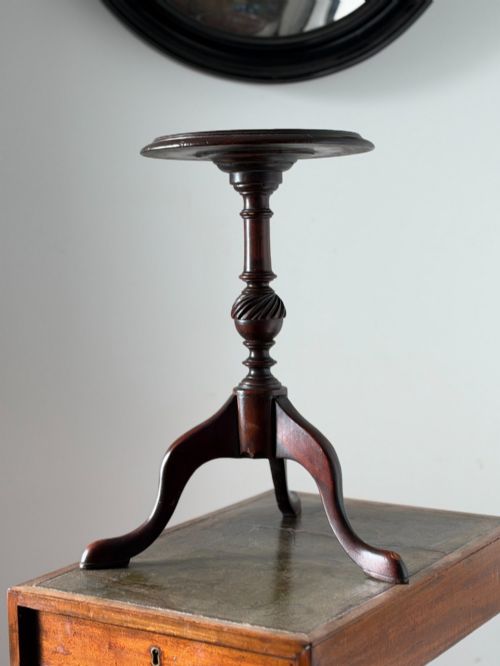
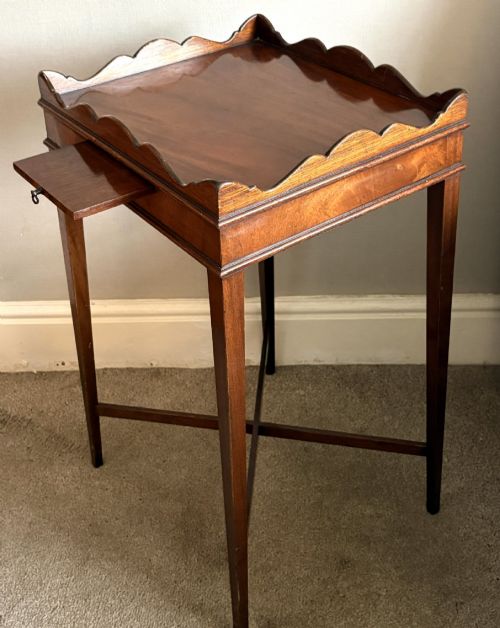
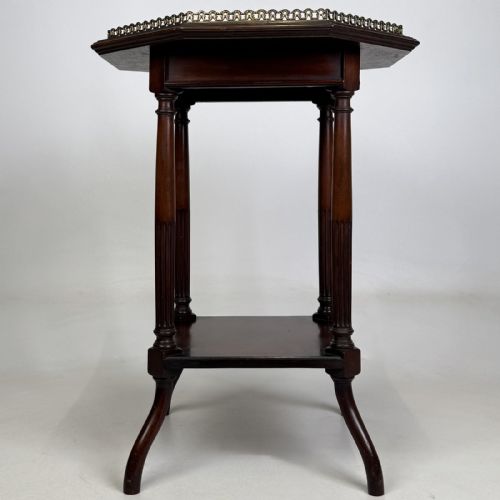
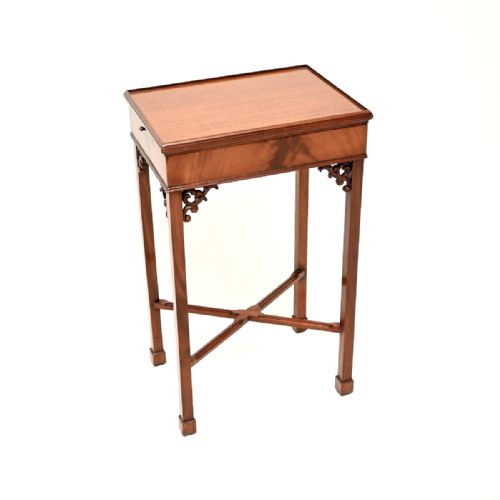
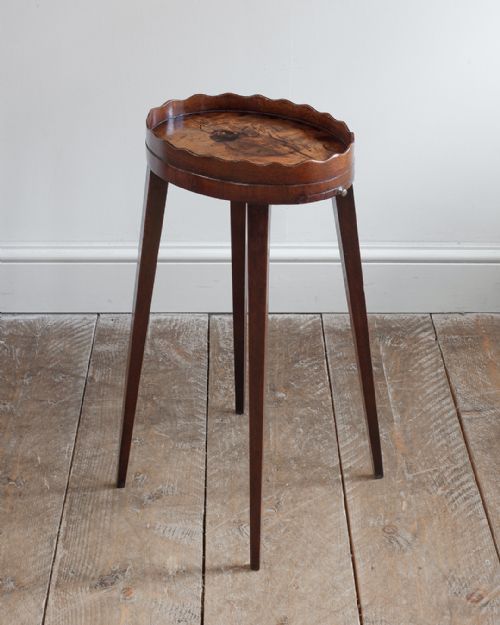
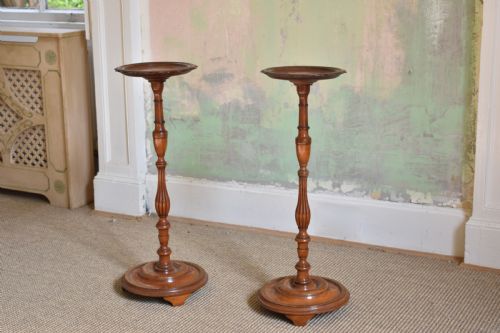
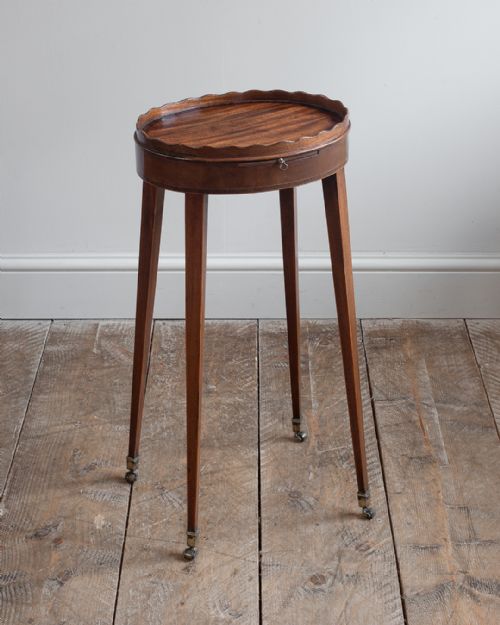
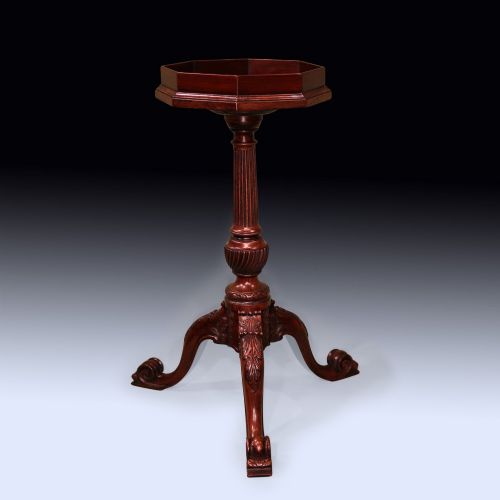
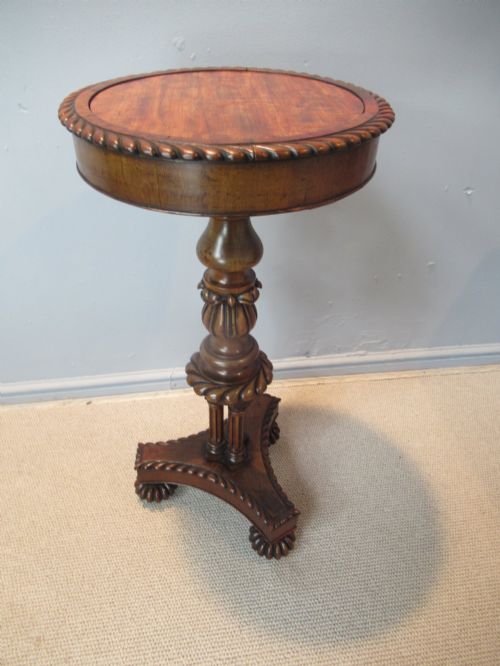
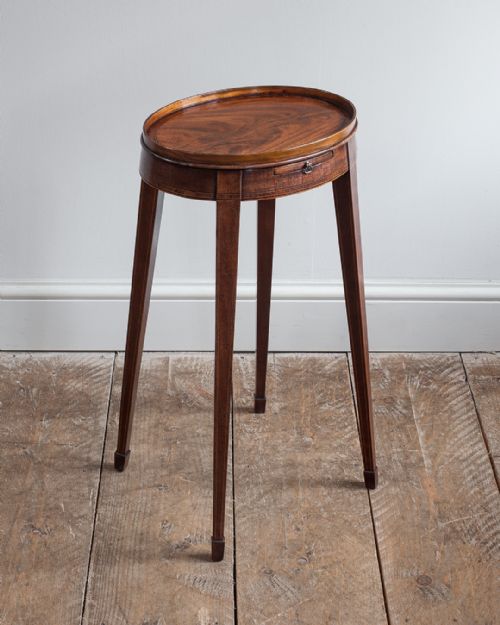
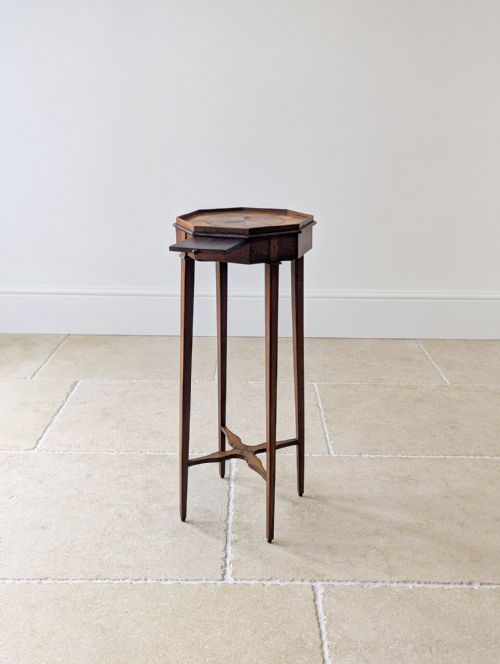
A georgian urn table represents a specialised category of small furniture designed specifically to support beverage urns and kettles during tea service. Most examples encountered here originate from the eighteenth and nineteenth centuries, taking the form of octagonal, oval, or square stands.
The material record demonstrates a strong preference for mahogany, often enriched with satinwood inlay or carved mahogany details. Alongside dedicated urn stands, the selection includes related small surfaces like kettle stands, torchere stands, and occasional tables spanning the Georgian and Regency periods.
Revival pieces also appear, reflecting later Victorian and Edwardian interpretations of eighteenth-century aesthetics. These range from Sheraton revival mahogany urn stands to Chippendale revival lamp tables, maintaining the compact footprint and elegant proportions of the originals.
Materials and Construction
Cabinetmakers relied heavily on solid mahogany and figured veneers to build these slender stands, frequently incorporating contrasting satinwood inlay and ebony stringing to define the edges. The timber was selected for its grain pattern and stability, allowing craftsmen to shape narrow tops and slender legs without risking structural failure.
Joinery methods focused on supporting concentrated weight on a high centre of gravity, utilising sturdy pedestals, tripod bases, or four-legged frames with delicate stretcher supports. Carving was executed directly into the mahogany, producing gadrooned edges, fluted columns, and bracket feet that mirrored the prevailing neoclassical and Chippendale styles.
Georgian Urn Table Retail Price Guide 2026
Typical asking prices for georgian urn table among the pieces listed under this phrase on Sellingantiques today, from the lower quarter to the upper quarter. They describe what is for sale here now, not the wider market.
Object forms span dedicated urn stands, kettle stands, torchere stands, and occasional tables reflecting Georgian, Regency, and Edwardian design idioms.
Judging Quality
The distinction between ordinary and exceptional pieces rests upon the crispness of the carving and the quality of the timber selection. Finer examples display deeply articulated mouldings, well-figured mahogany veneers, and precise inlay work that remains flush with the surrounding wood.
Proportion and structural integrity define the higher end of the range, where slender supports maintain absolute rigidity without relying on excessive reinforcement. The balance of the top relative to the base indicates the maker's skill in engineering a small table intended to hold a heavy vessel safely.
Miles Mason
The Georgian Urn Table Glossary
- Urn Stand
- A small, tall table designed to hold a heated water urn during tea service. These pieces typically feature raised edges or galleries to prevent the vessel from sliding off.
- Kettle Stand
- A compact occasional table used specifically to support a tea kettle over a spirit lamp. They share similar dimensions and period characteristics with urn stands.
- Inlay
- A decorative technique where contrasting woods such as satinwood or ebony are fitted into recessed cavities within the primary mahogany surface. This creates flat geometric or floral patterns.
- Torchere
- A tall, slender stand intended to support a candle or lamp. These pieces often feature highly decorative turned shafts or carved wooden columns.
- Serpentine
- A curved furniture front or tabletop featuring a convex centre flanked by concave ends. The flowing line requires precise woodworking skills to execute properly.
Georgian Urn Table: Frequently Asked Questions
What was a georgian urn table used for?
These tables served a practical role in eighteenth-century drawing rooms by holding heavy metal urns filled with hot water for tea. Their elevated height allowed servants to replenish teapots easily without bending down.
Over time, collectors repurposed these stable, compact surfaces as lamp tables or plant stands. Their small footprints make them exceptionally versatile for modern interior placement.
How do I distinguish original georgian pieces from later revivals?
Original eighteenth-century examples exhibit authentic patina, hand-cut joinery marks, and timber shrinkage consistent with age. Examining the underside and interior joints often reveals period-appropriate construction techniques.
Revival pieces from the Edwardian era or the late nineteenth century typically show machine-cut elements and standardised hardware. Comparing the secondary woods used in the frame helps clarify the true age of the piece.
Where should I place an urn table in a modern home?
An urn table fits well beside an armchair or sofa where surface space is limited. Their narrow proportions allow them to occupy empty corners effectively.
Avoid positioning them in direct sunlight or near heat sources to protect the antique mahogany and delicate inlay work. Using coasters safeguards the historic polish from moisture rings.
What is the difference between an urn stand and a kettle stand?
Urn stands generally accommodated larger water vessels used for general service during large gatherings. Kettle stands were built to hold specific tea kettles positioned over heating elements.
Both forms share comparable heights and compact tops, making them functionally interchangeable in modern display contexts. The distinction usually rests on subtle variations in edge profiling and top dimensions.