



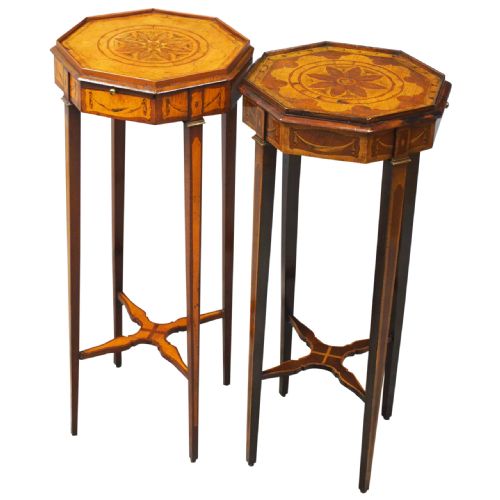
Georgian Inlaid Urn Stand
A georgian inlaid urn stand brings architectural balance to a room, offering a slender stage for a tea urn or lamp.
Georgian Inlaid Urn Stand
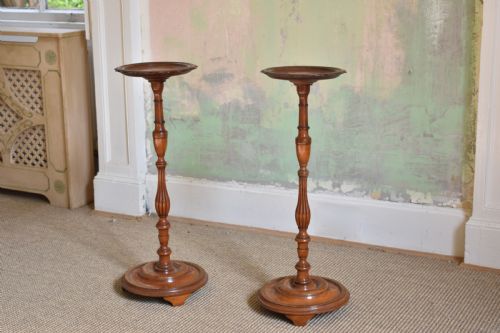
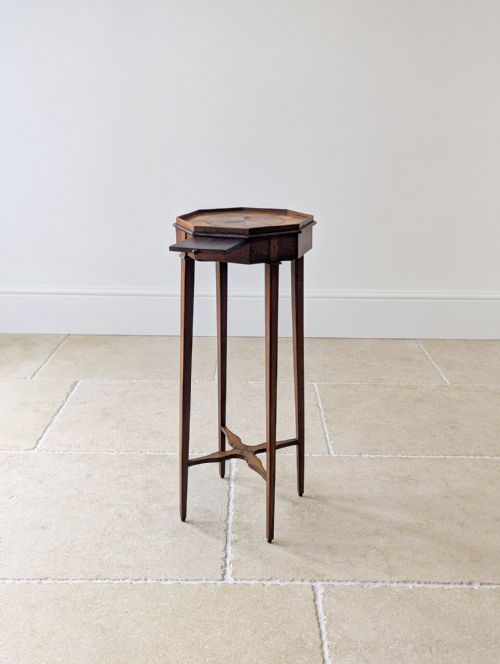
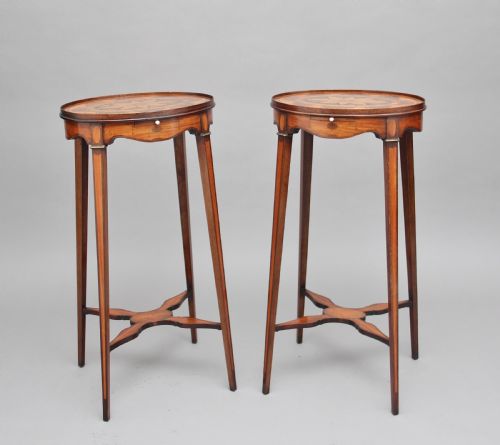
A georgian inlaid urn stand serves as a specialised small table designed originally to hold a heated water urn or kettle during tea service. These pieces stand on slender legs, often octagonal or square in section, and frequently feature delicate contrasting wood details.
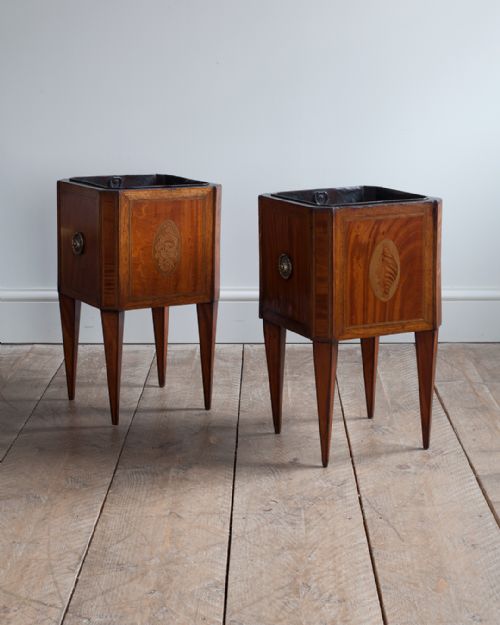
The versions met on this page range from authentic 18th century examples to later revival pieces created around 1900. Alongside standard urn stands, related forms like kettle stands, plant stands, and occasional tables appear within the selections.
Materials and construction
Cabinet makers utilised dense hardwoods such as mahogany and satinwood for the primary structure, ensuring stability in such slender proportions. Rosewood also appears, providing darker contrast alongside brass fittings.
Decoration relies heavily on precision inlay, setting lighter veneers into contrasting timber backgrounds to create geometric borders or central motifs. Bone is occasionally used for small decorative escutcheons or stringing details.
Georgian Inlaid Urn Stand Retail Price Guide 2026
Typical asking prices for georgian inlaid urn stand among the pieces listed under this phrase on Sellingantiques today, from the lower quarter to the upper quarter. They describe what is for sale here now, not the wider market.
Object types on this page include occasional tables, plant stands, kettle stands, and bedside cupboards alongside urn stands.
Separating the ordinary from the exceptional
Quality rests upon the crispness of the inlay and the choice of timber figuring. Finer pieces display tight, well-matched grain patterns and sharply defined stringing without gaps or mismatched joints.
Proportion and stance dictate the visual success of the piece. Superior examples maintain perfect balance despite their narrow footprints, with hand-turned legs and precisely fitted tops that reflect careful workshop assembly.
The Georgian Inlaid Urn Stand Glossary
- Urn stand
- A small, tall table specifically scaled to hold a liquid container above the tea table. These forms usually feature raised edges or shaped tops to secure the vessel.
- Inlay
- A decorative technique where pieces of contrasting wood or bone are fitted into hollowed recesses in the timber surface. This creates flat, ornate patterns across the top and legs.
- Satinwood
- A lustrous, yellowish timber valued for its fine grain and reflective quality. Makers used it extensively for contrasting banding and full veneered panels.
- Sheraton
- A neoclassical design style defined by straight lines, tapered legs, and classical motifs. Pieces in this manner emphasise elegance and geometric clarity.
- Stringing
- Thin lines of contrasting wood inlay used to outline panels, drawers, and table edges. It provides subtle definition to the primary timber.
Georgian Inlaid Urn Stand: Frequently Asked Questions
What is an urn stand used for today?
Modern interiors use these stands as lamp tables, plant holders, or bedside surfaces. Their compact footprint allows them to fit into narrow corners and beside seating.
They function well to display decorative objects or hold a single cup and saucer in a reception room.
How do I spot a revival piece?
Revival pieces often date from around 1900 or the Edwardian period, echoing earlier George III designs. Examination of the secondary timbers and the oxidation of the finish helps reveal the actual age.
Machine-cut components differ subtly from the hand-shaped elements found on 18th century examples.
Are these stands sturdy enough for daily use?
The slender legs require mindful placement to avoid heavy impacts. Their original purpose demanded stability for heavy liquid vessels, but modern placement should account for their light weight.
Careful positioning away from heavy traffic areas protects the delicate inlay and tapered legs.