






Sheraton Octagonal Stand
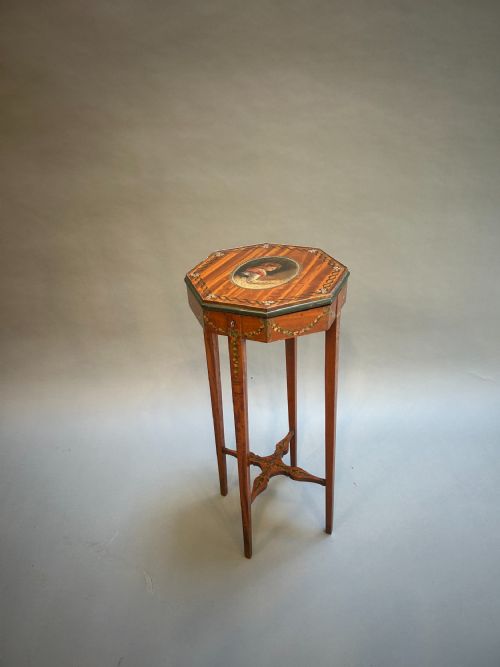
These sheraton octagonal stand pieces offer refined geometry and disciplined classical design, bringing proportion and proportioned utility to any room.
Sheraton Octagonal Stand
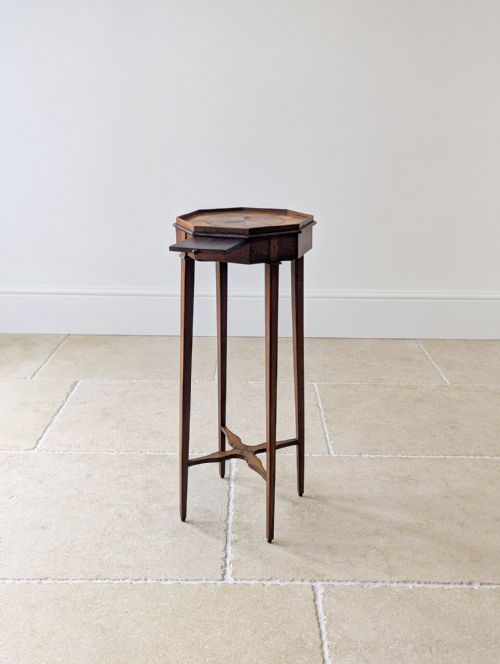
A sheraton octagonal stand encompasses a variety of compact surfaces, including urn stands, kettle stands, side tables, and occasional tables spanning the eighteenth century to the Edwardian Sheraton Revival period.
The material evidence shows pieces originating across the Georgian, Victorian, and Edwardian eras, with mahogany and satinwood dominating the forms.
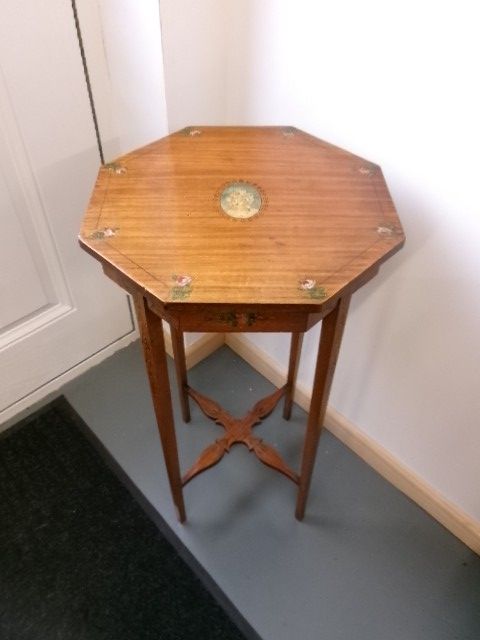
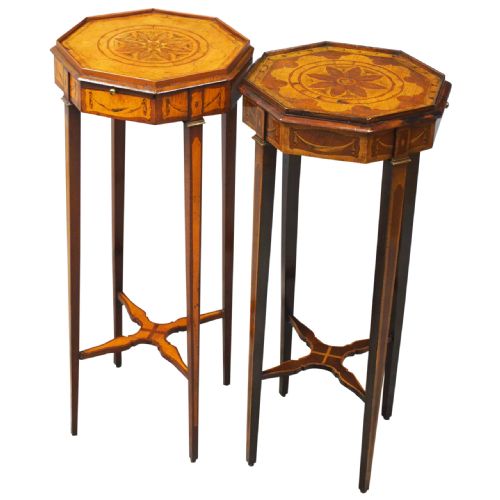
Buyers most frequently encounter Edwardian Sheraton Revival interpretations alongside genuine Georgian examples, often featuring inlaid decoration and painted timber surfaces.
How they were made
Cabinetmakers constructed these pieces using dense timbers like mahogany and satinwood, frequently employing ebony and brass details to accentuate the geometric form.
Surface decoration relies heavily on hand painting and intricate inlay work, applied to both walnut and painted timber to achieve the characteristic neoclassical aesthetic of the style.
Sheraton Octagonal Stand Retail Price Guide 2026
Typical asking prices for sheraton octagonal stand among the pieces listed under this phrase on Sellingantiques today, from the lower quarter to the upper quarter. They describe what is for sale here now, not the wider market.
Listings demonstrate a strong division between eighteenth-century Georgian originals and Edwardian Sheraton Revival interpretations executed in satinwood and mahogany.
What varies in quality
Quality rests upon the crispness of the inlay and the precision of the octagonal geometry, where sharper mitres and finer timber selection elevate an example above standard production.
The refinement of turned or spiral fluted stems and the application of hand-painted details distinguish finer pieces from simpler utility tables.
The Sheraton Octagonal Stand Glossary
- Satinwood
- A lustrous timber native to the tropics, prized for its pale golden colour and silky sheen. It was heavily utilised during the late eighteenth century and the Edwardian revival.
- Sheraton Revival
- A late nineteenth and early twentieth century design movement that recreated the lightness and classical restraint of Thomas Sheraton's eighteenth century pattern books.
- Urn Stand
- A tall, slender small table designed specifically to hold a tea urn during the Georgian period. Their elevated octagonal tops kept hot vessels stable.
- Inlay
- A technique where pieces of contrasting wood, brass, or shell are fitted into depressions within a solid timber surface to create decorative motifs.
- Torchere
- A tall stand designed to support a candle or lamp. These vertical supports frequently terminate in tripod bases.
Sheraton Octagonal Stand: Frequently Asked Questions
Where were these stands placed in period rooms?
These compact tables were positioned beside seating or near windows to hold tea equipment, candles, or decorative objects. Their small footprints allowed them to fit easily into corners or between furniture groupings.
In larger reception spaces, taller versions functioned as torchere supports or plant stands, raising decorative items to eye level.
How do I distinguish Georgian from Edwardian Sheraton Revival?
Georgian pieces display the deep patination, timber shrinkage, and structural joinery appropriate to the eighteenth century. Their construction methods reflect the hand tools and working practices of the original period.
Edwardian Sheraton Revival examples show lighter secondary woods and cleaner, more uniform surfaces typical of turn-of-the-century manufacturing techniques.
Can these stands safely hold modern table lamps?
The sturdy mahogany and satinwood construction provides a stable platform for standard lighting. The eight-sided top distributes weight evenly across the central stem or legs.
Care should be taken to ensure the footprint of the lamp base fits comfortably within the octagonal surface without overhanging the edges.
What is the difference between an urn stand and a wine table?
Urn stands generally feature higher, narrower proportions designed to support heavy vessels securely at a convenient height for pouring. They often include slide out candlesides or multi-tiered structures.
Wine tables possess lower, broader tops intended for holding glasses or decanters close to seating during evening entertainment.