
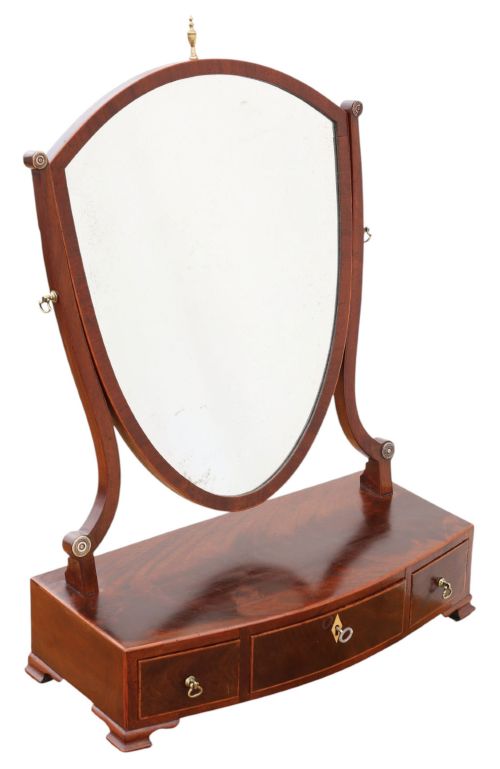
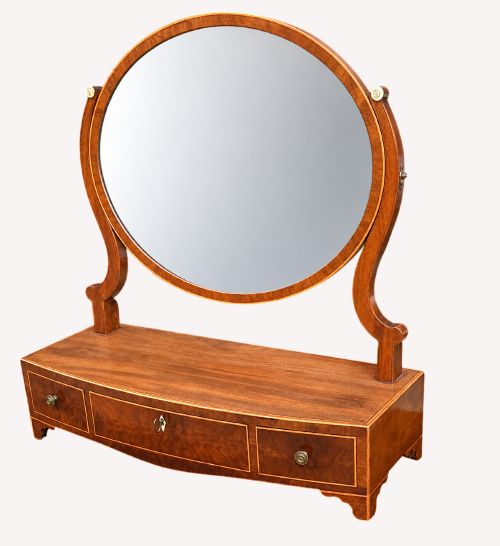
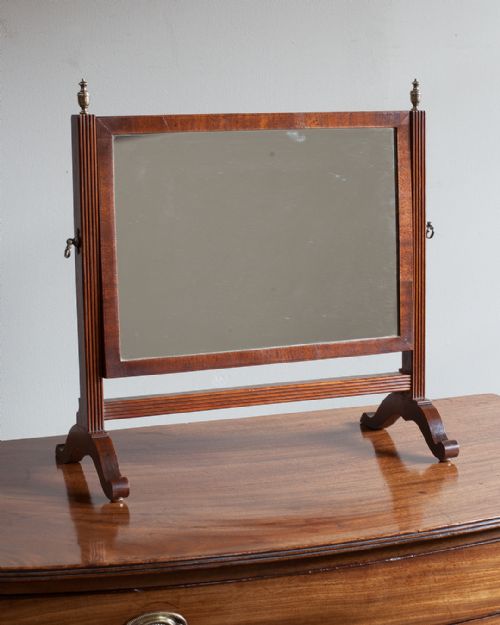
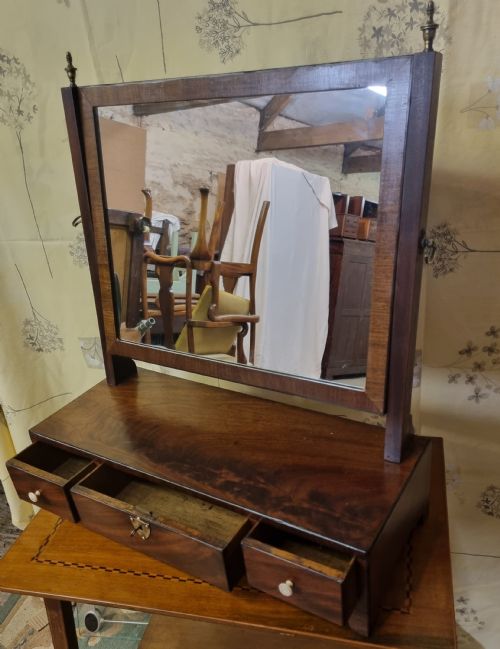
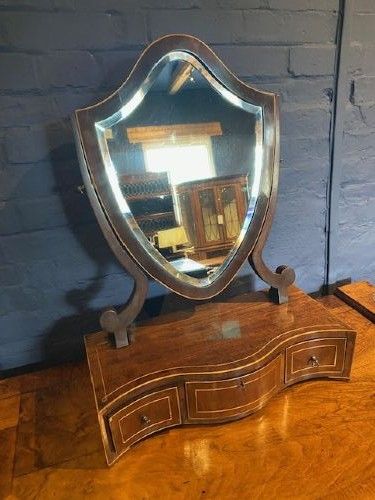
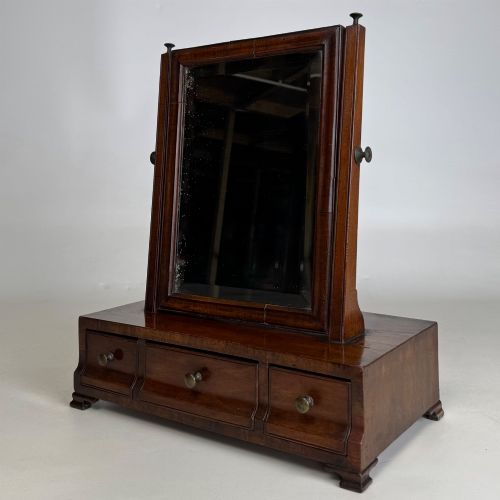
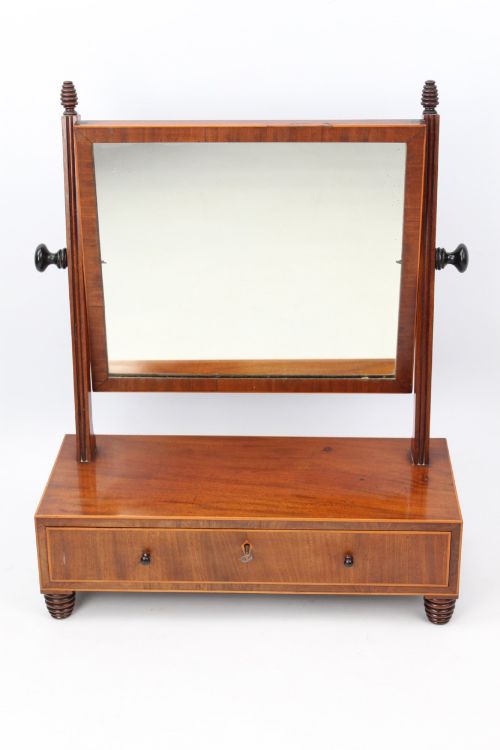
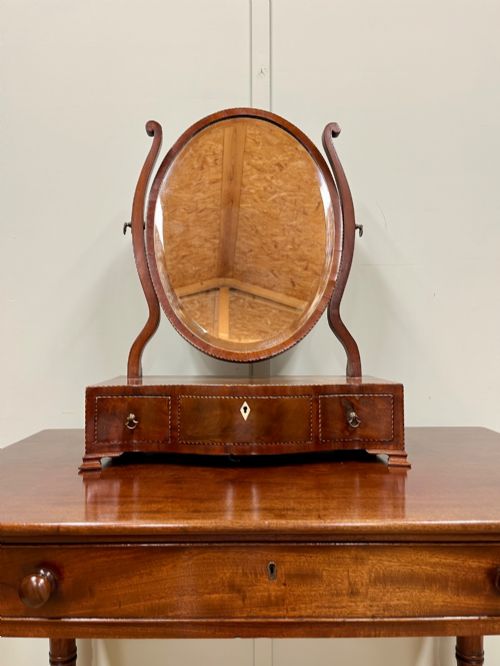
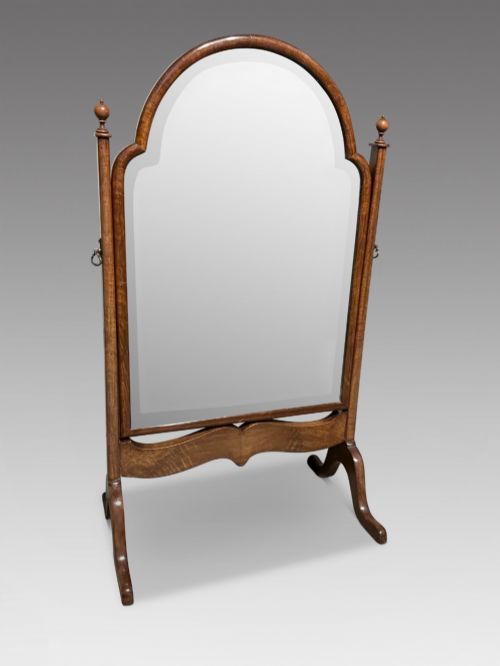
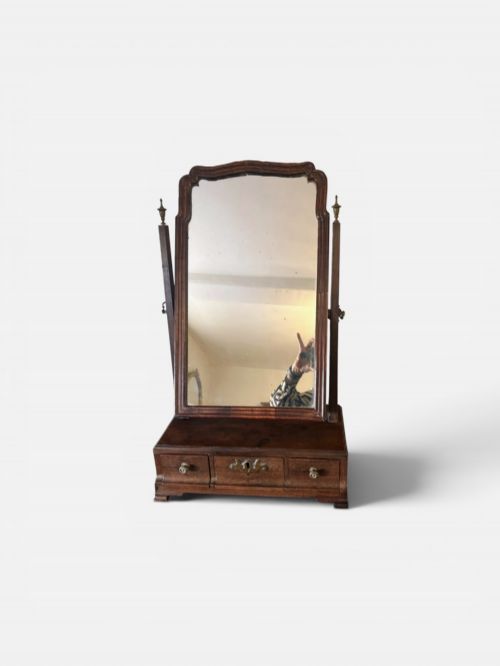
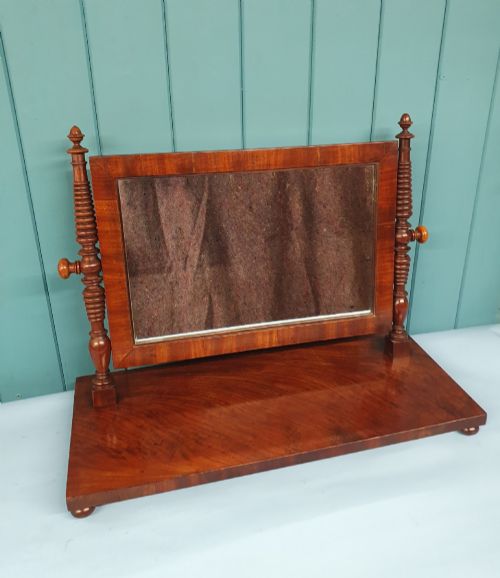

Georgian Tabletop Dressing Mirror
A georgian tabletop dressing mirror brings refined proportion and functional elegance to a chest of drawers.
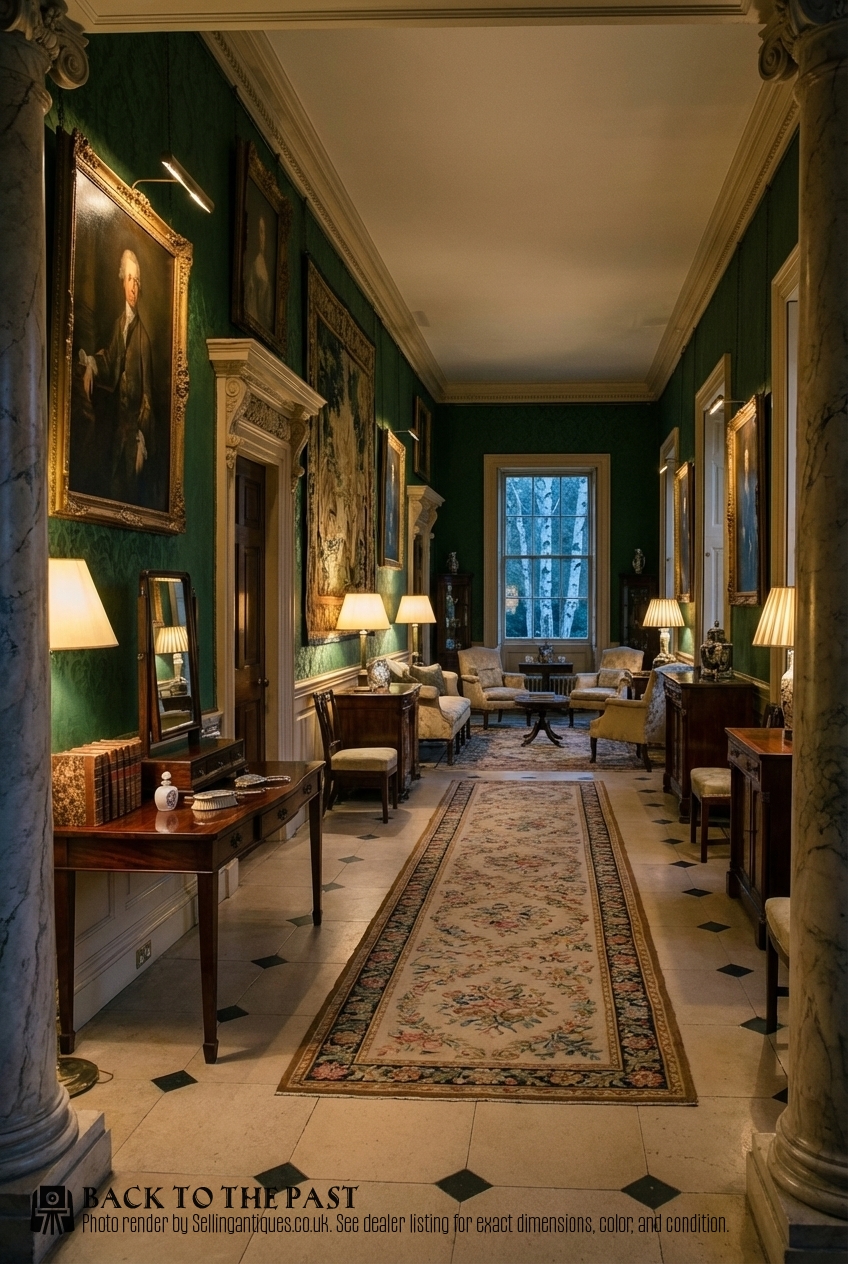
Georgian Tabletop Dressing Mirror
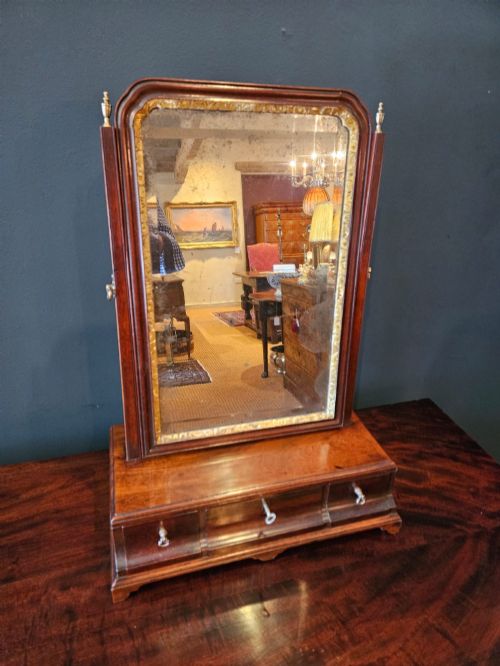
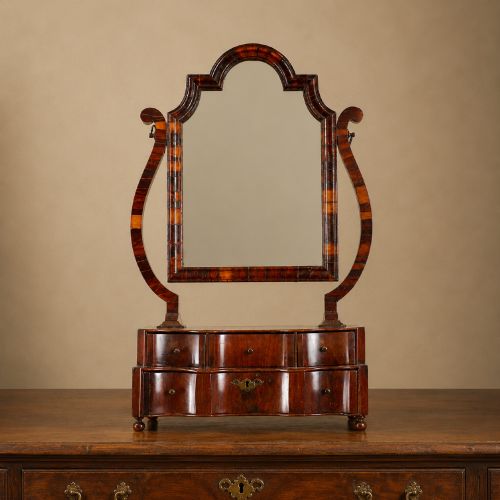
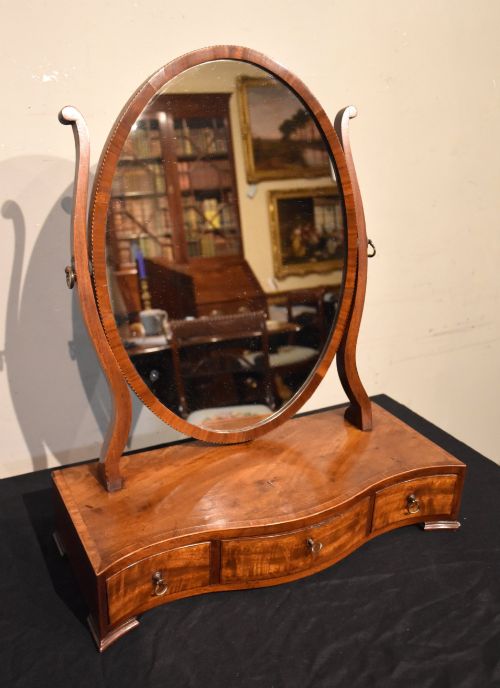
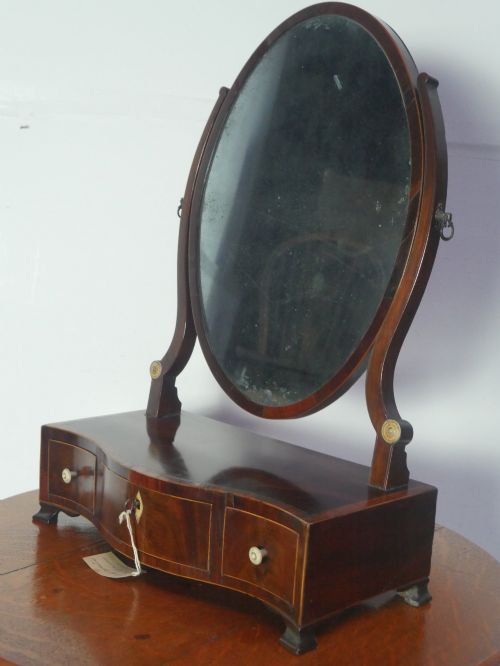
A georgian tabletop dressing mirror is a portable looking glass designed to sit upon a chest, commode or dressing table for personal grooming. These pieces comprise an adjustable glass plate held within a wooden frame, supported by upright arms atop a box base fitted with small drawers.
The versions most commonly met on this page date from the eighteenth and nineteenth centuries, spanning the Georgian, Regency and Victorian eras. Mahogany forms the predominant timber, appearing alongside walnut and satinwood in various rectilinear, shield, oval and serpentine forms.
Materials and construction
Cabinetmakers constructed these mirrors primarily in solid mahogany and walnut, frequently incorporating decorative crossbanding, stringing and marquetry inlay. Timber selection governed the visual weight of the piece, with dense grain and figured veneers reserved for the principal visible surfaces.
The mirror plates utilise silvered glass held securely within pivoting frames attached to brass or wooden screw knobs. Base sections frequently incorporate dovetailed drawer construction for storing small personal effects.
Portable campaign kit models let Regency travellers shave with stationary precision inside moving coaches.
Assessing quality
Quality rests upon the crispness of the cabinetwork, the figure of the mahogany or walnut veneer, and the delicacy of proportion between the glass frame and the supporting base. Finer examples display meticulous dovetailing, well-chosen crossbanding, and harmonious curves in shield or serpentine profiles.
The integrity of the original mirror glass and the correct retention of brass pivot hardware distinguish superior survivals. Lesser pieces often exhibit replaced components, heavy-handed proportions or timber shrinkage that disrupts the balance of the design.
The Georgian Tabletop Dressing Mirror Glossary
- Shield mirror
- A dressing glass featuring a plate shaped like a heraldic shield, popular during the later eighteenth century. This silhouette added a lighter, more curvilinear aesthetic to the tabletop.
- Toilet mirror
- A traditional period designation for a dressing table mirror used during morning ablutions and dressing. These items sat upon dedicated tables or standard chests in bedrooms.
- Crossbanding
- A border technique where thin strips of veneer are laid across the grain of the primary timber to frame a panel. It provides a neat, contrasting edge to drawer fronts and mirror frames.
- Serpentine
- A front contour characterised by a convex central section flanked by two concave curves. This undulating shape demands high skill from the cabinetmaker.
- Swing mirror
- A looking glass hung on pivots between two upright posts to allow tilting angles. The mechanism relies on threaded brass screws or wooden pegs.
Georgian Tabletop Dressing Mirror: Frequently Asked Questions
Where should I place a dressing mirror?
These mirrors sit comfortably on top of chests of drawers, sideboards or dedicated dressing tables in bedrooms and living spaces. Their compact footprints allow them to occupy surfaces without requiring floor space.
Ensure the supporting furniture matches the depth of the mirror base to maintain stability. Good natural light nearby assists with their original purpose of grooming and reflection.
How do I date an old mirror?
Dating relies on observing timber choices, hardware styles, construction methods and glass characteristics across different periods. Walnut dominates early pieces, while mahogany and satinwood prevail in later eighteenth and nineteenth-century examples.
Secondary woods inside drawers and the style of dovetailing offer further clues to age. Shield and oval plate shapes typically point towards the later Georgian era.
Did these mirrors serve for shaving?
Many smaller examples functioned as portable shaving mirrors for gentlemen during travel or daily routines. Compact campaign versions were built for easy transport in luggage.
These utilitarian pieces often included small lidded compartments or fitted boxes within their base structures. Their adjustable plates ensured correct angles for personal grooming.
How do I adjust the mirror angle?
The glass plate pivots between two upright arms secured by lateral screws or wooden pegs. Twisting these brass knobs loosens the grip, allowing the mirror to tilt forward or backward.
Careful tightening holds the glass firmly at the desired angle. Overtightening can strain the wooden uprights, so adjustments require gentle handling.