
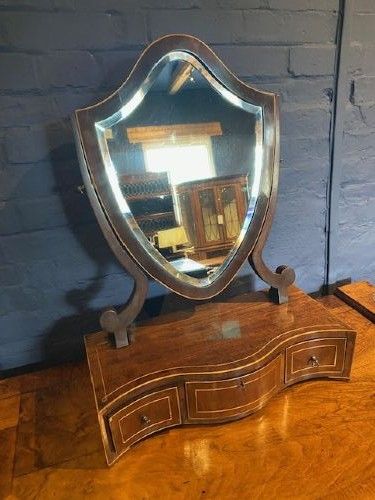
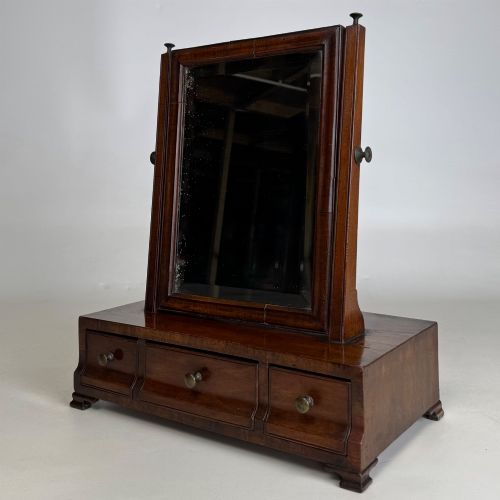
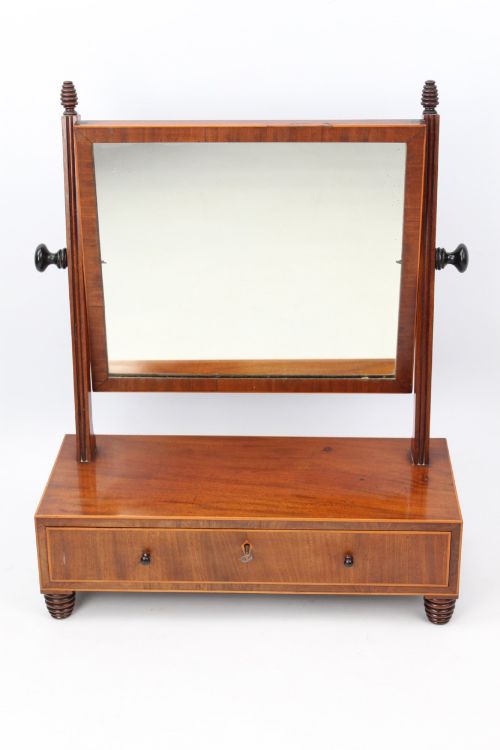
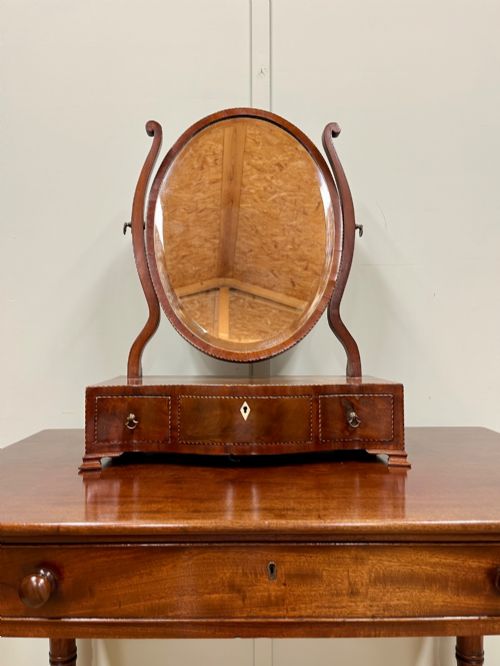
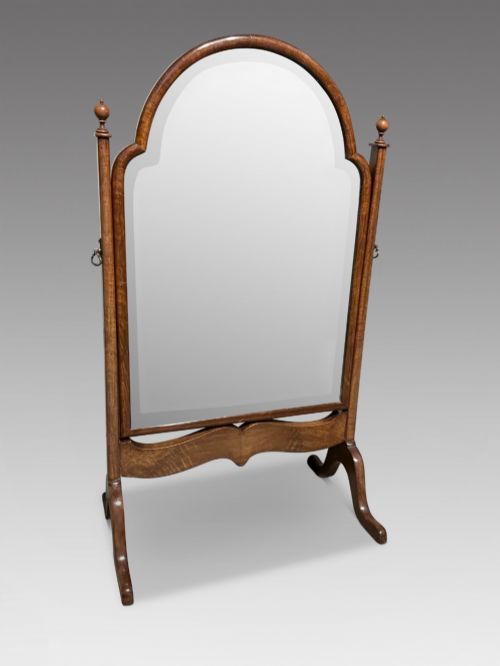
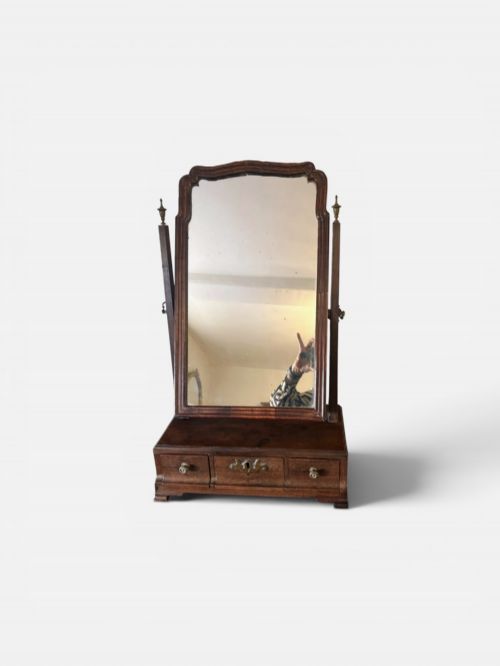
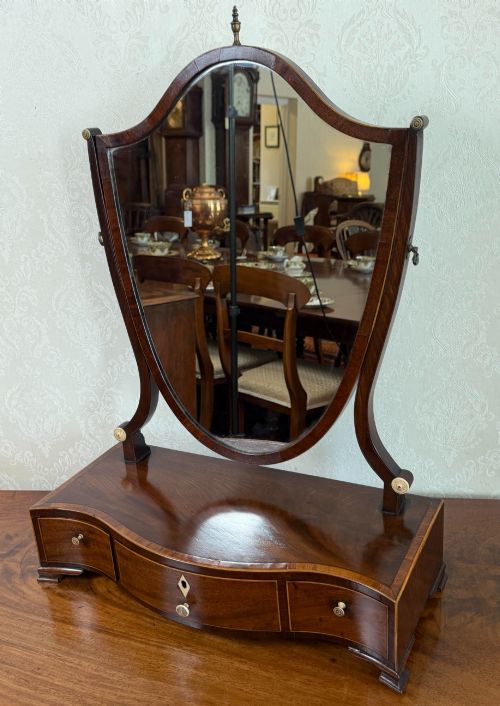
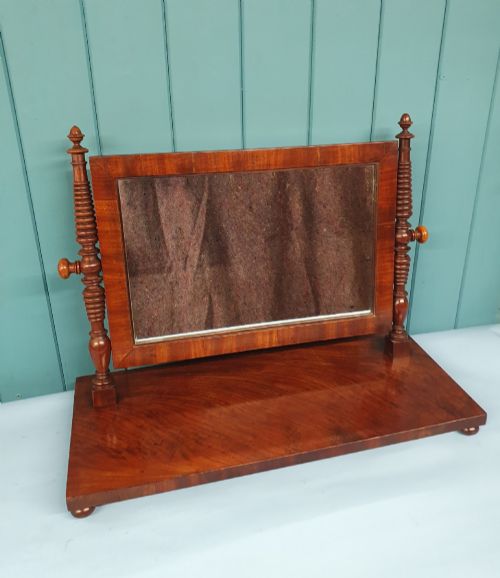
Georgian Swing Vanity Mirror
A georgian swing vanity mirror sits on a chest or table to reflect the face while grooming.
Georgian Swing Vanity Mirror
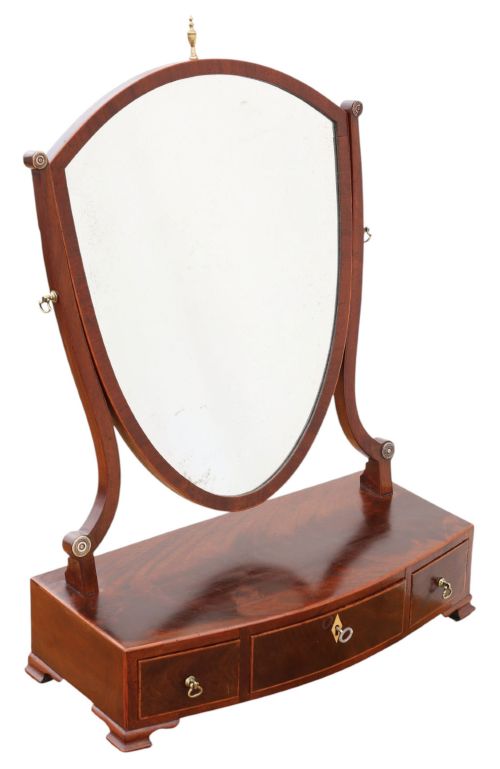
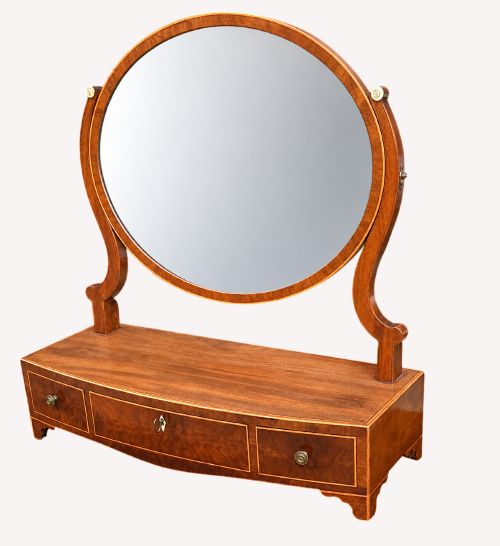
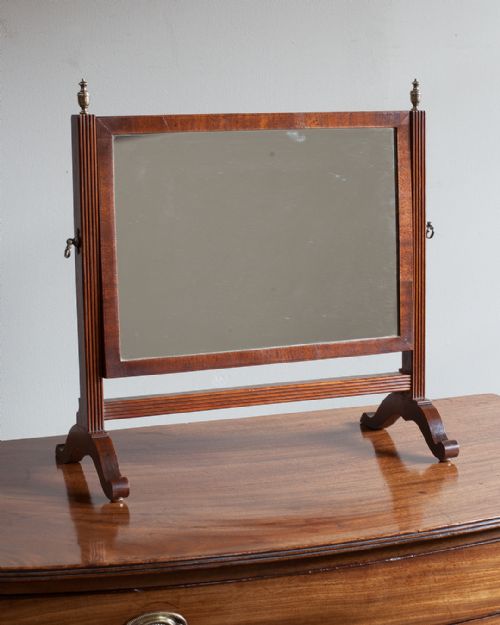
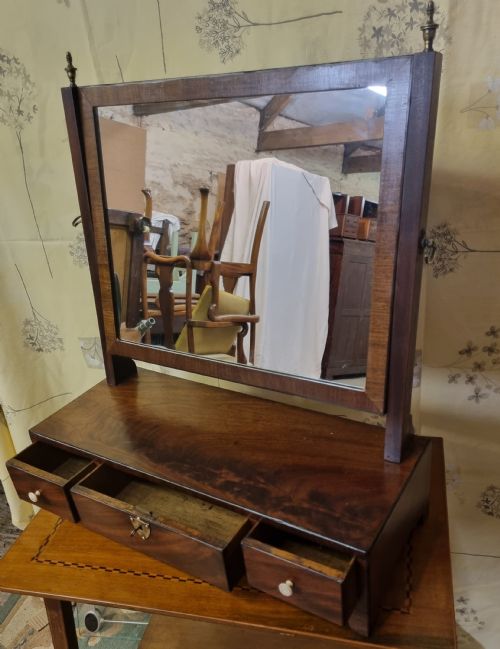
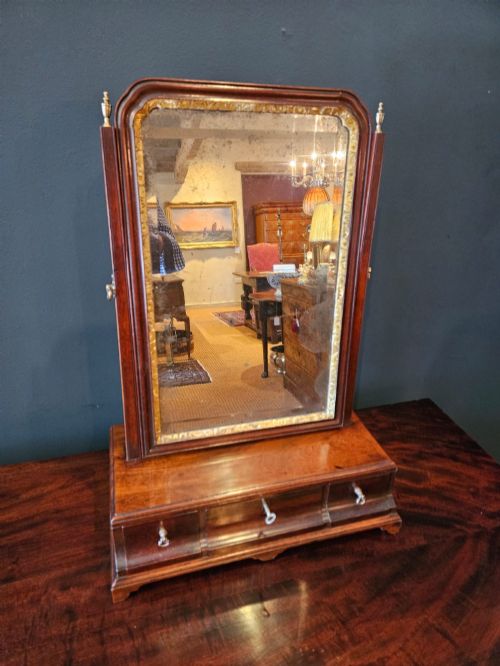
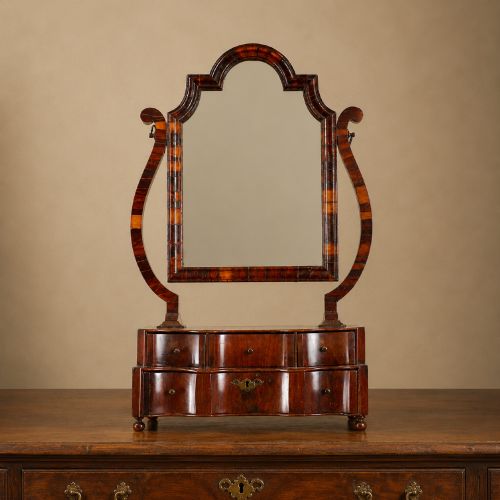
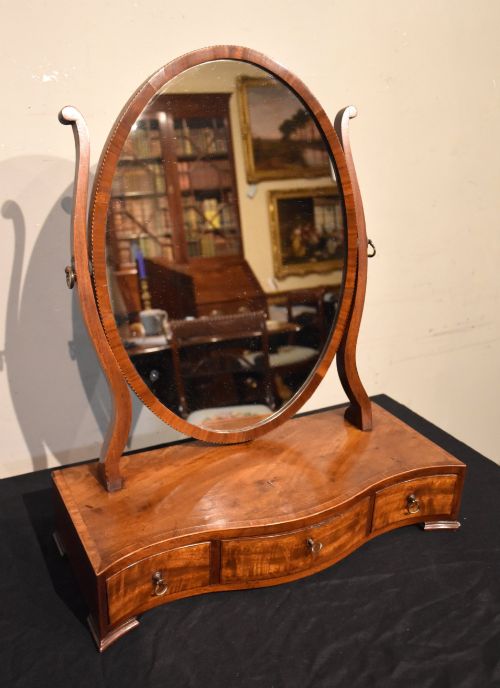
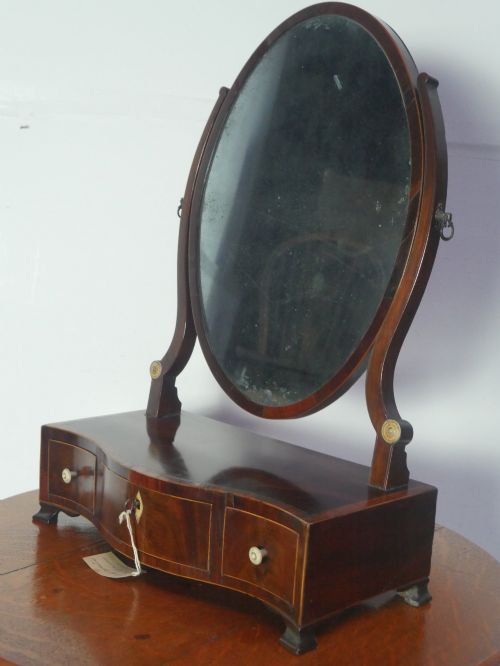
A georgian swing vanity mirror is a movable looking glass mounted in a frame that tilts on pivots between upright arms. These uprights stand upon a small base, which often takes the form of a box fitted with tiny drawers. The form appears most frequently in mahogany, walnut, and satinwood, spanning the eighteenth and nineteenth centuries.
The pieces on this page appear under various historical names, including toilet mirrors, dressing glasses, and table mirrors. Examples span the reigns of Queen Anne and the Georges through to the Regency period and later nineteenth-century revivals. Buyers encounter rectangular plates, shield shapes, and oval glasses mounted above serpentine or bow-fronted box bases.
How they were made
Cabinet makers constructed the frames and box bases using timbers such as mahogany, walnut, and satinwood, frequently enhanced with crossbanding, marquetry inlay, or parcel-gilt details. The mirror plates themselves utilised glass held within rebated wooden frames, often supported by brass pivots or bone fittings.
Joinery techniques involved precise box construction to house the small drawers, sometimes oak-lined, beneath the pivoting arms. Giltwood and brass components added decorative contrast to the dark polished woods of the main structure.
Object descriptions include dressing tables, toilet mirrors, and shield-shaped glasses equipped with small storage drawers.
What varies in quality
Quality rests upon the selection of timber and the crispness of the cabinet work, particularly around the drawer linings and inlaid details. Superior examples display carefully matched grain patterns, such as flame mahogany or burr walnut, alongside finely turned upright supports.
The integrity of the pivoting mechanism and the retention of original mirror glass and brass hardware also distinguish better pieces from later replacements. Proportions matter greatly, with finer mirrors showing a balanced relationship between the tilting glass plate and the supporting base.
The Georgian Swing Vanity Mirror Glossary
- Toilet mirror
- A small mirror designed to stand on a dressing table or chest during personal grooming. These typically incorporate small drawers in the base for storage.
- Shield mirror
- A looking glass cut into the shape of a heraldic shield. This silhouette became popular during the latter half of the eighteenth century.
- Crossbanding
- A strip of veneer applied across the grain of the primary wood to form a decorative border. It frequently frames the edges of drawer fronts and mirror frames.
- Parcel-gilt
- Partially gilded with gold leaf to highlight carved wooden ornaments or mouldings. This technique appears on higher-status walnut and mahogany pieces.
- Serpentine
- A curved line that undulates outward and inward in a gentle wave. This profile often shapes the front of the drawer box on dressing mirrors.
Georgian Swing Vanity Mirror: Frequently Asked Questions
Where did people place these mirrors?
These mirrors stood upon dressing tables, chests of drawers, or washstands in bedrooms and dressing rooms. Their compact size allowed them to be moved easily around the home for optimal light during grooming.
They provided a stable, adjustable surface for personal care before the widespread use of large, fixed wall-mounted dressing glasses.
What were the base drawers used for?
The small drawers built into the wooden stands held jewellery, cosmetics, hairpins, and other small personal items. They kept everyday accessories close at hand while supporting the weight of the pivoting uprights.
Many surviving examples retain their original tiny brass knobs and clean interior linings used for these valuables.
How do I date a swing mirror?
Dating relies on the combination of wood species, plate shape, and structural proportions. Eighteenth-century pieces often feature walnut or early mahogany with simple rectangular or shield plates, while Regency examples introduce bolder mahogany grains and different base shapes.
Secondary woods inside the drawer boxes and the construction of the mirror frame joints also help confirm the period of manufacture.
Is the mirror glass original?
Original mirror glass frequently shows signs of age, such as slight foxing, minor silvering loss, or subtle waviness within the reflection. Replacement plates usually appear clearer and flatter due to modern manufacturing standards.
Inspect the edges of the glass and the backing boards to understand how long the plate has resided within its frame.
Can I use one on a modern chest?
These mirrors adapt well to modern bedroom furniture, provided the proportions of the chest match the width of the mirror base. They add traditional character and a functional surface to contemporary spaces.
Ensure the chest is stable and deep enough to support the full footprint of the mirror stand safely.