

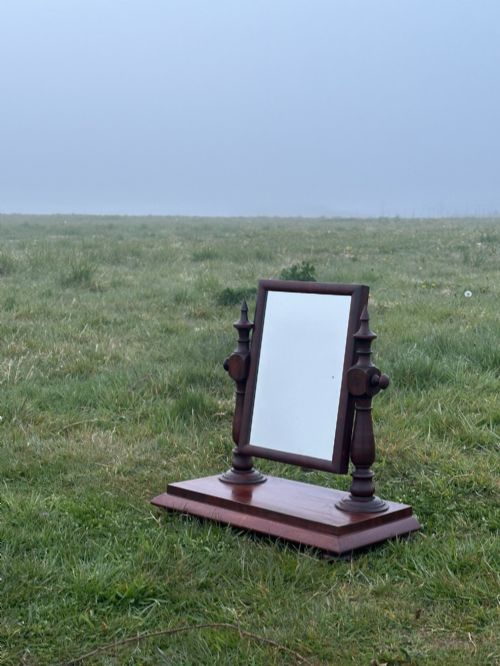


Mahogany Cheval Table Mirror
A mahogany cheval table mirror offers a practical and adjustable surface reflection, grounded in the rich tones of period timber.
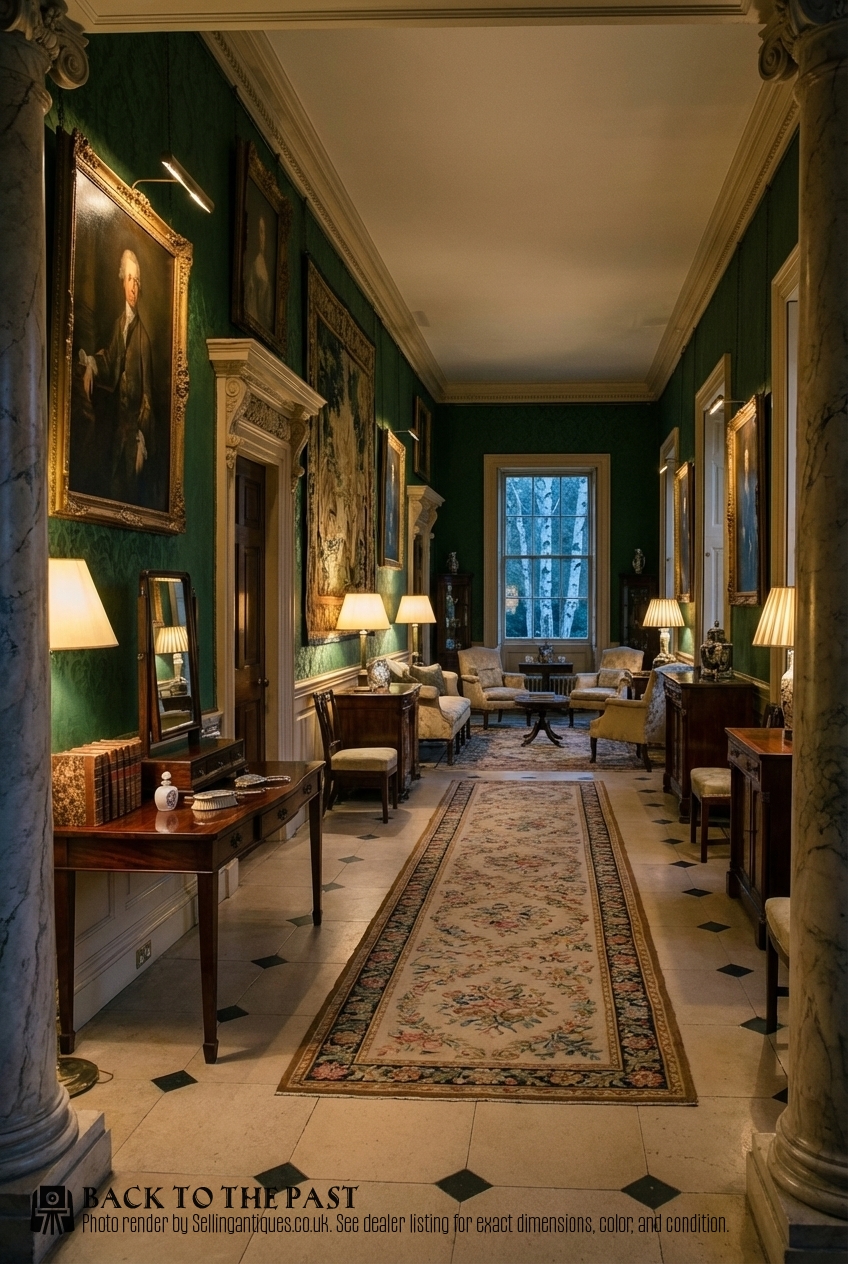
Mahogany Cheval Table Mirror
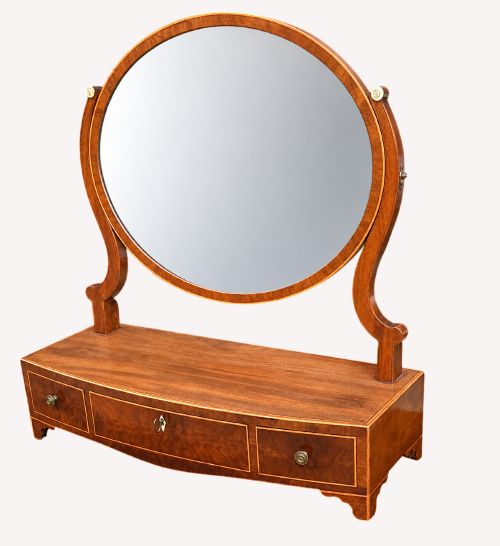
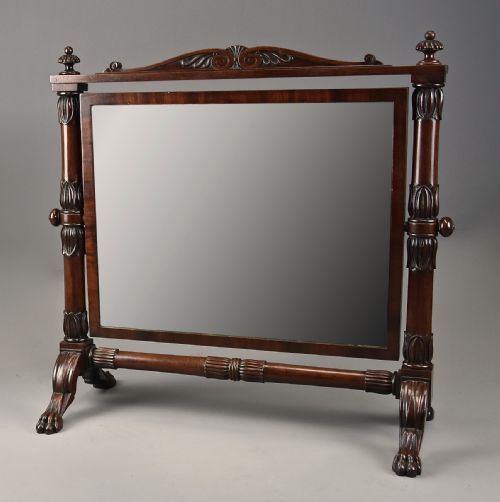
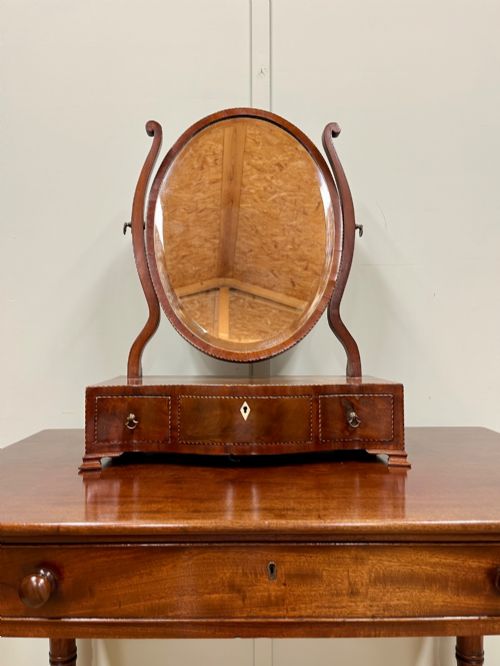
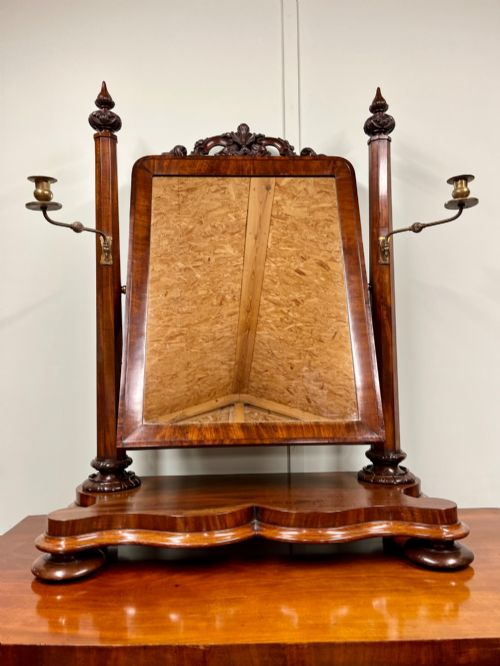
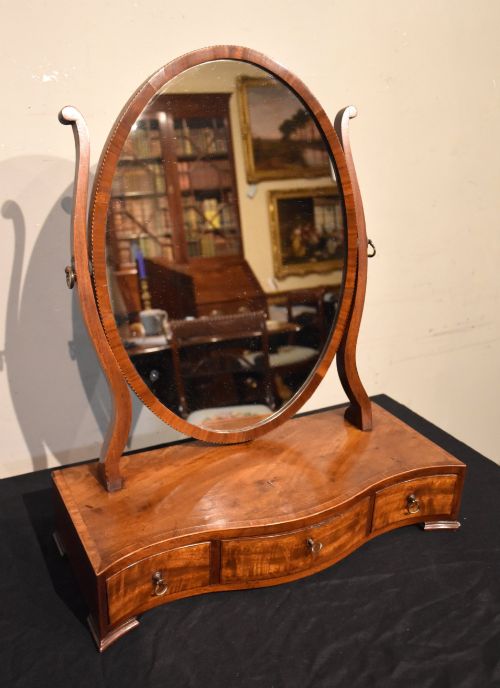
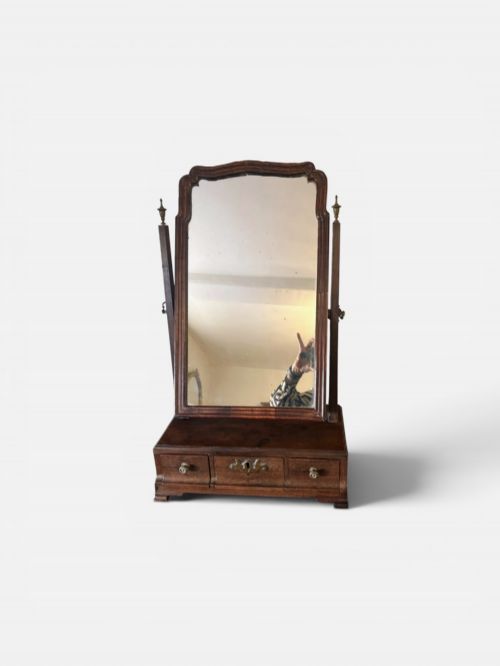
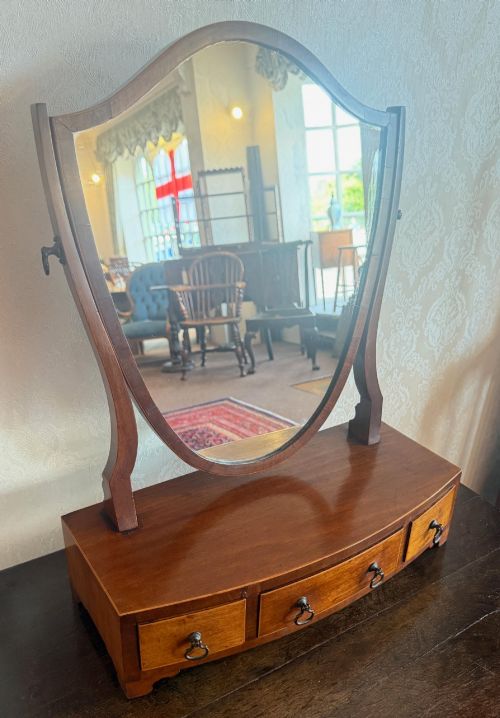
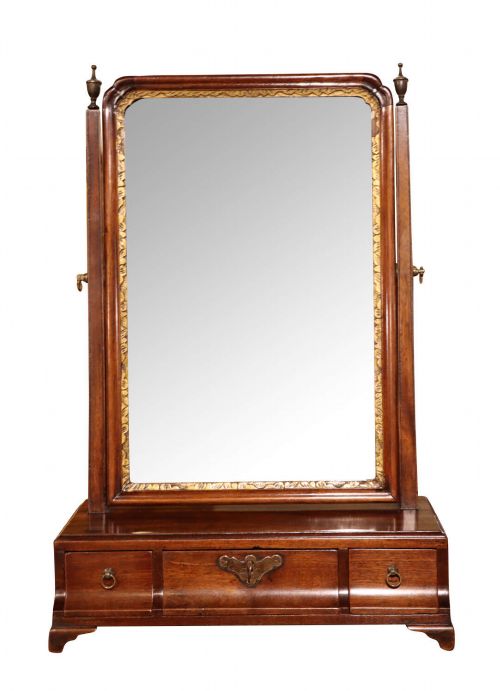
When you search for a mahogany cheval table mirror, you encounter a selection of dressing table mirrors, toilet mirrors, and swing mirrors designed to sit on furniture surfaces. The most common examples take the form of tabletop swing mirrors framed in rich mahogany, often incorporating small drawer bases from the Georgian, Regency, and Victorian periods.
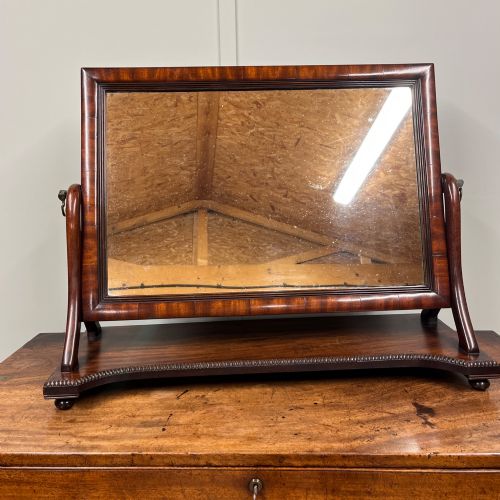
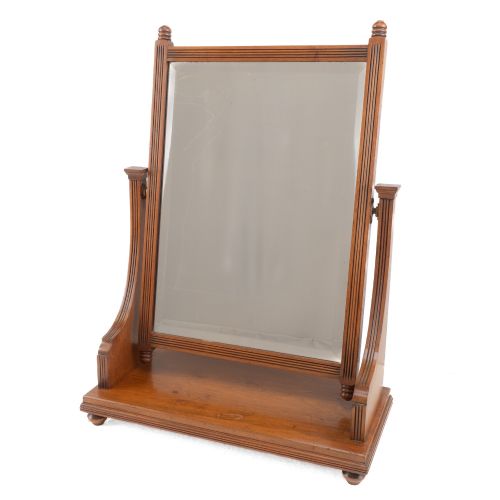
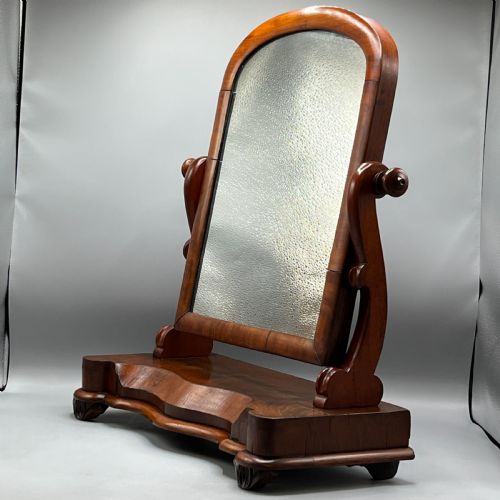
The objects span multiple centuries of design, covering George III, Regency, William IV, and Victorian eras alongside Edwardian interpretations. Many pieces function as traditional toilet mirrors with pivoting glass plates supported by upright arms, while others utilise the smaller cheval format for tabletop placement.
Materials and construction
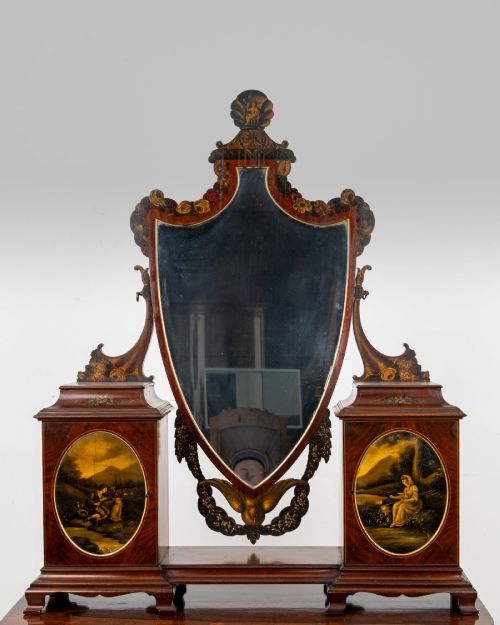
Cabinet makers constructed these mirrors primarily using solid mahogany and mahogany veneers, occasionally incorporating secondary timbers alongside glass mirror plates. Finer examples display decorative embellishments including boxwood inlay, wood inlay, satinwood, and brass hardware such as adjustable pivots and candle sconces.
The mirror plates are held within swinging frames supported by upright standards resting on box bases, serpentine fronts, or drawer units. Joinery techniques from the eighteenth and nineteenth centuries ensure the pivoting frames tilt smoothly while remaining balanced on their supporting structures.
Boot maker's mirrors appear alongside conventional dressing pieces, proving that even footwear required a dedicated reflection.
Distinctions in quality
The refinement of the timber selection and the complexity of the base cabinetry separate standard utility pieces from exhibition-grade examples. Pieces featuring figured Cuban mahogany, marquetry inlay, or secondary compartments demonstrate superior craftsmanship compared to plain surfaces.
Proportion and structural integrity define the higher tiers of these mirrors, where the supporting uprights and box bases maintain stability without heavy hardware. The crispness of carved mouldings and the retention of original glass plates further distinguish finer workshops.
P & MA Nicholson·Gillows
The Mahogany Cheval Table Mirror Glossary
- Cheval mirror
- A freestanding or tabletop mirror suspended on a pivoting frame that allows the glass to tilt to various angles.
- Toilet mirror
- A smaller dressing mirror designed to sit atop a chest of drawers or dressing table, usually featuring a box base with small drawers.
- Serpentine front
- A furniture front characterised by a curved outline that swells outward in the centre and recesses at the sides.
- Marquetry inlay
- Decorative patterns formed by fitting contrasting veneers into prepared recesses within the mahogany surface.
- Swing mirror
- A glass plate hung on side pivots within a frame, enabling the user to adjust the angle of reflection.
Mahogany Cheval Table Mirror: Frequently Asked Questions
What is the difference between a toilet mirror and a cheval mirror?
A toilet mirror sits on a chest of drawers or dressing table, usually featuring a small drawer base beneath the pivoting glass. A cheval mirror is traditionally a full-length pivoting glass standing on the floor, though smaller tabletop versions also appear in the record.
Tabletop cheval mirrors combine the small scale of a toilet mirror with the pivoting frame mechanics characteristic of full-length cheval designs.
How do I identify a Georgian mahogany mirror?
Georgian mirrors typically display clean architectural lines, solid mahogany frames, and box bases fitted with small graduated drawers. They rely on proportion and timber grain rather than heavy ornamentation.
Details such as bracket feet, ogee mouldings, and hand-cut dovetails on the internal drawer boxes point toward eighteenth-century production.
Did these mirrors always have drawers?
Not all examples include storage drawers beneath the glass frame. Many Georgian and Victorian toilet mirrors rest on simple upright scrolls or box plinths without compartments.
When drawers are present, they range from single serpentine fronts to banks of three small compartments designed for storing small personal items.
How do I care for antique mahogany and mirror glass?
Keep the timber clean by dusting with a dry cloth and occasionally applying a traditional wax polish to nourish the mahogany grain. Avoid placing the mirror in direct sunlight to prevent fading of the polished surface.
Handle the brass pivots with care when adjusting the angle, and clean the glass plate gently using a mild cleaner applied to a cloth rather than sprayed directly onto the frame.