
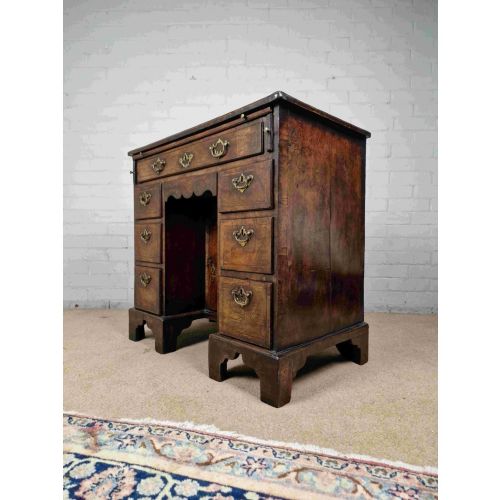
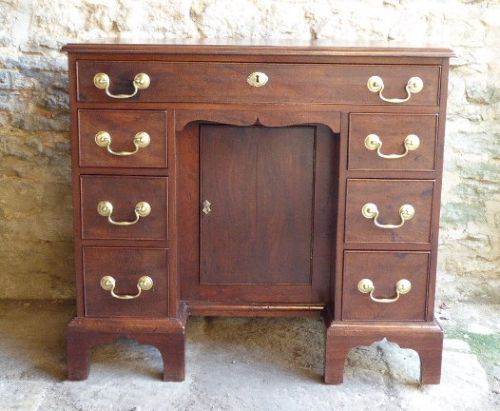
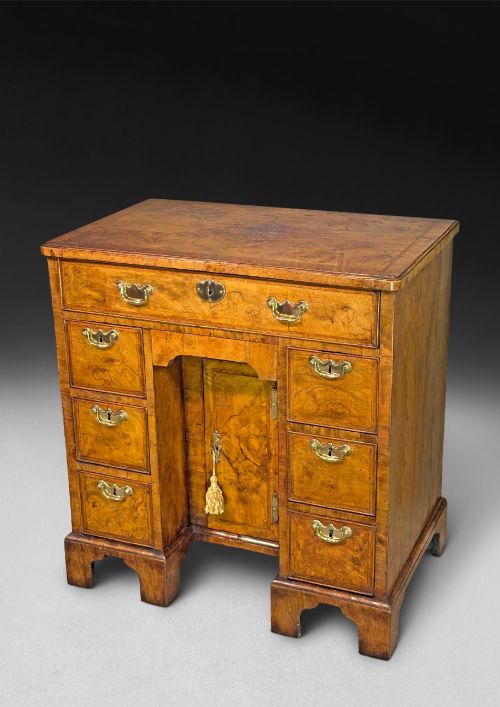


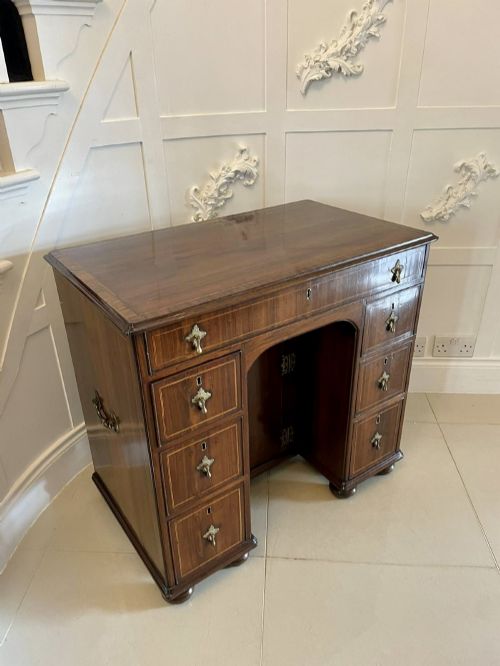
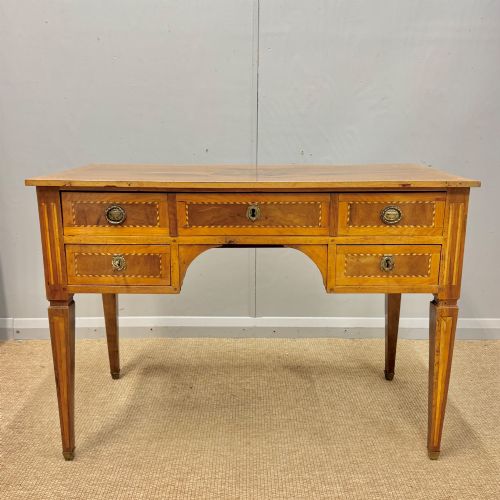
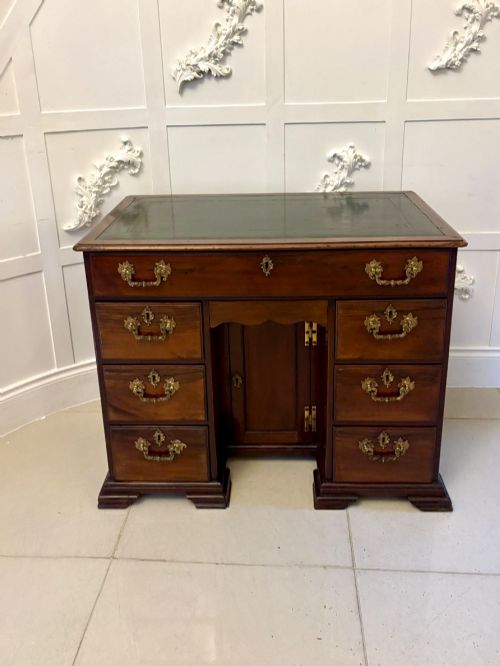
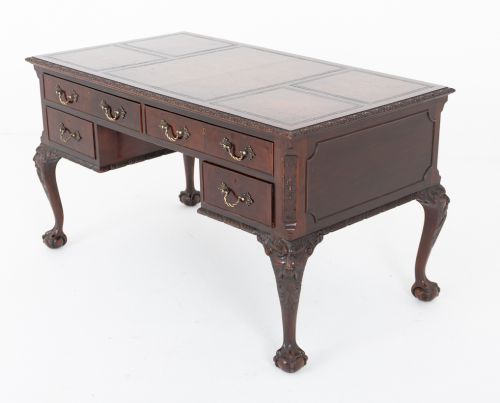
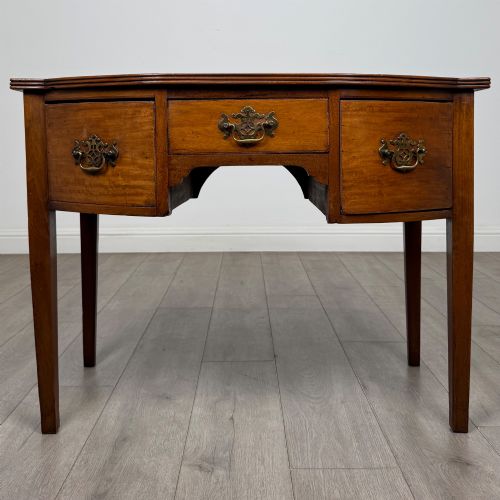
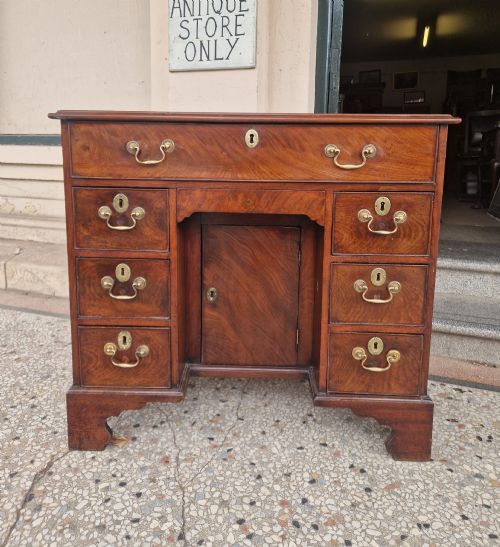
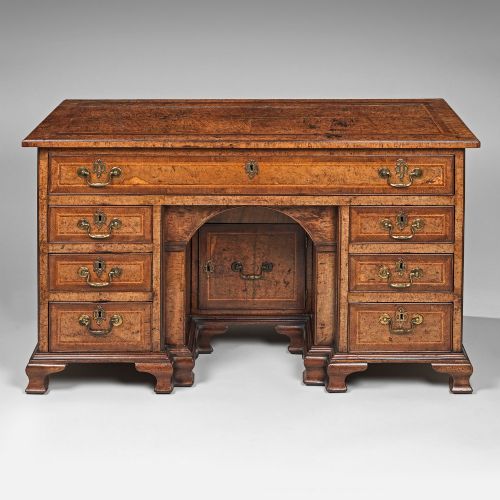
Georgian Table Bureau
A georgian table bureau offers a compact writing surface combined with enclosed storage, designed for domestic correspondence in past centuries.
Georgian Table Bureau
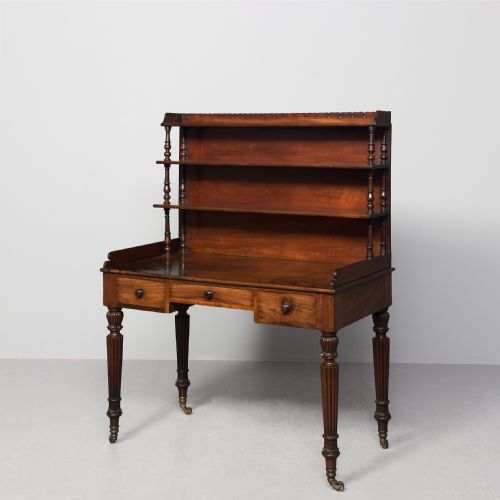
A georgian table bureau brings together a sloping writing flap and internal pigeonholes, often raised on legs or a stand rather than standing as a full-height cabinet. These compact pieces served households that required a dedicated writing space without the footprint of a large bureau bookcase.
The selection ranges from early eighteenth-century walnut and oak examples to later mahogany and satinwood interpretations, including kneehole configurations and bureau tables with drop sides. Pieces span the Georgian era and later revivals, reflecting the enduring utility of this domestic form.
Materials and construction
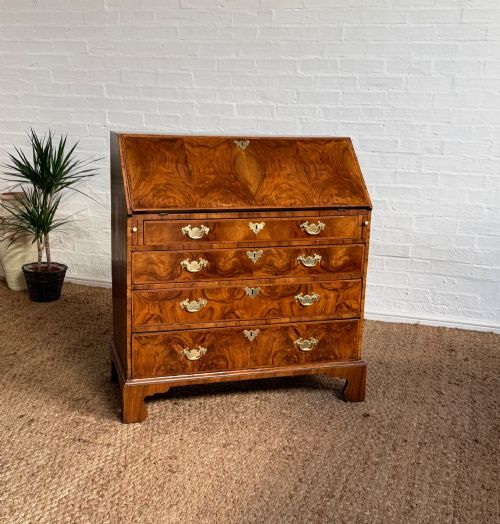
Cabinetmakers constructed these writing pieces primarily in mahogany, walnut, and oak, frequently employing figured veneers such as burr walnut or yew wood across the sloping fronts and drawer faces. Solid timber formed the structural frames, while secondary woods like deal lined the internal compartments.
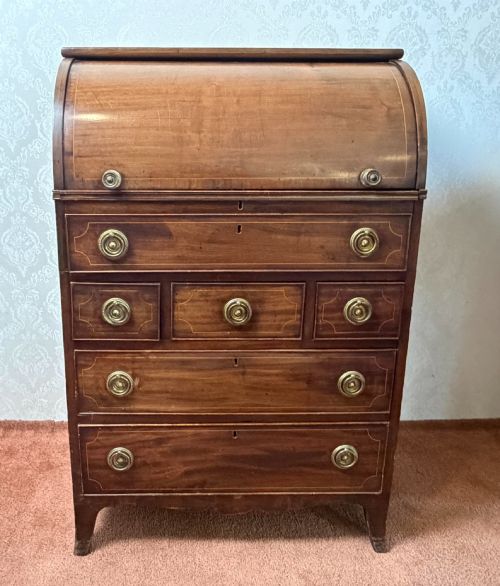
Hardware details included cast brass drop handles and escutcheons, alongside leather writing inserts tooled in gold. Tambour slides and cylinder tops utilised thin wooden slats glued to canvas backings to run smoothly in curved grooves.
A miniature table-top bureau permitted correspondence to travel from room to room before writing desks secured their own permanent corner.
Judging quality
Quality rests on the selection of timber figures, where symmetrical burr walnut or figured mahogany veneer shows deliberate alignment across the fall front and drawers. Secondary woods and internal drawer construction reveal the diligence of the cabinetmaker.
Proportion and the retention of original brass hardware elevate certain examples above standard utilitarian pieces. The crispness of inlay and the smooth operation of internal slides indicate superior workshop execution.
James Mein of Kelso·Maples of London
The Georgian Table Bureau Glossary
- Fall front
- The hinged sloping lid that drops forward to provide a writing surface. It conceals the pigeonholes and small drawers within.
- Kneehole desk
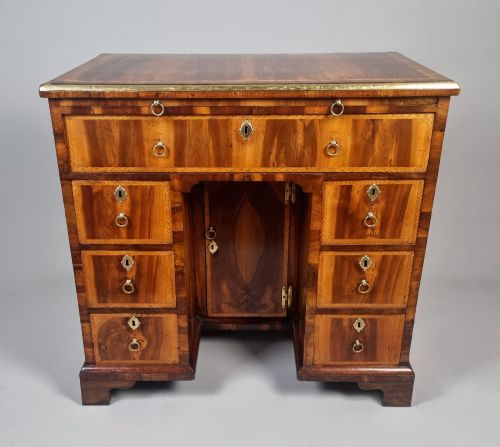
- A compact desk featuring a central recessed space for the legs, flanked by pedestals of small drawers. This form appears frequently in walnut and mahogany.
- Tambour
- A flexible shutter formed of narrow wooden strips glued to canvas, allowing a desk top to slide open in an arc.
- Crossbanding
- A narrow strip of veneer applied to the borders of a drawer front or top, with the grain running perpendicular to the surrounding wood.
- Escutcheon
- A protective brass plate surrounding a keyhole, often shaped and engraved according to the period style.
Georgian Table Bureau: Frequently Asked Questions
How were table bureaux used?
Households utilised these compact writing surfaces for daily correspondence, ledger keeping, and the storage of personal papers. The internal pigeonholes and small drawers kept inkwells, quills, and stationery organised within easy reach.
Unlike large secretaires, their smaller proportions allowed them to sit comfortably in parlours, bedrooms, and drawing rooms rather than dedicated libraries.
What is the difference between a bureau and a writing table?
A traditional bureau incorporates a sloping fall-front lid that opens to reveal internal compartments and a writing slope. Writing tables generally rely on a flat top, sometimes with pull-out slides or drop side flaps for extra surface area.
Many examples on this page blur these definitions by combining kneehole desk pedestals with bureau tops or tambour cylinders.
How do I identify a Georgian piece?
Dating relies on timber choices, construction methods, and hardware styles associated with the eighteenth century. Walnut dominated earlier decades, while mahogany and satinwood gained preference as the period progressed into the reign of George III.
Interior drawer construction using hand-cut dovetails and oak or pine linings provides further clues to age, supported by original brass drawer pulls.
How do I care for a walnut bureau?
Walnut benefits from stable room temperatures away from direct sunlight and heat sources, which can dry out and split delicate veneers. Regular dusting with a dry, soft cloth maintains the finish without the buildup of silicone polishes.
Leather writing surfaces require occasional specialist conditioning to keep the hide supple and prevent cracking along the folds.