


Georgian Slanted Bureau
A georgian slanted bureau brings handsomely fitted writing compartments and private storage into domestic rooms with exceptional craftsmanship.
Georgian Slanted Bureau
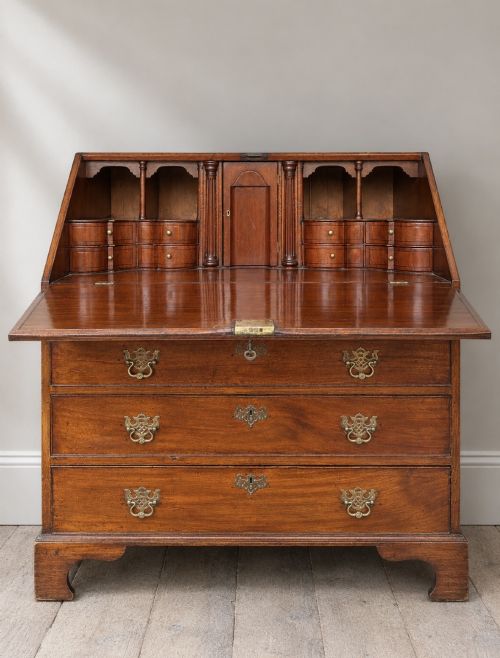
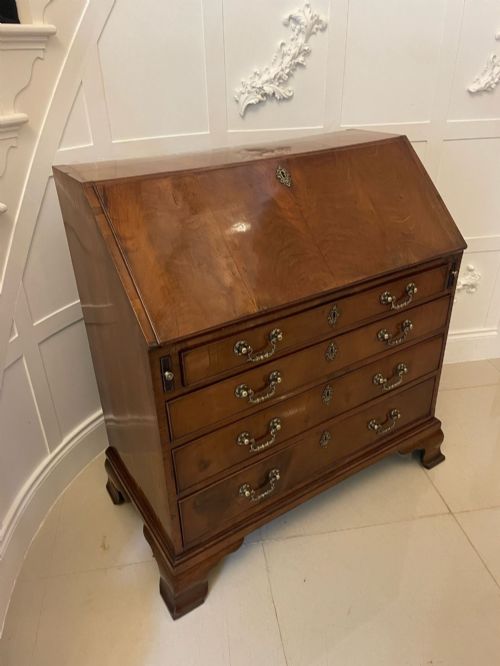
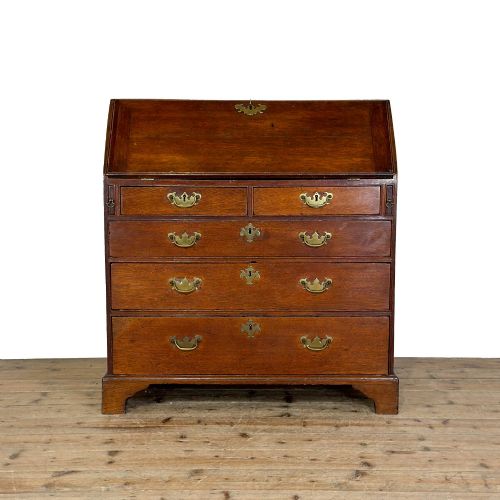
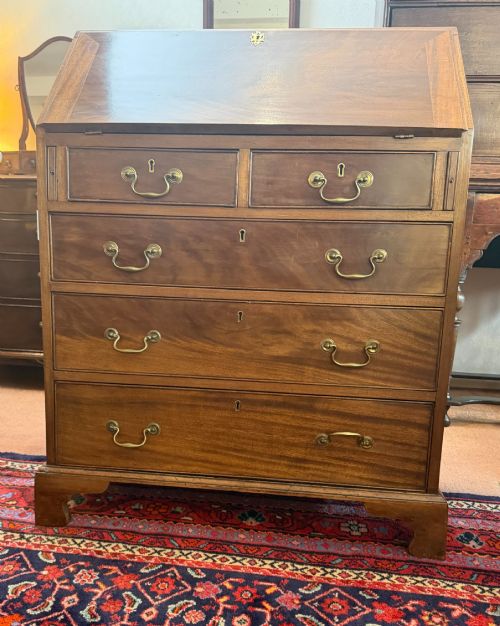
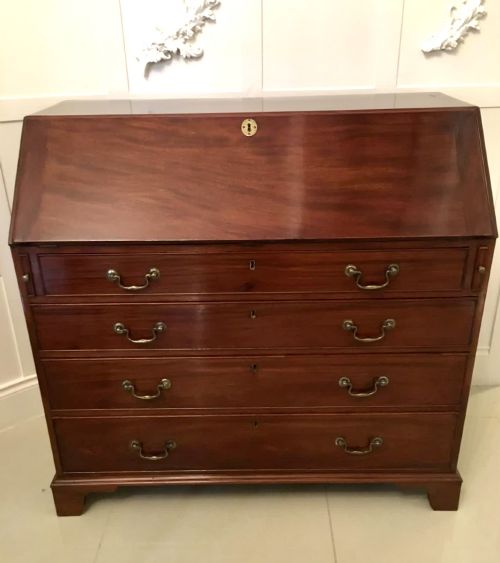
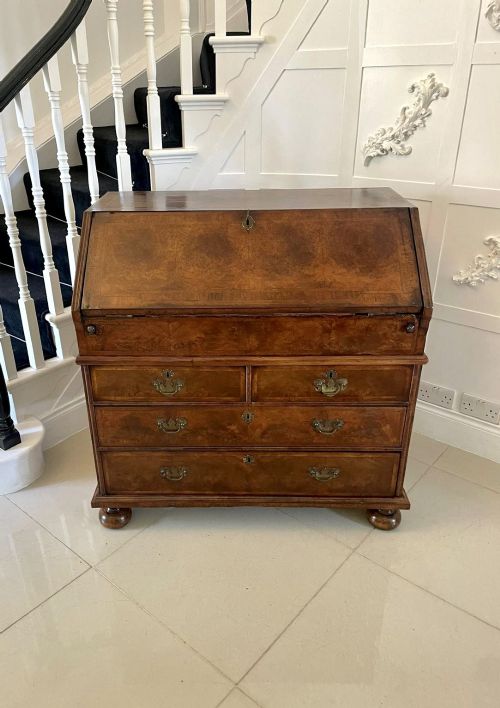
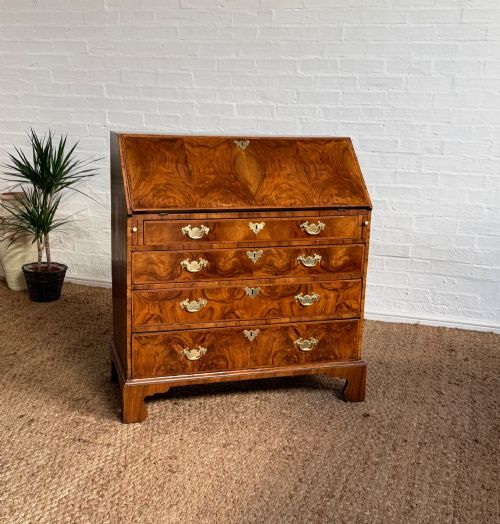
A georgian slanted bureau is a writing cabinet featuring a sloping fall-front flap that opens to reveal small drawers and pigeonholes. These pieces span the seventeenth, eighteenth, and nineteenth centuries, with later revivals appearing through the Edwardian era.
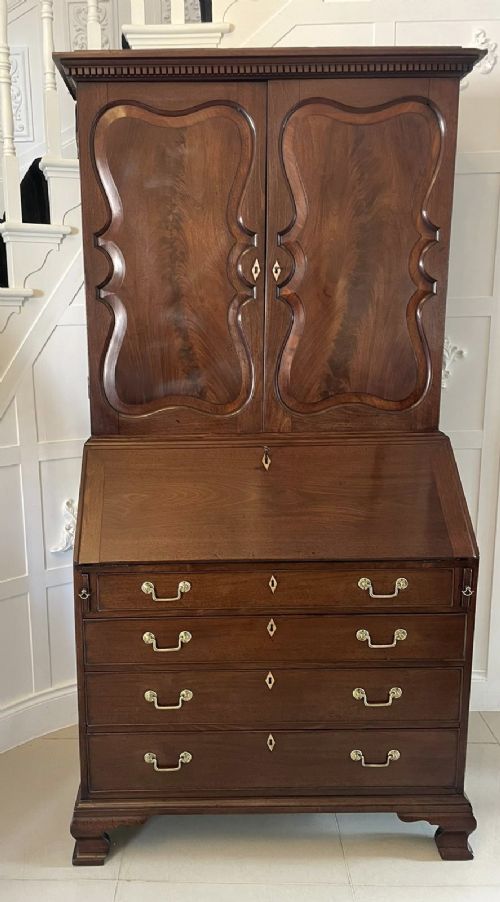
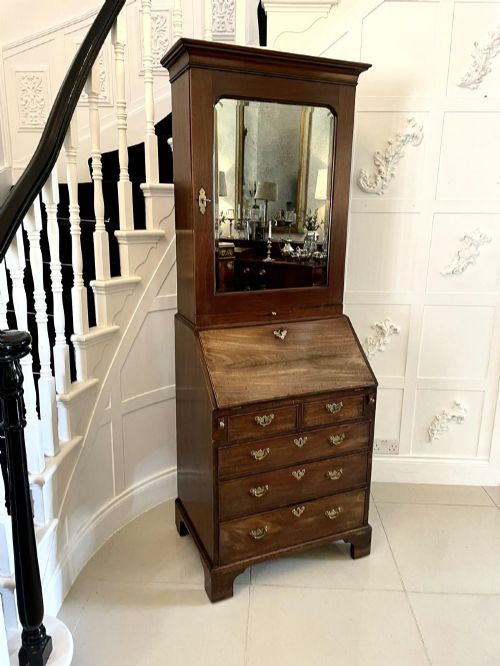
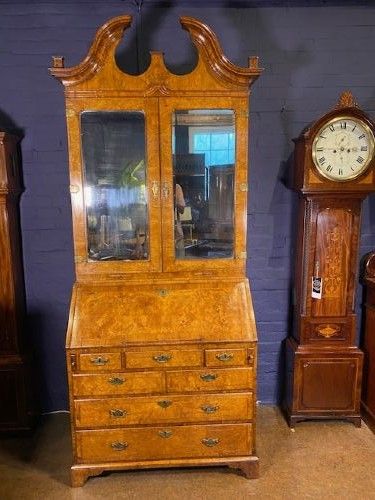
Buyers encounter freestanding slant-front desks alongside taller bureau bookcases featuring glazed upper sections. Oak and walnut examples from earlier periods share space with substantial eighteenth-century mahogany pieces and later interpretations.
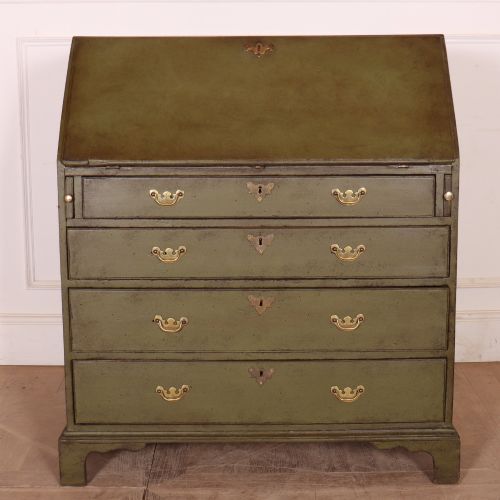
Simpler provincial writing desks and compact walnut or fruitwood examples on stands or legs appear regularly alongside grander multi-section cabinet pieces.
Materials and construction
Cabinetmakers built these pieces primarily using solid and veneered timbers including mahogany, oak, walnut, burr walnut, and fruitwood. Secondary woods and cedarwood appear inside drawers, whilst brass handles, escutcheons, and candle slides provide functional contrast.
Construction relies on framed panels, dovetail joints for drawer construction, and herringbone inlay for decorative surface enrichment. Leather writing surfaces inset into the fall-front flap provide a durable writing plane.
Several examples include hidden compartments designed for private letters, offering a secret hiding place that has outlasted generations of owners.
Assessing craftsmanship
Quality rests in the choice of timber figurations, such as highly figured walnut or flame mahogany veneers, matched carefully across the fall-front and drawer fronts. Superior examples show meticulous attention to internal stationery compartments, secret compartments, and stepped pigeonholes.
The crispness of brass hardware, the precision of dovetailing, and the retention of original bracket feet or sturdy stands distinguish finer pieces from later provincial interpretations or heavily altered items.
The Georgian Slanted Bureau Glossary
- Fall-front
- The hinged sloping flap that closes to conceal the inner writing desk and opens to form the writing surface. This panel bears the primary decorative wood veneers or timber grain.
- Fitted interior
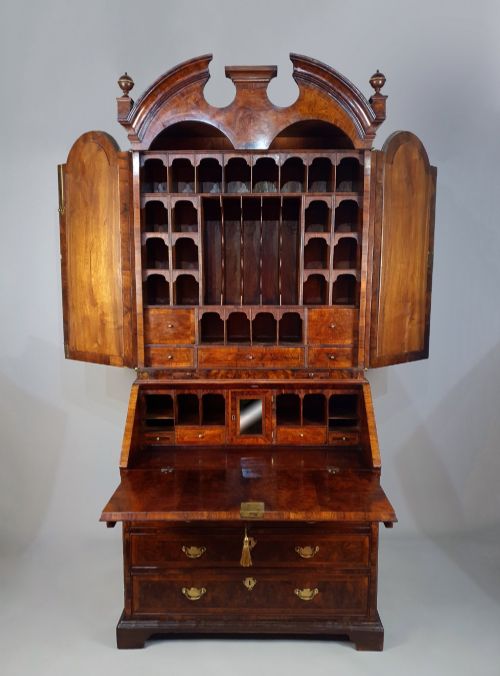
- The arrangement of small drawers, pigeonholes, and central compartments revealed when the fall-front opens. Finer versions include concealed compartments and stepped tiers.
- Bureau bookcase
- A two-part form combining a slanted writing bureau base with an upper shelving or cabinet section. Upper doors frequently feature glazed panels for book display.
- Herringbone inlay
- A decorative wood banding technique where small veneer segments are laid at angles resembling a fishbone pattern. This detail frames drawer fronts and cabinet doors on walnut pieces.
- Bracket feet
- Simple architectural feet supporting the base corners of the cabinet. They take shaped profile forms characteristic of eighteenth-century case furniture.
Georgian Slanted Bureau: Frequently Asked Questions
How do I use a bureau desk?
Lower the sloping front flap to create a flat writing surface above the internal compartments. Papers and writing tools rest securely inside the stationery pigeonholes when the flap closes.
Larger lower drawers provide concealed storage for household papers, linens, or personal items. Many designs include pull-out candle slides to illuminate the workspace after dark.
What is the difference between oak and walnut pieces?
Oak examples tend to originate from earlier periods or provincial workshops, showing robust construction and visible grain patterns. They suit rustic or traditional interiors.
Walnut and mahogany versions often display finer veneers, decorative crossbanding, and more formal architectural proportions developed for eighteenth-century reception rooms.
How can I date a slanted bureau?
Examine the timber selection, drawer construction methods, and hardware styles to determine the likely period of origin. Seventeenth and early eighteenth-century pieces frequently utilise oak or burr walnut with herringbone banding.
Mid-eighteenth-century items often feature figured mahogany with bracket feet, whilst Edwardian and later pieces show machine-cut dovetails or revival styling characteristics.
Where should I place a bureau in my home?
These compact writing cabinets fit well in studies, living rooms, or hallways where floor space is limited. The enclosed writing surface keeps paperwork concealed from view when not in use.
Ensure placement avoids direct sunlight to protect antique timber finishes and delicate wood veneers from fading over time.