


Tabletop Bureau Desk
A tabletop bureau desk is a compact writing cabinet designed to sit upon a larger surface, offering a clever blend of storage and writing space.
Tabletop Bureau Desk
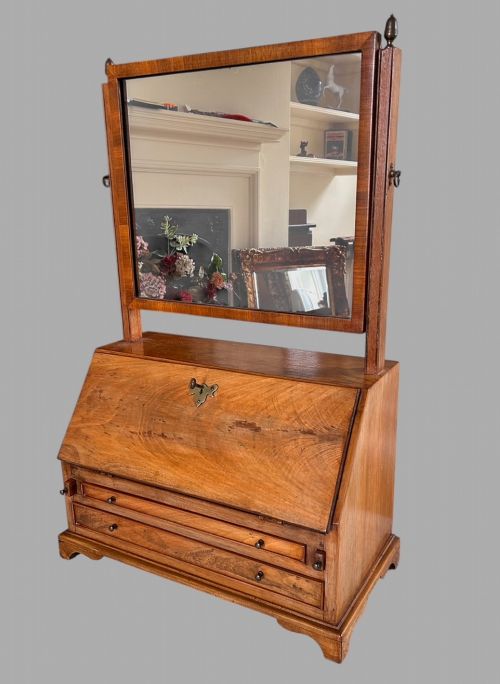
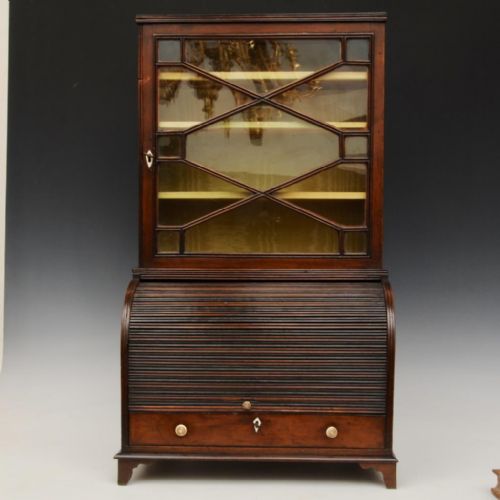
A tabletop bureau desk brings together miniature writing compartments and compact cabinetry across periods ranging from the seventeenth century through to the Edwardian era. These pieces combine the sloping fall front or fitted interior of a full-sized bureau with a portable tabletop scale.
Buyers frequently encounter variations that double as dressing table mirrors or toilet mirrors, incorporating drawers and pigeonholes beneath swinging glass plates. The selection spans walnut, oak, elm, and mahogany, reflecting styles from William and Mary and Queen Anne through to Victorian and Edwardian interpretations.
Makers designed these small desks for boudoirs and dressing rooms where floor space was scarce yet private correspondence required a dedicated station. The forms include bureau mirrors, escritoires with revolving tabernacles, and miniature fall-front desks.
Materials and construction
Cabinet makers utilised figured walnut, burr walnut, mahogany, satinwood, and oak, often applying decorative veneers and marquetry to the exterior surfaces. Brass hardware such as hinges, escutcheons, and small drop handles functionalised the compartments and drawers.
Internal joinery relied on traditional dovetailing for the small drawers that line the fitted interiors behind the fall fronts. Mirror glass was integrated into dressing table variants, sometimes accompanied by pivoting frames and candle sconces.
Listings feature periods spanning the seventeenth century, the Georgian era, and the Victorian period, constructed in oak, walnut, and mahogany.
Assessing quality and execution
The sophistication of the internal fitment separates standard examples from finer pieces, particularly where secret compartments, revolving tabernacles, or intricate pigeonholes are present. Figured timber veneers such as burr walnut or exotic satinwood indicate deliberate selection by the maker.
The integrity of the structural joinery, the crispness of the marquetry inlay, and the retention of original brass hardware and mirror glass determine the overall standing of an individual piece.
The Tabletop Bureau Desk Glossary
- Bureau
- A writing desk featuring a sloping hinged lid or fall front that opens to reveal a fitted interior of pigeonholes and small drawers.
- Escritoire
- A writing cabinet or desk, typically fitted with multiple internal drawers and compartments for correspondence.
- Marquetry
- The art of applying pieces of veneer to a structure to form decorative patterns, frequently seen in floral or geometric designs on Dutch pieces.
- Tabernacle
- A central architectural compartment or shrine-like recess within a desk interior, sometimes mounted on a revolving mechanism.
- Toilet Mirror
- A small adjustable looking glass mounted on a dressing box or bureau base, designed for a tabletop.
Tabletop Bureau Desk: Frequently Asked Questions
What is a tabletop bureau desk?
A tabletop bureau desk is a portable writing cabinet designed to rest upon a table, chest, or dressing surface rather than standing on its own legs.
These pieces provide internal storage compartments, small drawers, and a writing surface or fall front on a miniature scale.
How were these small desks used historically?
Owners utilised them in bedchambers, boudoirs, and dressing rooms for private correspondence, record-keeping, and grooming.
The combined bureau and dressing mirror forms allowed users to write letters and tend to their appearance at the same piece of furniture.
What woods appear most often?
Makers constructed these pieces using native and imported timbers, with oak and walnut appearing frequently in earlier seventeenth and eighteenth-century examples.
Mahogany, satinwood, elm, and burr walnut veneers also feature strongly across Georgian, Victorian, and Edwardian interpretations.
How do you distinguish between periods?
Structural characteristics, joinery techniques, and decorative styles help indicate the period of origin, from William and Mary marquetry to Victorian walnut.
Specific stylistic indicators include Queen Anne taste profiles, Dutch floral inlay, and Edwardian miniature proportions.