


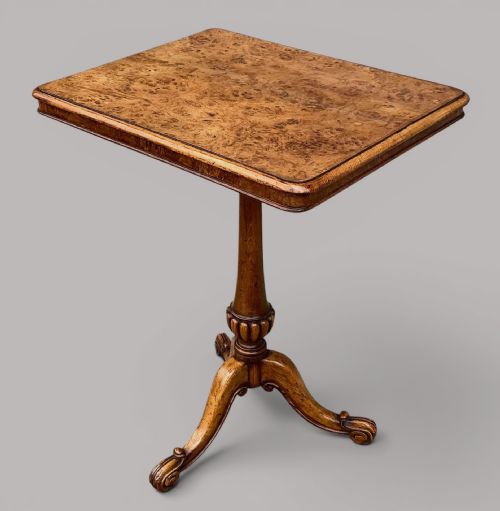

Georgian Style Tilt Table
A georgian style tilt table brings clever engineering and rich timber into a room, folding away neatly when not in use.
Georgian Style Tilt Table
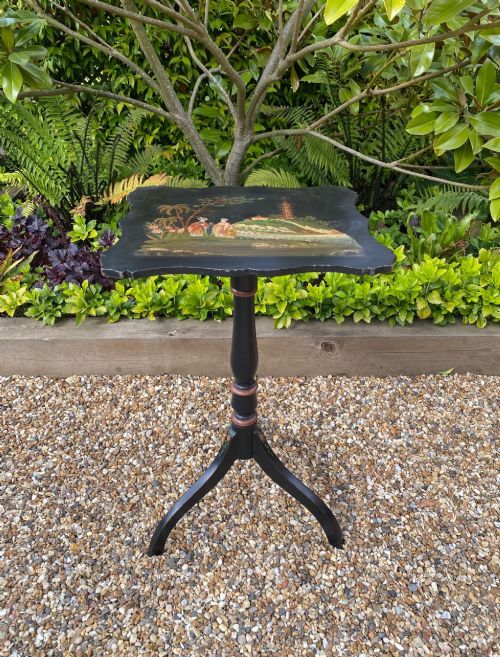
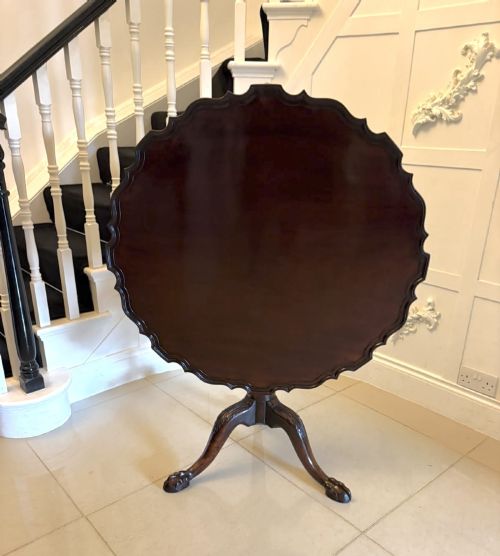
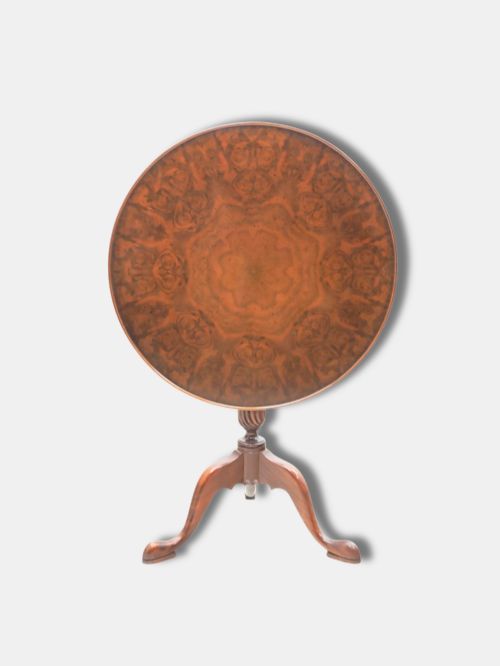
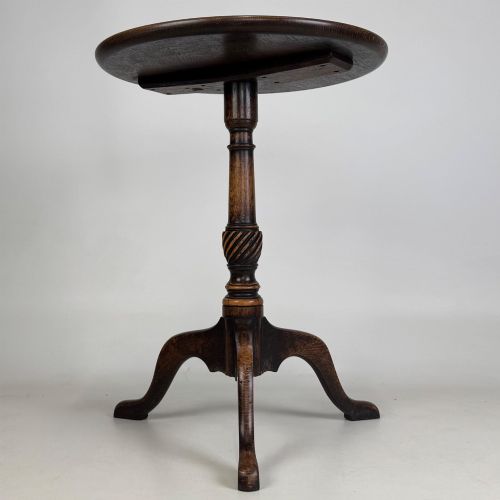
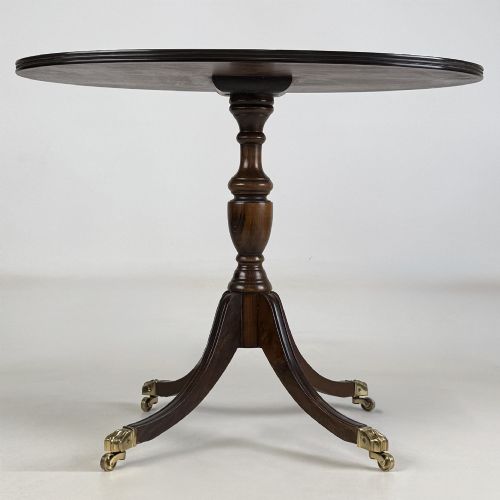
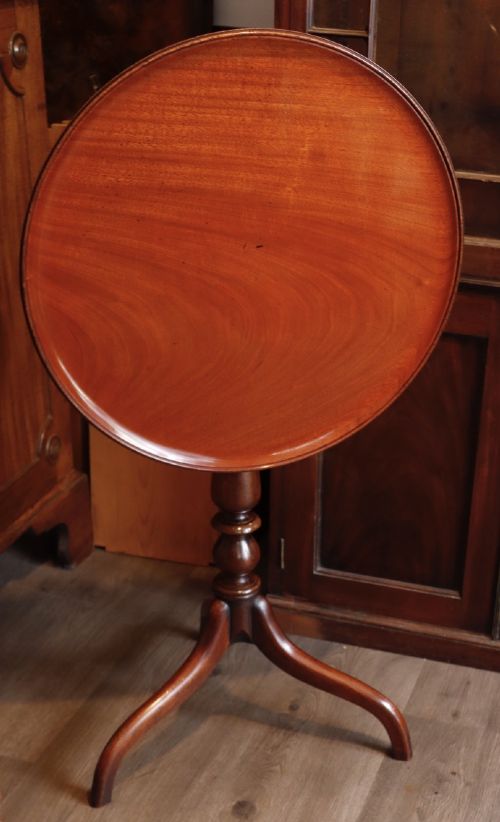
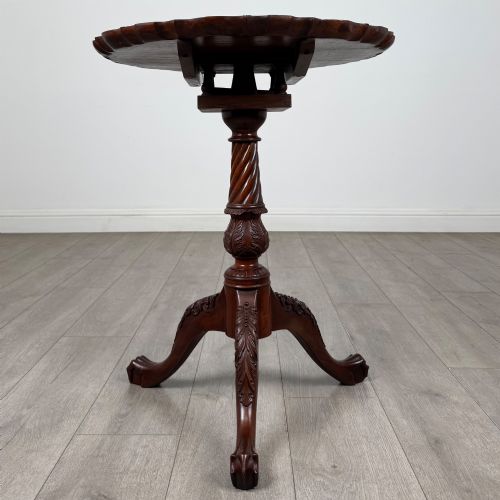
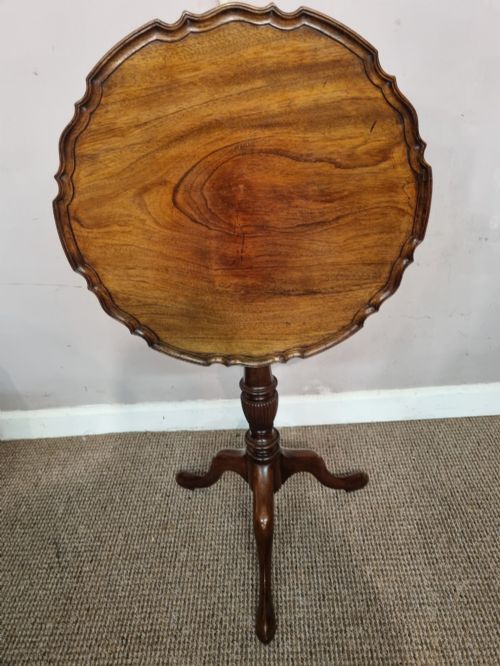
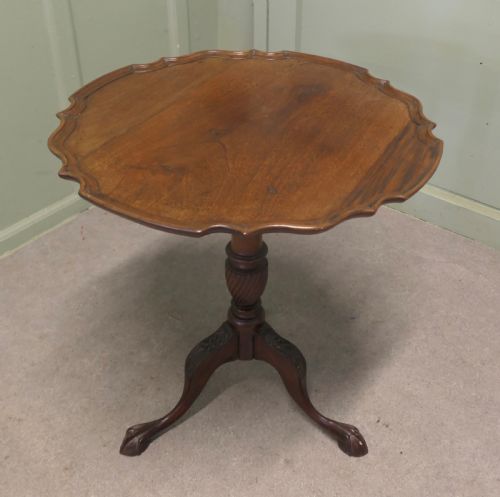
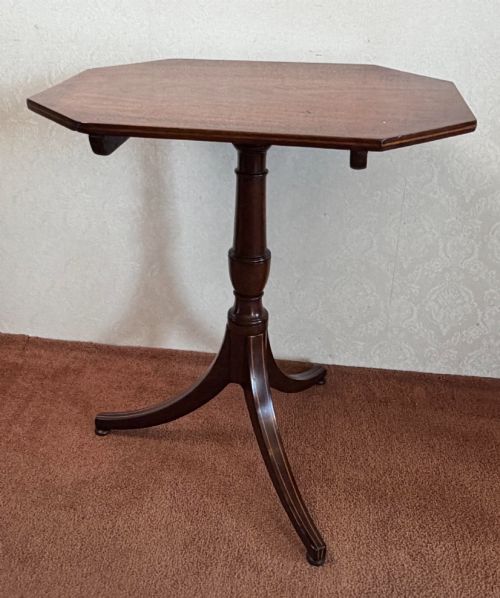
A georgian style tilt table functions as a flexible piece of furniture designed to pivot its top against the central pillar for compact storage or display. These tables appear across periods ranging from the eighteenth century through the twentieth century, embracing Georgian, Regency, and Victorian revivals alongside original pieces.
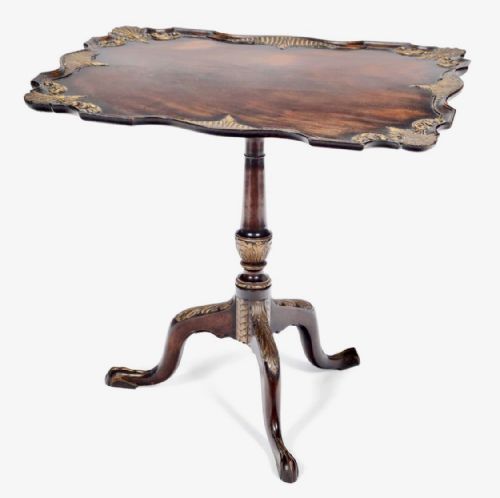
The format typically manifests as a tripod table, wine table, or occasional table resting on a central pedestal with three splayed legs. Walnut, mahogany, oak, and yew form the primary timber choices found across these examples, sometimes detailed with boxwood inlay or carved edges.
Buyers encounter authentic eighteenth-century George III examples alongside later Georgian style revivals from the nineteenth and early twentieth centuries. Forms stretch from small wine tables and supper tables to larger breakfast and dining formats.
How they were made
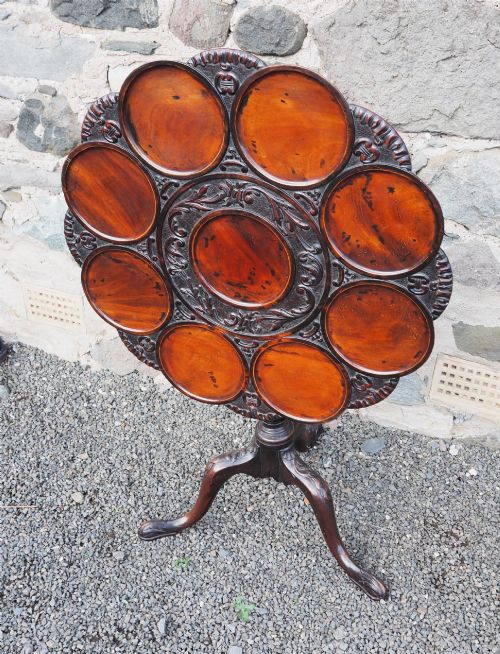
Cabinetmakers utilised solid timbers such as mahogany, oak, walnut, and yew, turning central pedestals on lathes and shaping tripod legs by hand. Tops were constructed from single or multiple boards joined carefully, occasionally featuring carved piecrust borders or intricate boxwood inlay.
Many examples incorporate a birdcage mechanism beneath the circular top, allowing the surface to both rotate and tilt via a small wooden frame and pivot pins. Parcel gilding, carving, and lacquer work appear on specific decorative items, demonstrating advanced joinery and finishing skills.
Listings feature mahogany, oak, walnut, burr yew, and yew timber across Georgian, Regency, and Victorian periods.
What varies in quality
Quality rests upon the crispness of the timber carving, the choice of figured veneers like burr yew or burr oak, and the mechanical precision of the tilting action. Superior pieces display smooth rotation without wobble in the central birdcage or pillar block.
Proportion and stability define the better examples, where the splayed tripod legs securely balance the weight of the circular top without strain on the joints. Finer execution shows in balanced grain patterns, delicate boxwood stringing, and well-defined mouldings.
Gillows·George Bullock
The Georgian Style Tilt Table Glossary
- Tilt-top table
- A table with a hinged mechanism allowing the top to pivot vertically for storage against a wall or in a corner.
- Birdcage
- A timber framework beneath the table top that enables it to rotate horizontally and tilt vertically on pivot pins.
- Piecrust edge
- A raised, decorative carved border shaped in undulating curves resembling pastry work on a pie.
- Tripod base
- A pedestal support resting on three splayed legs, providing stability for small occasional and wine tables.
- Occasional table
- A small, movable table intended for versatile use around a room as a lamp, wine, or side table.
Georgian Style Tilt Table: Frequently Asked Questions
What is a birdcage mechanism?
A birdcage mechanism is a small wooden assembly situated directly beneath the table top. It permits the surface to turn in a full circle and tilt upright when not in use.
This clever engineering allowed eighteenth-century households to clear floor space quickly by pushing the folded tables against the walls.
Where were these tables used?
These tables served primarily as flexible furniture for tea drinking, dining, or holding lamps and wine in parlours and drawing rooms. Their portability meant servants could move them easily wherever extra surface space was required.
Today they function effectively as accent pieces, lamp tables, or bedside stands in traditional and contemporary interiors alike.
How do I distinguish eighteenth-century pieces from later revivals?
Eighteenth-century pieces display authentic construction marks, hand-cut joinery, and timber patination developed over centuries of use. Later Georgian revival pieces from the Victorian and Edwardian eras often show machine tooling or different secondary woods beneath.
Examining the underside, pivot mechanism, and timber shrinkage helps clarify the exact period of manufacture.