






Georgian Style Sewing Table
A georgian style sewing table brings compact elegance to a room, offering clever compartments designed for needlework.
Georgian Style Sewing Table
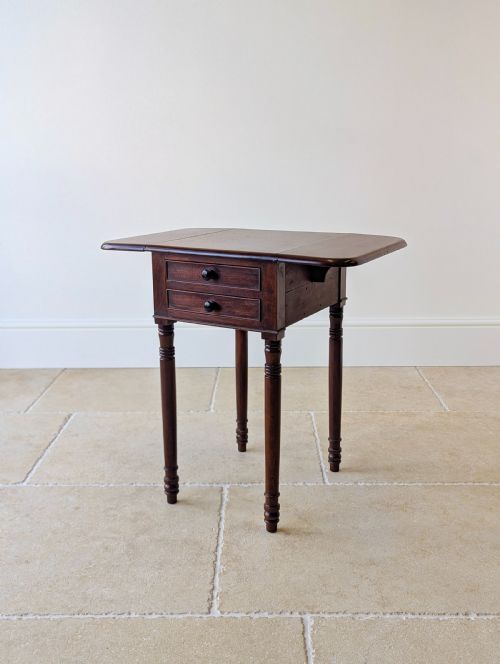
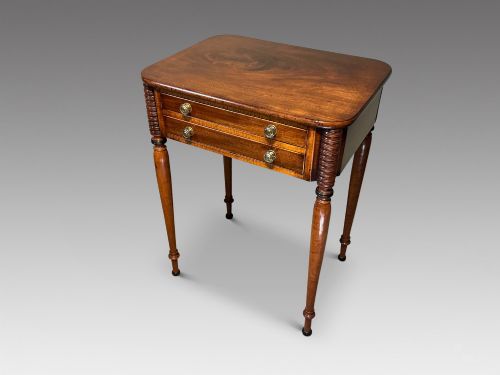
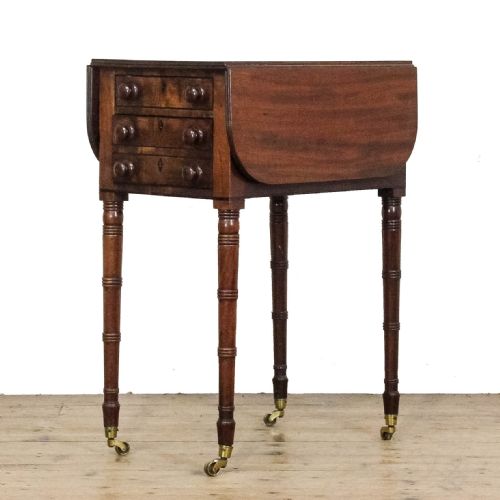
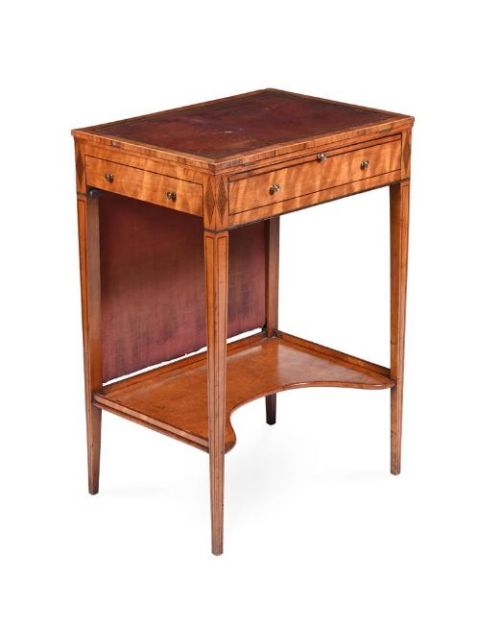
When you search for a georgian style sewing table, you encounter pieces designed primarily for domestic needlework and small writing tasks. These tables frequently feature drop leaves, multiple drawers, and hanging fabric bags for storing thread and cloth.
The selections span various periods including the Regency, George III, and Victorian eras, alongside later revivals from the Edwardian period and nineteen-twenty. Mahogany and rosewood dominate the material record, often complemented by satinwood and figured walnut veneer.
Forms overlap with side tables, work tables, and occasional tables, meaning many examples double as compact writing desks. You will commonly find pieces exhibiting stylistic traits associated with Gillows of Lancaster or Sheraton Revival designs.
How they were made
Cabinetmakers utilised dense timbers such as mahogany and rosewood for the primary carcases, adding figured walnut veneer and satinwood for visual contrast. Fine inlay work in contrasting woods and delicate brass stringing frequently adorn the drawer fronts and tops.
Construction techniques involve sturdy drop-leaf mechanisms, turned pedestals, and fitted interior compartments lined with silk or fabric. Brass castors often support the legs, allowing these multifunctional items to move easily around a drawing room.
Listings feature mahogany, rosewood, satinwood, and figured walnut veneer across multiple periods from the eighteenth century to nineteen-twenty.
What varies in quality
The choice of timber underpins the distinction between standard production and superior craftsmanship, particularly in the selection of figured veneers and solid mahogany. The crispness of inlaid details and the complexity of the interior fittings separate ordinary examples from fine workshop output.
Structural integrity depends on the precision of the joinery in the drawers and drop-leaf supports. Attribution to notable cabinetmakers like Gillows or John MacLean elevates a piece through documented execution and refined proportions.
Gillows·John MaClean
The Georgian Style Sewing Table Glossary
- Work table
- A small domestic table fitted with drawers and a fabric bag for holding sewing materials. It served as a functional piece for ladies in the drawing room.
- Drop leaf
- A hinged flap on the side of a table that can be raised to extend the surface area or lowered when space is restricted. These flaps are supported by swing brackets.
- Pembroke table
- A small rectangular table featuring two hinged leaves on opposite sides. It typically includes one or more small drawers.
- Satinwood
- A durable, yellowish timber prized for its smooth grain and lustrous finish. It was frequently used for veneers and decorative inlay during the eighteenth and nineteenth centuries.
Georgian Style Sewing Table: Frequently Asked Questions
What is a sewing table?
A sewing table is a compact furniture piece designed to hold needles, thread, and fabric within built-in drawers and hanging bags.
These tables gained popularity for domestic needlework and writing, offering a functional surface that suited drawing rooms and boudoirs.
How do I spot a Gillows piece?
Gillows pieces are identified by high-grade mahogany, precise construction, and distinctive hardware or stamped signatures.
The workshop tradition of Lancaster and London produced refined proportions and clever mechanical drawers designed for needleworkers.
Where were sewing tables placed?
These tables sat beside chairs or sofas in principal reception rooms where ladies gathered for needlework.
Their compact size and mobility on brass castors allowed owners to reposition them easily near windows for daylight.
How do I date an antique work table?
Dating relies on identifying the primary timbers, construction methods, and stylistic motifs present in the legs and drawer fronts.
Earlier eighteenth-century examples feature satinwood and restrained inlay, while nineteenth-century versions often incorporate rosewood and pedestal bases.