

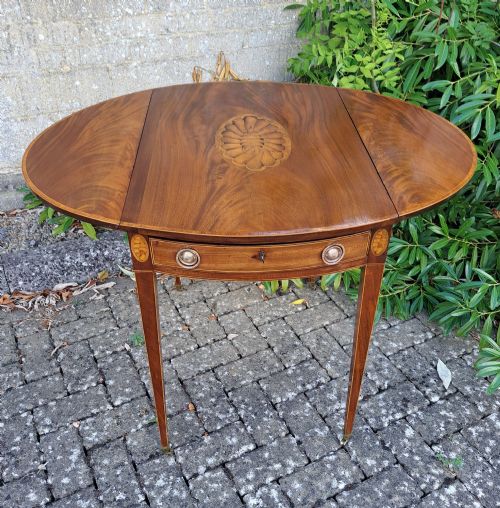


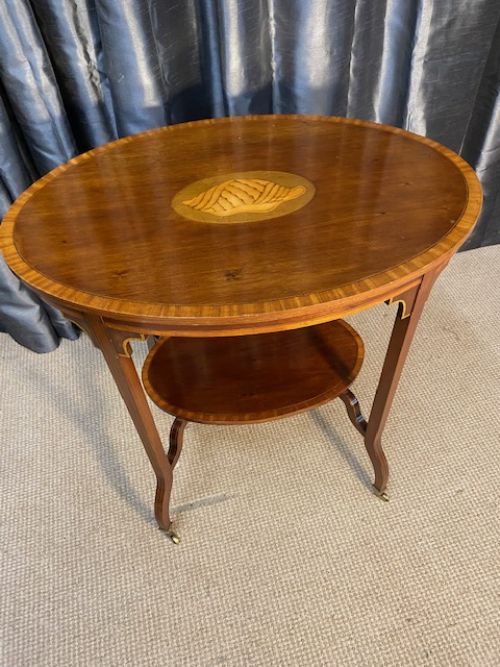
Shell Inlaid Table
These shell inlaid table pieces bring refined woodwork and detailed marquetry into a room, offering both practical surface space and traditional craftsmanship.
Shell Inlaid Table
A shell inlaid table combines solid timber construction with intricate decorative marquetry featuring shell motifs. These items appear primarily in Edwardian and Georgian forms, reflecting distinct periods of domestic furniture design.
Buyers encounter occasional pieces, Pembroke tables, and work tables within this selection. Each format serves a functional purpose in a traditional interior layout.
The origin spans classic British cabinet-making traditions, particularly the Sheraton revival style and George III designs. These variations provide distinct silhouettes ranging from kidney-shaped trays to rectangular drop-leaf formats.
How they were made
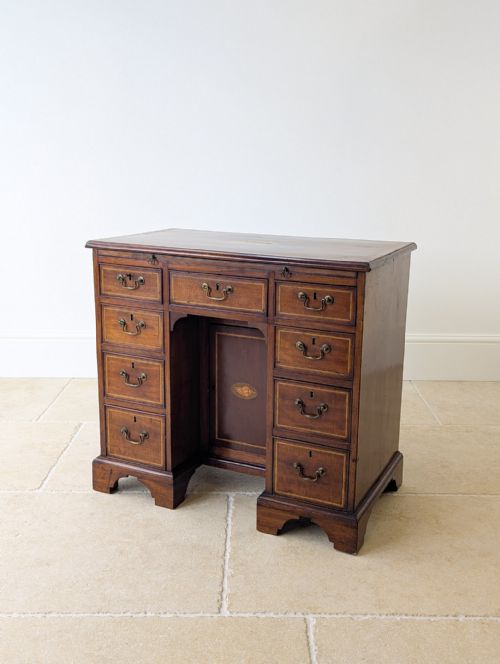
Mahogany serves as the primary structural timber across these listings, providing a stable and rich foundation for decorative work. Workshops paired this with satinwood and boxwood to create contrasting borders and central motifs.
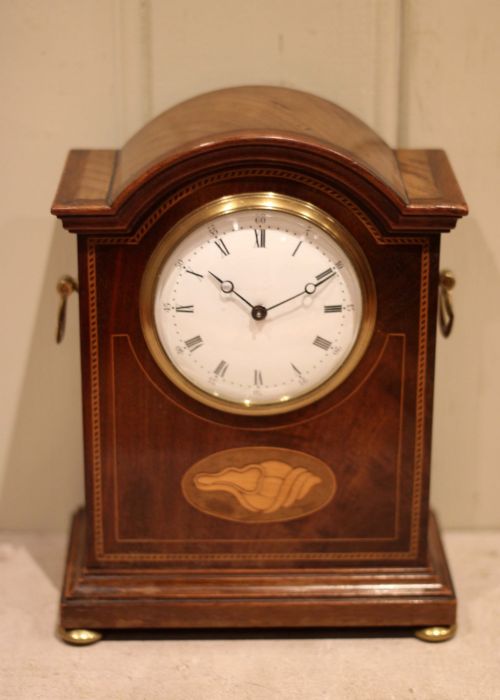
Marquetry and inlay techniques involve cutting thin sections of contrasting woods and embedding them flush into the timber surface. Artisans utilised these precise methods to form the characteristic shell designs.
Shell Inlaid Table Retail Price Guide 2026
Typical asking prices for shell inlaid table among the pieces listed under this phrase on Sellingantiques today, from the lower quarter to the upper quarter. They describe what is for sale here now, not the wider market.
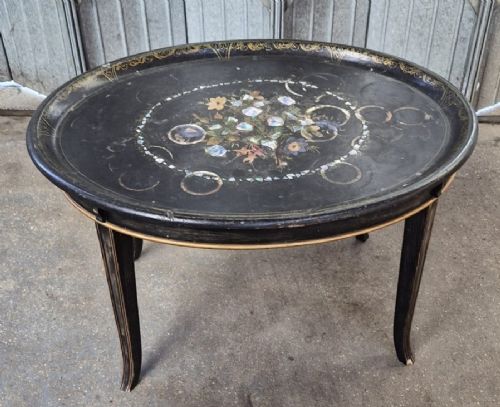
Papier-mâché tray tables offer a surprisingly robust and glossy alternative to solid wood.
What varies in quality
The precision of the inlay work separates standard examples from finer pieces. Tighter joints between the contrasting woods and the primary timber indicate superior cabinet-making skill.
The choice of secondary timbers and the depth of the mahogany grain influence the overall visual weight of the furniture. Finer examples display carefully selected grain patterns that complement the central shell motif without distraction.
W. Burton
The Shell Inlaid Table Glossary
- Pembroke table
- A small form of table featuring two hinged drop leaves on opposing sides. It often includes a single drawer and slender legs.
- Marquetry
- The art of applying pieces of veneer to a structure to form decorative patterns. This technique creates the pictorial shell designs seen on the timber surface.
- Satinwood
- A durable hardwood native to Ceylon and India known for its lustrous golden-yellow appearance. Cabinet-makers used it extensively for contrasting inlays.
- Sheraton revival
- A late nineteenth and early twentieth century design movement inspired by the late eighteenth-century neoclassical furniture of Thomas Sheraton. It favours light proportions and classical motifs.
- Work table
- A small movable piece designed for sewing and needlework, typically equipped with compartments or a fabric bag beneath the top.
Shell Inlaid Table: Frequently Asked Questions
What is a shell inlaid table used for?
These pieces function primarily as decorative occasional furniture in sitting rooms and studies. They provide a stable surface for lamps, books, or small decorative objects while adding warmth through traditional timber.
Specific formats like work tables also offer integrated storage for needlework or small accessories. Their modest proportions allow them to sit comfortably beside seating or against hallway walls.
How do I identify a Georgian piece?
Georgian examples date from the eighteenth century and typically display heavier timber construction with restrained neoclassical proportions. The use of mahogany and boxwood inlay in these items reflects the prevailing taste of the period.
Later Edwardian revival pieces often copy these earlier motifs but generally utilise lighter framing and brighter satinwood contrasts. Examining the interior secondary woods and construction joints helps clarify the actual period of manufacture.
How should I care for mahogany furniture?
Keep these items away from direct sunlight and strong heat sources to prevent the timber from drying out and cracking. Maintain a stable room temperature to protect both the wood and the delicate inlay work.
Dust the surface regularly with a soft, dry cloth rather than applying heavy silicone polishes. Occasional application of traditional beeswax helps nourish the grain without building up a residue.
What distinguishes Edwardian revival pieces?
Edwardian revival items date from the early twentieth century and frequently reinterpret eighteenth-century Sheraton designs. They combine mahogany frames with crisp satinwood inlays and lighter structural proportions than their predecessors.
These pieces emerged during a period of renewed interest in classical British cabinet-making. They offer traditional aesthetics combined with the lighter scaling favoured in Edwardian domestic interiors.