
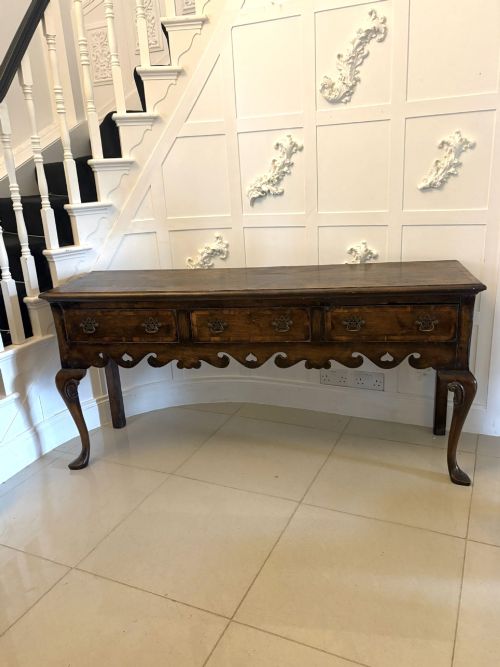
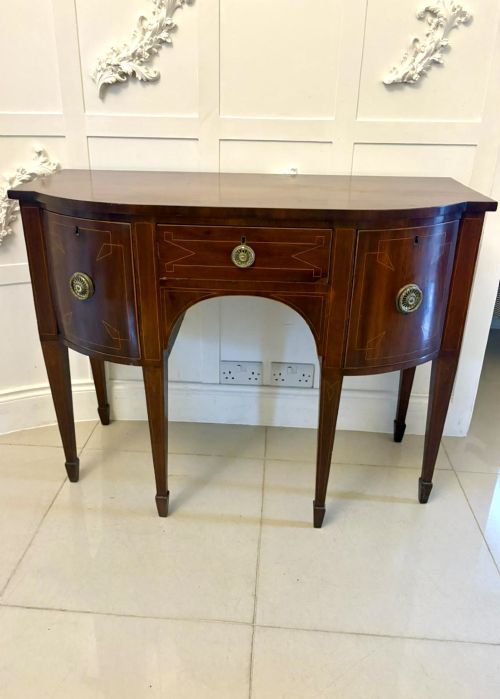
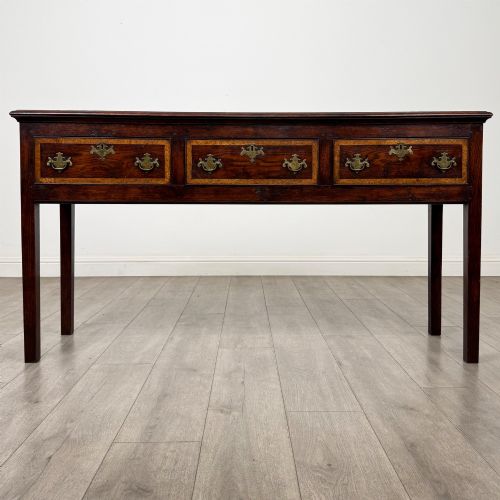
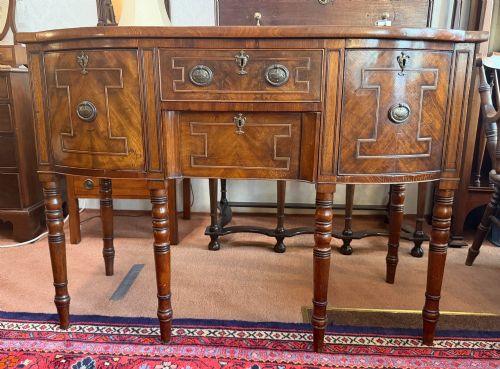
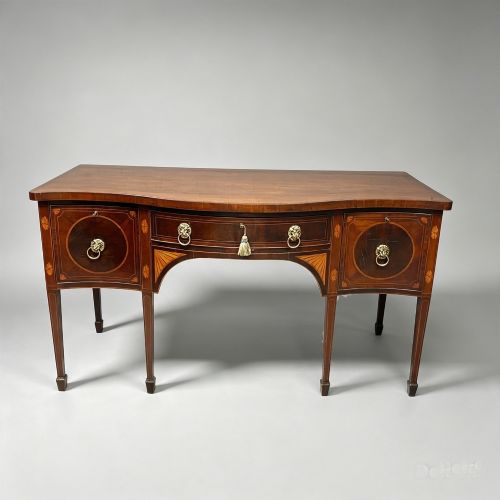
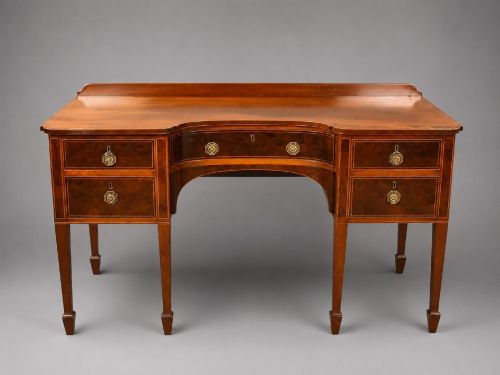
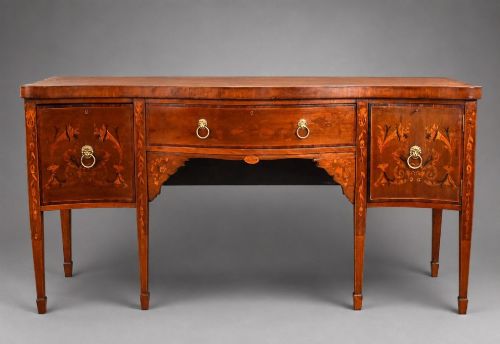
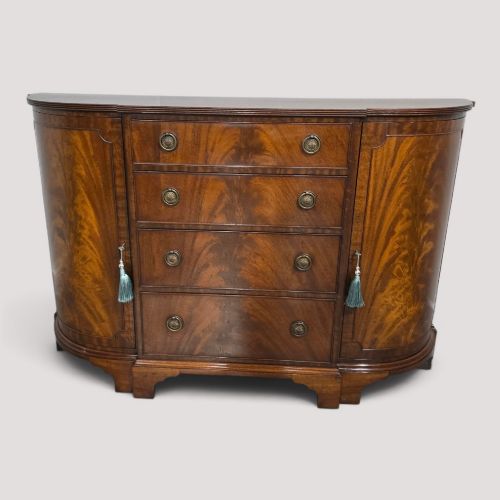
Georgian Style Server
A georgian style server brings formal dining storage and serving space into a room through classical proportion and rich cabinet timber.

Georgian Style Server
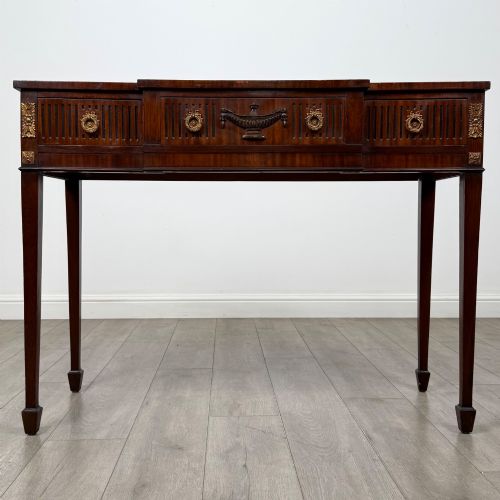
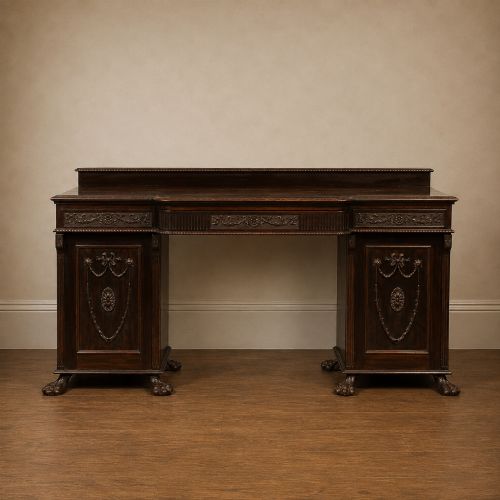
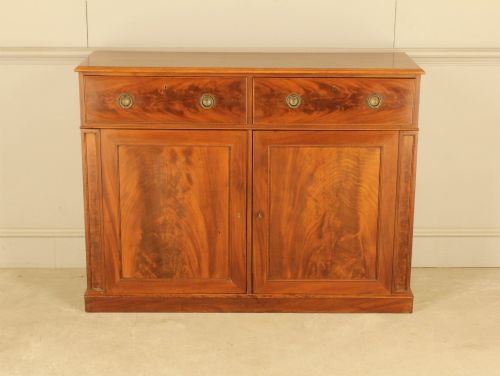
A georgian style server functions as a sideboard, serving table, or dresser base designed for dining rooms and hallways. These pieces provide surface space for food presentation alongside drawers and cupboards for tableware storage.
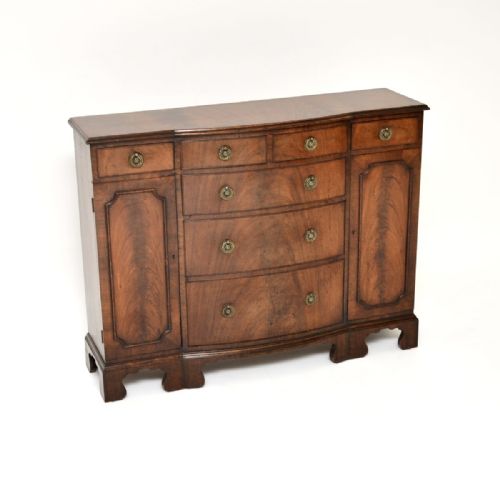
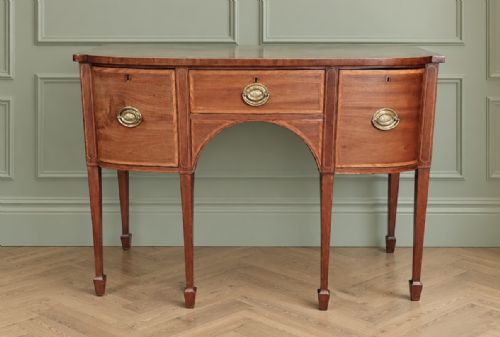
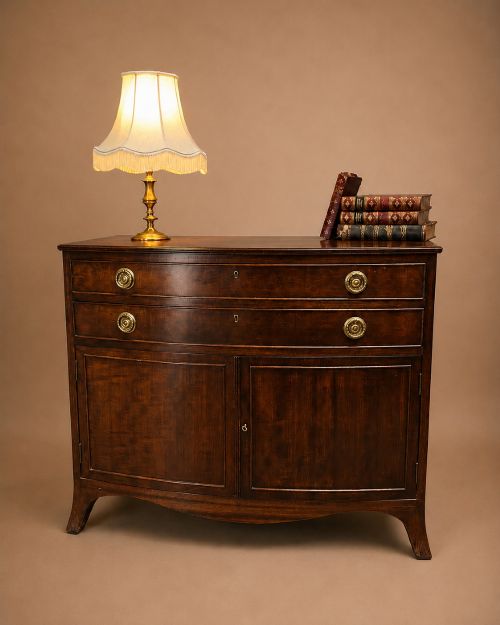
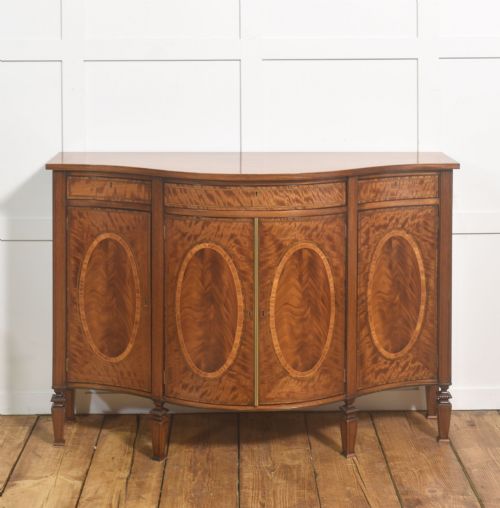
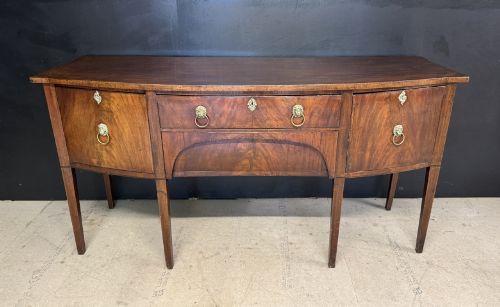
The selections on this page span genuine eighteenth-century pieces alongside later revival interpretations from the nineteenth and twentieth centuries. Mahogany and oak dominate the forms, appearing in straight, bow-front, serpentine, and breakfront shapes.
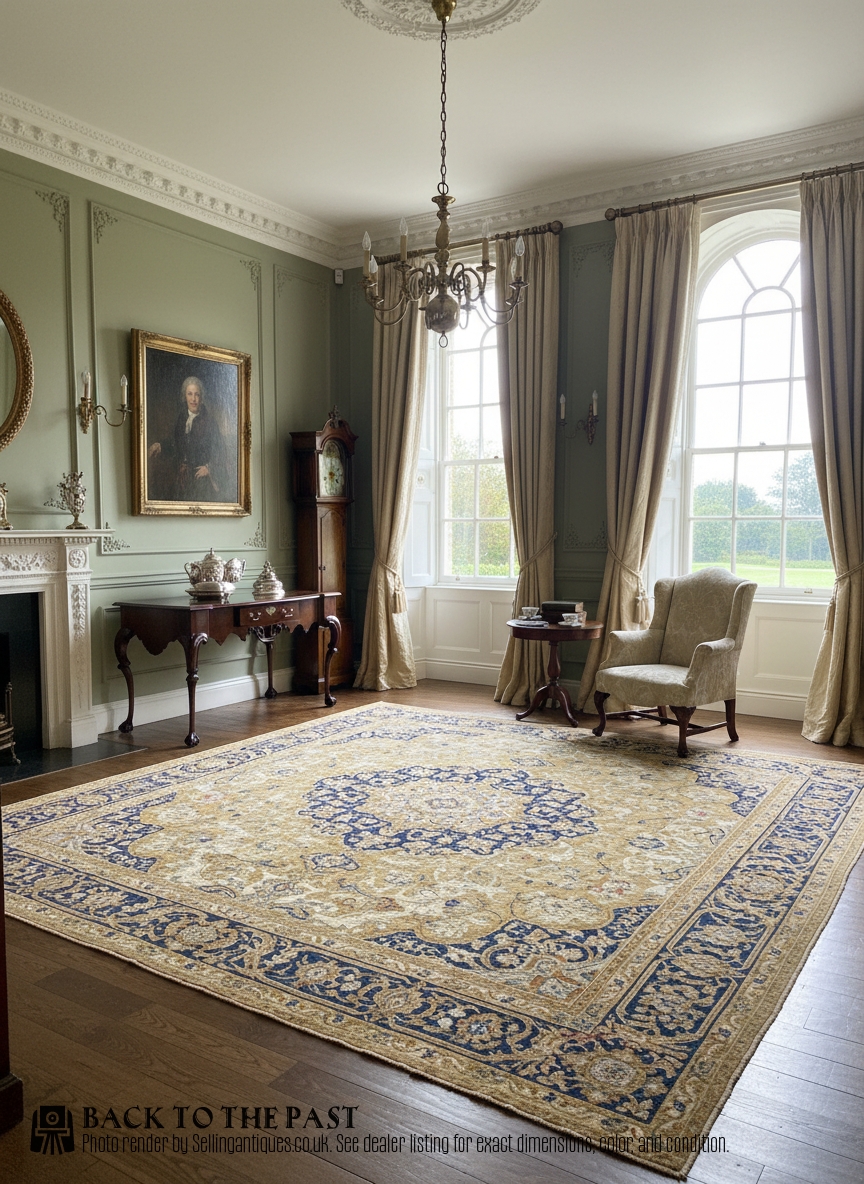
Materials and construction
Cabinetmakers relied heavily on solid and veneered mahogany, oak, and walnut, often accenting primary surfaces with boxwood and satinwood stringing or inlay. Carved details such as cabriole legs and paw feet appear alongside geometric mouldings and potboard bases.
Makers shaped timber into serpentine, bow-front, and breakfront profiles requiring advanced joinery. Secondary woods like pine frequently form internal drawer linings and back panels.
Georgian Style Server Retail Price Guide 2026
Typical asking prices for georgian style server among the pieces listed under this phrase on Sellingantiques today, from the lower quarter to the upper quarter. They describe what is for sale here now, not the wider market.
Listings feature oak, mahogany, walnut, satinwood, and pine across periods ranging from the seventeenth century through to nineteen-thirty.
The markers of finer execution
Superior examples display crispness in their inlaid veneers and stringing, with timber selections chosen for pronounced figure, curl, or grain consistency. Structural refinement shows in the smoothness of drawer operation and the precise fit of cupboard doors.
The integration of classical design elements, such as proportioned brass hardware and well-defined carving on legs and pedestals, separates standard production from exceptional cabinetwork.
M. D. Miller and Sons·Gillows
The Georgian Style Server Glossary
- Serpentine
- A front profile curving outward at the centre and inward toward the ends, demanding high skill from the cabinetmaker.
- Bow-front
- A convexly curved front outline that softens the rectangular mass of a heavy sideboard.
- Breakfront
- A cabinet design where the central section projects forward from the flanking outer sections.
- Potboard
- An open slatted lower shelf found on traditional dresser bases, originally intended for pots and heavy dishes.
- Stringing
- Thin lines of contrasting wood inlaid into the primary surface to create geometric borders.
Georgian Style Server: Frequently Asked Questions
What is the difference between a sideboard and a server?
A server generally provides a lighter, more compact surface primarily intended for presenting food during meals. Sideboards often incorporate heavier storage capacities with multiple deep drawers and enclosed cupboards for larger dining services.
Both forms share similar stylistic lineages, drawing on eighteenth-century proportions and revival designs.
Where should I place a georgian style server?
These pieces suit dining rooms, grand hallways, and drawing rooms where surface area for display or serving is required. Their linear profiles allow them to sit flush against walls without dominating floor space.
Purchasers frequently utilise them as serving stations during gatherings or as lamp tables in larger reception spaces.
How do I distinguish genuine eighteenth-century pieces from later revivals?
Examination of internal timbers, secondary woods like pine or oak, and hand-cut joinery helps indicate age. Revival pieces from the Edwardian era and the twentieth century often utilise machine-sawn components and standardised fixings.
Style nomenclature in listings often distinguishes original Georgian manufacture from later Sheraton and Adam revivals.
What wood types are most common?
Mahogany forms the majority of formal servers, frequently featuring figured, curl, or flame grain patterns. Oak appears predominantly in earlier country pieces, dresser bases, and heavy sideboard forms.
Satinwood, burr walnut, and boxwood appear as decorative veneers and inlay accents.