
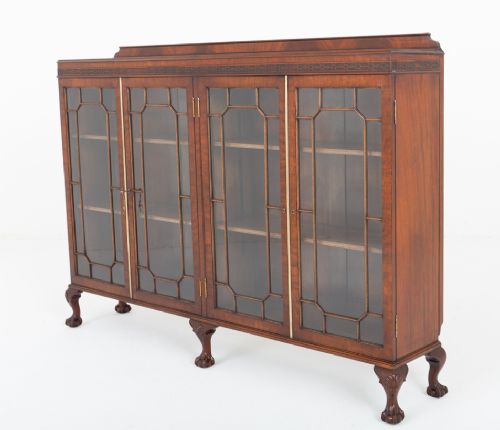
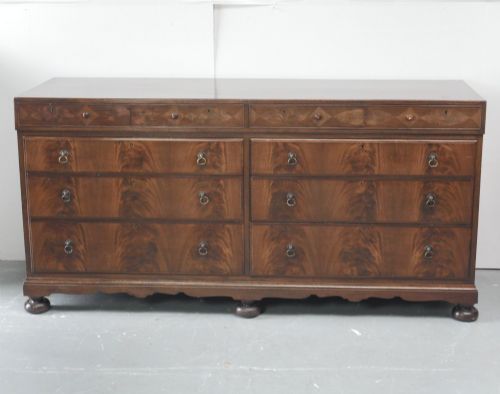
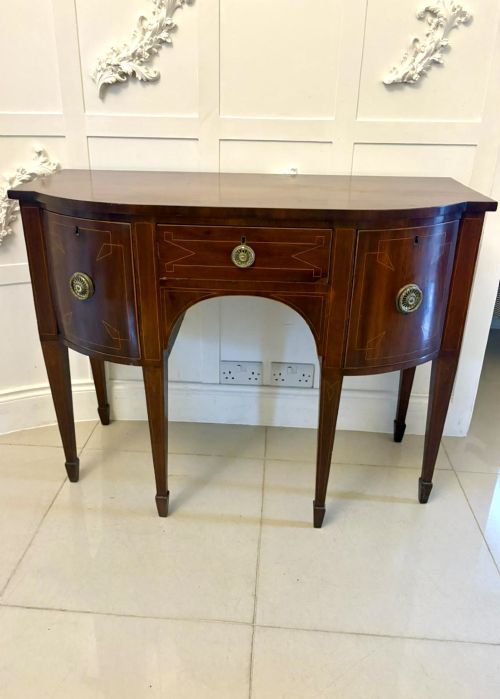
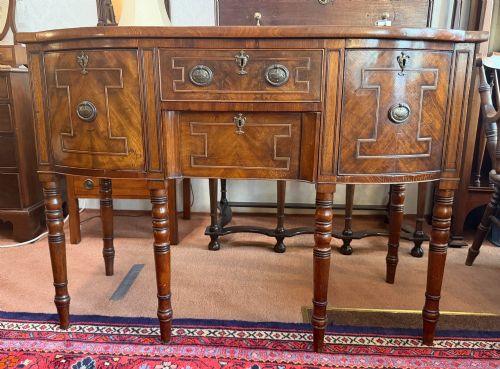
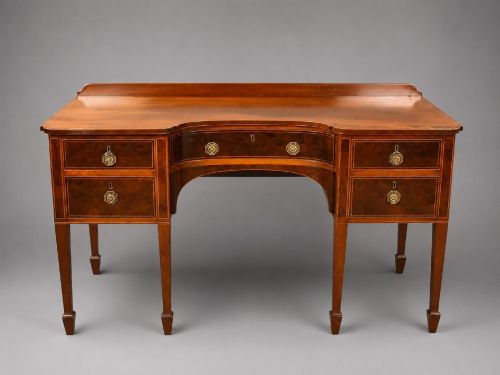
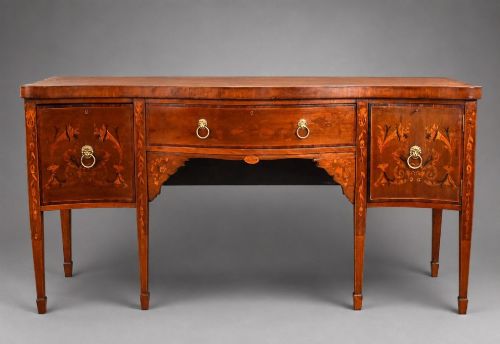
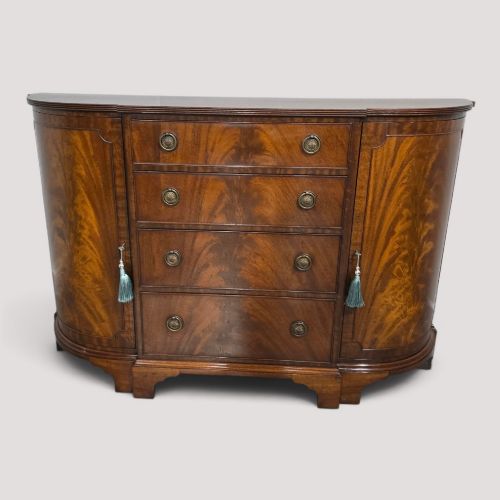
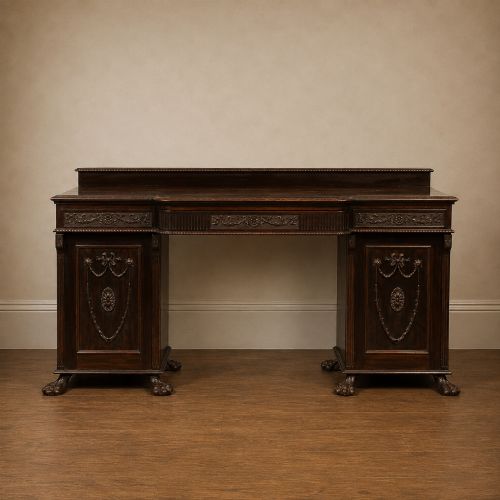
Georgian Style Mahogany Credenza
A georgian style mahogany credenza brings refined British cabinet-making into a room, offering structured storage and timeless timber figures.
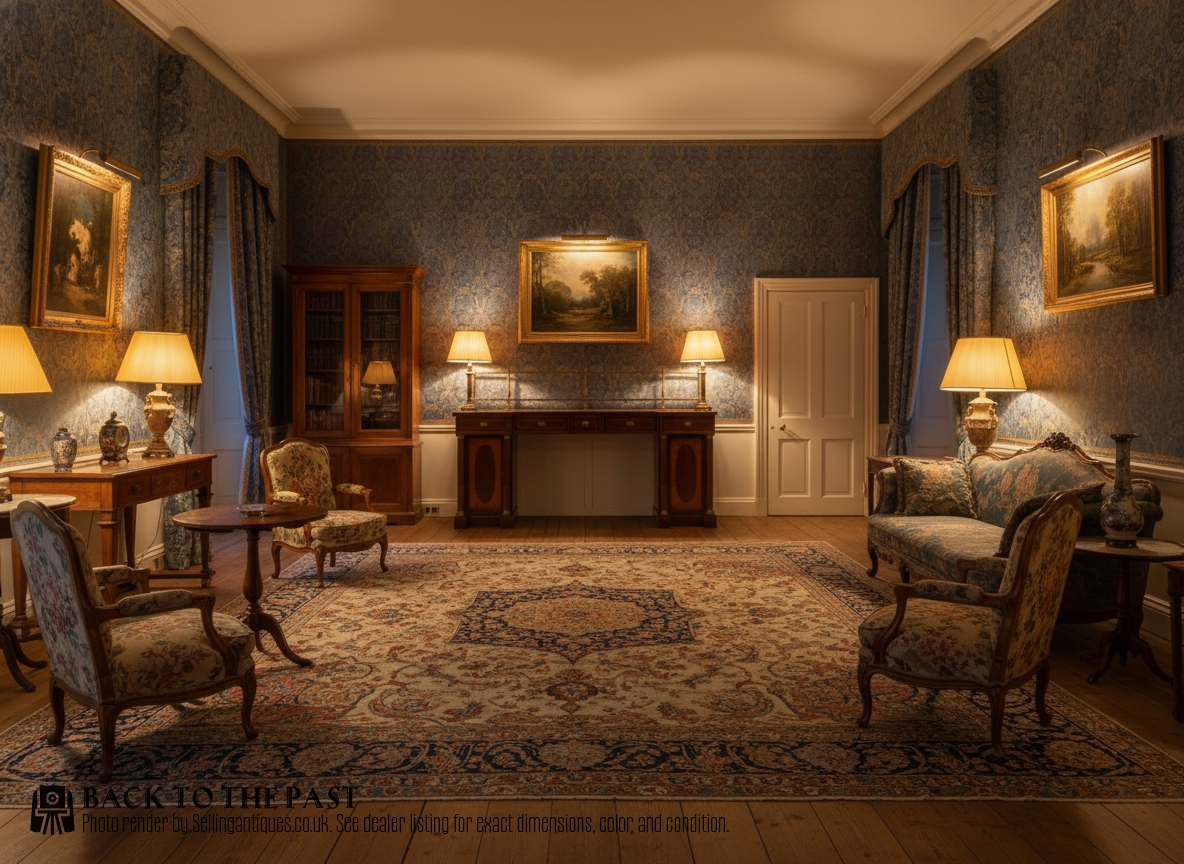
Georgian Style Mahogany Credenza
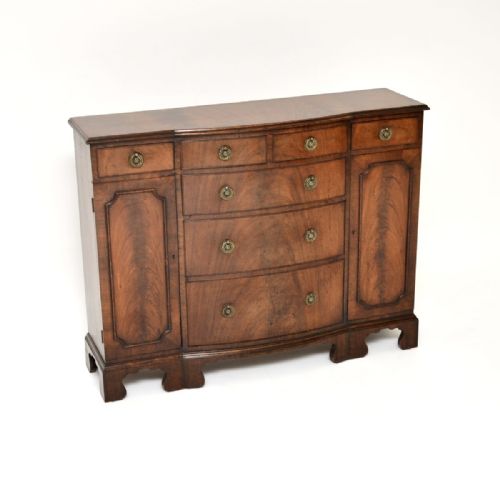
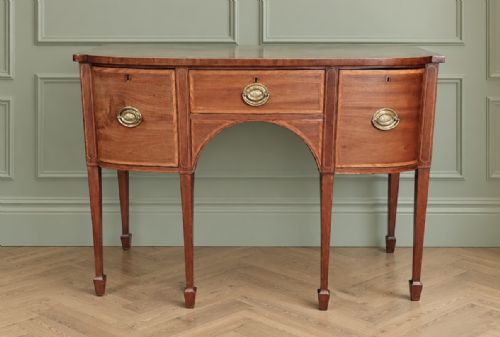
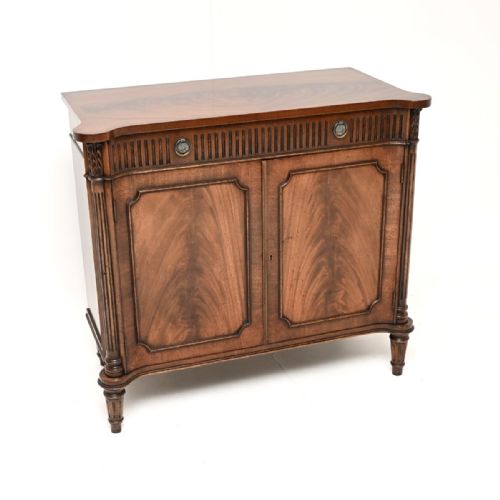
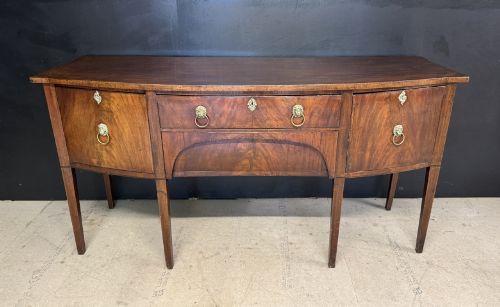
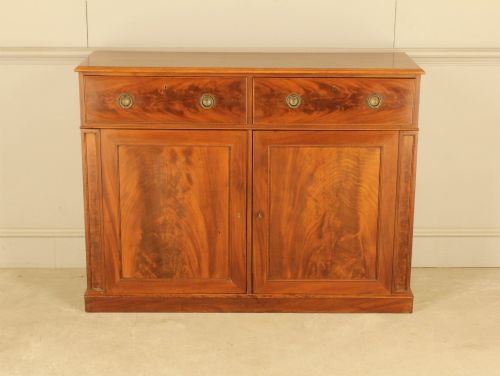
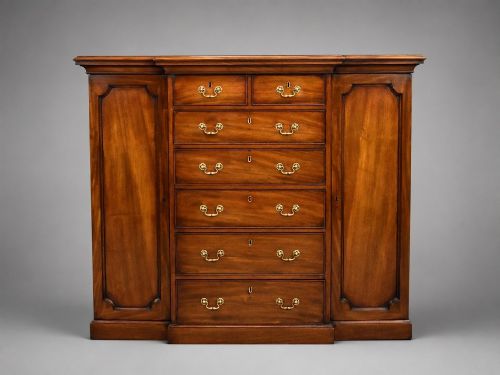
When searching for a georgian style mahogany credenza, buyers encounter a variety of substantial storage furniture designed for dining rooms and grand halls. These pieces primarily manifest as sideboards, side cabinets, and breakfront servers, reflecting both genuine Georgian origins and later revival periods.
Makers and workshops from different eras adopted traditional forms, combining functional cupboard space with decorative drawers. Identifying the exact period involves examining timber patination, structural carcass construction, and decorative stringing.
Materials and construction techniques
Makers utilised solid mahogany and flame mahogany veneers over secondary timbers such as oak, achieving deep natural reddish-brown tones through careful polishing. The timber grain was selected to highlight natural figures on drawer fronts and cabinet doors.
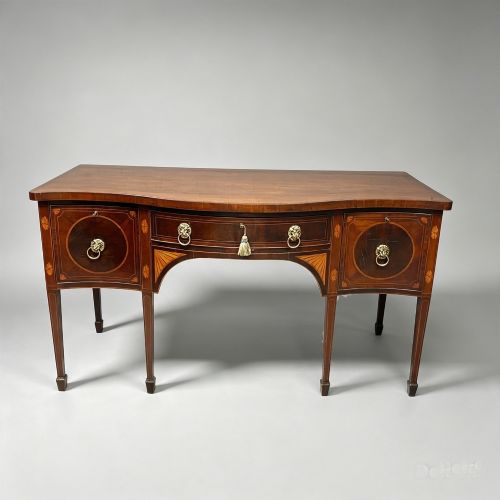
Inlaid decoration frequently incorporates contrasting light timbers like satinwood and boxwood, arranged in delicate stringing or neoclassical motifs. Brass hardware, including handles and escutcheons, provides functional and visual accents across the various styles.
Primary materials recorded across the selection include solid mahogany, flame mahogany, brass fittings, and satinwood stringing.
Markers of superior execution
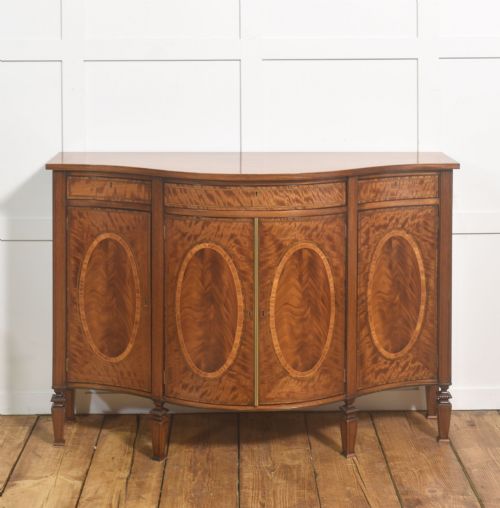
Quality rests upon the selection of timber figures, particularly the use of highly figured flame mahogany veneer matched symmetrically across the front panels. Superior examples display crisp, fine-line inlay work in satinwood and boxwood without gaps or misalignment.
Structural integrity and proportional harmony separate exceptional pieces from standard workshop output. Finely executed carcase joinery, substantial brass fittings, and well-balanced serpentine or bow-front curves indicate accomplished craftsmanship.
Whytock and Reid·M D Miller and Sons·Maple and Co
The Georgian Style Mahogany Credenza Glossary
- Serpentine front
- A convex centre flanked by concave curves, creating a fluid undulating shape on the front of a sideboard.
- Bow-front
- A convexly curved front profile that projects outward, commonly utilised on sideboards and cupboards.
- Flame mahogany
- A veneer cut from the fork of the mahogany tree, producing a distinctive fire-like or feather pattern in the wood grain.
- Satinwood inlay
- Contrasting decorative wood inserts prized for their pale, golden yellow lustre.
- Breakfront
- A piece of furniture where the central section projects forward from the flanking outer sections.
Georgian Style Mahogany Credenza: Frequently Asked Questions
Where should I place a sideboard?
These large storage pieces traditionally anchor a dining room wall, providing a surface for serving food and storing tableware within deep cupboards and drawers.
Their substantial proportions also suit spacious hallways or living rooms where they serve as focal points beneath large mirrors or artwork.
How do I care for mahogany?
Maintain the polished timber surface by dusting regularly with a soft, dry cloth and avoiding placement near direct heat sources or strong sunlight.
Apply a traditional beeswax polish occasionally to nourish the grain and preserve the rich natural lustre of the wood.
How can I tell the period?
Dating relies on examining construction methods, timber selection, secondary woods, and hardware details such as dovetailing and drawer linings.
Revival pieces from the Edwardian era or the nineteen-twenties often emulate earlier eighteenth-century George III designs while retaining characteristics of their own period.