
Georgian Style Library Chair
A georgian style library chair brings solid mahogany, deep leather and a steady reading posture straight into the study.
Georgian Style Library Chair
When you search for a georgian style library chair, you encounter sturdy seating designed for reading, writing, and quiet contemplation in a study or library. These pieces range from authentic eighteenth-century examples to later revivals produced across the nineteenth and early twentieth centuries.
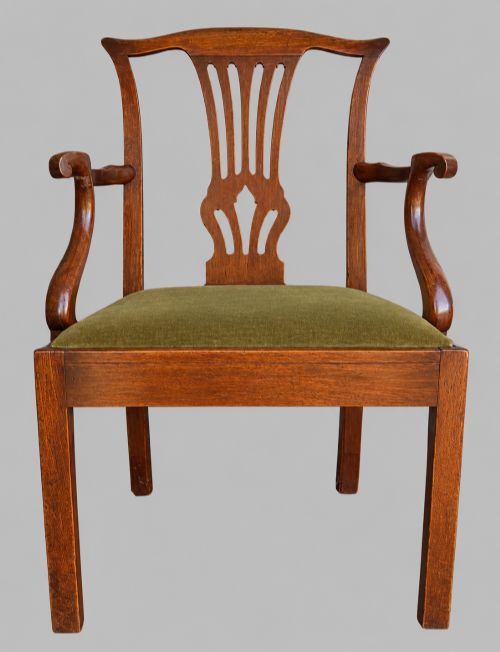
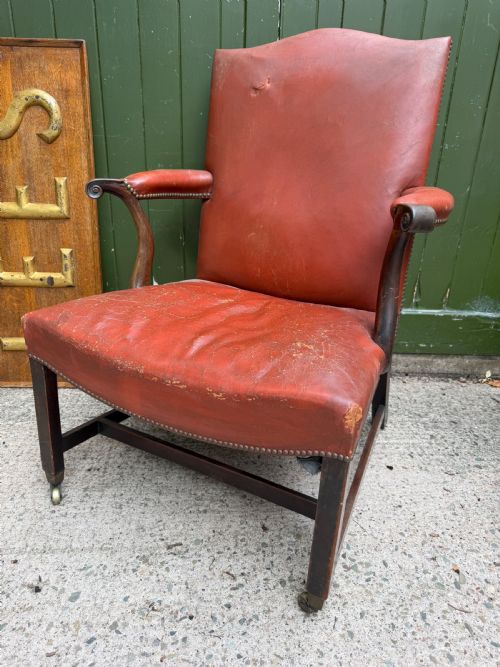
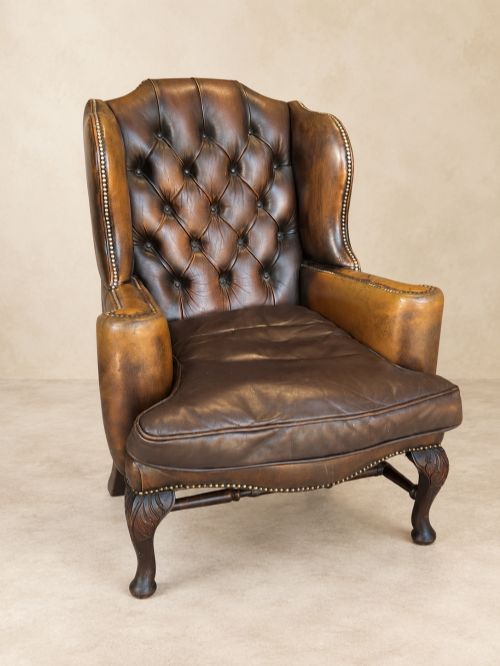
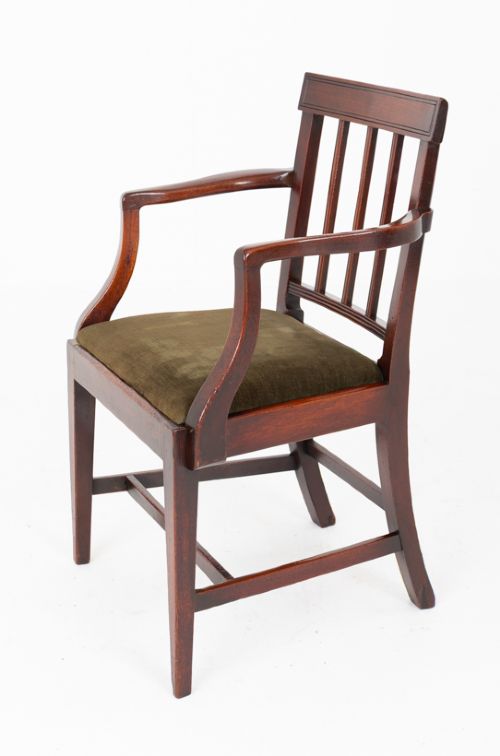
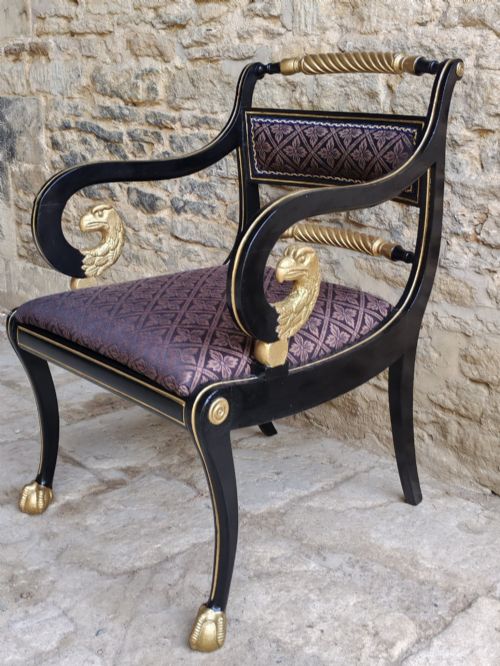
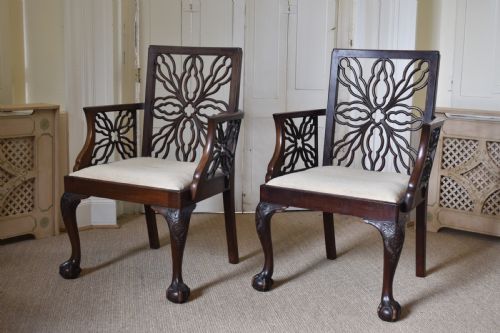
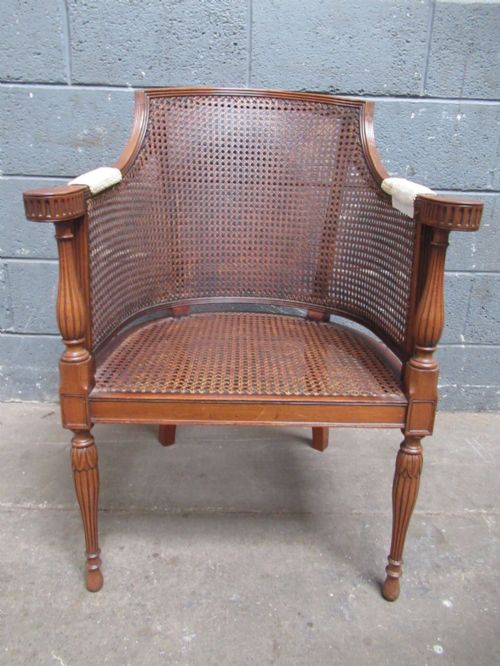
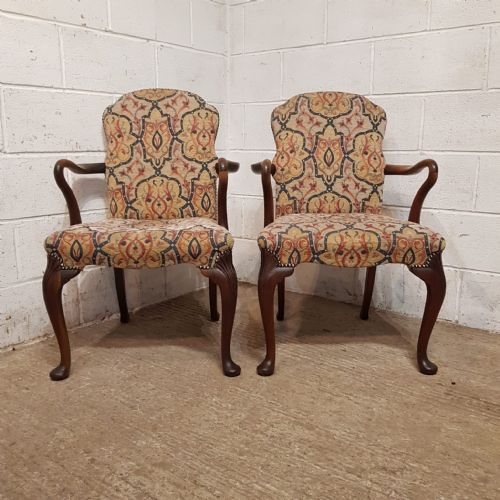
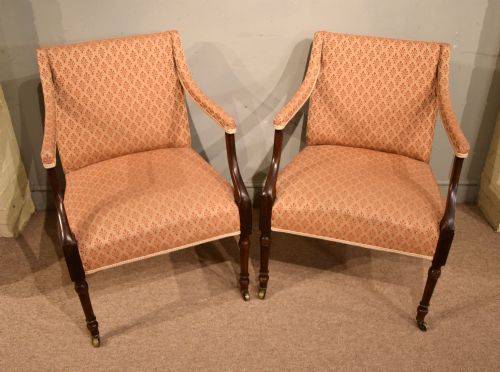
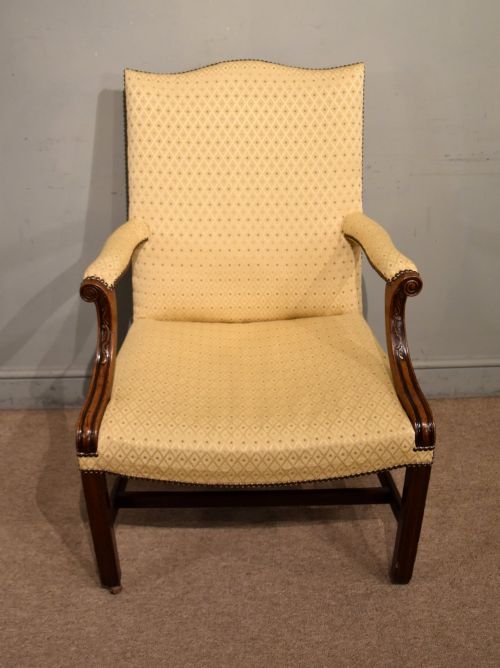
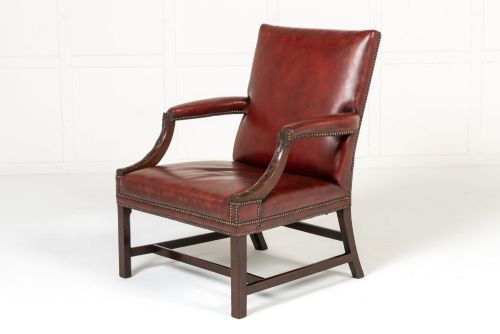
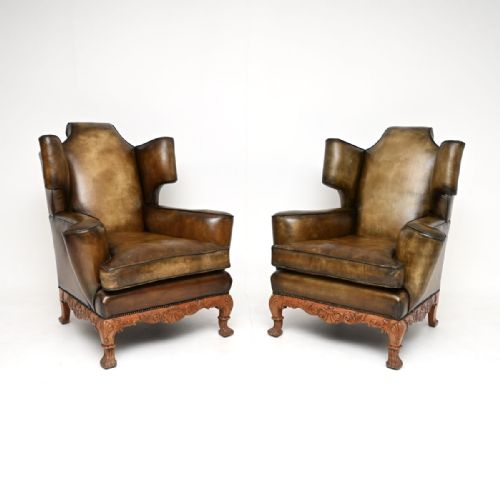
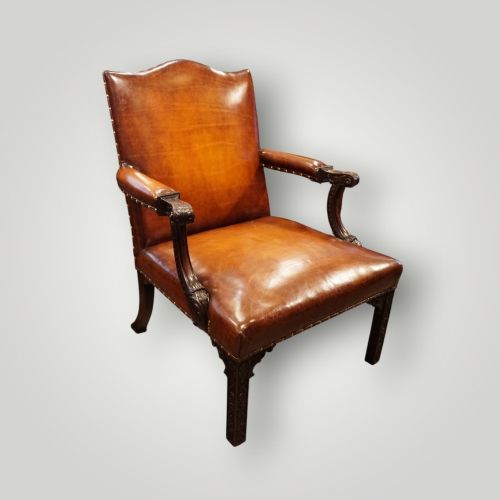
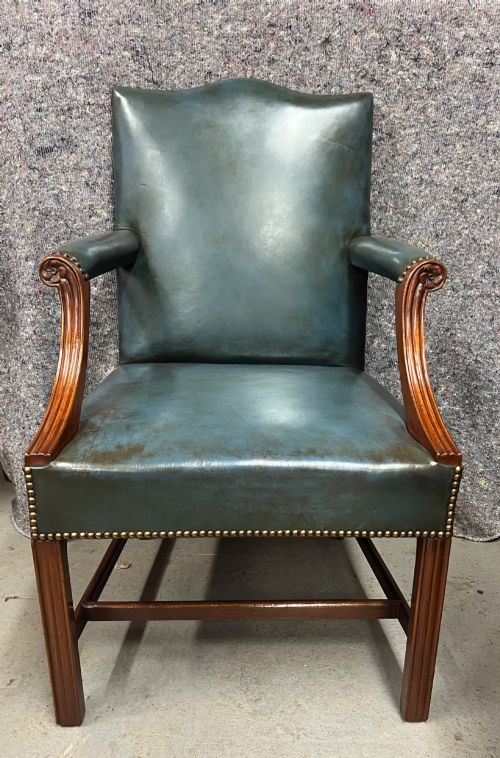
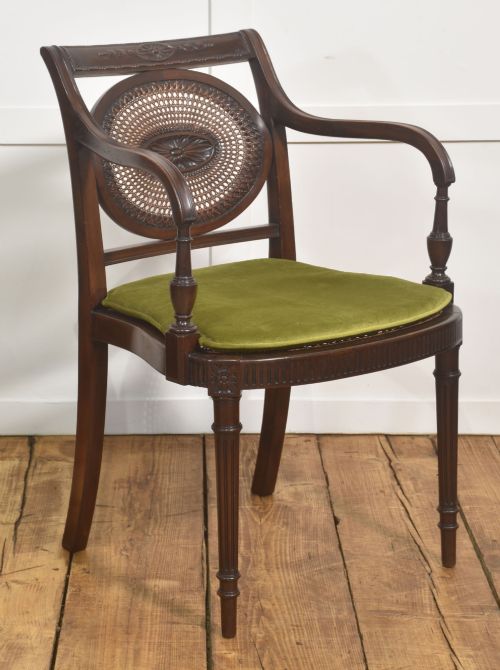
The most common form on this page is the Gainsborough armchair, characterised by its upholstered back, padded arms, and open sides above mahogany frames. You also find desk chairs, wingback armchairs, and bergère chairs featuring cane panels.
Makers drew on Georgian, Regency, and revival idioms, producing seating in mahogany and walnut with leather, fabric, or velvet upholstery. These forms served scholars and gentlemen who required comfort during long hours at a desk or reading table.
How They Were Made
Frames rely principally on solid mahogany and walnut, frequently joined with traditional mortise and tenon construction to withstand daily use. Wood surfaces show careful turning, hand carving, and occasional blind fretwork along the legs and stretchers.
Upholstery involves traditional stuffing methods paired with leather, fabric, velvet, or woven cane panels. Brass tacks frequently secure the edges of leather hides to the wooden framework, providing both structural fastening and decorative contrast.
Listings span multiple eras from the eighteenth century through the Edwardian period, executed in mahogany, walnut, brass, and leather.
What Varies in Quality
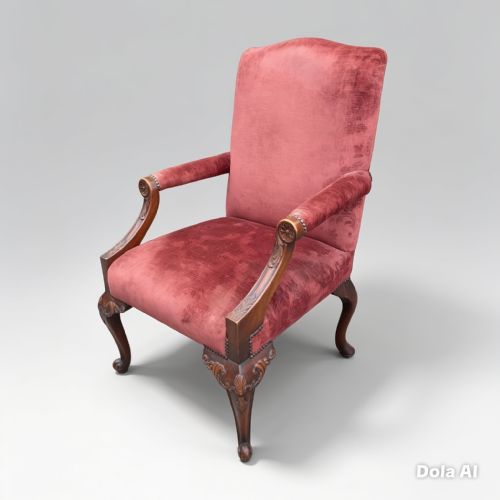
The distinction between ordinary and superior pieces rests on the crispness of the timber carving and the architectural proportions of the frame. Skilled cabinet-makers achieved balanced curves in cabriole legs and scroll arms, whereas lesser examples appear heavy or stiff.
Materials also dictate standing, with hand-dyed English hide leather and dense, figured mahogany separating fine workshop productions from simpler commercial seating. The integrity of the original joints and the quality of secondary timbers underneath tell much about the original maker's intent.
Gillows
The Georgian Style Library Chair Glossary
- Gainsborough chair
- A wide, upholstered armchair with open sides and short mahogany legs, designed in the eighteenth century for reading and writing at a desk.
- Bergère
- An enclosed armchair with cane-work sides and back, typically fitted with a loose seat cushion for added comfort.
- Blind carving
- Low-relief ornamentation carved directly onto the flat face of a mahogany rail, mimicking Chinese or Gothic fretwork without piercing the wood.
- Cabriole leg
- A furniture leg that curves out at the knee and tapers inward to an ankle, often terminating in a pad or claw-and-ball foot.
- Elbow chair
- An open armchair with padded armrests, frequently used as a desk or office seat in a library.
Georgian Style Library Chair: Frequently Asked Questions
What is a Gainsborough chair?
A Gainsborough chair is a wide, open-sided armchair featuring a padded back and upholstered armrests designed for desk work.
These pieces typically stand on mahogany legs and provide an upright posture suited to reading.
How do I spot a revival chair?
Revival chairs date from the nineteenth or early twentieth centuries but mimic the proportions and decorative details of eighteenth-century models.
Examining the underside, timber maturity, and secondary woods helps determine whether a piece is period or later.
Were these chairs used at desks?
Many library and elbow chairs served specific tasks at writing tables and partners desks in period homes.
Their open arms allowed individuals wearing bulky historical garments to sit comfortably without restriction.
What woods were used?
Makers relied predominantly on mahogany and walnut for the structural frames of these library seats.
Secondary timbers like oak or pine often appear in the unseen framing beneath the seat squab.