



Mahogany Claw Ball Armchair
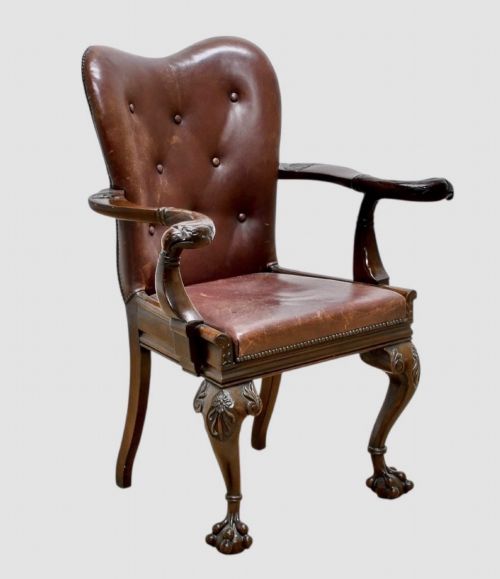
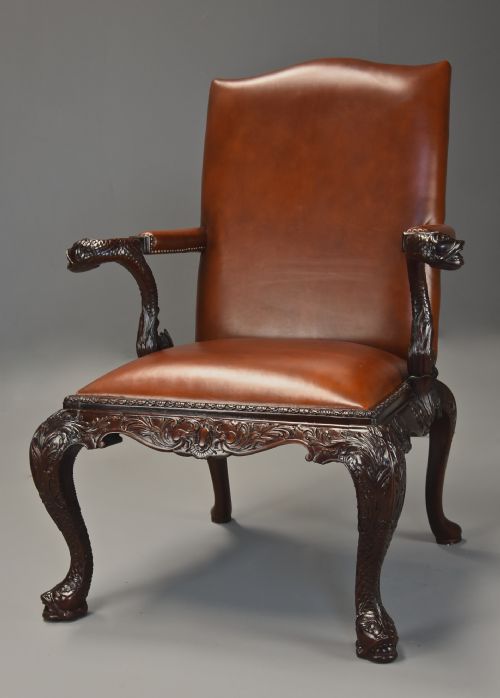
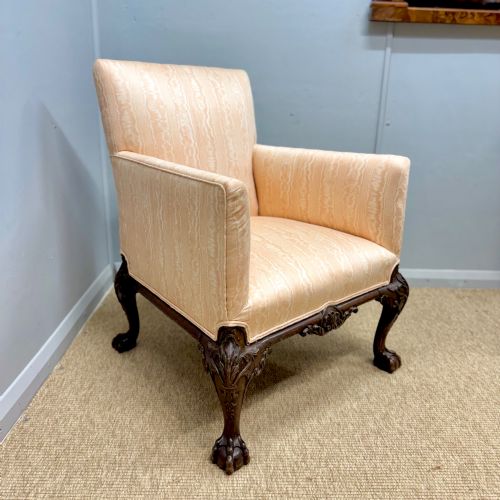
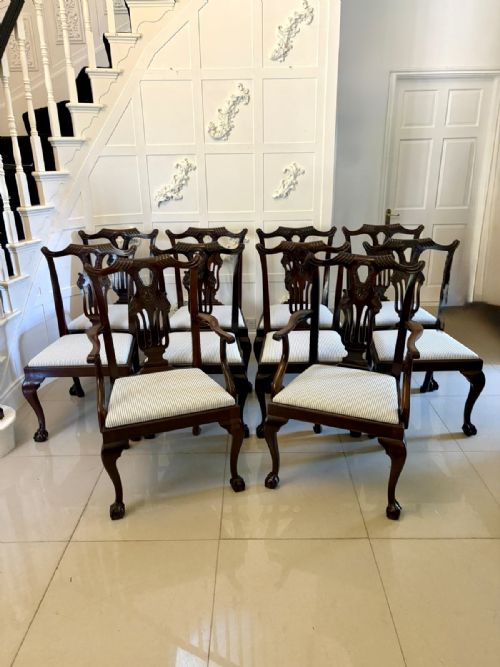
A mahogany claw ball armchair brings solid wood and classic carved feet together for formal seating with genuine presence.
Mahogany Claw Ball Armchair
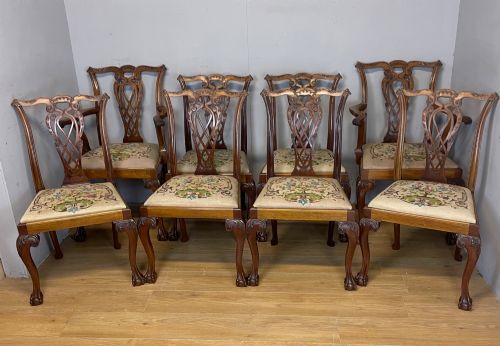
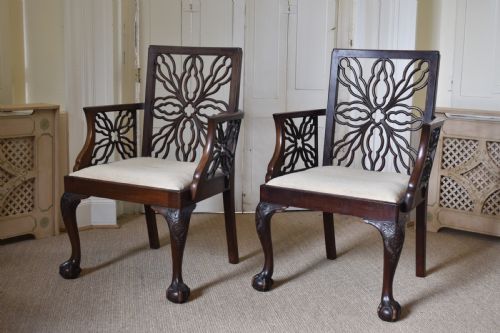
A mahogany claw ball armchair is a timber-framed seat resting on distinctive carved feet holding a sphere, found across multiple periods from the eighteenth century to the early twentieth century. Buyers seeking this phrase encounter a range of forms, including open armchairs, library chairs, desk chairs, and wingback models.
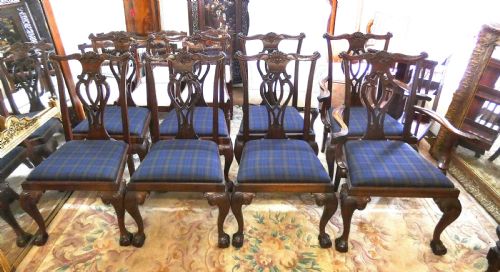
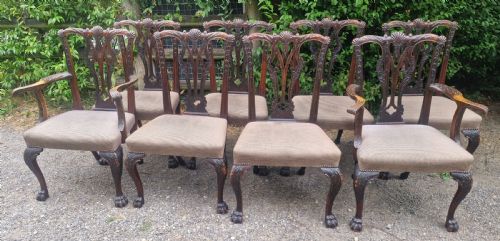
The selections span original Georgian pieces as well as later Victorian, Edwardian, and twentieth-century revivals in the Chippendale and George II styles. Dining chairs with armrests, often termed carvers, appear frequently alongside larger library and wingback seating options.
Makers and workshops produced these chairs in sets for dining rooms or individually for libraries and desks. The recurring presence of ball and claw feet unites disparate periods, linking eighteenth-century cabinet making with later revival interpretations.
How they were made
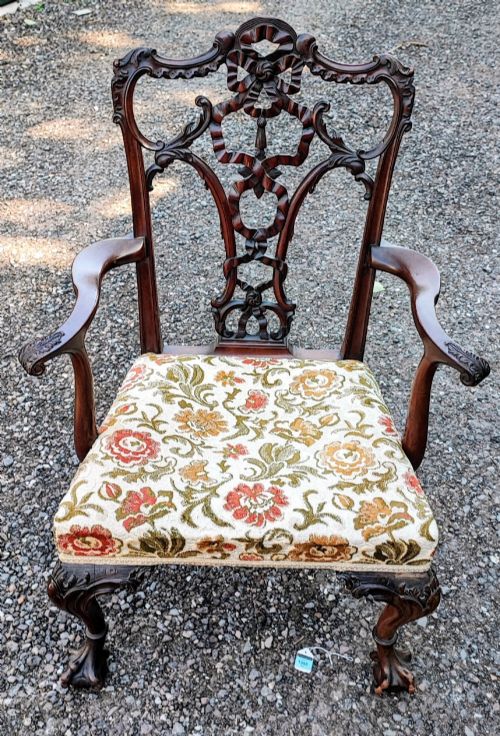
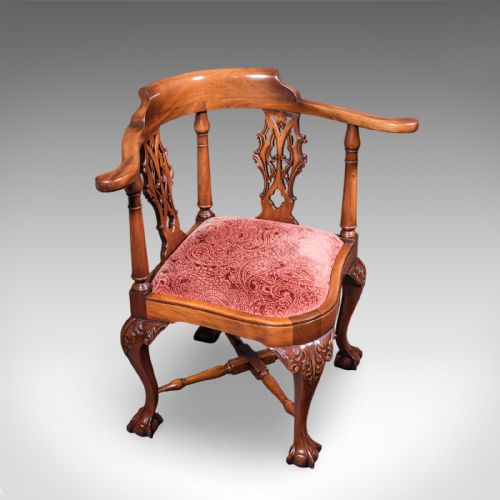
Makers worked primarily in solid mahogany, shaping frames with curved cabriole legs and joining structural elements with traditional timber joints. Carvers rendered the ball and claw foot directly into the foot of the leg, often adding acanthus leaf detail to the knees.
Seating portions utilised leather, fabric, or upholstery over webbing and stuffing to provide functional support. Brass details appear on specific desk chairs and castors, while textiles range from velvet and plain fabric to calico stages awaiting final covering.
Materials across the selection include solid mahogany, brass castors, leather upholstery, velvet, and calico.
What varies in quality
The depth and crispness of the timber carving separate standard production from superior examples, particularly in the definition of the talons gripping the ball. Dense, richly figured mahogany with a deep natural patina indicates higher grade timber selected by skilled cabinet makers.
Proportion and structural integrity dictate the standing of an armchair, with well-balanced cabriole legs and firm, supportive framing holding lasting value. Original upholstery methods and period leather coverings elevate historical authenticity above later replacements.
Warings·Howard & Son's
The Mahogany Claw Ball Armchair Glossary
- Cabriole leg
- A furniture leg that bends outward in a convex curve at the top and tapers inward in a concave curve below, ending in a foot. This form derives from animal limbs and appears frequently on eighteenth-century seating.
- Carver
- An armchair designed to match a set of dining chairs, typically featuring open arms and a wider seat. These pieces often sat at the head of a dining table.
- Gainsborough chair
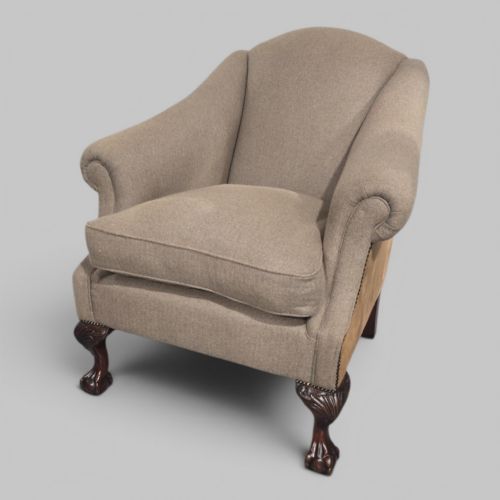
- A wide, upholstered armchair with open padded arms, low sides, and short legs dating from the mid-eighteenth century onward. They served primarily as desk or reading chairs.
- Wingback chair
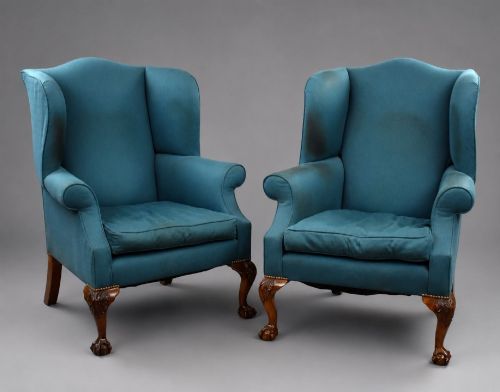
- An upholstered armchair with side panels or wings attached to the back, designed to shield the sitter from drafts. Early versions rest on cabriole legs with ball and claw feet.
- Chippendale style
- A furniture design style inspired by Thomas Chippendale's mid-eighteenth-century pattern books, characterised by carved mahogany, ribbon backs, and ball and claw feet.
Mahogany Claw Ball Armchair: Frequently Asked Questions
What is a ball and claw foot?
A ball and claw foot is a furniture foot carved to resemble a bird's talon or a beast's paw grasping a spherical ball. This decorative feature appears frequently on eighteenth-century mahogany furniture and later revival pieces.
Craftsmen shaped the foot directly from the timber of the leg, often adding fine details such as knuckles and scaled texture. It remains a defining characteristic of Chippendale and George II furniture designs.
How do I date a mahogany armchair?
Dating relies on examining the timber species, construction methods, tool marks, and stylistic details such as leg curvature and carving motifs. Eighteenth-century pieces display hand-cut joinery and aged patination, while later revival models from the Victorian and Edwardian eras reflect machine assistance and nineteenth-century interpretations.
Comparing the chair to documented period examples helps distinguish original antique production from nineteenth and twentieth-century revival furniture.
Where should I place a wingback armchair?
Wingback armchairs suit living rooms, studies, and libraries where their tall backs and upholstered sides provide a strong visual anchor. Their original purpose of blocking drafts makes them practical seating near fireplaces or in reading corners.
Pairing a mahogany-framed wingback with complementary side tables or desks highlights the carved cabriole legs and timber framing.
What is the difference between a desk chair and a dining chair?
Desk chairs typically feature swivel mechanisms, wider seats, or upholstered leather panels designed for extended periods of administrative work. They often incorporate more robust armrests and lower profiles to fit beneath writing surfaces.
Dining chairs, including carvers, are built as part of a matching set to surround a table, prioritising upright posture and standard dining height over mobility or heavy padding.
Are these chairs suitable for daily use?
Solid mahogany frames and sturdy cabriole leg construction make these armchairs durable for everyday seating when properly maintained. Checking the internal webbing and upholstery support ensures the chair remains comfortable for regular sitting.
Historic pieces benefit from careful weight distribution and gentle cleaning to preserve the timber finish and nineteenth or twentieth-century upholstery fabrics.