
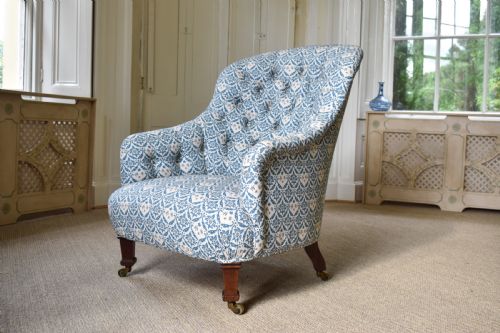
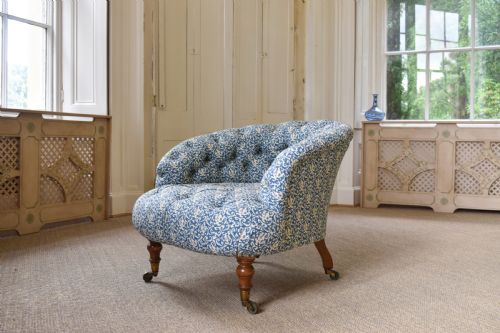
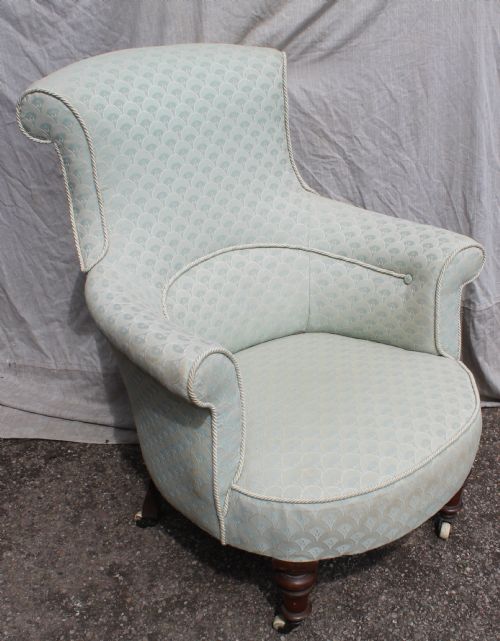


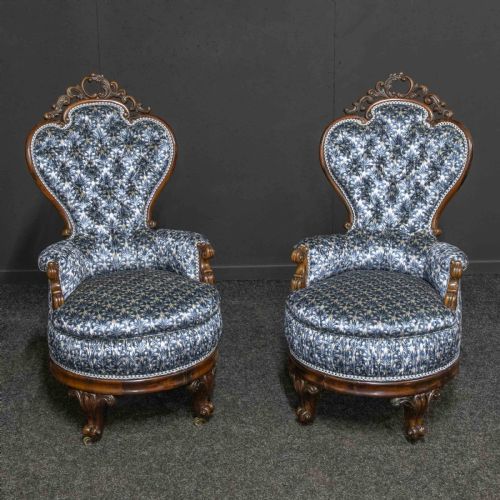


Blue Pattern Fireside Chair
A blue pattern fireside chair offers deep upholstery and classic comfort, bringing traditional character and warmth to a room.
Blue Pattern Fireside Chair
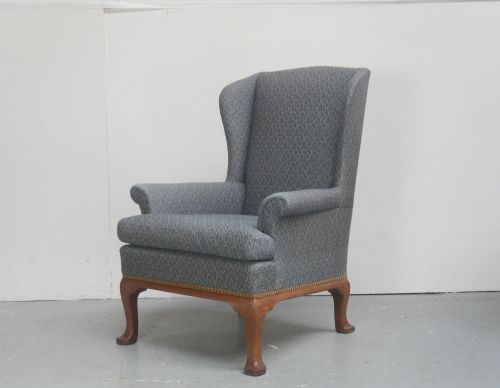
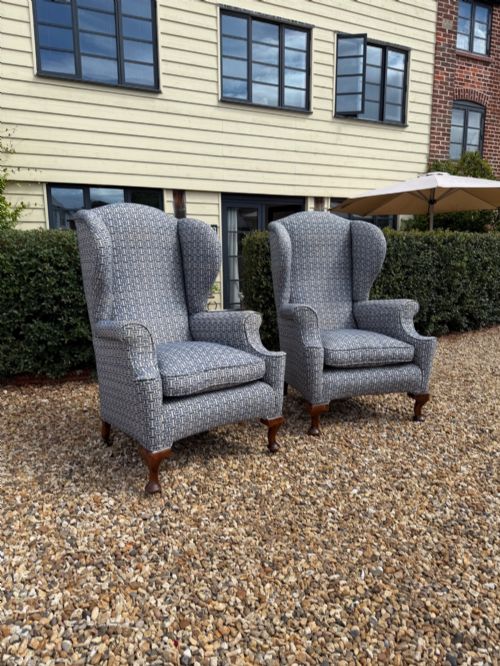
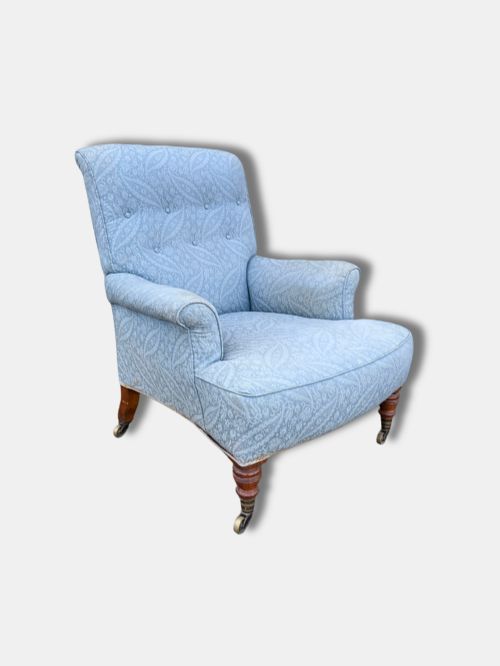
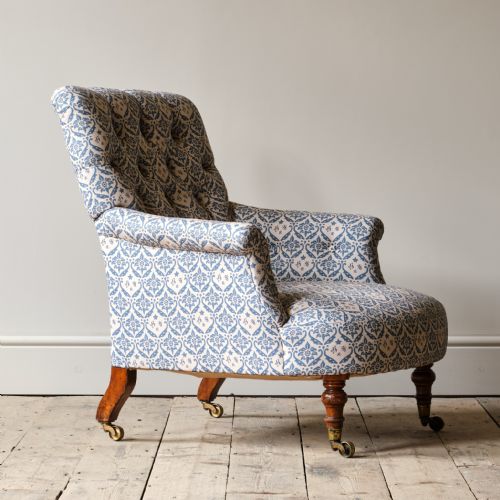
A blue pattern fireside chair represents a tradition of comfortable seating designed for domestic sitting rooms and libraries. These pieces span the nineteenth century and the Edwardian period, incorporating forms such as wing armchairs, library chairs, and club easy armchairs.
Makers such as Howard and Sons and William Morris appear frequently among the pieces, defining the high standards of nineteenth-century seating. These chairs combine deep seats with supportive backs intended for fireside placement.
Materials and construction
The structural frames rely on hardwoods like mahogany and walnut, providing stable foundations for heavy daily use. Brass components occasionally appear in castors and hardware details.
Upholstery involves traditional textile methods, utilising fabric, cotton, and specialised upholstery materials over sprung interiors. Wood framing is often exposed on legs, arms, and wing supports.
Listings span the nineteenth and early twentieth centuries, featuring walnut and mahogany frames paired with cotton and fabric upholstery.
Judging quality in antique seating
Quality rests upon the integrity of the wooden frame and the precision of the joinery beneath the fabric. Finer examples retain their original proportions and structural firmness without excessive reinforcement.
The distinction between standard workshop output and top tier pieces lies in the sophistication of the upholstery work and the selection of materials. Maker attribution significantly elevates the standing of a chair within this category.
Howard and Sons·William Morris
The Blue Pattern Fireside Chair Glossary
- Wingback armchair
- A large seating form featuring protective side panels designed to shield the sitter from draughts near a fireplace. These chairs often stand on mahogany or walnut legs.
- Bergère
- An enclosed armchair with upholstered sides and back, typically featuring exposed wooden framing. This style originates in French design but appears frequently in English Edwardian pieces.
- Ticking
- A tightly woven cotton or linen fabric traditionally used as a durable foundation or covering for upholstery stuffing. It provides a sturdy and plain base for loose covers.
- Button back
- An upholstery technique where buttons are pulled deep into the padding to create a grid of diamond-shaped puffs. This method secures the internal filling while adding decorative texture.
- Claw and ball
- A carved furniture foot depicting a bird's talon clutching a spherical ball. This decorative motif appears on the legs of traditional nineteenth-century armchairs.
Blue Pattern Fireside Chair: Frequently Asked Questions
What defines a fireside chair?
A fireside chair is a comfortable upholstered armchair designed to sit close to a hearth, often featuring high backs or protective wings.
These pieces prioritize ergonomic support and warmth, utilising deep padding and heavy textiles to keep out drafts.
How do I identify Victorian armchairs?
Victorian armchairs are identified through their use of dense timbers like mahogany, heavy button-backed upholstery, and robust proportions.
Design influences from this era often include revival styles such as Queen Anne and Chippendale, reflecting historical revivals of the nineteenth century.
What materials are used for upholstery?
Upholstery on these armchairs relies primarily on heavy cotton, woven textiles, and traditional fabric coverings.
Internal padding uses sturdy stuffings contained within durable linings such as ticking to maintain shape and comfort over decades of use.
Are Edwardian chairs different from Victorian ones?
Edwardian chairs generally present lighter proportions and brighter wood tones compared to the heavier dark mahogany of the Victorian era.
Makers of the Edwardian period favored refined lines while maintaining the deep comfort established by earlier nineteenth-century workshops.