



Carved Mahogany Easy Chair
A carved mahogany easy chair brings solid timber frames and deep upholstery together for serious comfort.
Carved Mahogany Easy Chair
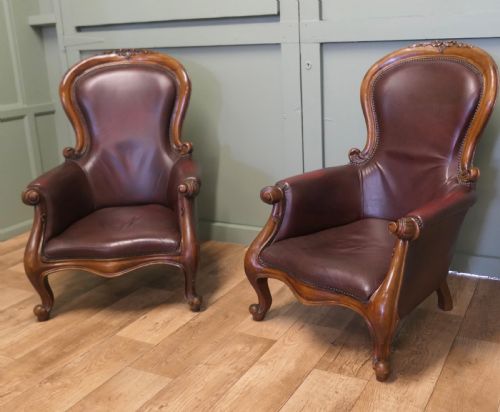
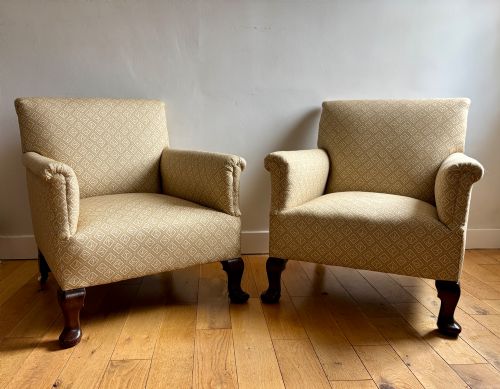
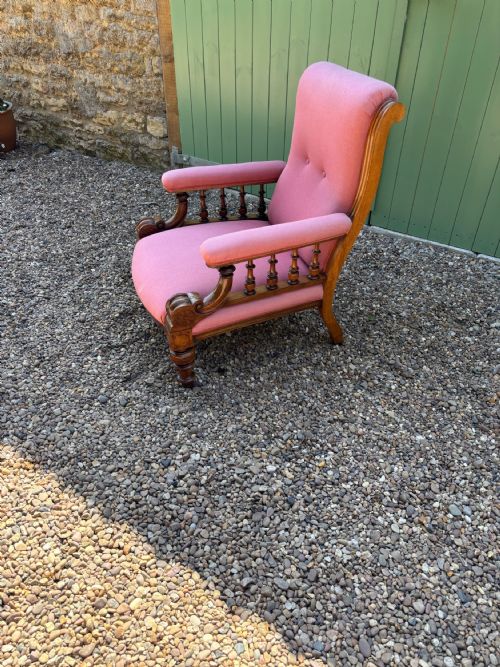
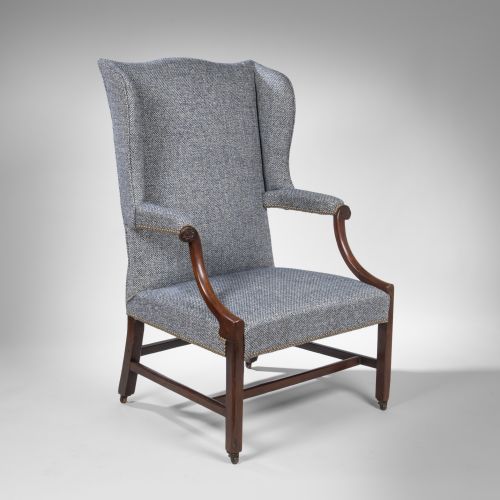
A carved mahogany easy chair is a substantial seating form designed for relaxation, appearing across the Georgian, Victorian, and Edwardian periods. These pieces include library chairs, wingbacks, and spoon backs built for domestic comfort and reading rooms.
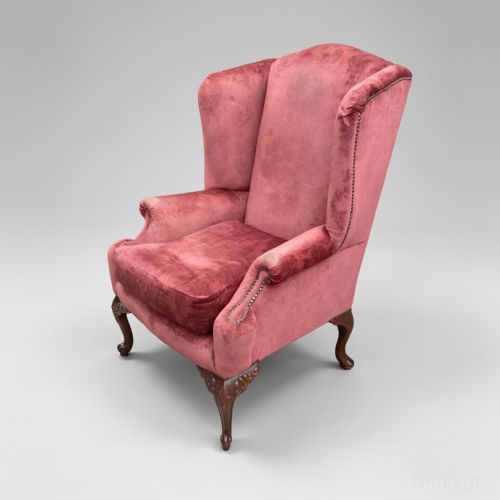
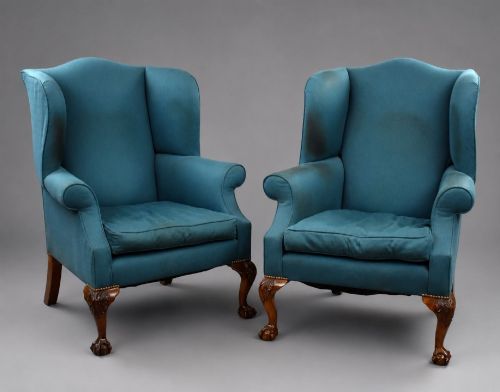
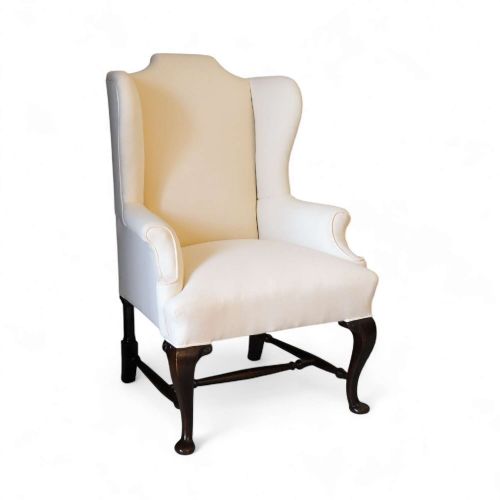
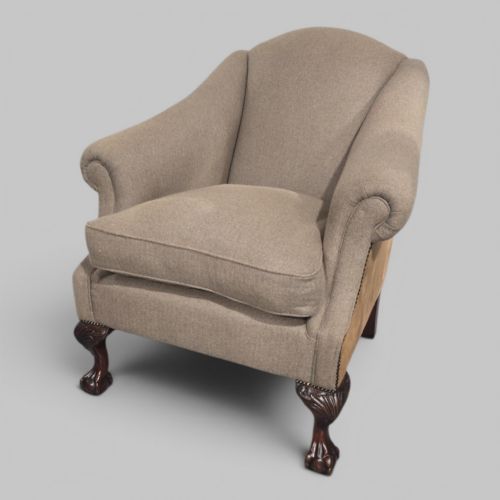
The version most commonly met on this page is the Victorian or George II style mahogany wing armchair, often standing on claw and ball legs. They range from formal library seating to country house armchairs in various stages of upholstery.
Makers such as Gillows, Howard and Sons, and Whytock and Reid shaped this tradition, producing frames that span from the mid-eighteenth century revival designs up to the early twentieth century.
How they were made
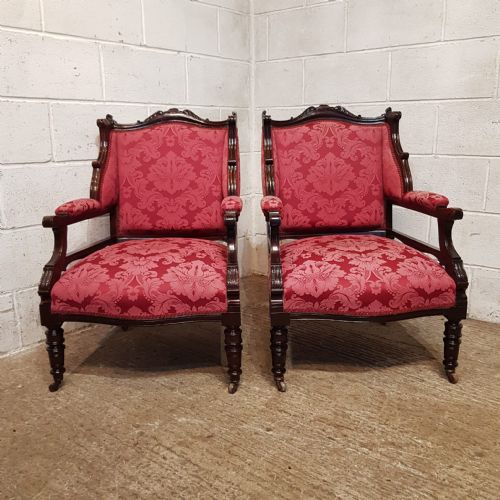
The primary structural material is mahogany, selected for its strength and rich grain, occasionally accompanied by rosewood. Frames feature hand-carved details, notably on cabriole or straight legs, sometimes terminating in brass castors.
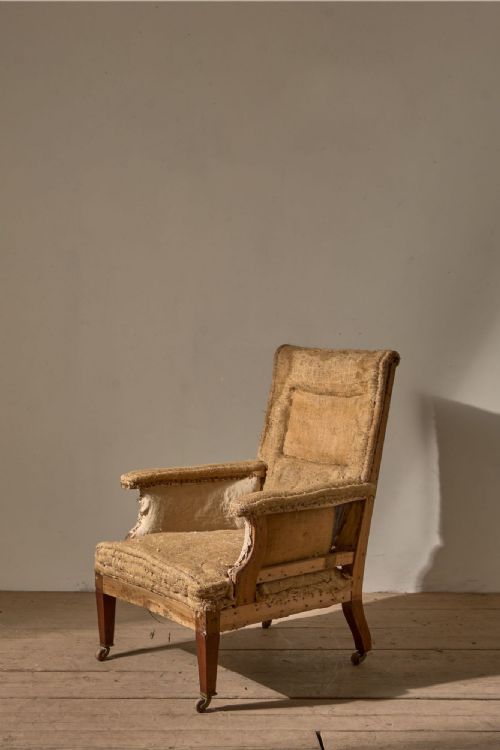
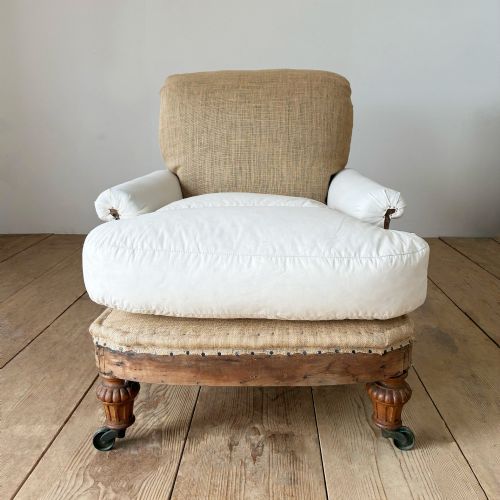
Upholstery techniques involve traditional stuffing secured over hessian and webbing, finished in leather, velvet, calico, or modern textiles. Many examples retain or have been returned to a calico stage, ready for final covering.
Some armchairs spent generations guarding library fires before finding their way onto the market.
What varies in quality
Quality rests in the crispness and depth of the timber carving on the frame, particularly around the knees and arms. Heavier, more substantial mahogany structures with well-proportioned wings and backs command greater presence.
The integrity of the internal frame construction and the fidelity of revival periods, such as Chippendale and George II styles, separate standard workshop output from pieces bearing maker stamps.
Gillows·Howard and Sons·Whytock and Reid
The Carved Mahogany Easy Chair Glossary
- Wingback
- An armchair with side panels attached to the arms and back to shield the sitter from draughts. These pieces date predominantly from the Georgian and Victorian eras.
- Library chair
- A heavy, comfortable armchair designed for reading rooms and studies, usually framed in solid mahogany. They frequently feature deep leather or textile upholstery.
- Spoon back
- A padded chair back shaped in a concave oval resembling the bowl of a spoon. This form is common in Victorian seating.
- Calico stage
- An intermediate state of upholstery where the internal stuffing is covered in plain calico fabric before final decorative material is applied. It allows buyers to select their own top covering.
- Cabriole leg
- A furniture leg that curves out in an outward arc and tapers inward, terminating in a foot such as a claw and ball. This shape derives from classical animal forms.
Carved Mahogany Easy Chair: Frequently Asked Questions
What is a carved mahogany easy chair?
A carved mahogany easy chair is a sturdy upholstered seat featuring solid timber frames with decorative hand-carving. These pieces span library chairs, wingbacks, and club forms from the Georgian and Victorian periods.
They were built for comfort in studies, drawing rooms, and country houses. The heavy mahogany frames provide lasting structural support beneath traditional upholstery.
How do I identify a Georgian style armchair?
Georgian style armchairs often feature wingback designs, robust mahogany frames, and carved cabriole legs with claw and ball feet. They prioritise solid proportions and architectural lines.
Revival pieces from the nineteenth century replicated these eighteenth-century forms with similar attention to timber quality and carved ornamentation.
What does upholstery to calico stage mean?
Upholstery to calico stage means the internal webbing, springs, and stuffing are fully built and covered in plain calico. This leaves the final decorative fabric to be chosen by the buyer.
It provides a sound, traditionally made interior while allowing complete freedom in the final aesthetic choice.
How do I live with a leather armchair?
Leather armchairs require stable room temperatures away from direct heat sources to prevent the hide from drying out. Regular conditioning with appropriate leather balms keeps the material supple.
Over time, good quality leather develops a rich patina that responds well to daily domestic use in studies and living rooms.