
Georgian Style Leather Chair
A georgian style leather chair brings substantial mahogany frames and rich hide upholstery together for a traditional library or study.
Georgian Style Leather Chair
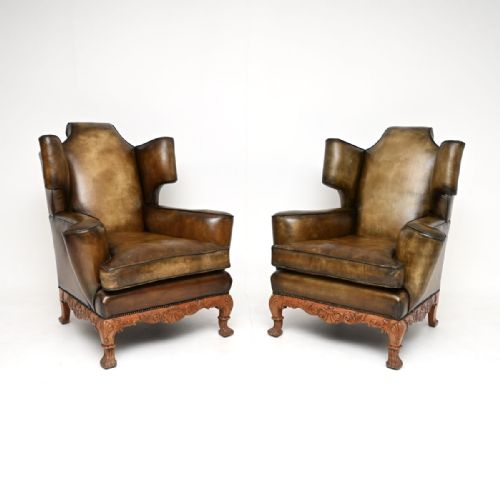
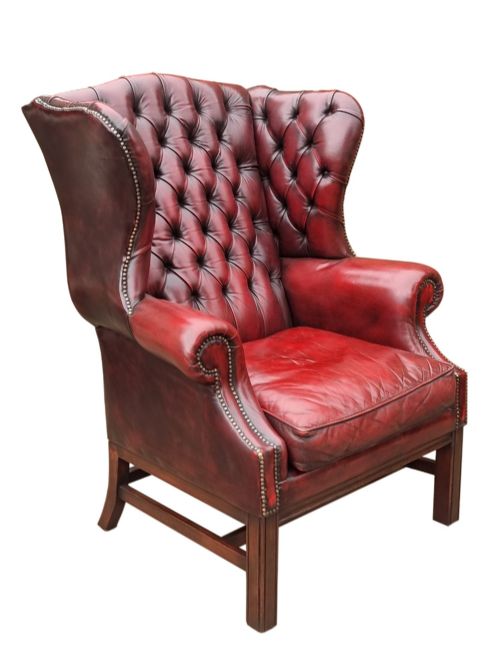
A georgian style leather chair encompasses open library armchairs, upholstered wingbacks, and sturdy desk seating designed with classic proportions. The pieces listed here span genuine eighteenth-century examples alongside later revival interpretations produced through the nineteenth and twentieth centuries.
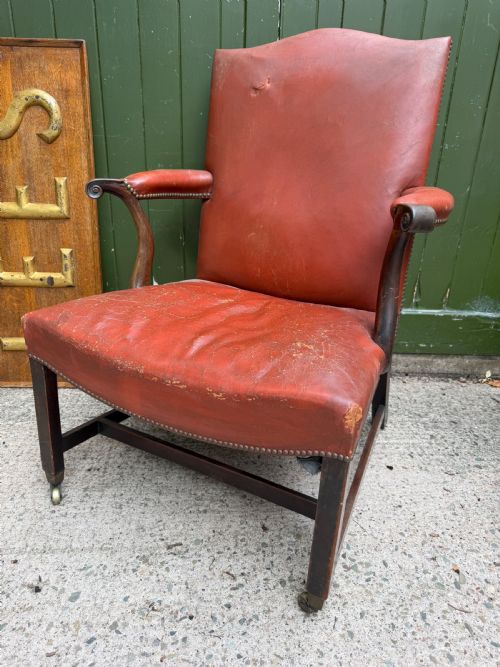
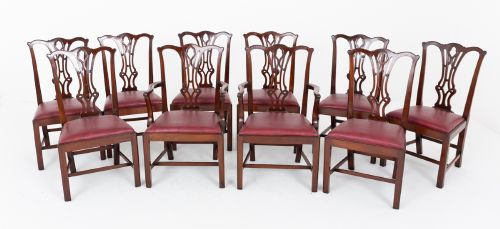
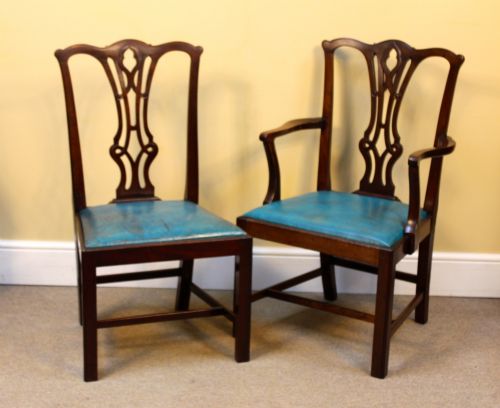
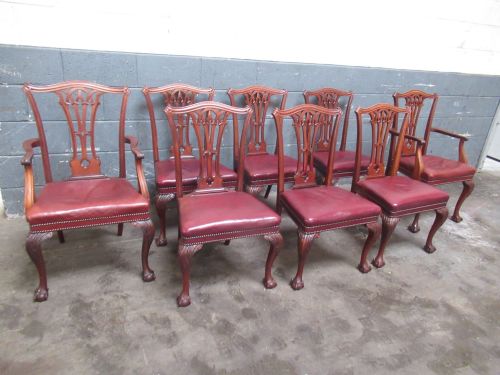
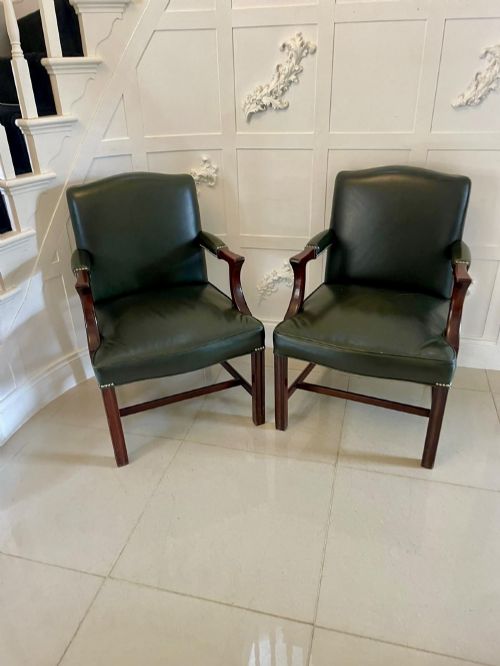
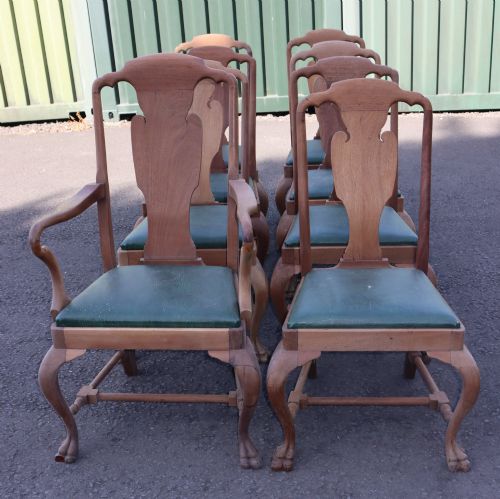
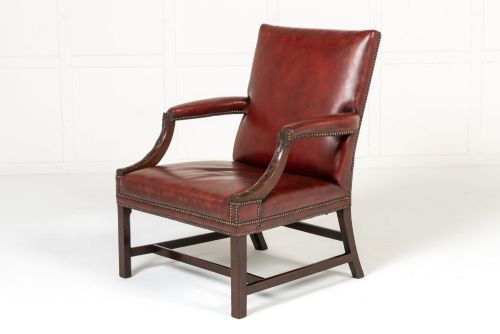
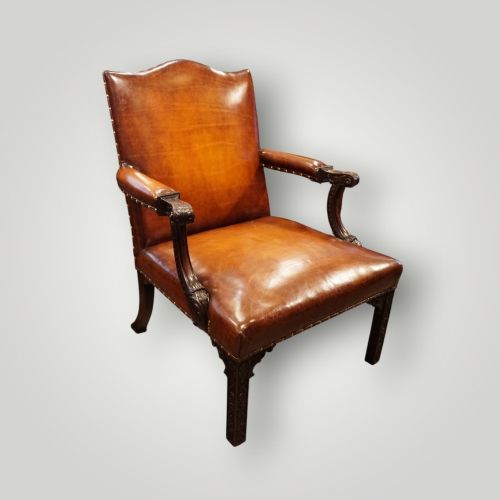
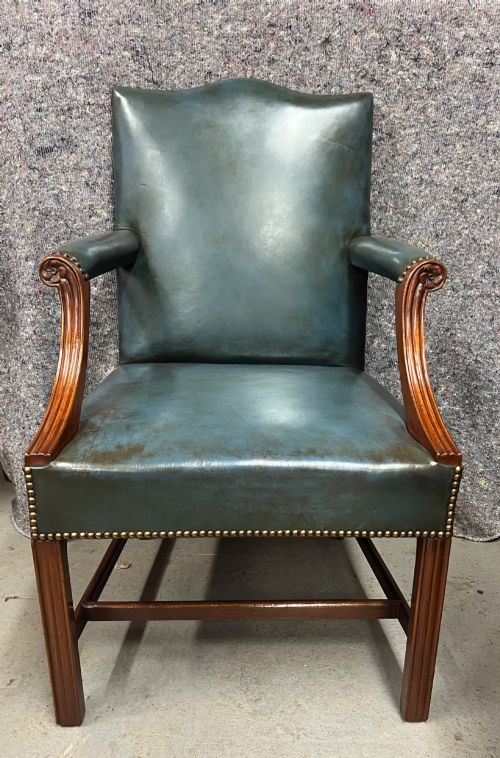
Library seating often takes the form of the wide-seated Gainsborough armchairs, whilst dining and office settings utilise carved mahogany side chairs, carvers, and elbow chairs fitted with leather pads.
Materials and Construction
Upholstery relies on traditional techniques utilising durable English hide leather, hand-dyed in shades of oxblood, red, brown, and green, then secured with individual brass studs.
Cockfighting chairs appear among the seating forms, built backwards with a padded armrest meant to support the spectator's chest.
Gradations in Quality
Quality rests upon the crispness of the timber carving and the weight of the mahogany frame. Superior examples display substantial proportions and carefully finished details rather than flat, machine-cut decoration.
The choice of leather upholstery dictates longevity and finish; hand-dyed English hide with natural patination separates exceptional library pieces from standard utilitarian seating.
The Georgian Style Leather Chair Glossary
- Gainsborough chair
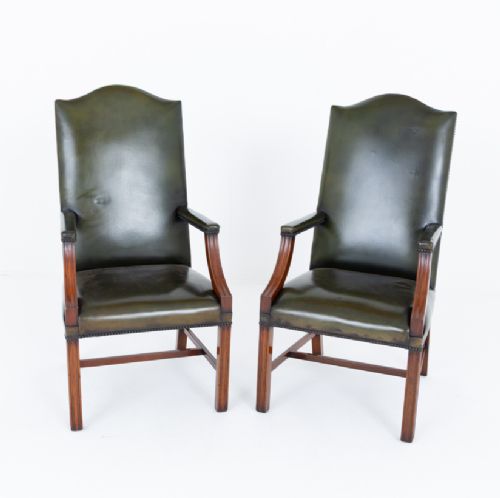
- A wide open armchair with padded armrests and a square back, designed originally for eighteenth-century libraries and drawing rooms. These pieces typically feature short cabriole or straight legs.
- Wing chair
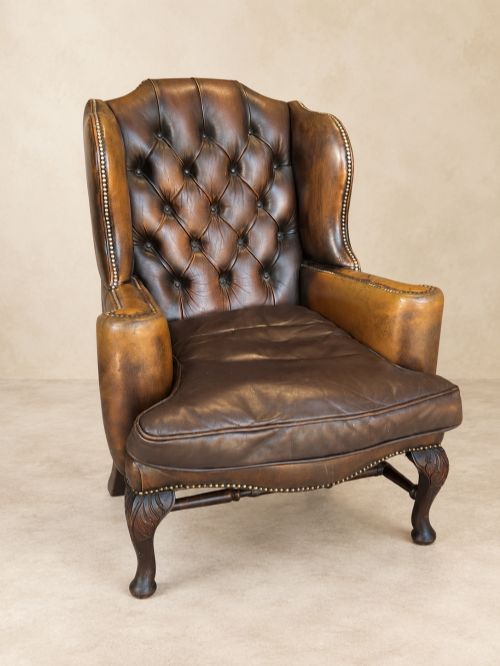
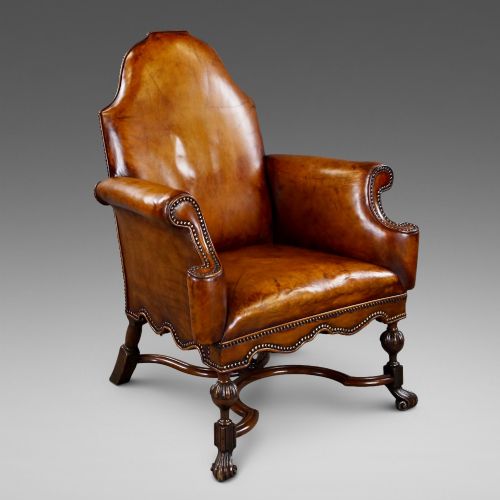
- An upholstered seat featuring protective side panels designed to deflect draughts from open fires. This form appears frequently in twentieth-century revivals finished in deep-buttoned leather.
- Bergère
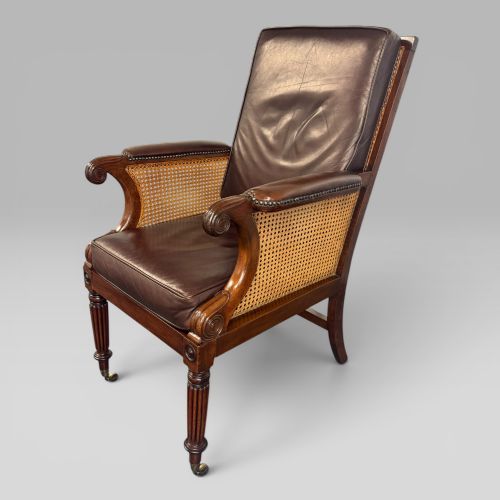
- An enclosed armchair with a wooden frame where the sides and back incorporate woven cane panels. Examples often include loose squab cushions upholstered in leather.
- Carver chair
- An armchair designed to match a set of dining chairs, usually placed at the head of the table. They share the decorative style of the accompanying side chairs but feature supportive open arms.
- Blind fret carving
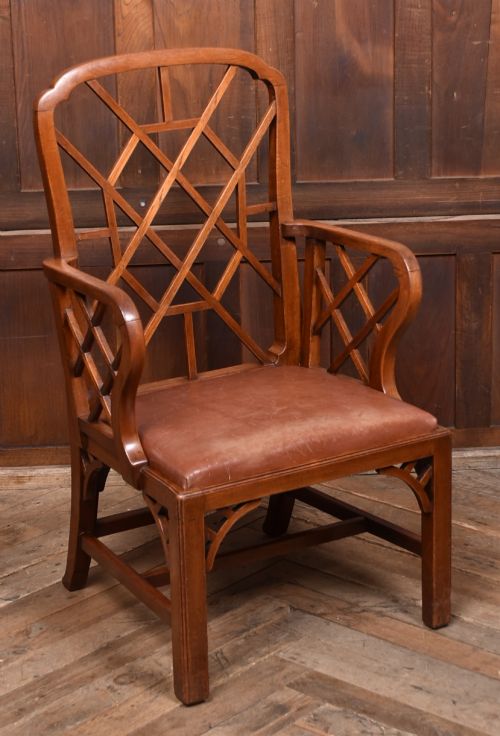
- A flat ornamental pattern carved into the surface of the mahogany framework to simulate pierced fretwork without weakening the structural timber. This technique appears often on Chippendale style legs and rails.
Georgian Style Leather Chair: Frequently Asked Questions
What is a Gainsborough chair?
A Gainsborough chair is a wide, open-armed library seat designed during the eighteenth century with upholstered back and armrests. The form prioritises comfort and dignified proportions for reading and writing.
These armchairs sit on straight or cabriole wooden legs and are typically covered in rich leather. They remain a popular choice for studies and formal rooms.
How do I date a leather chair?
Dating relies on examining the framing timbers, construction joints, and the wear patterns of the hide. Eighteenth-century pieces show hand-cut joinery and aged mahogany, whilst revival pieces from the Victorian and Edwardian eras display nineteenth-century manufacturing methods.
Stylistic cues such as Chippendale blind carving or Regency scroll arms help narrow down the period. Comparing the wood density and hardware also clarifies the era of production.
Where should I place a wingback chair?
Wingback chairs suit corners of living rooms, studies, and grand hallways where their high backs create a distinct seating zone. The traditional design works well alongside bookshelves and fireplaces.
They also function effectively as reading chairs when paired with a small side table and adequate lighting. The enclosed sides offer a private, quiet space.
Are these chairs comfortable for daily use?
These chairs provide firm, upright support suited for desks and dining tables, whilst library and wingback versions offer deeper cushions for relaxed reading. The sturdy hardwood frames and leather upholstery are built for longevity.
Over time, the leather softens and conforms to the user while maintaining its structural integrity. Regular conditioning keeps the hide supple for everyday living.