
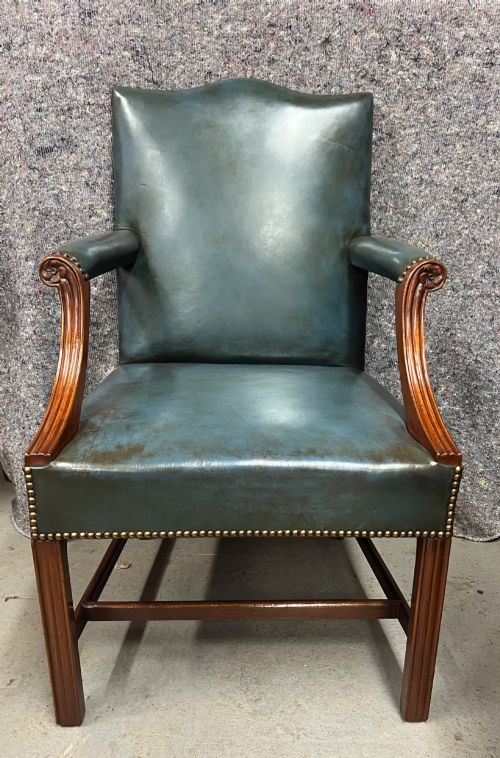

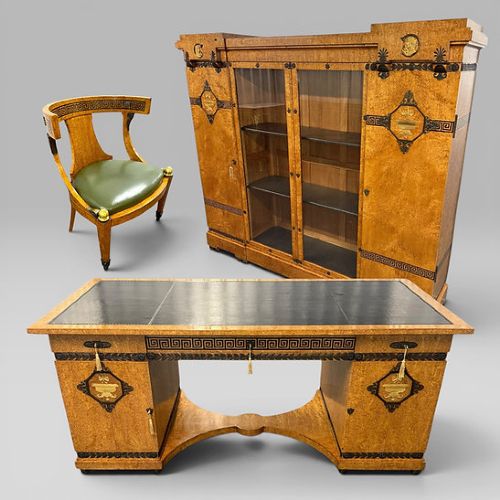
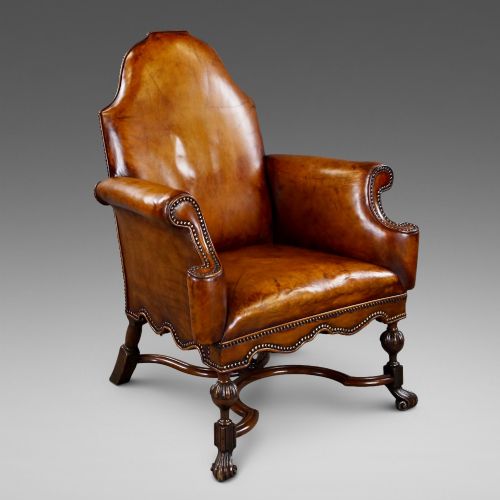
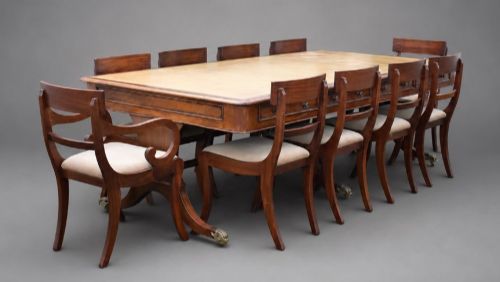
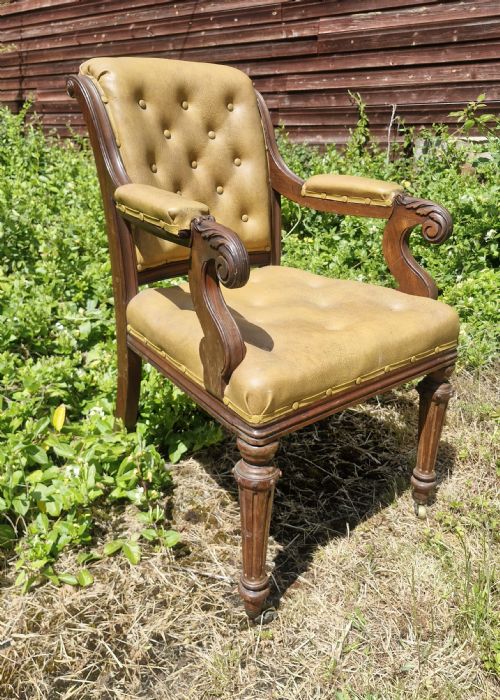


Leather Executive Chair
A leather executive chair provides solid support and traditional style at the desk, drawing on decades of timber and hide construction.
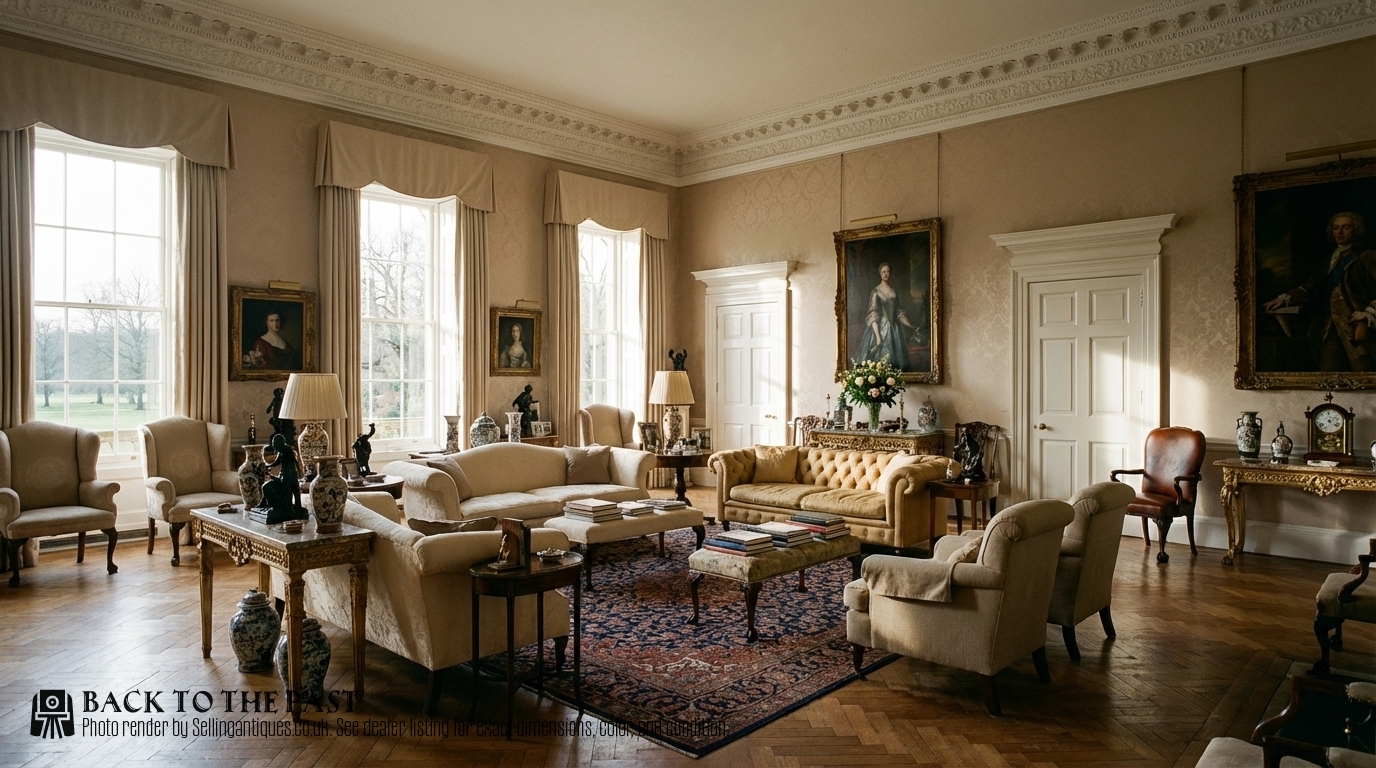
Leather Executive Chair
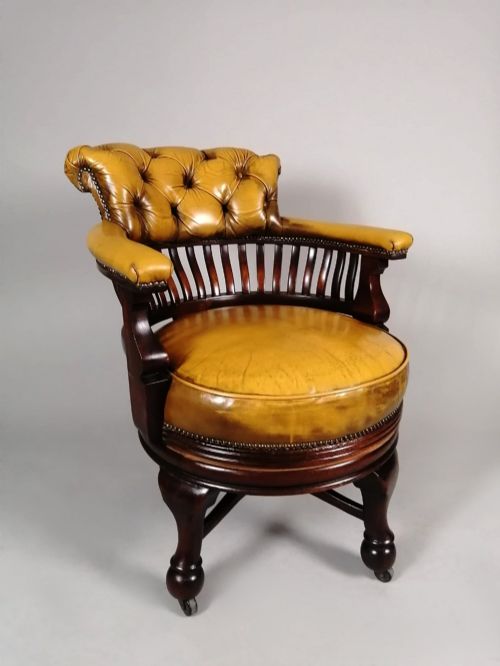
A leather executive chair brings together sturdy framing and upholstered seating designed for long hours at a desk. These pieces emerge from periods spanning the nineteenth century into the twentieth century, appearing in forms such as revolving office chairs, library armchairs, and desk armchairs.
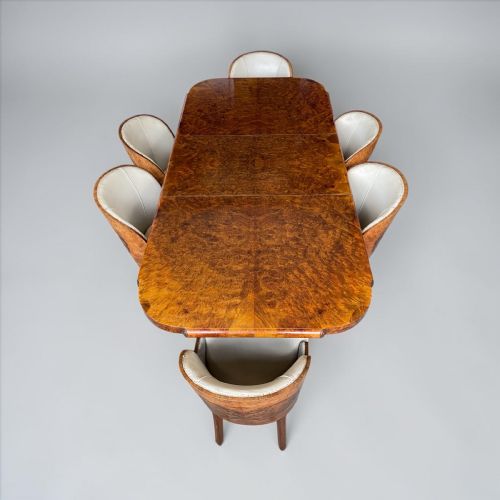
Buyers will most frequently encounter nineteenth-century and early twentieth-century examples shaped by Victorian, Edwardian, and Art Deco design. Common configurations include swivel models with brass hardware alongside stationary armchairs built for reading and administrative tasks.
Originating largely from British and French workshops, these seating options utilise traditional timber frames paired with durable hide. The selection reflects both formal office suites and domestic library settings from past centuries.
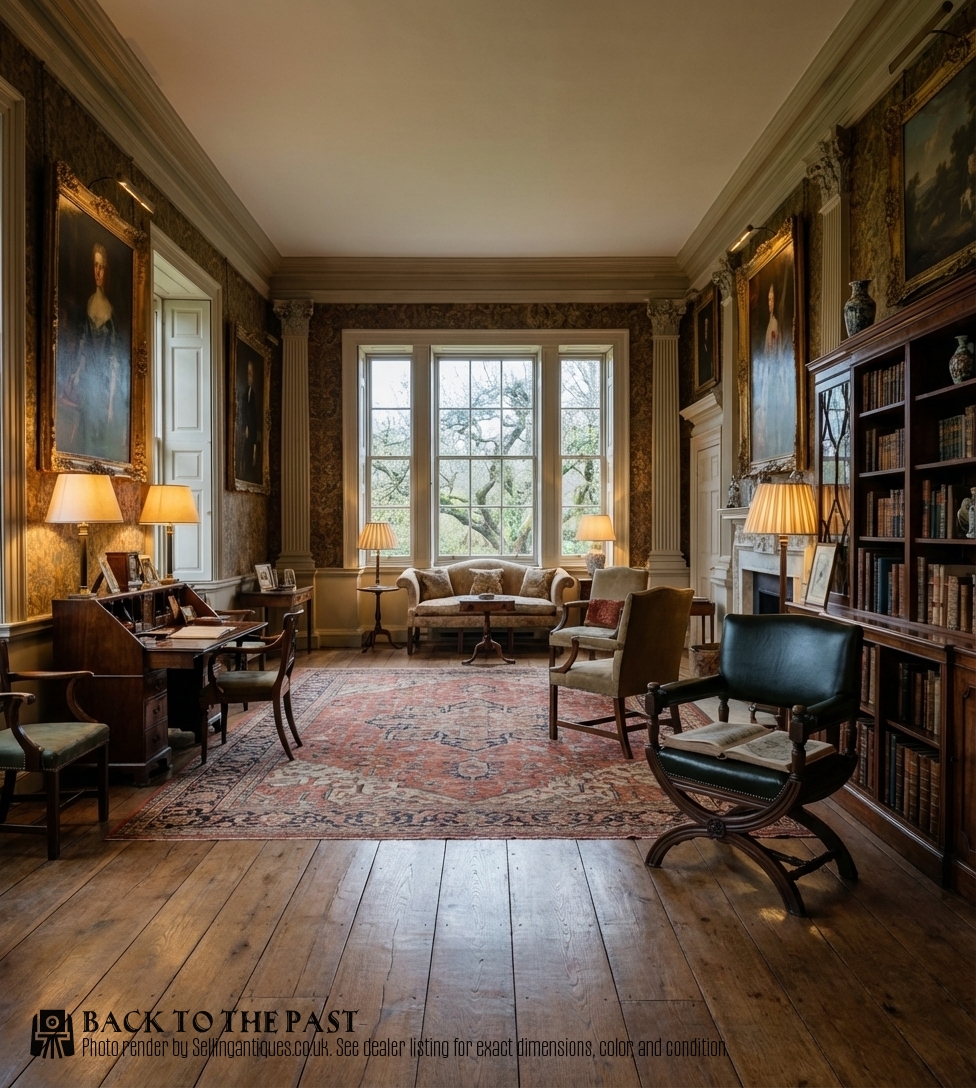
Materials and construction
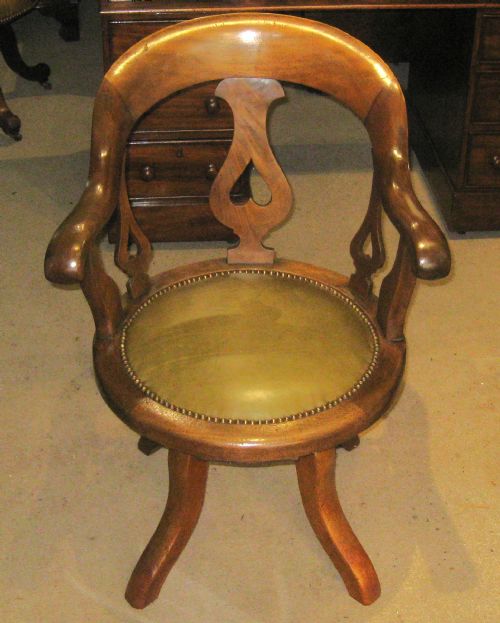
Makers constructed these chairs primarily using dense timbers such as mahogany, walnut, oak, and rosewood, often pairing the wooden frames with supple leather upholstery. Brass castors, swivel mechanisms, and iron support brackets frequently appear on pivoting models to allow movement.
Upholstery techniques typically involved buttoning and traditional tacking to secure the leather over padding. Skilled cabinetmakers shaped the mahogany and walnut components into curved backs and sturdy armrests to withstand daily office use.
Leather Executive Chair Retail Price Guide 2026
Typical asking prices for leather executive chair among the pieces listed under this phrase on Sellingantiques today, from the lower quarter to the upper quarter. They describe what is for sale here now, not the wider market.
The selection includes swivel desk chairs, library armchairs, and complete office suites dating from the nineteenth and twentieth centuries.
Evaluating craftsmanship
Quality separates pieces by the depth of timber carving and the integrity of the internal frame joints. Superior examples exhibit tightly fitted joinery and substantial hardwood frames that resist movement over time.
The grade of the leather and the execution of buttoning and stitching distinguish finer iterations from standard workshop output. Original brass mechanisms and smooth swivel action also indicate higher manufacturing standards.
Maurice Adams·Mercier Frères·Harry and Lou Epstein·Gillows·WM Heywood Chair Co
The Leather Executive Chair Glossary
- Revolving desk chair
- A seating unit fitted with a central pivot mechanism allowing rotation. These often include brass hardware and adjustable height screw assemblies.
- Gainsborough style
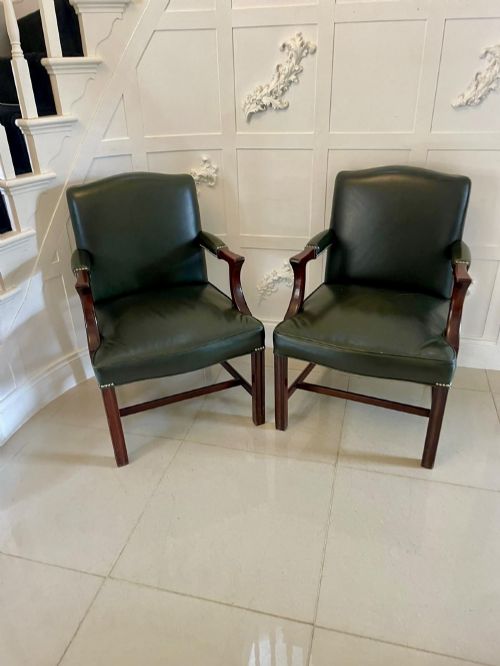
- An upholstered armchair characterised by an open wooden frame with padded arms and back. The design originated in the eighteenth century and remained popular in later reproductions.
- Library armchair
- A comfortable seated furniture piece intended for reading rooms and studies. They typically feature wide armrests and supportive cushioned backs.
- Bentwood
- Wood that is shaped by steaming until pliable and then bent into curved structural forms. This technique appears in several swivel desk chair designs.
- Swivel desk armchair
- A working seat combining armrests with a rotating base. These items facilitate movement between different areas of a large desk.
Leather Executive Chair: Frequently Asked Questions
How do I identify a period leather executive chair?
Examine the timber species, joinery methods, and hardware beneath the seat to determine age. Nineteenth-century examples often display hand-turned mahogany components and heavy brass castors.
Style indicators such as Victorian buttoning or Edwardian swivel mechanisms further clarify the decade of production. Compare the construction details against documented workshop standards of the era.
Were these chairs used only in offices?
Historical examples served dual purposes in both commercial offices and private residential libraries. Many were commissioned for boardroom tables and executive studies.
Library armchairs provided comfortable seating for reading and writing at home. Their robust timber frames suited heavy daily administration in various settings.
How should I care for vintage leather upholstery?
Maintain the hide by applying appropriate leather conditioners to prevent drying and cracking over time. Keep the material away from direct sunlight and excessive heat sources.
Dust the surface regularly with a soft dry cloth. Avoid harsh chemical cleaners that might strip the original finish from the leather.
What timber types are most common?
Mahogany and walnut form the primary structural woods found in these seating pieces. Oak and rosewood also appear frequently across specific regional styles and periods.
Burr walnut surfaces occasionally accent the woodwork on higher-grade desk chairs. Hardwood framing ensures the long-term stability of the revolving mechanisms.