
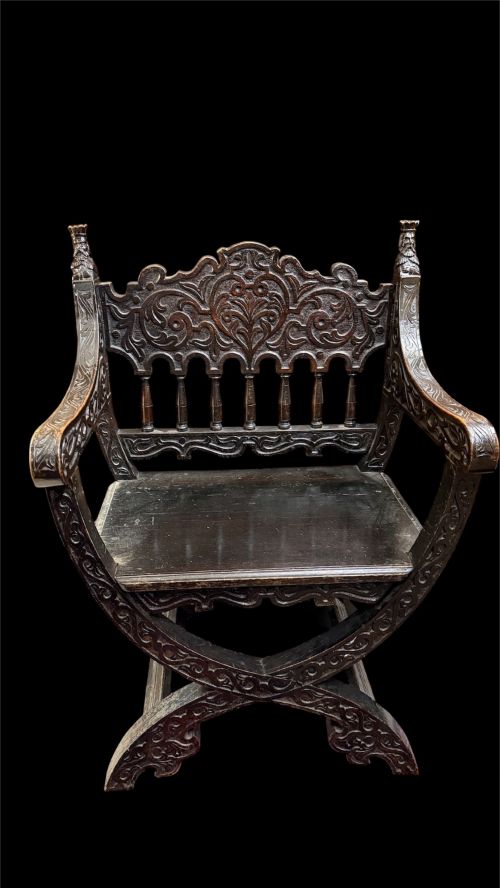
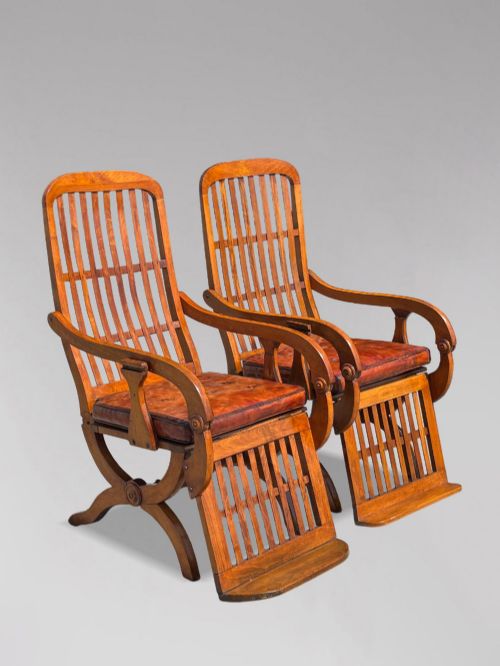


Curule Frame Armchair
A curule frame armchair offers a distinct X-shaped curule support that brings classical lineage straight into a nineteenth-century interior.
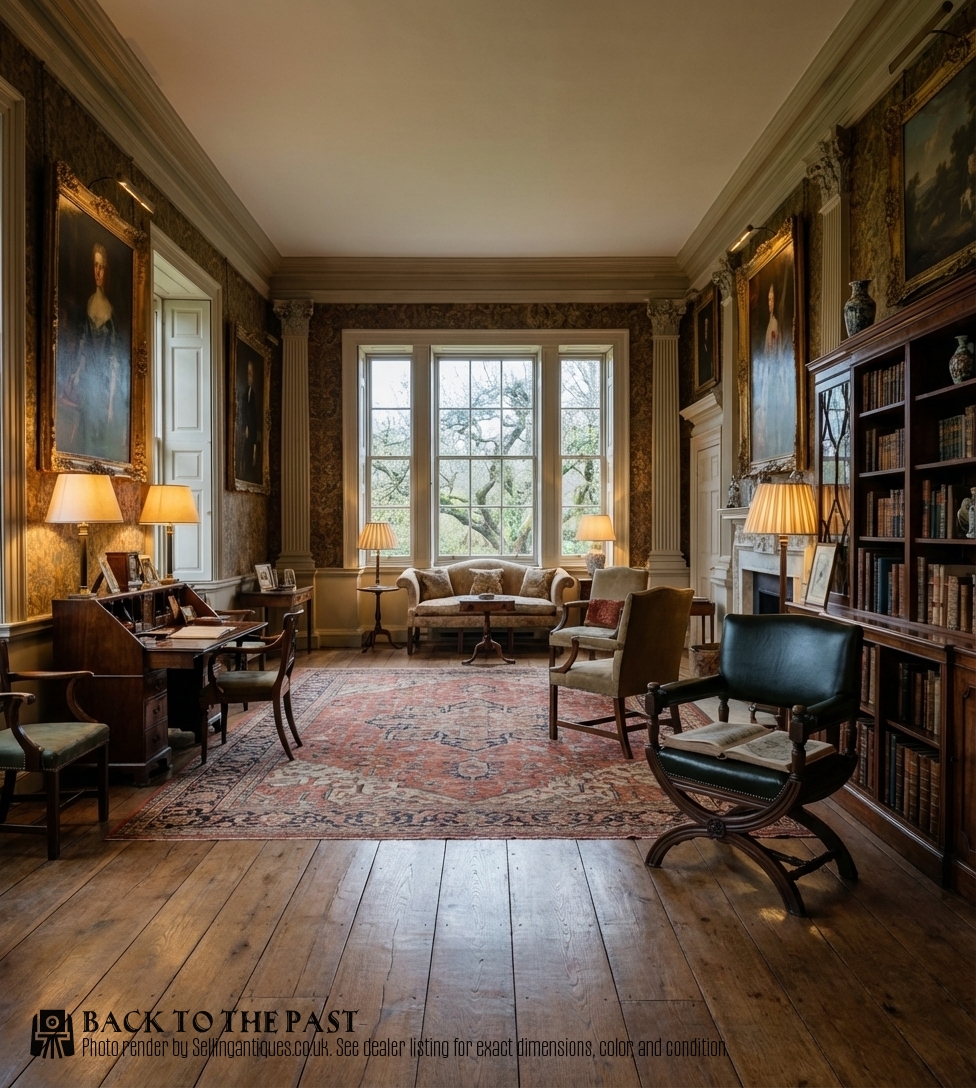
What these armchairs are
A curule frame armchair relies on the ancient X-form structure, a classical curule shape adapted for nineteenth-century seating. These chairs function as library chairs, desk chairs, and open armchairs designed for formal rooms.
The pieces on this page appear in walnut and mahogany, spanning periods from the 1850s through to Edwardian times. Styles range across Victorian, Regency, Gothic Revival, and Neoclassical Revival forms.
Makers utilised various secondary woods and applied brass details, leather, velvet, tapestry, and cane to complete the seating. Most examples date from the nineteenth century with occasional Continental and British regional variations.
How they were made
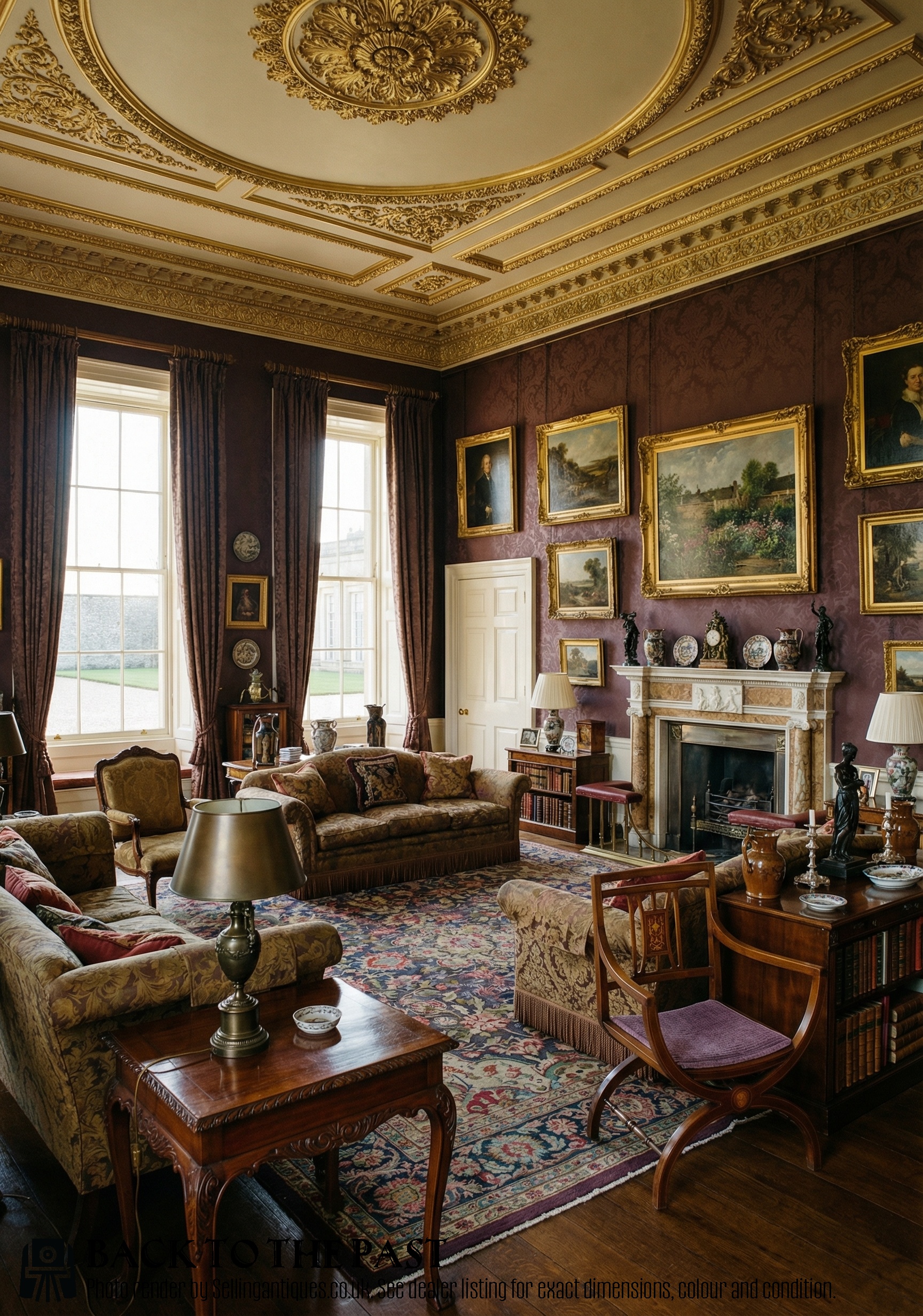
Cabinetmakers constructed the primary X-frames using solid walnut and mahogany, sometimes employing inlaid details or open woodwork. Structural integrity depended on the precise intersection of the crossing frame members beneath the seat.
Upholstered versions integrated leather, velvet, and tapestry panels secured with brass tacks, while other variants utilised woven cane. Wood surfaces received traditional polishing to bring out the natural grain of the timber.
Retail Price Guide 2026
Typical UK retail prices for curule frame armchair, calculated from the Sellingantiques database of over a million retail prices indexed since 2003. This retail price guide relies exclusively on Sellingantiques data; no external sources or auction records are used, so the figures do not describe the wider market.
Roman magistrates once carried portable X-shaped folding seats everywhere, accidentally inventing the ancestor of every library armchair here.
What varies in quality
Quality rests in the precision of the X-frame joinery and the choice of primary timber, where dense walnut and figured mahogany command attention. Finer examples display crisper carving, well-executed inlay, and substantial proportions.
The integration of original upholstery materials, whether leather, velvet, or cane, elevates a piece above standard utility seating. Lesser specimens show simpler turning, plain secondary woods, and later alterations to the frame.
Gillows
The Curule Frame Armchair Glossary
- Curule frame
- A cross-shaped seating support derived from ancient Roman magistrate seats. This structural form defines the profile of the armchair.
- X frame
- An alternative descriptor for furniture built with crossing diagonal supports. It provides both structural bracing and a distinctive silhouette.
- Gothic Revival
- A nineteenth-century design movement drawing on medieval architectural motifs. Pieces in this style often incorporate pointed arches and heavy walnut framing.
- Neoclassical Revival
- A style looking back to ancient Greek and Roman ornamentation. It frequently informs the clean lines and classical proportions seen on these chairs.
- Open armchair
- A chair design featuring un-upholstered arm supports that expose the wooden framework. This form highlights the craftsmanship of the side structure.
Frequently Asked Questions
What is a curule frame armchair?
A curule frame armchair is a seat built with an X-shaped crossing support structure. This design draws on ancient Roman precedents.
Nineteenth-century makers adapted this classical silhouette into library chairs and desk chairs using walnut and mahogany.
Where were these chairs used?
These armchairs typically served in studies, libraries, and formal reception rooms. Their sturdy X-frame construction suited spaces requiring both decorative presence and functional seating.
Desk chairs and library chairs of this form provided stable seating for reading and writing.
How do I date a curule armchair?
Dating relies on identifying the primary wood, construction techniques, and stylistic revival markers. Nineteenth-century pieces often exhibit Victorian, Regency, or Gothic Revival details.
Turnings, joinery methods, and upholstery materials further help narrow the period of manufacture.
Are these chairs comfortable for daily use?
Many examples feature padded upholstery in leather, velvet, or tapestry designed for seated tasks. The supportive X-frame provides a rigid base for daily study or desk work.
Cane-seated versions offer a lighter alternative suited to occasional use in a sitting room.