




Mother of Pearl Armchair
A mother of pearl armchair brings intricate nacre inlay and dense hardwood framing into a room.
Mother of Pearl Armchair
A mother of pearl armchair is an ornate seating piece defined by elaborate shell, bone, and parquetry ornamentation set into a wooden frame. When searching this phrase, buyers encounter examples ranging from 19th-century Syrian and Levantine workshops to Chinese Qing dynasty hardwood suites.
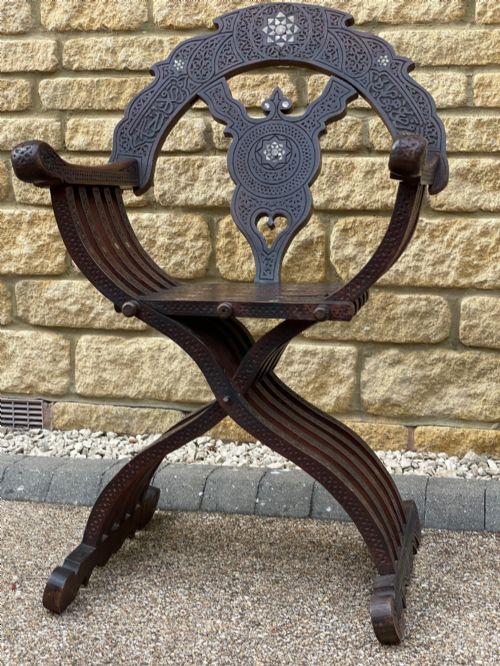
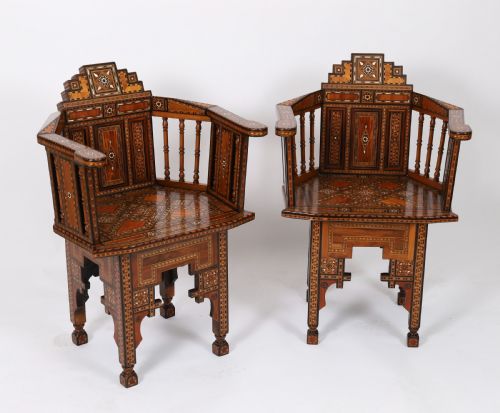
The most common versions on this page are Syrian and Moorish revival armchairs, corner chairs, and X-frame Savonarola seats. These regional pieces utilise dense walnut, fruitwood, or hardwood carcasses covered in geometric nacre inlay and occasional Mashrabiya panels.
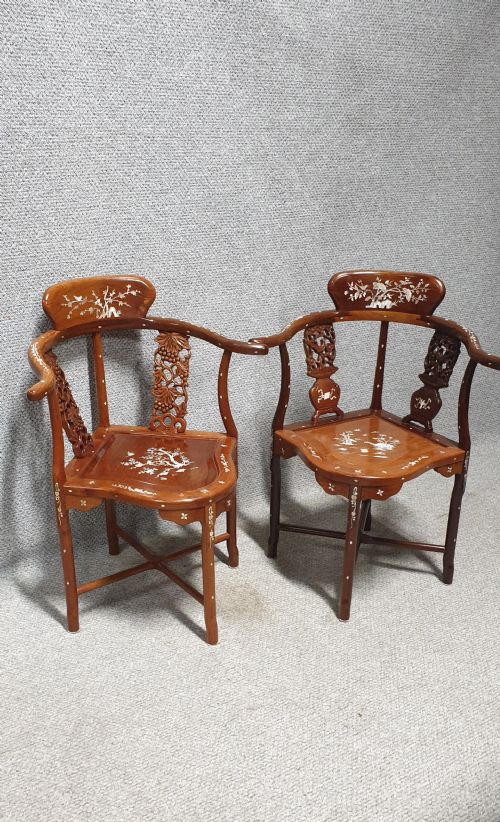
Alongside Middle Eastern seating, the inventory includes occasional chairs and sets from Chinese and Anglo-Moorish traditions. These forms span the late 19th century through the early decades of the 20th century, capturing various global revival movements.
How they were made
The construction relies on joining sturdy timbers such as walnut, fruitwood, and Chinese hardwood to support intricate surface decoration. Artisans shaped these frames into X-shapes, corner chairs, and low lounge forms.
Decoration is achieved through painstaking parquetry and inlay work using mother-of-pearl, nacre shell, and bone. These small geometric segments are hand-fitted into recesses carved directly into the wood.
Additional detailing includes carved mashrabiya lattice panels, brass accents, and inset marble panels. Leather upholstery occasionally completes the seating surface on regional armchairs.
Listings span the late 19th century through the 1920s, covering periods of intense Moorish and Oriental revival.
What varies in quality
Quality rests upon the density and precision of the inlay work across the frame. Master makers ensured that nacre and bone pieces fit tightly together with minimal filler, creating smooth, continuous geometric patterns.
The structural integrity of the underlying hardwood carcass dictates durability. Chairs featuring dense walnut or huanghuali hold their joinery better over decades of use than lighter secondary timbers.
The complexity of the regional carving distinguishes standard output from finer workshop productions. Elements like pierced mashrabiya panels and balanced parquetry alignment elevate the visual depth of the seating.
The Mother of Pearl Armchair Glossary
- Mother-of-pearl
- An iridescent inner nacre layer harvested from mollusc shells used for decorative inlay. It reflects light with pearlescent pink and green tones.
- Mashrabiya
- An architectural pierced wooden lattice screen formed from small turned bobbins. It appears frequently in regional furniture backs and panels.
- Parquetry
- A geometric mosaic of wood, bone, or shell veneer pieces applied to a surface. Artisans arrange contrasting materials to form interlocking patterns.
- Savonarola chair
- A folding X-frame chair constructed from multiple curved wooden slats. This Renaissance form was adopted by later Levantine and Moorish workshops.
Mother of Pearl Armchair: Frequently Asked Questions
Where were mother of pearl armchairs made?
These chairs originate from two distinct regional traditions found in the listings. Many hail from Syrian, Damascus, and Levantine workshops practicing Moorish and Ottoman revival designs.
Others come from Chinese makers producing Qing dynasty hardwood suites and benches.
How do I identify a Syrian armchair?
Syrian armchairs typically feature dense geometric parquetry utilising mother-of-pearl, bone, and nacre shell. They often incorporate walnut or fruitwood frames with arched details and Mashrabiya panels.
Some examples also appear in X-frame or Savonarola seating configurations.
Are these chairs comfortable for daily use?
Most of these chairs are low-slung occasional or accent seating designed primarily for visual impact rather than deep lounging. Many feature upright wooden backs and firm seats.
Placing them in low-traffic reception spaces helps preserve their delicate inlay work.
What is an X-frame chair?
An X-frame chair utilises intersecting curved wooden slats that cross beneath the seat to form an X shape from the side profile. This historic form supports an upholstered or solid seat above.
Middle Eastern workshops adapted this style with extensive nacre inlay.
How should I clean mother of pearl inlay?
Maintenance requires gentle dusting with a soft, dry cloth to prevent debris from settling into the fine grooves between the shell and wood. Liquid cleaners and harsh polishes can damage the natural nacre and the surrounding timber.
Keeping the chair away from direct heat sources protects the old animal glues used in the inlay.