



Dark Wood Inlaid Chair
These dark wood inlaid chairs span centuries of fine cabinet-making, offering distinctive seating that grounds a room with rich timber and intricate detail.
Dark Wood Inlaid Chair
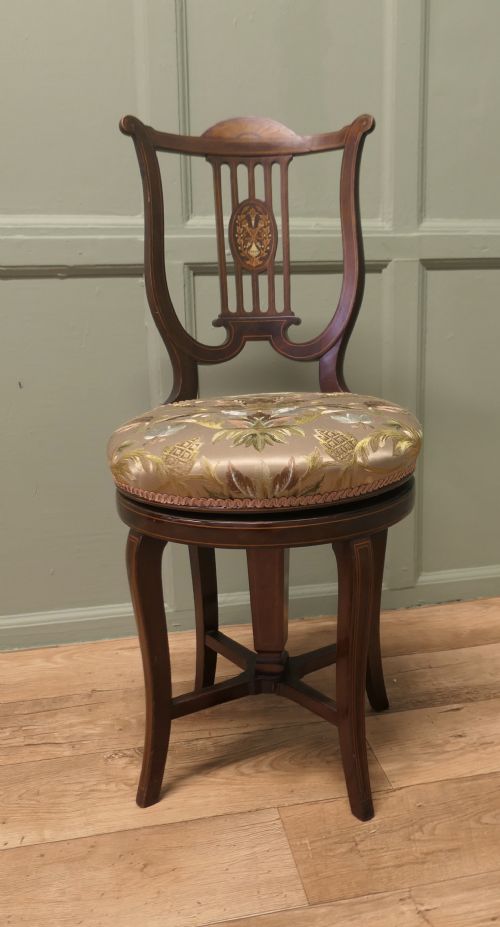
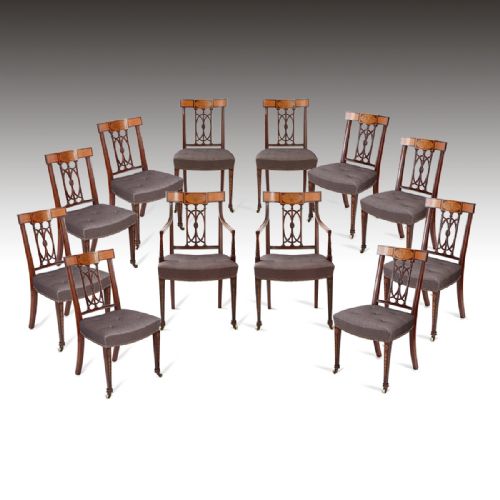
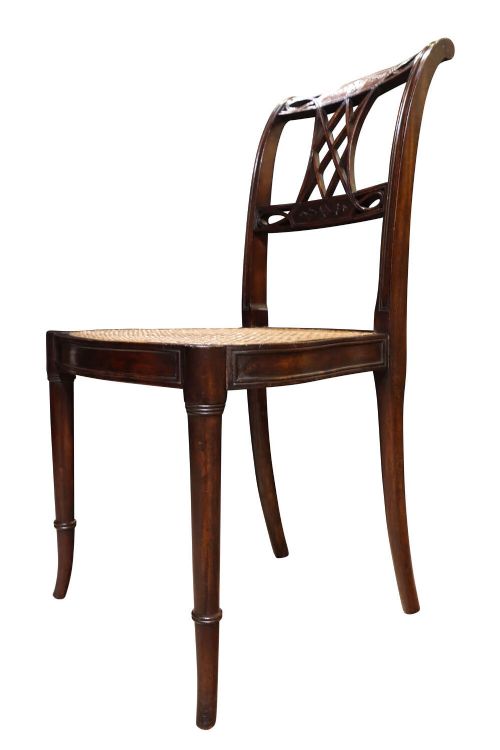
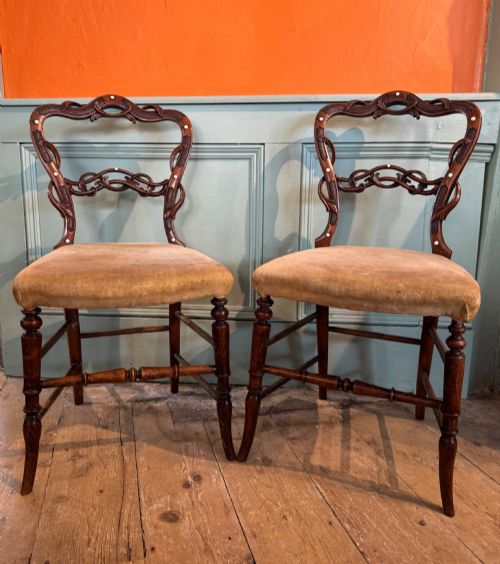
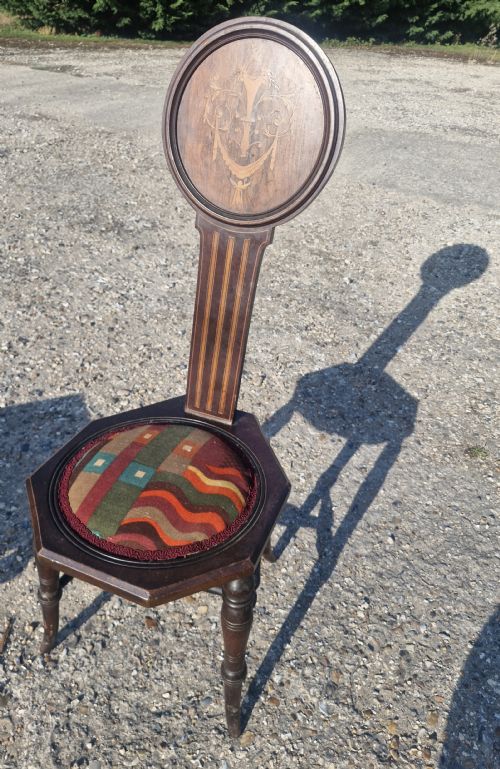
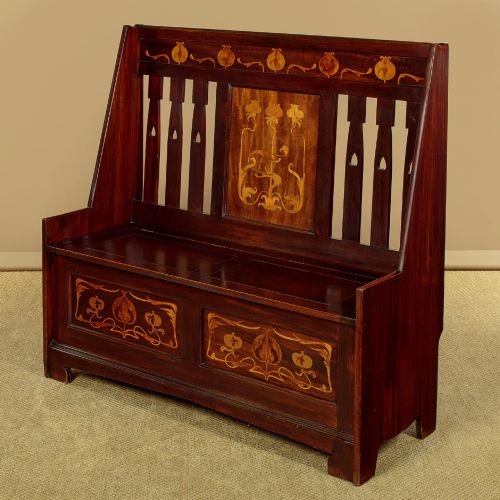
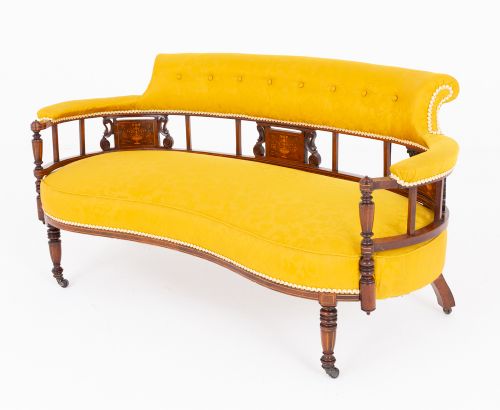
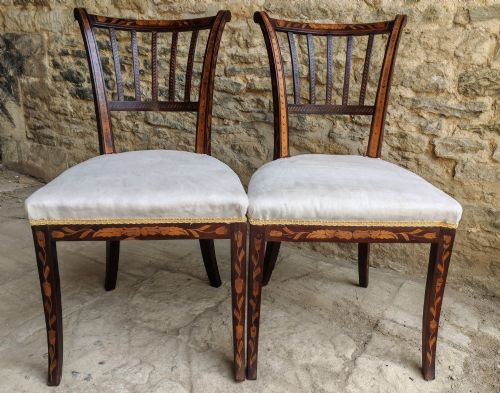
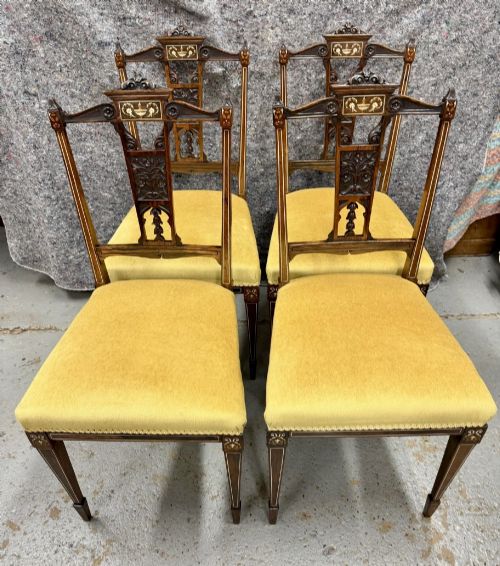
A dark wood inlaid chair covers a broad spectrum of seating forms, ranging from single dining chairs and salon sets to corner chairs, music stools, and occasional armchairs. The pieces appearing in this selection traverse the Georgian, Regency, Victorian, and Edwardian periods, alongside turn-of-the-century interpretations.
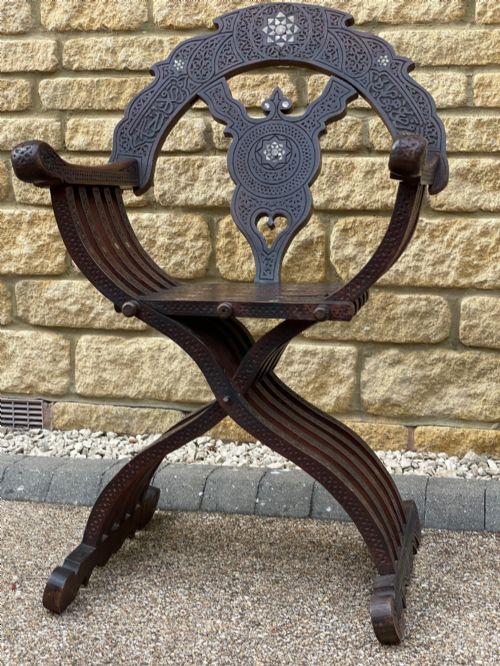
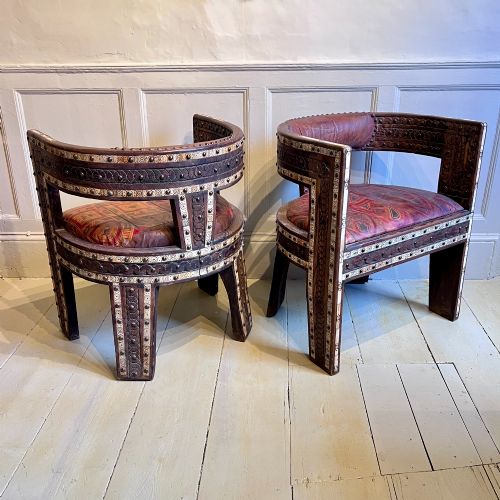
The buyer most frequently encounters mahogany, rosewood, and walnut frames embellished with contrasting wood inlay or metal stringing. These pieces reflect specific stylistic revivals, including Sheraton Revival, Arts and Crafts, and Moorish influences, capturing the shifting tastes of British and continental interiors.
Materials and Construction
Cabinet-makers constructed these chairs using dense timbers such as mahogany, rosewood, and walnut, often shaping them into solid frames or applying decorative veneers. Structural joints relied on traditional mortise and tenon techniques to withstand daily use over generations.
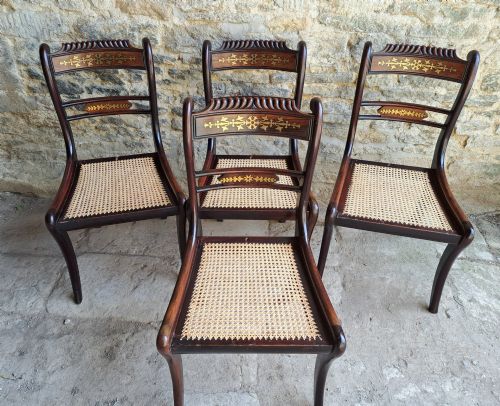
Surface ornamentation involved precise marquetry and inlay work utilising boxwood, mother of pearl, or brass stringing set flush into the timber. Upholstered elements incorporated materials like velvet, leather, fabric, cane, and webbing to provide functional comfort.
Design influences span across Sheraton Revival, Arts and Crafts, and Moorish styles utilising boxwood inlay, velvet, cane, and brass.
Markers of Distinction
The standard of a dark wood inlaid chair rests on the precision of its joinery and the crispness of its carved or inlaid details. Finer examples display meticulous alignment in multi-wood marquetry and secure, seamless fitting around complex curves.
Thicker timbers, substantial gauge brass inlay, and sophisticated timber selection separate master workshops from simpler production pieces. The integrity of the original structure and the restraint shown in decorative embellishments govern the overall standing of the work.
James Shoolbred & Co.·Liberty and Co·Lamb of Manchester
The Dark Wood Inlaid Chair Glossary
- Marquetry
- A decorative technique of applying pieces of veneer to a structure to form ornamental designs and pictures. This method allowed craftsmen to create elaborate floral or geometric patterns across the backrests and seats.
- Stringing
- Thin strips of contrasting wood or metal inlaid into shallow channels on the surface of furniture. It typically outlines panels and legs to accentuate the structural lines of the timber.
- Salon chair
- A light, decorative seat designed for formal reception rooms rather than heavy daily dining. These pieces often feature delicate legs and prominent inlay work.
- Carver elbow chair
- A seating form featuring supportive arms, historically positioned at the head of a dining table. They share matching design motifs with the side chairs in a larger set.
- Mashrabiya
- An architectural element of turned wooden lattice panels incorporated into furniture design. It appears on pieces influenced by Middle Eastern and North African decorative traditions.
Dark Wood Inlaid Chair: Frequently Asked Questions
How do I date a dark wood inlaid chair?
Dating relies on examining the timber species, construction methods, and prevailing stylistic influences. Georgian and Regency pieces often employ heavy brass stringing and mahogany, while Edwardian examples frequently utilise lighter satinwood inlay on rosewood.
Secondary indicators include the type of secondary woods used in the frame underneath and the wear patterns on the feet and joints. Comparing the carving style to known period pattern books helps narrow the decade of manufacture.
Are these chairs suitable for daily dining?
Many of these pieces were built specifically as dining sets and remain robust enough for regular use. Ensuring the structural joints are firm prevents movement and protects the historical timber from undue strain.
Careful placement away from direct heat sources and sunlight preserves both the polish and the delicate inlaid elements. Periodic checks of the underlying webbing and upholstery maintain their comfort and stability.
What is the difference between marquetry and inlay?
Inlay involves cutting a recess into a solid piece of wood and inserting a contrasting material, such as brass or a different timber, flush with the surface. Marquetry is a broader assembly of veneers applied to the entire surface to form a pictorial design.
Both techniques were used extensively to decorate high-status seating across the nineteenth and early twentieth centuries. Understanding the distinction helps identify the specific skill level required to produce the ornament.
How should I clean antique wood inlay?
Maintenance requires gentle dusting with a soft, dry cloth to prevent abrasive particles from scratching the polished surface. Avoid harsh chemical cleaners or excess moisture, which can loosen fragile veneers and metal stringing.
Applying microcrystalline wax periodically feeds the timber and protects the contrasting woods from drying out. Professional conservation is recommended if any elements of the inlay begin to lift or separate.