
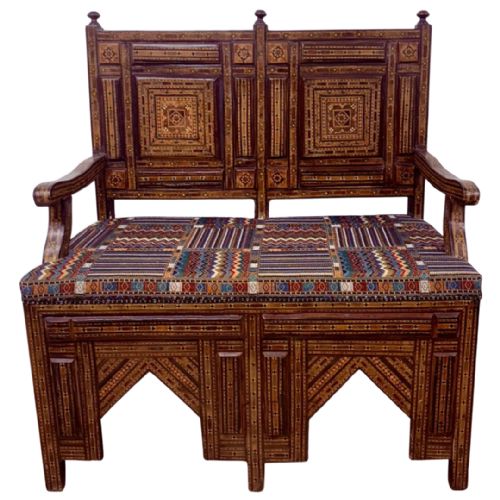
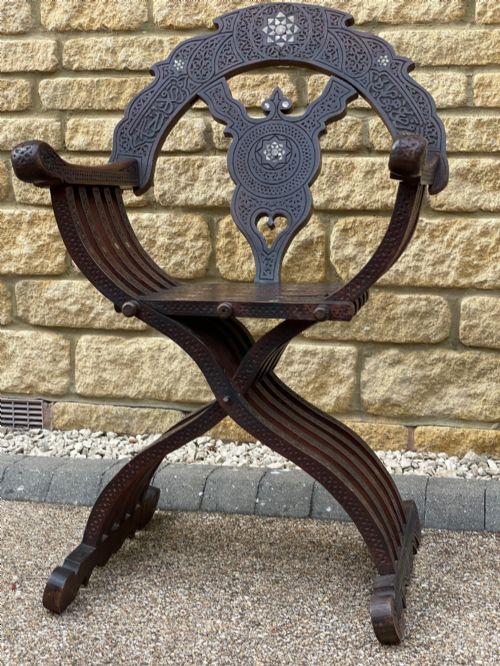
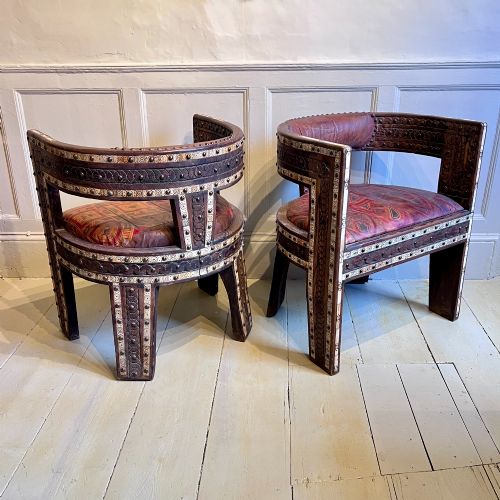
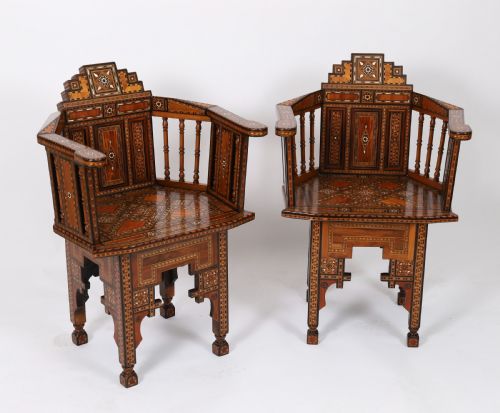


Antique Bone Inlaid Seat
These antique bone inlaid seat examples bring intricate Levantine and Moorish craftsmanship straight into your hallway or drawing room.
Antique Bone Inlaid Seat
An antique bone inlaid seat encompasses a diverse range of armchairs, settees, and folding chairs originating from various global traditions. You encounter pieces spanning the nineteenth century through the early twentieth century, reflecting distinct stylistic revivals.
The selections on this page heavily feature Moorish, Syrian, and Levantine influences alongside Edwardian and Italian interpretations. Forms vary from conversation seats and corner chairs to substantial settees and folding campaign chairs.
Moorish Revival and Islamic Revival pieces dominate the stylistic landscape, often incorporating elaborate geometric panels and intricate parquetry. These seating options serve as striking focal points in contemporary and traditional interiors alike.
Materials and construction methods
Artisans construct these frames from sturdy hardwoods such as walnut and satinwood, providing a stable foundation for detailed ornamentation. Master craftsmen then apply delicate bone and mother-of-pearl inlay directly into the wooden surfaces, creating contrasting geometric and floral patterns.
Many examples incorporate specialised woodworking techniques like Mashrabiya panels, pierced carved crest rails, and detailed parquetry work. Metal elements such as brass appear alongside fabric and velvet upholstery to complete the functional design of the seat.
The available seating spans the nineteenth century through the Edwardian period, encompassing Moorish and Italian Revival styles.
Assessing craftsmanship and detail
The distinction between standard examples and exceptional pieces rests upon the density and precision of the inlay work. Finer items display meticulous placement of individual bone and mother-of-pearl tesserae forming complex symmetrical patterns across the entire frame.
Structural integrity and the complexity of the woodwork also define the upper tier of these seating options. Pieces featuring intricate pierced carvings, specialised folding mechanisms, or integrated Mashrabiya panels demonstrate a higher level of workshop expertise.
Liberty and Co
The Antique Bone Inlaid Seat Glossary
- Mashrabiya
- A traditional architectural element featuring turned wooden lattices arranged in intricate geometric patterns. These delicate panels often form the backrests or side panels of Levantine seating.
- Parquetry
- A mosaic of geometric wooden pieces used for decorative effect on furniture surfaces. Craftsmen combine different wood tones alongside bone inlay to build complex visual depth.
- Savonarola Chair
- A type of X-framed folding chair originating in the Italian Renaissance. The form utilises curved wooden slats crossing to form a supportive scissor-like base.
- Campaign Chair
- A portable piece of furniture designed for military use in the field. These collapsible items often incorporate folding wooden frames and bone button decorations for easy transport.
- Boulle Inlay
- A technique of inlaying brass and tortoiseshell or similar contrasting materials into wood furniture surfaces. Named after the famous French cabinetmaker, it appears on specific revival settees.
Antique Bone Inlaid Seat: Frequently Asked Questions
How do I clean bone inlay?
Dust the wooden frame regularly with a dry, soft cloth to prevent particle buildup within the intricate crevices. Avoid harsh chemical cleaners or excess moisture, which can loosen the delicate bone tesserae and damage the underlying hardwood.
Condition the surrounding wood periodically with a suitable microcrystalline wax to maintain the finish. Treat the inlaid sections with extreme care to preserve their original placement.
Where should I place these seats?
Position these decorative chairs in low-traffic areas or hallways where their detailed patterns can be fully appreciated. They also serve well as striking accent seating in drawing rooms or studies.
Keep the furniture away from direct sunlight and strong heat sources to prevent the wood from warping. Stable indoor humidity levels protect both the structural timber and the historic bone elements.
Are folding campaign chairs sturdy?
Nineteenth-century campaign chairs utilise interlocking X-frame constructions designed for genuine portability and functional strength. The clever engineering distributes weight evenly across the wooden pivots and supporting rails.
Inspect the pivot joints and bone button decorations regularly to ensure the mechanism operates smoothly. Sit down gently to respect the age and historic construction of the folding frame.
What defines Moorish Revival furniture?
Moorish Revival pieces draw heavily on Islamic architecture, featuring horseshoe arches, intricate tile-like geometric patterns, and turned spindle work. Craftsmen utilised bone and mother-of-pearl inlay to create high-contrast decorative surfaces.
This aesthetic gained immense popularity in Europe during the nineteenth century alongside other exotic design movements. The resulting seating combines comfort with elaborate Near Eastern ornamentation.