


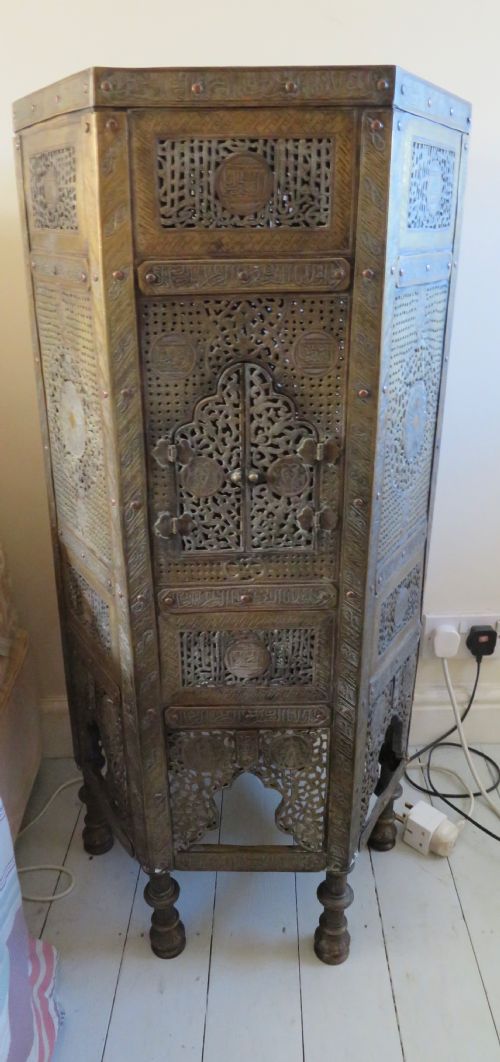


Victorian Orientalist Furniture
Victorian orientalist furniture brings intricate inlay and exotic motifs into nineteenth-century rooms, offering rich texture and distinct historical character.
Victorian Orientalist Furniture
Victorian orientalist furniture encompasses decorative seating, tables, and cabinets produced during the nineteenth and early twentieth centuries under the influence of Middle Eastern, East Asian, and North African design. These pieces draw heavily on Moorish Revival, Syrian Ottoman, Mamluk Revival, and Japonisme styles, reflecting British fascination with global aesthetic traditions.
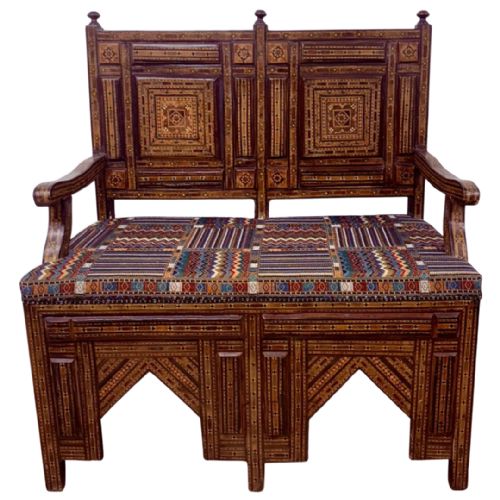
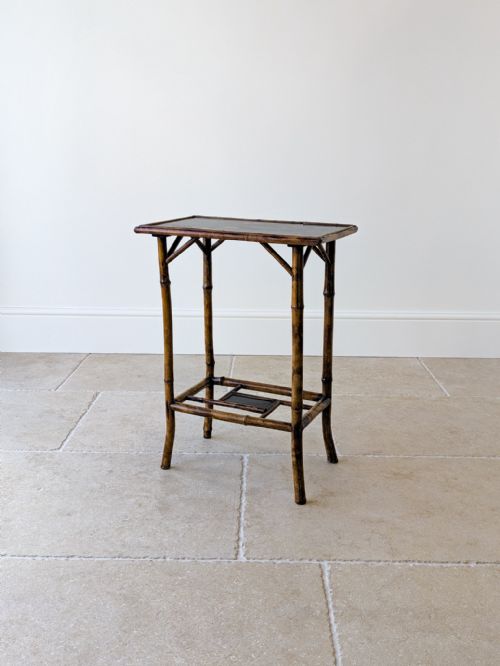
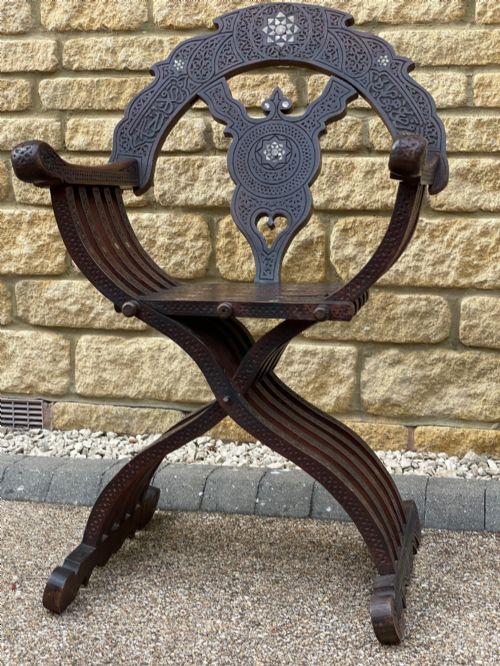
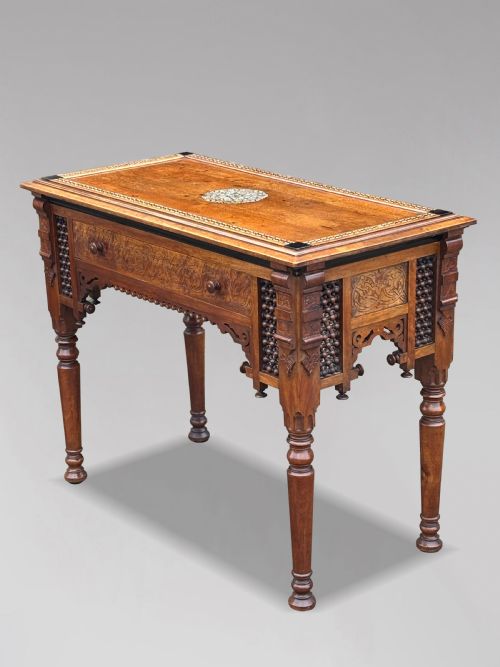
Occasional tables and side tables dominate the selections, alongside chairs, stools, and music cabinets. Forms frequently feature geometric octagonal shapes, intricate openwork, and distinct seating suites designed to create an exotic focal point within a domestic interior.
The materials and construction reflect a blend of European cabinet-making techniques with imported stylistic idioms. Pieces range from Moorish inlaid occasional tables to elaborately carved hall benches and conversation seats.
How They Were Made
Workshops utilised dense timbers such as walnut, oak, ebonised wood, and various hardwoods as foundations for complex decorative schemes. These surfaces provided stable bases for intricate geometric and floral ornamentation.
Artisans applied detailed surface embellishments using mother-of-pearl, bone, brass, copper, and white-metal inlay. This meticulous handwork created high-contrast patterns across table tops, chair backs, and cabinet panels.
Listings feature walnut, oak, and ebonised wood combined with mother-of-pearl, bone, and brass inlay across multiple nineteenth-century styles.
What Varies in Quality
The precision and density of the inlay separate finer examples from standard commercial production. Superior pieces display tightly fitted mother-of-pearl, bone, and metal elements with minimal filler, whereas lesser items rely on simpler surface decoration.
Structural integrity and the quality of the underlying timber dictate longevity and execution standard. Solid hardwoods and robust joinery distinguish expertly built cabinets and seating from more fragile decorative novelties.
Gabriel Viardot·Liberty & Co.
The Victorian Orientalist Furniture Glossary
- Japonisme
- The influence of Japanese art and design on Western decorative arts during the late nineteenth century. This style frequently appears in furniture through asymmetrical compositions and natural motifs.
- Cairoware
- Metalwork produced in Cairo featuring inlaid copper, silver, and white metal on brass surfaces. Such decorative techniques translated directly onto tables and decorative objects imported or adapted for the British market.
- Occasional table
- A small, versatile table designed for specific, intermittent uses rather than primary dining or writing. These pieces include hexagonal and octagonal forms intended for display or holding small items.
Victorian Orientalist Furniture: Frequently Asked Questions
What is orientalist furniture?
Orientalist furniture comprises nineteenth-century European pieces designed with stylistic influences from the Middle East, North Africa, and East Asia. These items incorporate traditional motifs and construction methods adapted for Western homes.
Such pieces range from tables featuring intricate mother-of-pearl inlay to carved seating suites and music cabinets reflecting global aesthetic movements.
How do I identify Moorish style?
Moorish style furniture is recognisable by geometric patterns, intricate lattice work, and extensive use of inlay materials like bone and mother-of-pearl. Octagonal table tops and horseshoe arches are also common indicators.
These designs often utilise ebonised wood or dark hardwoods to create high contrast against the bright metallic or shell embellishments.
Where were these pieces used?
Homeowners placed these furnishings in reception rooms, drawing rooms, and hallways to demonstrate worldly taste and an appreciation for exotic craftsmanship. Smaller tables and stools served as flexible accent pieces.
Conversation seats and matching suites created designated social areas within Victorian drawing rooms, doubling as decorative statements.
How do I care for inlaid wood?
Inlaid surfaces require stable indoor humidity and temperature to prevent the timber from shrinking and loosening the mother-of-pearl or metal elements. Gentle dusting with a dry cloth protects the delicate components.
Avoid placing these items in direct sunlight or near heat sources, as extreme conditions can dry out the wood and cause inlay pieces to detach.