



Syrian Inlaid Chair
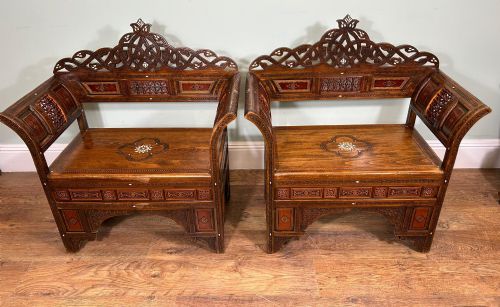
These Syrian inlaid chairs bring intricate geometric pattern and mother-of-pearl detail into a room, offering striking seating rooted in Middle Eastern craft.
Syrian Inlaid Chair
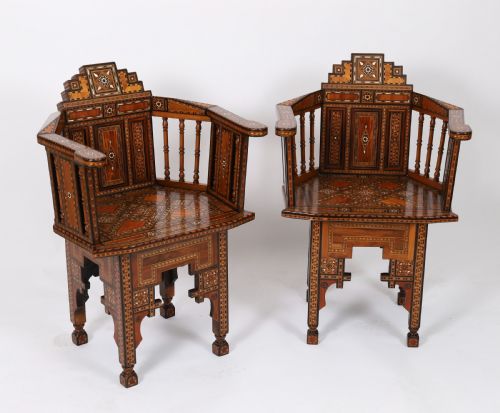
A Syrian inlaid chair is a distinctive form of seating defined by elaborate geometric parquetry and contrasting decorative panels. When you search for a syrian inlaid chair, you encounter regional variations spanning armchairs, accent chairs, side chairs, and folding forms.
Most examples appearing on this page belong to the nineteenth century, nineteen hundred, and early twentieth century. These pieces reflect broader revival movements, including Moorish Revival, Syrian Ottoman, and Levantine styles.
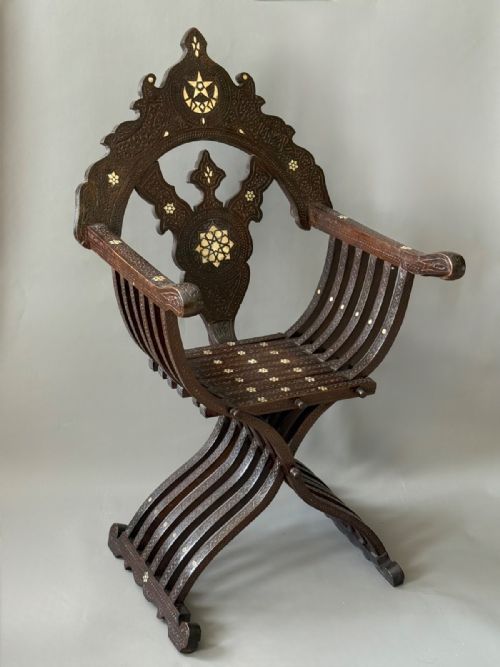
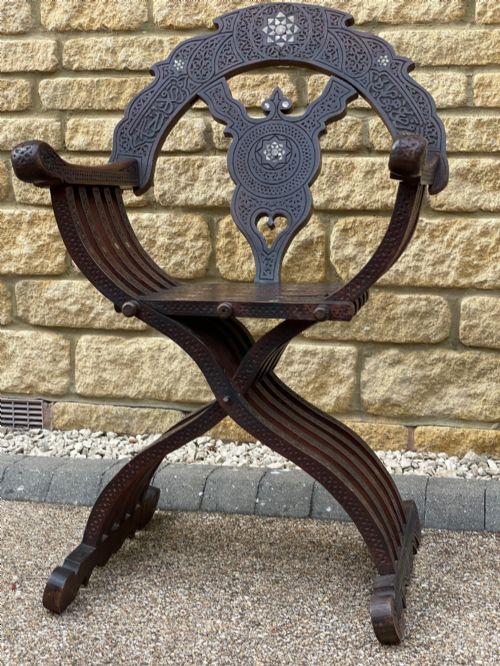
Forms range from conventional armchairs to conversation seats, settees, and X-frame Savonarola chairs. They serve equally as functional seating and as decorative focal points within traditional or eclectic interiors.
Materials and Construction
The foundation of these pieces relies on timbers such as walnut, fruitwood, and other hardwoods. Woodworkers shaped these bases to support intricate surface decoration.
Surface patterns incorporate extensive inlay work using mother-of-pearl, nacre-shell, and bone. Artisans set these materials into precise geometric channels carved directly into the wooden frame.
Syrian Inlaid Chair Retail Price Guide 2026
Typical asking prices for syrian inlaid chair among the pieces listed under this phrase on Sellingantiques today, from the lower quarter to the upper quarter. They describe what is for sale here now, not the wider market.
Design styles span Moorish Revival, Syrian Ottoman, and Levantine traditions applied to X-frames, armchairs, and conversation seats.
Judging Quality and Execution
Quality rests upon the precision and density of the parquetry work. Fine examples exhibit tight, uniform geometric tessellation where individual pieces of bone and mother-of-pearl fit seamlessly without excessive filler.
The depth and clarity of the underlying woodwork also dictate overall merit. Crisp carving on hardwood frames distinguishes master workshops from simpler commercial output.
The Syrian Inlaid Chair Glossary
- Parquetry
- A geometric mosaic of wood pieces used for decorative floors and furniture surfaces. It forms the primary backdrop for inlaid shell and bone.
- Savonarola chair
- A folding armchair constructed of multiple intersecting wooden slats forming an X-frame. This Renaissance-inspired shape was widely adopted in Middle Eastern revival seating.
- Mother-of-pearl
- The iridescent inner layer of mollusc shells used extensively for decorative inlay. It provides luminous contrast against dark walnut and hardwood frames.
- Moorish Revival
- An architectural and decorative style popular in the nineteenth century that reinterpreted Islamic design motifs. It heavily influences the ornamentation found on these chairs.
Syrian Inlaid Chair: Frequently Asked Questions
How do I clean a Syrian inlaid chair?
Dust regularly with a soft, dry cloth to protect the delicate shell and bone segments. Avoid liquid polishes or harsh chemicals that can loosen the adhesive holding the inlay.
Maintain moderate indoor humidity levels to prevent the hardwood base from shrinking and causing the geometric inlay to lift.
Are these chairs comfortable for daily seating?
Many examples function primarily as decorative accent pieces rather than deep lounge seating. Their upright proportions and rigid wooden backs suit occasional sitting in studies or hallways.
Adding a tailored silk or velvet cushion can improve comfort without concealing the intricate armrests and frame details.
How do I date a Syrian inlaid chair?
Examine the construction joints, timber type, and style of the mother-of-pearl patterns. Pieces from the nineteenth century often feature hand-cut shell and denser hardwood frames.
Reference the period markers listed across nineteenth century and early twentieth century examples to compare framing techniques and decorative motifs.
Where should I place this chair at home?
Position the chair in a low-traffic area where the reflective mother-of-pearl inlay catches natural light. Hallways, drawing rooms, and reading corners provide ideal settings.
Keep the piece away from direct sunlight and heat sources to preserve the natural moisture in the wood and bone elements.