



Moorish Inlaid Armchairs
These moorish inlaid armchairs bring striking geometric patterns and intricate woodwork into a room, offering both comfortable seating and historic character.
Moorish Inlaid Armchairs
Most examples originate from the late nineteenth and early twentieth centuries, spanning the 1890s through to the 1930s. Buyers frequently encounter pairs and suites alongside individual statement chairs reflecting these intricate regional designs.
How they were made
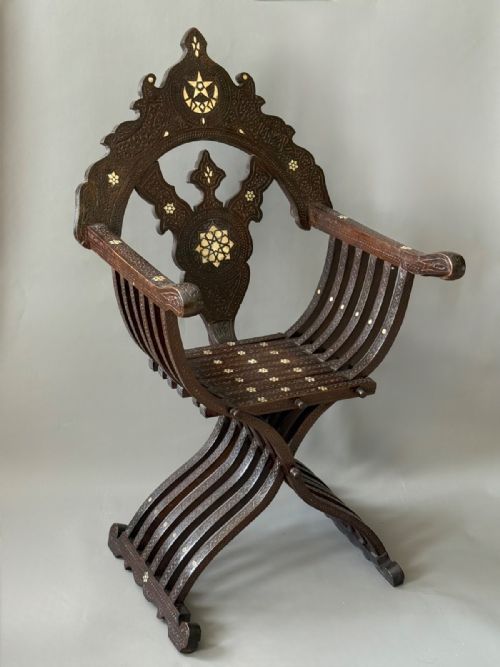
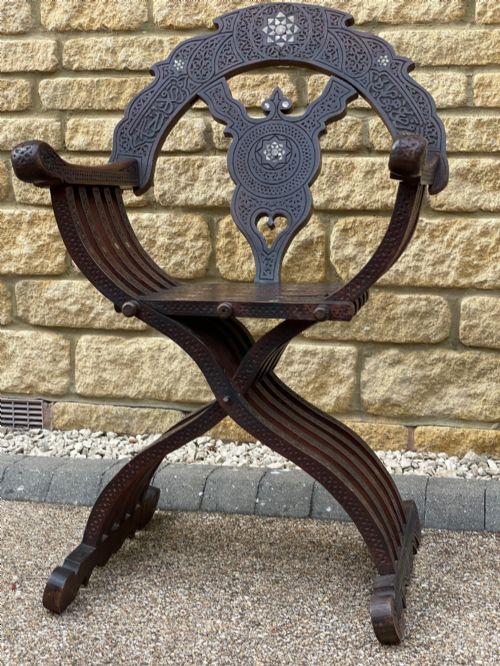
Maker workshops built these chairs using timber foundations of walnut, fruitwood, and other hardwoods. Artisans incorporated intricate joinery, creating forms that include traditional X-frame structures and folding designs.
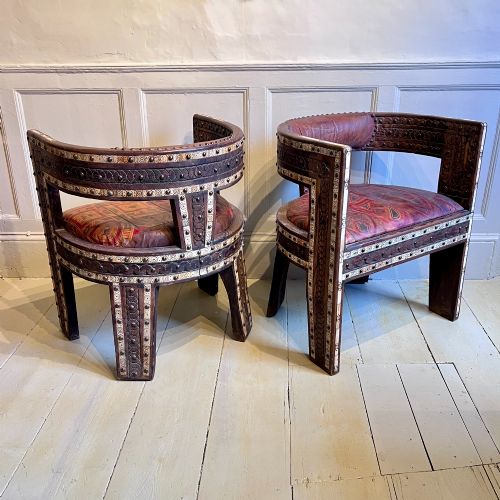
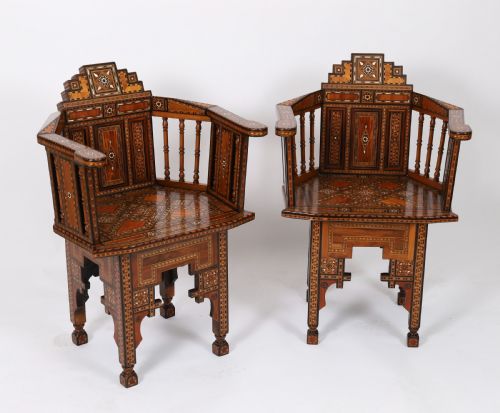
Surface decoration relies heavily on detailed parquetry and geometric inlay work utilising bone, mother-of-pearl, and nacre shell. Certain pieces integrate carved wooden elements such as mashrabiya panels, occasionally complemented by leather upholstery or brass details.
Moorish Inlaid Armchairs Retail Price Guide 2026
Typical asking prices for moorish inlaid armchairs among the pieces listed under this phrase on Sellingantiques today, from the lower quarter to the upper quarter. They describe what is for sale here now, not the wider market.
One clever folding chair design allows an ornate Levantine seat to collapse flat for travel, proving that historic portability could still be remarkably decorative.
What varies in quality
The sophistication of the surface decoration determines much of the distinction between pieces, particularly the precision and density of the bone and mother-of-pearl inlay. Finer examples display meticulous geometric alignment across complex wooden forms and integrated architectural panels.
The integrity of the underlying timber framework and the preservation of delicate inlaid elements set apart the more substantial examples. Chairs retaining balanced proportions and complete decorative schemes demonstrate superior craftsmanship.
Liberty and Co
The Moorish Inlaid Armchairs Glossary
- Moorish Revival
- An architectural and decorative style popular in the nineteenth century that reinterpreted traditional Islamic design elements from Spain and North Africa. It heavily influenced furniture makers working in European and Middle Eastern centres.
- Mashrabiya
- A type of projected wooden window screen with an intricate lattice of turned bobs and spindles. In furniture, these decorative panels are often incorporated into chair backs and structural frames.
- Parquetry
- A geometric mosaic of wood pieces used for decorative surface inlay. Craftsmen arrange contrasting timbers to create complex interlocking patterns across the arms and backrests.
- Nacre
- The iridescent internal layer of mollusc shells, commonly referred to as mother-of-pearl. It is shaped into small geometric tiles and embedded into wooden frames.
- X-frame
- A structural furniture form where intersecting diagonal legs support the seat. This historic folding design dates back centuries and appears in various regional traditions.
Moorish Inlaid Armchairs: Frequently Asked Questions
How do I care for inlaid wood?
Protect the delicate bone and mother-of-pearl inlay by maintaining stable humidity levels away from direct heat sources and sunlight. Gentle dusting with a soft, dry cloth preserves the polished wooden surfaces without moisture damage.
Avoid using standard liquid furniture polishes that can seep beneath small inlaid tiles and loosen the historic adhesives holding the geometric patterns together.
Are these chairs comfortable for daily use?
While many feature supportive armrests and ergonomic proportions, their primary appeal lies in their intricate decorative construction and historic craftsmanship. Some variations include upholstered leather seats or conversation layouts designed for formal reception rooms.
Consider the upright posture and rigid wooden or inlaid backs when selecting a chair for regular seating rather than occasional placement in a study or hallway.
How can I distinguish different regional styles?
Regional styles often reveal themselves through specific combinations of materials and joinery techniques, such as Syrian nacre inlay or Spanish hip-joint framing. The integration of mashrabiya lattice panels typically points toward Levantine and Ottoman influences.
Examining the underlying hardwood species and the specific geometry of the parquetry helps attribute pieces to broader movements like Moorish Revival or Anglo-Moorish production.