
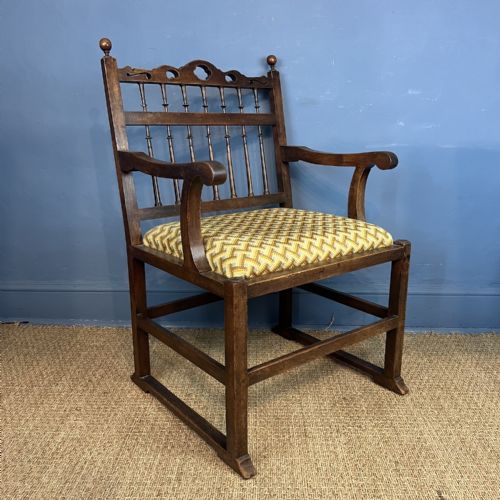
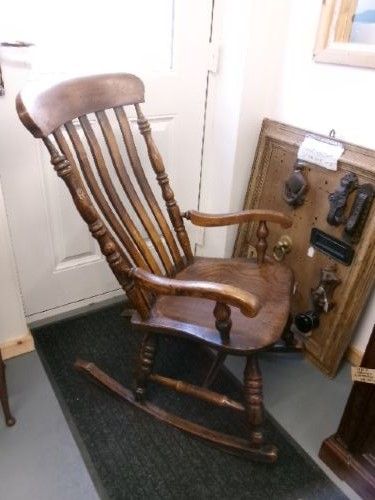
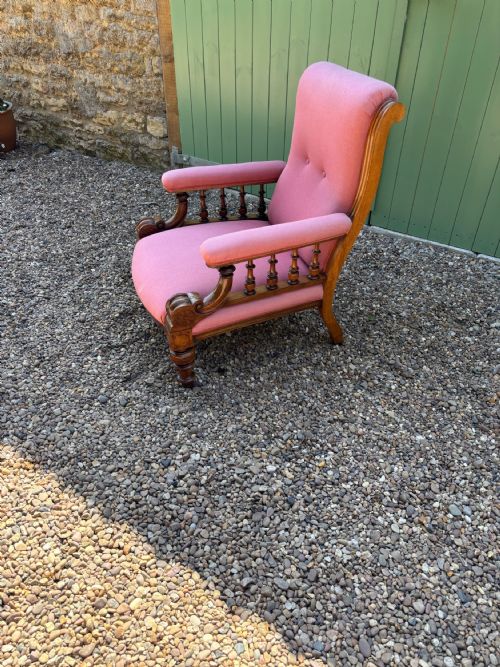
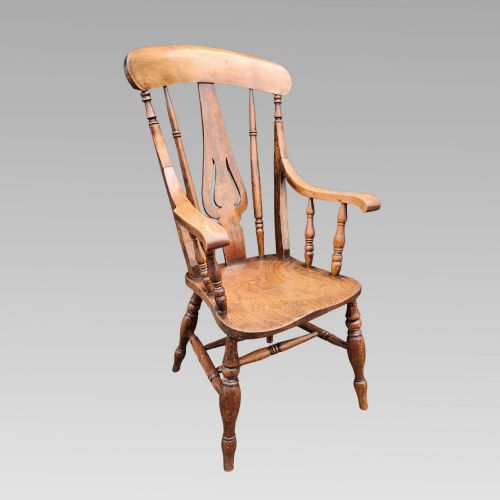


Carved Spindle Back Chairs
Carved spindle back chairs bring honest country craftsmanship and robust vernacular design into daily seating, shaped from sturdy woods like elm and oak.
Carved Spindle Back Chairs
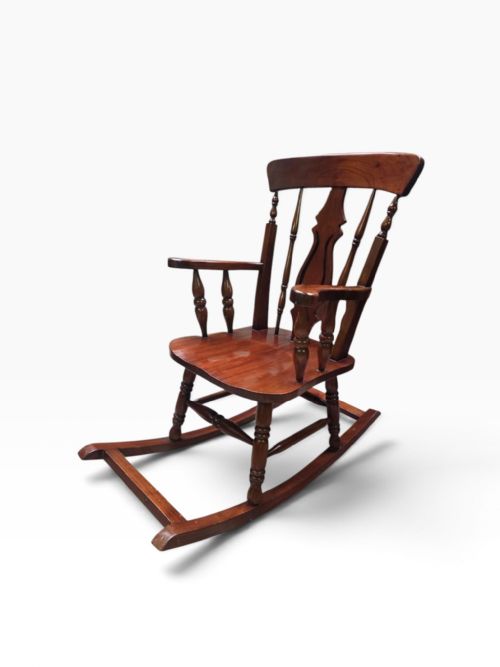
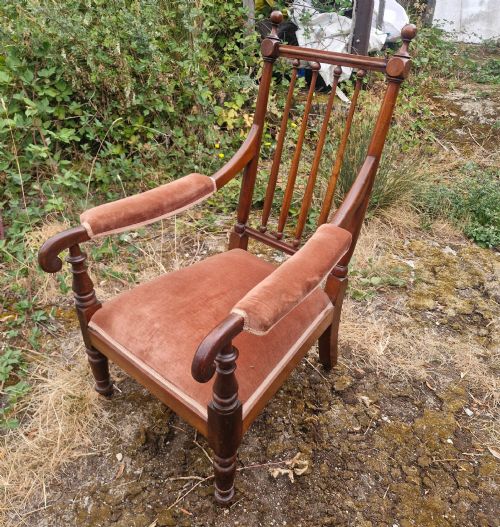
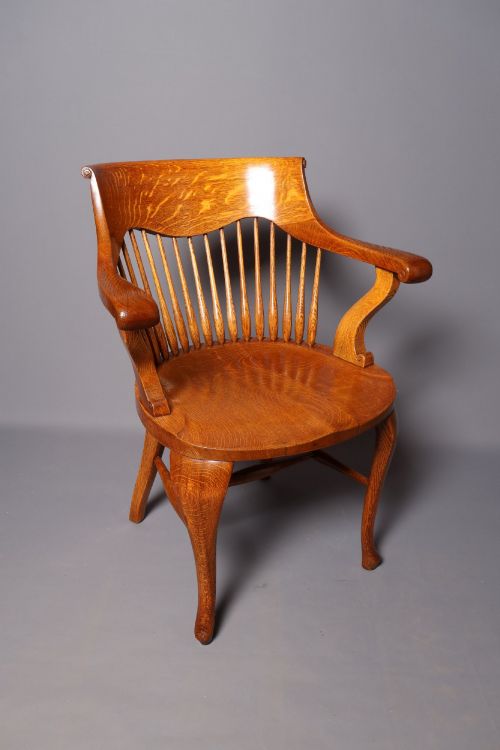
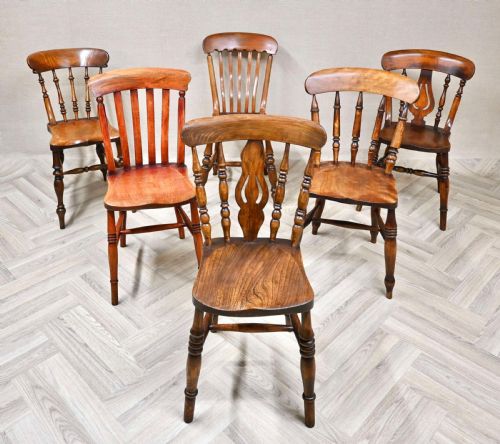
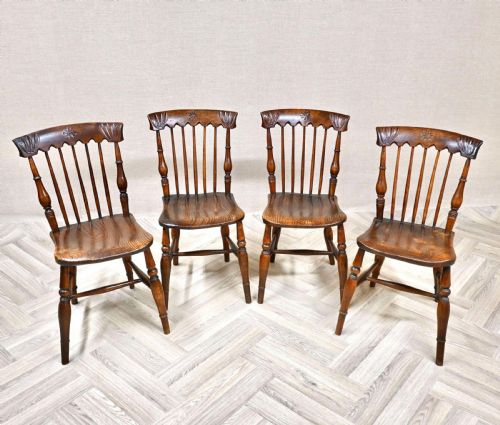
Carved spindle back chairs encompass a diverse range of vernacular seating forms, spanning Windsor armchairs, smokers bows, office desk chairs, and farmhouse rocking chairs produced from the early nineteenth century through the Edwardian period. Buyers encounter robust country kitchen sets alongside individual library, nursing, and captain chairs reflecting both regional British traditions and broader Victorian styles.
The selection here draws primarily upon nineteenth-century pieces, featuring traditional forms such as Thames Valley Windsors, Yorkshire farmhouse rockers, and Westmoreland lawn chairs. These seats served practical daily functions in domestic kitchens, reception halls, offices, and studies, retaining their functional integrity and sturdy proportions over generations.
How they were made
Carpenters and country joiners constructed these chairs using a combination of native timbers, pairing robust elm or ash seats with turned beech spindles, oak frames, and mahogany or walnut components. Turnery lathes shaped the vertical spindles and legs, while skilled hand carving created saddle seats and distinctive pierced splats.
Construction techniques relied on traditional socket and wedged tenon joints, ensuring the rigidity required for heavy daily use in kitchens and offices. Certain refined examples incorporated steam-bent wooden bows and delicate upholstery over brass or fabric elements.
Listings feature nineteen-century vernacular forms in elm, oak, beech, and mahogany, spanning Windsor, farmhouse, and desk chair varieties.
What varies in quality
Quality rests upon the selection of timber and the crispness of the original turning and carving detail, separating utilitarian workshop output from master regional craftsmanship. The presence of dense, figured grain in timbers like yew, satin birch, or mature elm elevates a piece above standard beech and oak construction.
Proportion and structural retention dictate the overall merit of an individual chair, particularly where spindle assemblies and saddle seats endure decades of movement. Examples retaining their original patination and uncompromised joinery demonstrate superior historical integrity.
The Carved Spindle Back Chairs Glossary
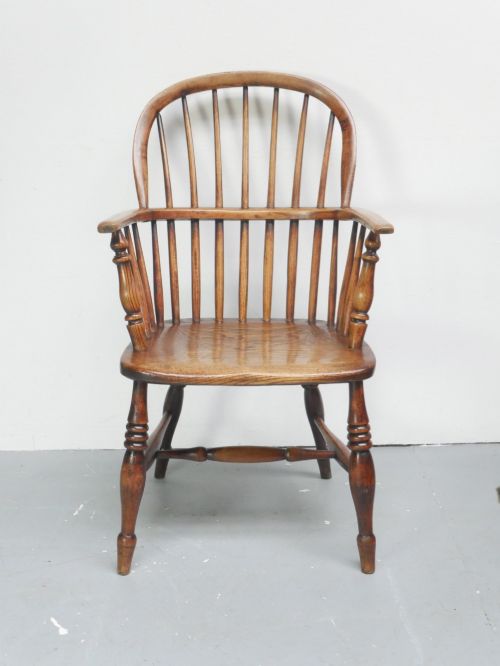
- Windsor
- A traditional chair type featuring a solid carved wooden seat into which the legs and back spindles are directly tenoned. These sturdy forms developed distinct regional variations across Britain.
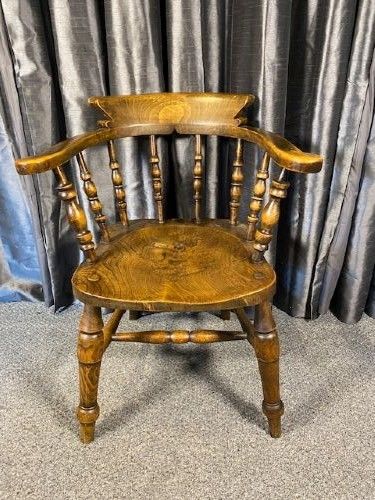
- Smokers Bow
- A low-backed, robust armchair featuring a continuous curved armrail supported by turned spindles, often utilised in public houses and commercial offices. They provide a comfortable, enclosed seat.
- Spindle
- A slender, turned wooden rod used to form the vertical elements of a chair back or undercarriage. They are typically shaped on a lathe to uniform profiles.
- Saddle Seat
- A wooden chair seat hollowed out and shaped into ergonomic contours resembling an equestrian saddle. This technique enhances comfort in heavy utilitarian seating.
Carved Spindle Back Chairs: Frequently Asked Questions
How do I identify a Windsor chair?
A Windsor chair is distinguished by its heavy solid wood seat, which serves as the central anchor for both the legs below and the vertical spindles and back bow above.
Unlike framed chairs, the structural components are tenoned directly into holes bored through the thick seat slab.
Where were these chairs used?
These seats served hardworking domestic and commercial spaces, including farmhouse kitchens, solicitors' offices, and reception halls.
Robust framing allowed them to endure daily demands in active environments without losing structural stability.
What woods are commonly found?
Maker workshops utilised accessible native hardwoods, pairing sturdy elm or ash seats with turned beech spindles and oak frameworks.
Finer urban examples occasionally incorporated mahogany, walnut, yew, or satin birch to suit more formal interiors.
How do I care for wooden seats?
Maintain the wood by applying natural beeswax periodically to nourish the grain and preserve the historic surface patination.
Keep the furniture away from direct heat sources and sudden humidity shifts to prevent timber splitting.