


Bone Inlaid Chair
A bone inlaid chair brings intricate geometric patterns and warm timber tones into a room, offering both seating and striking visual detail.
Bone Inlaid Chair
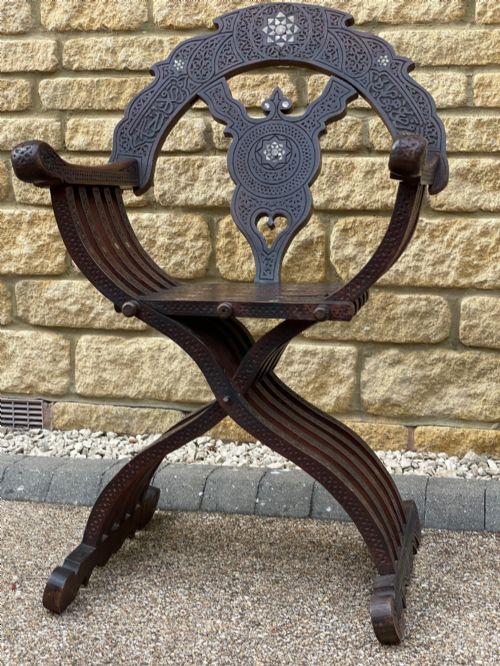
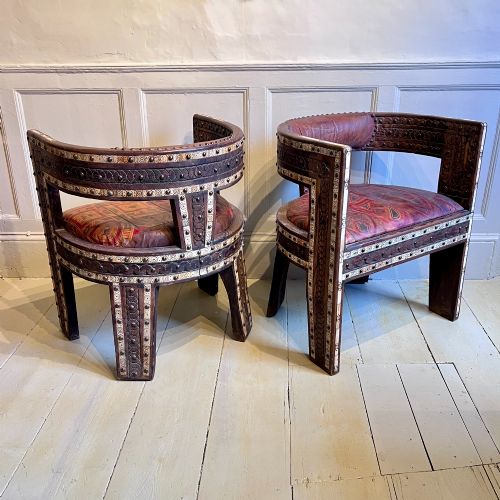
A bone inlaid chair encompasses seating from various global traditions, most frequently appearing in Moorish Revival, Syrian, Levantine, and Anglo-Indian styles. These pieces range from upright hall chairs and corner seats to low folding armchairs and elaborate conversation suites.
The materials span walnut, hardwood, rosewood, and mahogany, decorated with delicate pieces of bone and mother-of-pearl. Surviving examples stretch from the early eighteenth century through the nineteenth century and into the twentieth century.
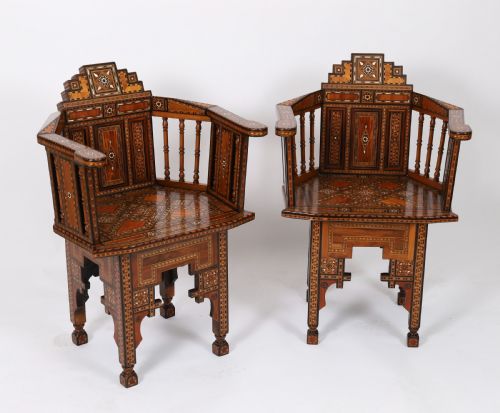
Buyers will most commonly encounter nineteenth-century Moorish and Syrian armchairs or side chairs bearing dense geometric ornamentation. European interpretations, including Italian and Portuguese variants, also appear alongside Anglo-Indian bedroom and salon chairs.
Materials and Construction
Craftsmen built the frames using dense timbers such as walnut, mahogany, and assorted hardwoods, often shaping them through turning and pierced carving. Selected sections received precise chiselling to create shallow recesses for the decorative elements.
Makers shaped small fragments of bone and mother-of-pearl by hand, fitting them tightly into the carved wooden channels to form intricate mosaics and scrollwork. Assemblage frequently utilised traditional joinery alongside wooden pins and bone buttons for structural reinforcement.
Bone Inlaid Chair Retail Price Guide 2026
Typical asking prices for bone inlaid chair among the pieces listed under this phrase on Sellingantiques today, from the lower quarter to the upper quarter. They describe what is for sale here now, not the wider market.
Documented periods span the early eighteenth century through the nineteenth century and into the early twentieth century.
Assessing Quality
The standard of a bone inlaid chair rests primarily upon the precision and complexity of the surface decoration. Superior examples display tightly fitted tesserae with minimal filler, maintaining crisp geometric alignment across complex curves and carved panels.
Structural integrity also separates individual pieces, as intricate pierced work and folding mechanisms require robust framing. The depth of the carving and the inclusion of materials like mother-of-pearl alongside bone generally indicate finer workshop production.
Liberty and Co
The Bone Inlaid Chair Glossary
- Mashrabiya
- A type of projecting oriel window enclosed by carved wood latticework, whose geometric patterns often influence panel designs on furniture.
- Savonarola chair
- A folding chair constructed from multiple curved wooden slats intersecting in an X-shape, named after the fifteenth-century friar.
- Parquetry
- A geometric mosaic of wood pieces used for decorative surfaces, frequently combined with bone and mother-of-pearl inlay.
- Tessera
- An individual small block of stone, tile, glass, or bone used in the creation of a mosaic pattern.
Bone Inlaid Chair: Frequently Asked Questions
How do I clean a bone inlaid chair?
Dust the surface regularly with a soft, dry cloth to prevent debris from settling into the intricate recesses of the inlay.
Avoid using liquid cleaners, polishes, or abrasive cloths, as moisture can loosen the bone fragments and damage the surrounding timber.
Are these chairs comfortable for daily use?
Many of these chairs were designed for formal reception rooms, salons, or occasional seating rather than heavy lounging.
Rigid wooden backs and upright postures mean they function best as accent pieces or occasional seating in low-traffic areas.
How do I distinguish Moorish Revival from Anglo-Indian styles?
Moorish Revival pieces typically feature dense geometric strapwork, arched motifs, and influences from Syrian and North African workshops.
Anglo-Indian examples often incorporate softer floral scrolls and satinwood or rosewood framing reflecting British colonial trade connections.
Why do some chairs have folding frames?
Folding frames, such as those seen on Savonarola and campaign chairs, allowed for portable or flexible seating arrangements.
This construction method made the furniture easier to transport or store while maintaining structural stability through interlocking wooden curves.