


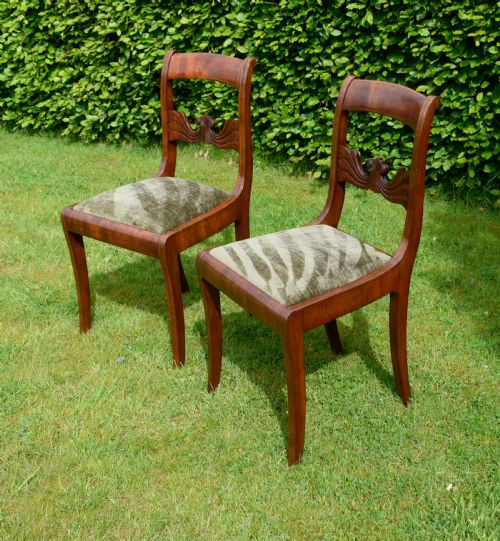


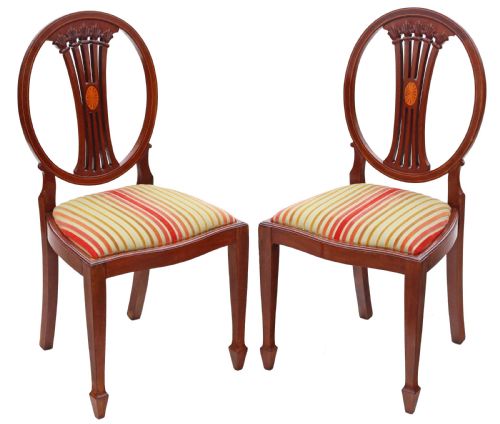
Brown Inlaid Hall Chair
A brown inlaid hall chair brings dark timber and precise marquetry together near an entrance, offering solid utility and decorative detail.
Brown Inlaid Hall Chair
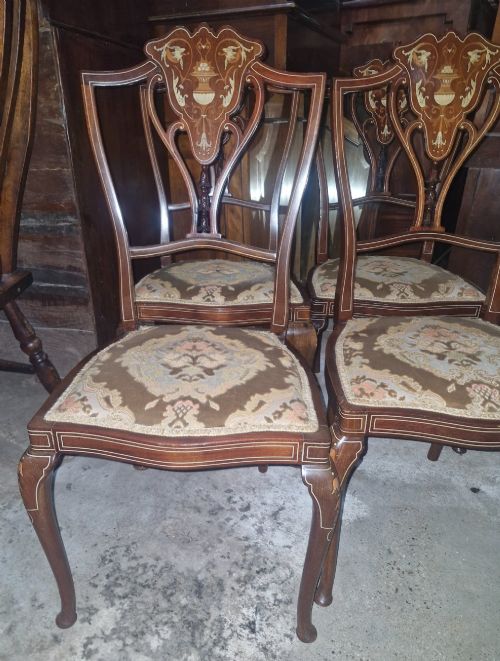
A brown inlaid hall chair typically takes the form of a side chair or a bench designed for occasional seating in a vestibule or corridor. The search phrase brown inlaid hall chair points directly to wooden seating incorporating contrasting wood inlay, satinwood detailing, or bone decoration upon dark surfaces.
Most examples found on this page date from the Edwardian period or the Georgian revival, constructed from mahogany, walnut, or oak. Alongside these formal hall seats, the selection includes related side chairs, occasional seating, and benches sharing similar timber and inlay characteristics.
How they were made
Cabinetmakers utilised dense hardwoods such as mahogany and walnut for the primary frame, often applying lighter satinwood or bone for contrasting surface ornamentation. Wood inlay and marquetry were carefully set into recess channels across the backrests and panels.
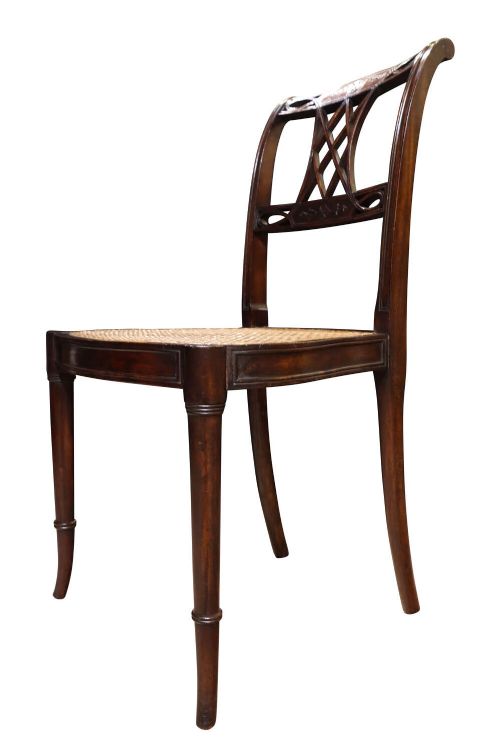
Seating surfaces varied according to the specific form and date, ranging from solid wooden boards and woven cane to upholstered pads finished in fabric or leather.
Brown Inlaid Hall Chair Retail Price Guide 2026
Typical asking prices for brown inlaid hall chair among the pieces listed under this phrase on Sellingantiques today, from the lower quarter to the upper quarter. They describe what is for sale here now, not the wider market.
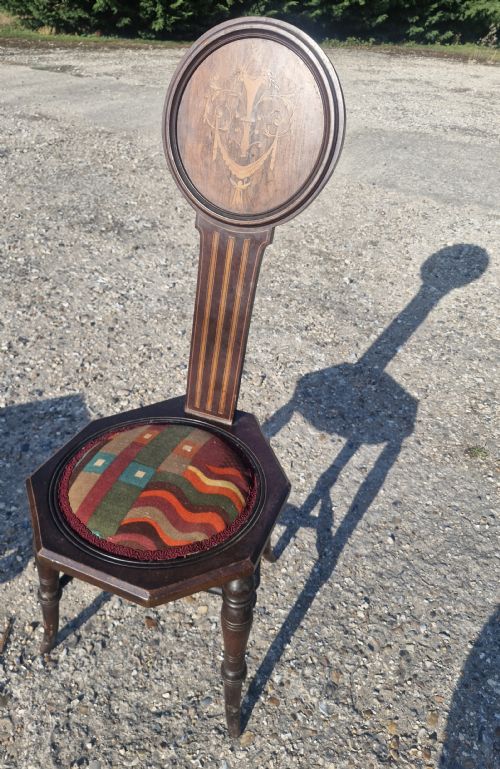
One unexpected Edwardian spinning chair offers a glimpse into historic domestic hobbies.
What varies in quality
Quality rests upon the precision of the cabinetwork and the intricacy of the timber selection. Finer examples display tightly fitted joinery and sharply defined marquetry that remains flush with the surrounding dark wood.
Secondary elements such as the crispness of the carving on structural frames and the integrity of cane or upholstered inserts separate standard production pieces from finer regional workshop items.
The Brown Inlaid Hall Chair Glossary
- Marquetry
- Decorative veneer applied to furniture in patterns using different woods, metals, or other materials. This technique creates pictorial or geometric designs across flat surfaces.
- Satinwood
- A durable, lustrous timber from tropical trees displaying a golden yellow sheen. It serves primarily for contrasting inlay work on darker cabinet woods.
- Side chair
- An upright chair without arms, intended for dining or general placement against walls. These pieces form a large portion of the seating inventory.
- Hall bench
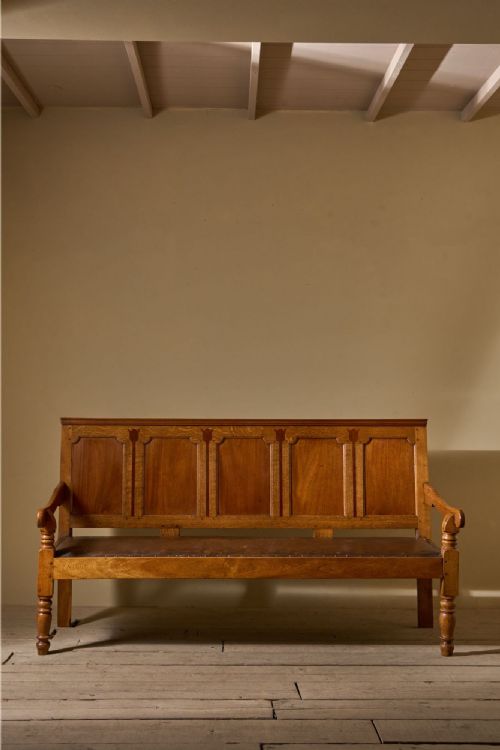
- A long wooden seat intended for entrance spaces, sometimes featuring carved or inlaid back panels. Georgian examples often incorporate panel decoration.
Brown Inlaid Hall Chair: Frequently Asked Questions
Where should I place a hall chair?
These chairs suit narrow spaces such as hallways, landings, and entrance lobbies where a slim profile is practical. Their decorative backrests provide visual interest against plain walls without obstructing movement.
They also function effectively in bedrooms and dressing rooms as occasional seating or garment placement surfaces.
How do I distinguish Edwardian pieces from earlier styles?
Edwardian seating often exhibits lighter framing and machine-cut inlay, reflecting the manufacturing capabilities of the early twentieth century. These items frequently utilise mahogany combined with satinwood stringing.
Earlier Georgian and revival pieces tend to feature heavier proportions, darker oak or walnut timbers, and hand-cut joinery details.
Are these chairs suitable for daily seating?
Most historic seating handles normal daily use provided the joints remain stable and the timber is treated with care. Hall chairs were originally built for brief seating rather than prolonged lounging.
Cane seats and upholstered pads may require periodic tightening or restoration depending on their age and previous wear.
What maintenance do inlaid wooden chairs need?
Keep wooden surfaces nourished using appropriate beeswax or furniture polish applied sparingly with a soft cloth. Avoid placing timber furniture in direct sunlight or near heat sources to prevent the veneer from lifting.
Inspect the inlaid sections periodically to ensure the contrasting elements remain secure within their channels.