


Inlaid Walnut Chairs
These inlaid walnut chairs combine rich timber with intricate surface work, offering collectors both functional seating and striking decorative presence.
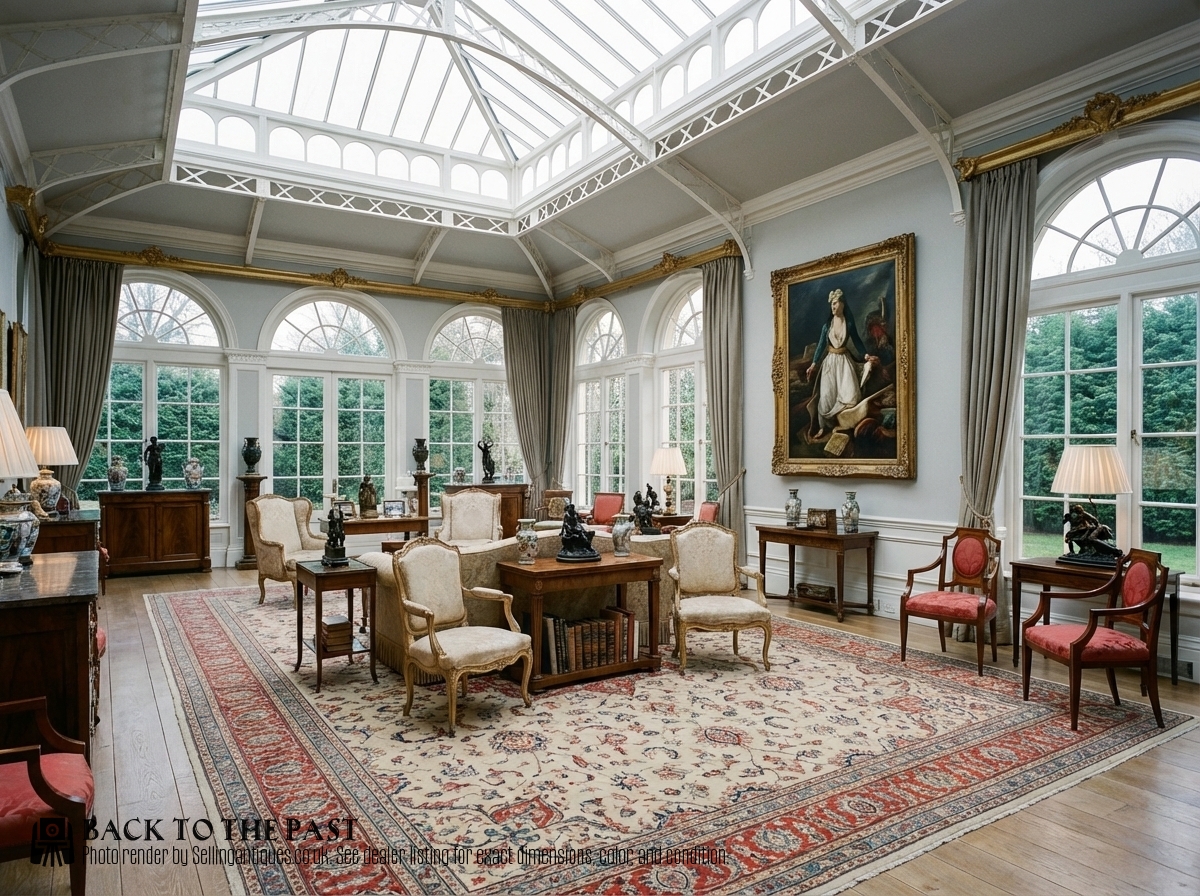
Inlaid Walnut Chairs
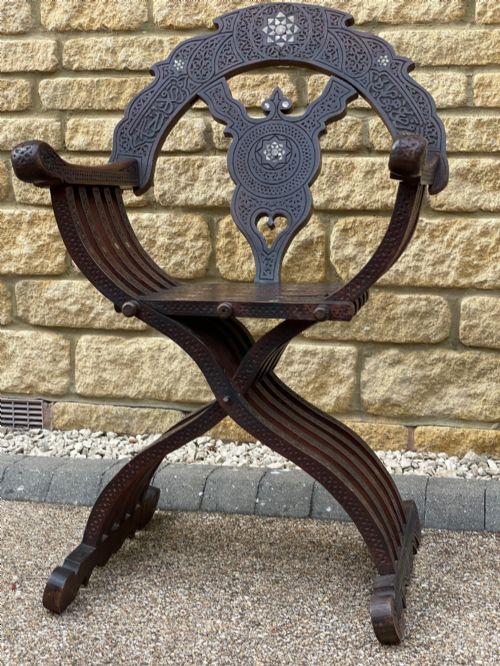
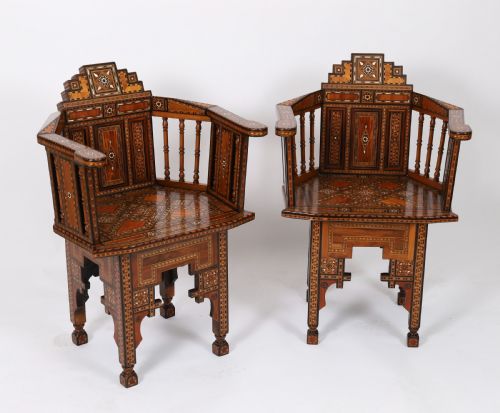
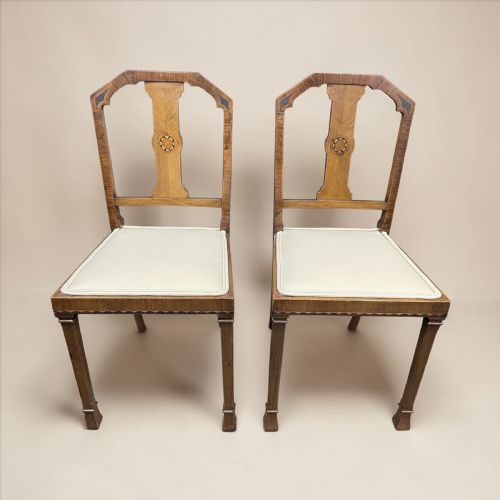
When searching for inlaid walnut chairs, buyers encounter diverse forms ranging from formal dining sets to occasional armchairs and folding seats. The selection spans centuries of design, with domestic British Edwardian and Victorian pieces appearing alongside continental European marquetry work and intricate Middle Eastern styles.
Dining chairs and high-backed salon seating feature prominently alongside library armchairs and low conversation seats. Many examples arrive in matched pairs or larger sets, preserved from drawing rooms and country houses across different periods.
How they were made
The framework utilises solid walnut or fruitwood, often selected for figured grain or enriched with contrasting veneers. Artisans embed various decorative elements into the timber base, creating intricate surface patterns.
Inlay work incorporates materials such as bone, mother-of-pearl, and nacre-shell alongside lighter woods for marquetry and parquetry designs. Upholstered sections utilise traditional textiles, leather, velvet, and fabric supported by webbing and stuffing within the wooden frame.
Materials span traditional walnut and fruitwood combined with exotic additions like mother-of-pearl, bone, and velvet upholstery.
What varies in quality
The standard of execution in the inlay work dictates the visual distinction of each piece, separating precise, tightly fitted marquetry from simpler surface embellishment. Finer examples display meticulous control when combining materials like bone and shell into complex geometric or floral motifs.
Structural integrity and timber selection further separate standard production from superior craftsmanship. Chairs retain more value when the walnut frame remains sturdy, the carved elements stay crisp, and the original decorative surface endures without heavy restoration.
Lamb of Manchester·Shoolbred
The Inlaid Walnut Chairs Glossary
- Marquetry
- Decorative veneer work arranged in pictorial or geometric patterns across the wooden surface. This technique builds complex designs using contrasting timber slices.
- Parquetry
- Geometric mosaic woodwork forming regular patterns such as cubes or stripes. It creates durable decorative surfaces on panels and seats.
- Savonarola
- An X-frame folding chair constructed with multiple curved wooden slats. This Renaissance form reappears in later revival periods with decorative inlay.
- Tunbridge inlay
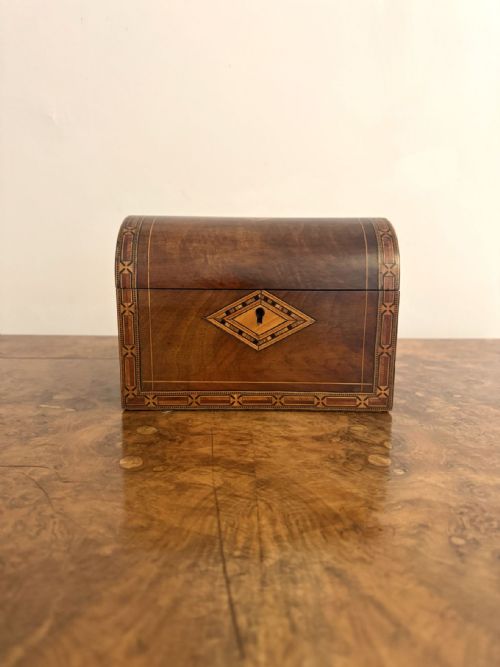
- Micro-mosaic woodwork utilising tiny coloured wood prisms to picture flowers or buildings. Originating in Kent, it appears on select pieces.
- Nacre-shell
- Pearlescent inner shell layer used for contrasting white inlay details. It catches the light against dark walnut timber.
Inlaid Walnut Chairs: Frequently Asked Questions
What periods do these chairs cover?
The available seating spans from eighteenth-century Dutch and Portuguese workshops through to nineteenth-century Victorian production and early twentieth-century Edwardian examples. Various regional revivals also contribute to the timeline.
Craftsmen across these eras adapted contemporary tastes, resulting in distinct stylistic shifts from baroque marquetry to delicate Edwardian stringing.
How were inlaid chairs used historically?
Formal rooms utilised high-backed dining sets and parlour suites for entertaining guests, while libraries housed sturdy upholstered armchairs for reading.
Exotic folding chairs and low conversation seats served as decorative statement pieces in drawing rooms, reflecting global design influences.
How do I care for inlaid walnut furniture?
Keep wooden seating away from direct sunlight and heat sources to prevent the walnut timber from drying and the veneer from lifting. Maintaining stable room humidity protects the delicate bone and shell inlays.
Apply suitable wax polish sparingly to nourish the grain without damaging historical surface patination.
Are these chairs suitable for daily use?
Most antique seating functions well for regular domestic use provided the underlying wooden frame remains structurally sound. Lighter salon chairs require more careful handling than heavy dining chairs.
Upholstered components can be renewed using traditional methods if modern comfort or fabric updates are desired.