



Edwardian Walnut Side Chairs
Edwardian walnut side chairs combine robust timber with slender proportions, offering a practical seating option for dining rooms and parlours.
Edwardian Walnut Side Chairs
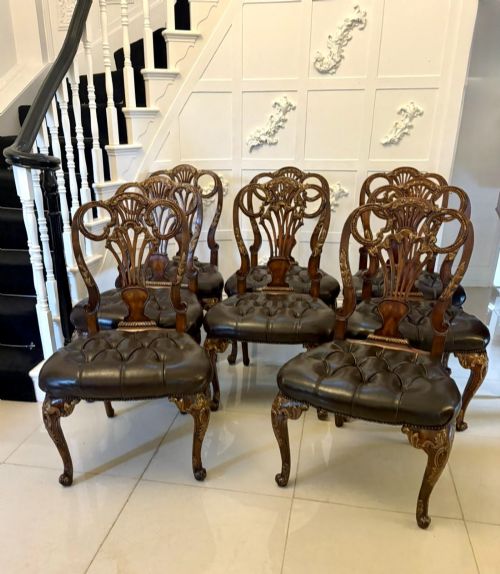
Edwardian walnut side chairs appear primarily as dining sets or individual salon seats originating around the turn of the twentieth century. The evidence shows these seating forms emerging from Victorian traditions into lighter Edwardian styles, alongside earlier pieces that share similar timber and frame construction. Buyers select them for their combination of solid walnut framing and period domestic utility.
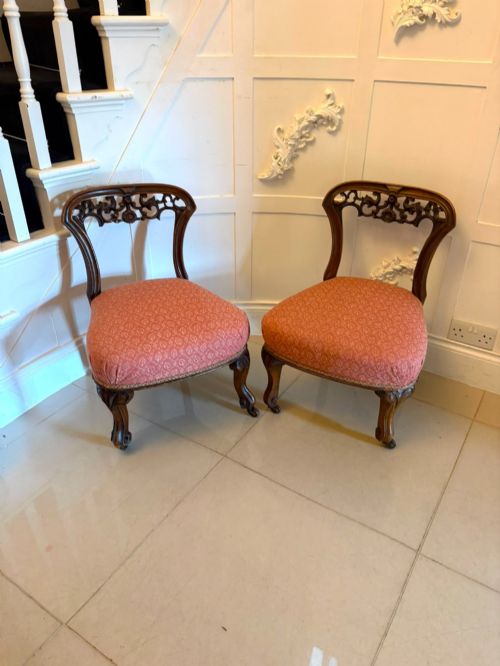
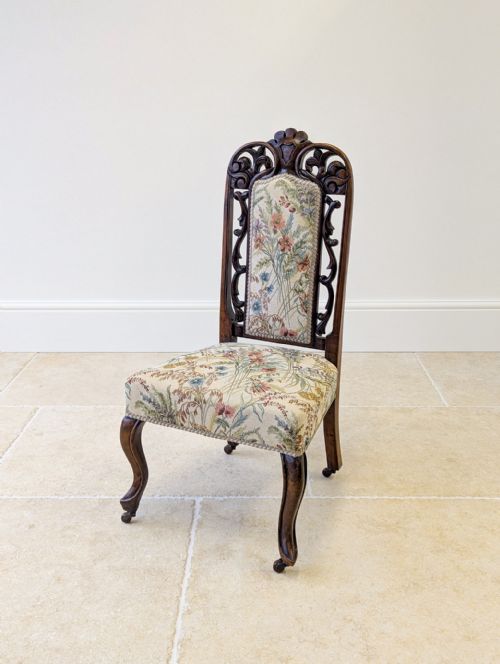
Most examples survive as pairs or larger dining sets, though single bedroom, hall and nursing chairs also surface in the listings. These variations reflect the diverse domestic spaces of the early twentieth century, where specific rooms required dedicated seating. The walnut timber provides a dark, rich grain that anchors traditional interior schemes.
What varies in quality
The distinction between standard production and top-tier execution lies in the crispness of the timber carving and the selection of figured walnut veneers. Superior sets demonstrate careful timber matching across multiple chairs, ensuring consistent grain patterns and colour throughout the group.
Structural integrity and the retention of original upholstery materials also dictate the standing of individual pieces. Chairs that preserve their early textile coverings or maintain rigid, uncompromised frame joints command greater attention from collectors.
Listings feature walnut, burr walnut, and satin walnut across Victorian and Edwardian periods, alongside revival styles including Queen Anne and Arts and Crafts.
Charles Tozer·Blyth & Sons·Shoolbred·Spillman & Co
The Edwardian Walnut Side Chairs Glossary
- Side chair
- A chair without arms, traditionally used for dining or occasional placement around a room. These forms make up the majority of the walnut seating recorded in the evidence.
- Burr walnut
- A specialised timber veneer taken from the warted growths on walnut trees, prized for its swirling, decorative grain patterns. It appears frequently on Edwardian cabinet furniture and chair backs.
- Cabriole leg
- A furniture leg that curves outward at the knee and tapers inward toward the foot, echoing animal limbs. This form is common in revival styles such as Queen Anne.
- Crest rail
- The top horizontal member of a chair back, often shaped, carved or inlaid. On dining and salon chairs, this area frequently receives the most decorative attention.
- Bergere
- An enclosed armchair or side chair with woven cane panels on the back and sides. This style provides a lighter visual weight compared to solid upholstered frames.
Edwardian Walnut Side Chairs: Frequently Asked Questions
How do I clean walnut chair frames?
Dust the timber regularly with a soft, dry cloth to prevent dirt accumulation. Avoid modern silicone sprays, which can damage historic polished surfaces over time.
Apply a traditional beeswax polish sparingly when the wood appears dry, buffing gently to maintain the natural sheen of the walnut.
Can these chairs be used daily?
Solid walnut frames offer considerable strength, making them suitable for regular domestic use around a dining table. Check the stability of the leg joints periodically to ensure the glue remains secure.
Historic upholstery may require professional conservation if the internal stuffing has deteriorated through decades of sitting.
How do I identify Edwardian chairs?
Edwardian seating typically exhibits lighter proportions and less heavy ornamentation than preceding Victorian designs. Look for refined carving styles that draw on eighteenth-century revivals like Chippendale or Queen Anne.
Construction methods, screw types and timber ageing help confirm the manufacture date sits around the turn of the twentieth century.
What is satin walnut?
Satin walnut refers to timber derived from the American sweetgum tree, which was frequently used by Edwardian cabinet makers as an alternative to European walnut. It offers a similar golden-brown tone with a distinct satin-like grain texture.
Makers utilised this material across various chair forms to achieve a uniform appearance at a different production cost.