
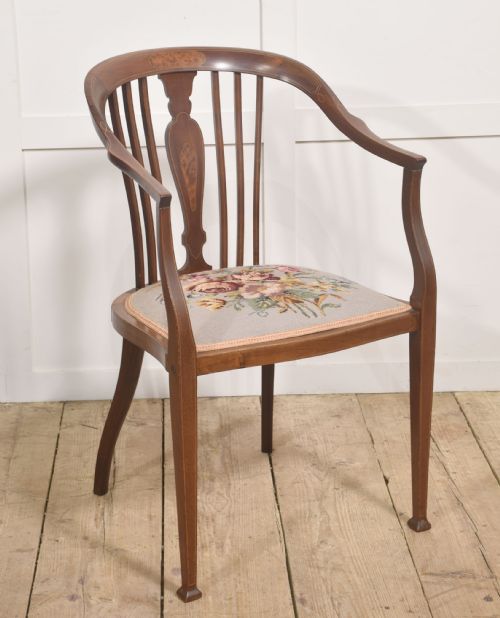


Inlaid Wooden Tub Chair
These inlaid wooden tub chair examples offer curved back support and decorative woodwork, blending period elegance with comfortable domestic seating.
Inlaid Wooden Tub Chair
An inlaid wooden tub chair brings together curved backrests and decorative timber surfaces across several historical periods. Buyers seeking an inlaid wooden tub chair encounter examples shaped from mahogany, walnut, and satinwood with distinctive enclosed seating profiles.
Most pieces date from the Victorian and Edwardian eras, alongside pieces from the 19th century and the 1920s. These items function as occasional chairs, desk chairs, corner chairs, and low salon armchairs within period interiors.
How they were made
Cabinetmakers constructed these frames primarily using solid mahogany, walnut, and satinwood timbers. Artisans applied intricate contrasting details using boxwood, bone, and brass elements set directly into the wood grain.
Seating portions received traditional upholstery finishes, frequently utilising fabric or needlepoint tapestry. Woodworkers shaped the characteristic curved tub profiles through steam bending and careful joinery techniques.
Listings feature Edwardian, Victorian, and 19th-century periods alongside pieces from 1900, 1910, and 1920.
What varies in quality
The precision of the contrasting inlay work defines the upper tiers of craftsmanship. Finer examples display tight, complex geometric or botanical motifs executed in bone, boxwood, and satinwood without gaps.
Structural integrity and timber selection separate ordinary production from superior pieces. Dense, well-figured mahogany or walnut frames maintain structural stability through their curved joints over decades of use.
The Inlaid Wooden Tub Chair Glossary
- Tub chair
- A seating form featuring a continuous curved back and arms that enclose the sitter. This shape provides compact support and characteristically low proportions.
- Inlay
- A decorative technique where contrasting materials are inserted into recessed cavities on a wooden surface. Boxwood, bone, and satinwood frequently serve this purpose.
- Satinwood
- A lustrous hardwood native to tropical regions, valued for its pale golden colour and fine grain. Cabinetmakers use it to create bright contrasting details.
- Moorish Revival
- An architectural and decorative style drawing on Islamic design motifs. Pieces from this tradition often incorporate complex geometric patterns and bone stringing.
Inlaid Wooden Tub Chair: Frequently Asked Questions
What is an inlaid wooden tub chair?
An inlaid wooden tub chair is a compact seating piece featuring a curved, enclosing backrest and decorative contrasting woodwork. These items combine structural timber frames with ornamental details set into the surface.
They appear across Victorian and Edwardian periods as functional seating for parlours, desks, and corners. Their defining characteristic is the rounded upper rail that wraps around the sitter.
How do I date an inlaid wooden tub chair?
Dating relies on examining the timber species, construction methods, and style of inlay decoration. Victorian and Edwardian pieces typically feature mahogany or walnut frames with boxwood or satinwood stringing.
Items from the 1920s often show Moorish Revival influences with extensive bone or contrasting wood patterns. Comparing the joinery and upholstery style helps narrow down the period of manufacture.
Where were tub chairs placed historically?
These chairs served multiple functions in period homes, acting as salon seats, desk chairs, and occasional furniture. Their compact footprint allowed them to fit easily into corners or beside writing tables.
Low salon varieties were designed for relaxing in reception rooms. Corner chairs provided alternative seating arrangements suited to domestic gatherings.
What materials make up the inlay?
Inlay work on these chairs incorporates light-coloured timbers such as satinwood and boxwood to create contrast against darker mahogany or walnut bodies. Some examples integrate bone or brass elements.
These materials form geometric patterns, floral motifs, or fine lines that trace the contours of the chair frame. The choice of inlay material often reflects the specific style and period of the piece.