
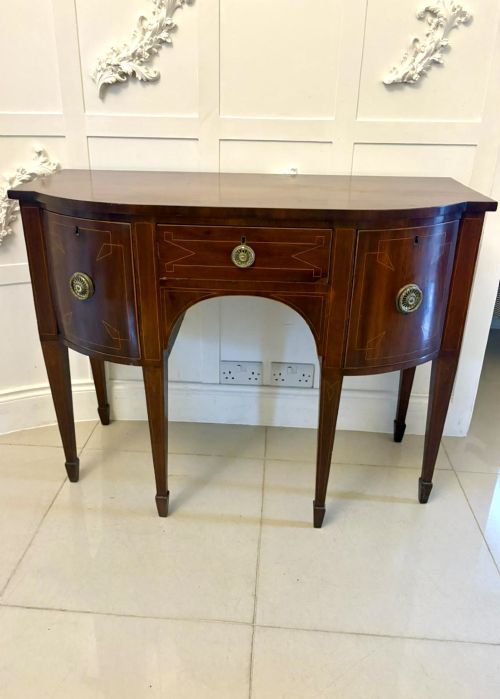
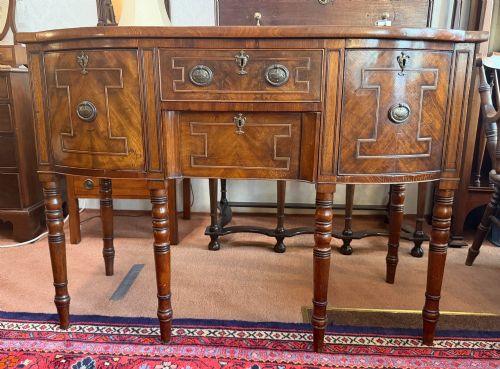
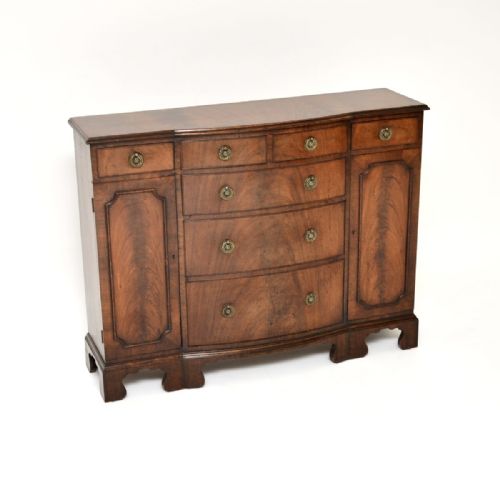
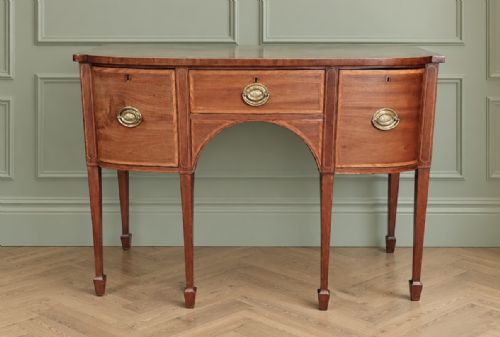
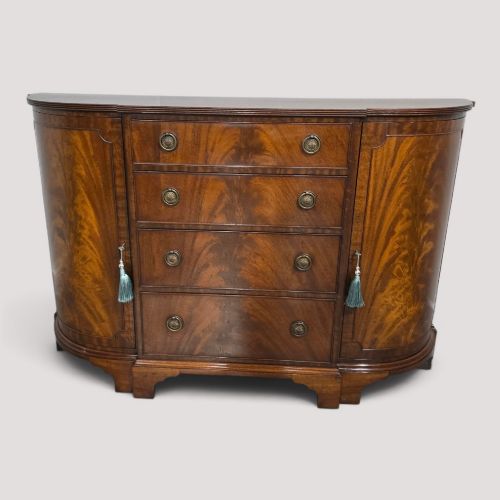
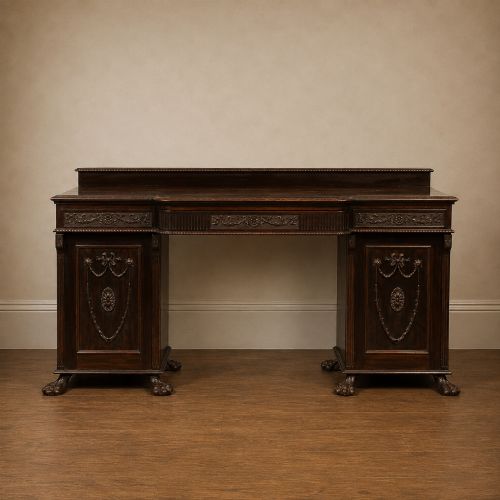
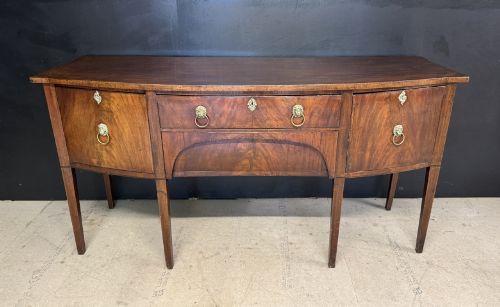
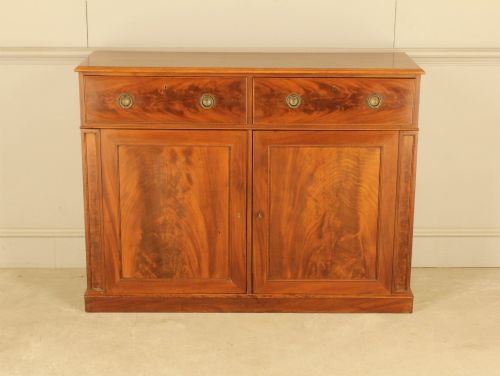
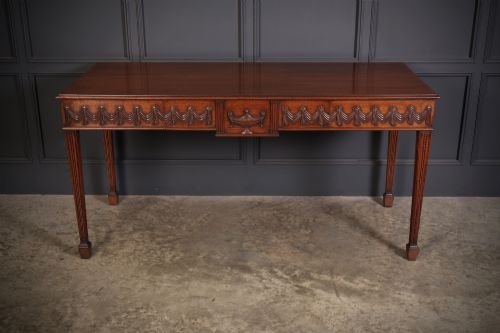
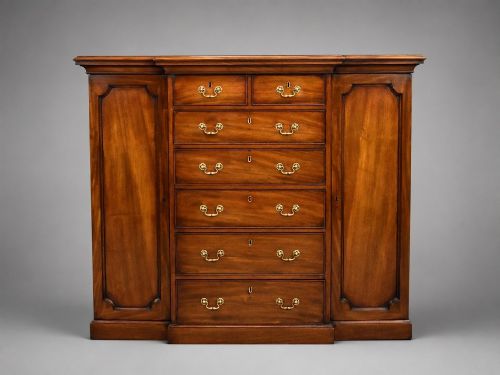
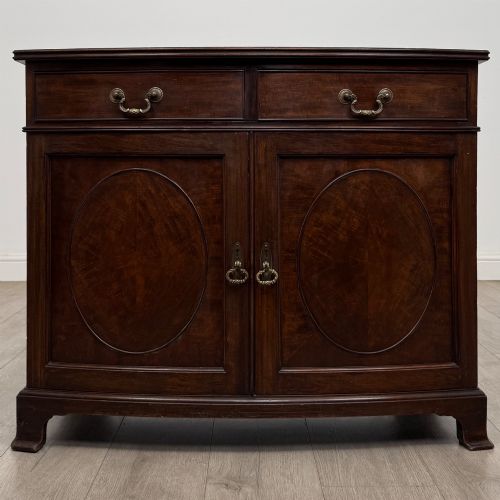
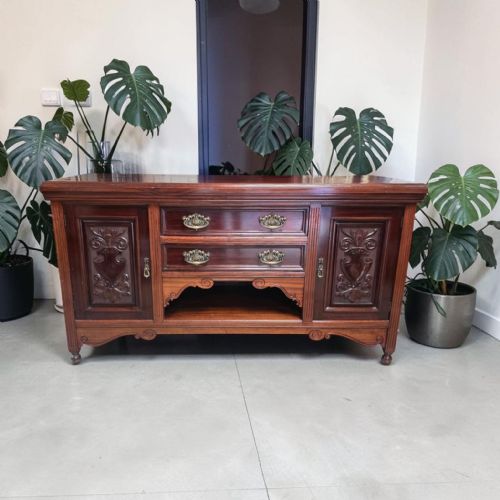
Georgian Style Dining Sideboard
A georgian style dining sideboard brings classical proportion and refined timber to a room, offering both generous storage and an impressive focal point.
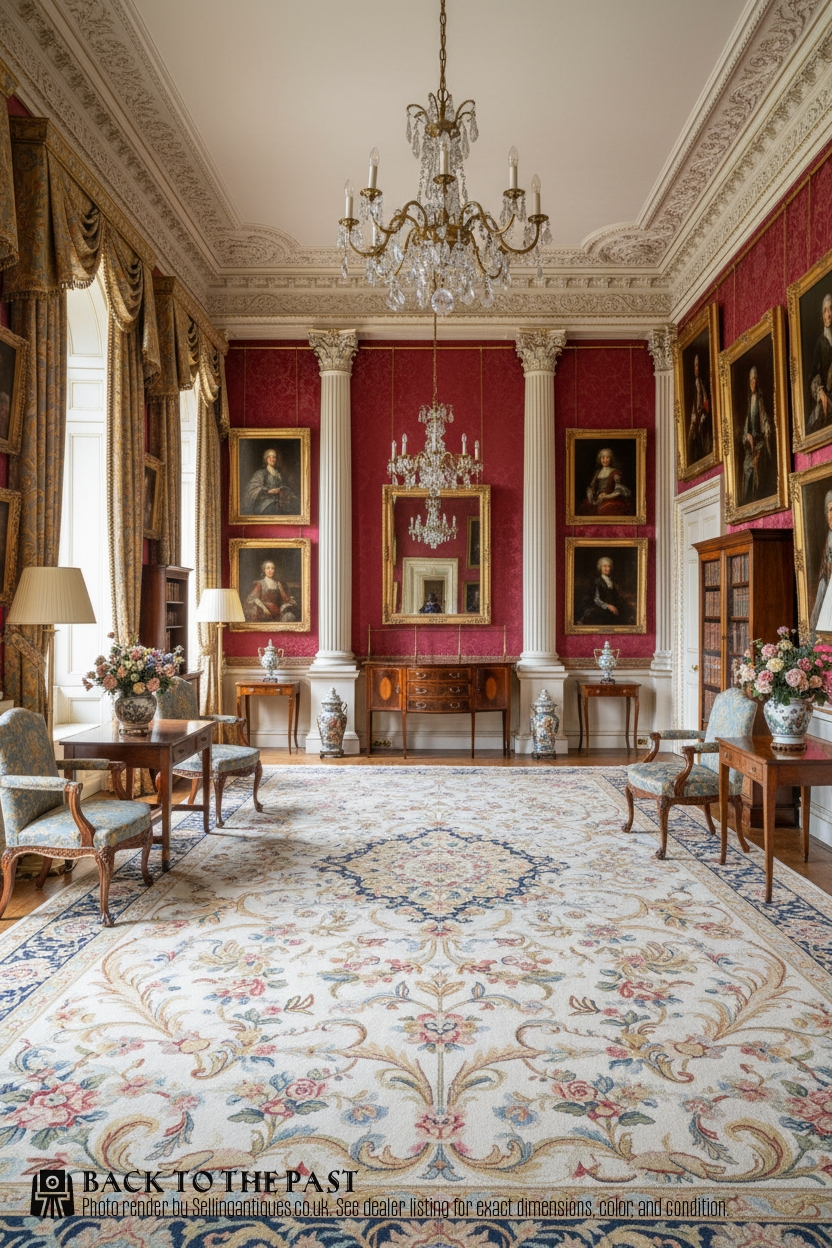
Georgian Style Dining Sideboard
When searching for a georgian style dining sideboard, you encounter substantial serving furniture designed to anchor a formal dining space. These pieces serve primarily to hold dining silver, linen, and serving dishes while providing a broad top surface for display.
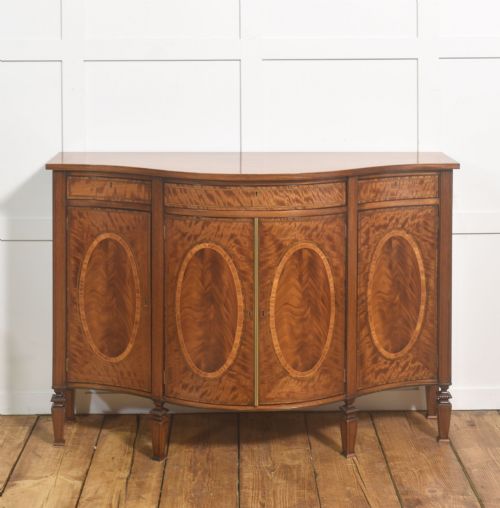
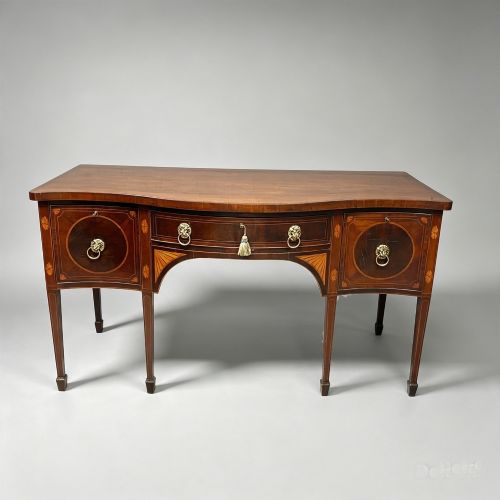
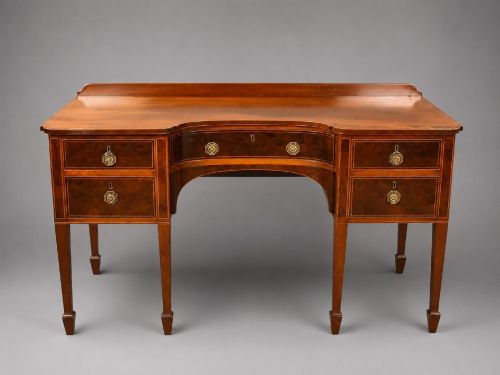
The versions most common in these listings span genuine periods from the eighteenth century alongside later nineteenth and early twentieth century revivals. Forms range from straight bow-fronts and serpentine fronts to grand breakfronts and pedestal configurations.
Origins in the evidence stretch from the Georgian era itself through the Victorian, Edwardian, and Sheraton revival periods. Makers and workshops drew heavily upon classical idioms, adapting proportions to suit changing domestic interiors over two centuries.
How they were made
Cabinetmakers constructed these sideboards around sturdy timber carcasses, predominantly utilising solid and figured mahogany. Selected sections often featured curl or flame mahogany veneers chosen for their rich grain patterns.
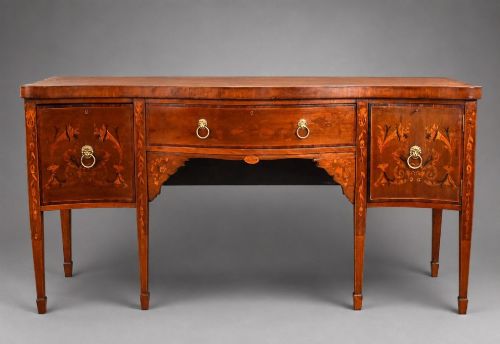
Surface enrichment relied heavily upon contrasting timbers and botanical details. Craftsmen applied satinwood, boxwood, and walnut for delicate stringing, marquetry, and geometric wood inlay across drawer fronts and doors.
Functional hardware was cast in brass, providing key escutcheons and drawer pulls that accented the dark timber. Structural integrity was maintained through traditional joinery, occasionally supported by distinctive paw feet or tapered legs.
Listings feature sideboards spanning the eighteenth century through the Edwardian period, constructed primarily in mahogany, satinwood, and walnut.
What varies in quality
The hierarchy of quality rests primarily on the ambition of the silhouette and the selection of timber. Serpentine and breakfront shapes demanded greater carpentry skill than a simple straight bow-front, while highly figured mahogany or intricate satinwood marquetry elevated a piece's status.
Execution of detail defines the finer examples. Crisp wood inlay, well-matched veneer panels, and finely cast brass mounts distinguish superior workshop production from more utilitarian cabinetmaking.
M D Miller And Sons·Gillows
The Georgian Style Dining Sideboard Glossary
- Bow-front
- A cabinet front that curves outward in a convex sweep across its width. This shape softens the room's geometry while maintaining interior storage depth.
- Serpentine
- A front contour characterised by a convex central section flanked by concave curves, or vice versa. It represents a challenging form that requires precise woodworking.
- Breakfront
- A piece of furniture where the central section projects forward from the flanking wings. This architectural layout creates a strong shadow line and varied depths.
- Marquetry
- Decorative patterns formed by fitting together contrasting veneers of wood or other materials. It creates pictorial or geometric ornament across flat surfaces.
- Satinwood
- A durable, yellowish timber prized for its lustrous sheen and smooth texture. It frequently serves as a contrasting inlay or banding material.
Georgian Style Dining Sideboard: Frequently Asked Questions
What is a georgian style dining sideboard?
It is a formal dining room cabinet designed for serving food and storing tableware, characterised by classical proportions and balanced storage compartments.
Such pieces evolved from simple serving tables into sophisticated cupboards with drawers and pedestals, heavily influenced by eighteenth-century design principles.
How do I date a sideboard?
Dating relies on observing timber choices, construction methods, and stylistic revival markers. Eighteenth-century pieces show period joinery and native woods, whereas Edwardian revivals often feature lighter internal secondary timbers and machine-cut veneers.
Examining the handles, backboards, and secondary woods helps differentiate an original piece from a later nineteenth or twentieth-century interpretation.
Where should I place a sideboard?
A sideboard traditionally stands against the main dining room wall, acting as a functional station during meals and a display area between them. Its length requires a wall capable of balancing its visual weight without crowding the room.
In modern homes, these cabinets also function effectively in large hallways or drawing rooms to provide substantial surface space and concealed storage.