


Georgian Silver Vinaigrette
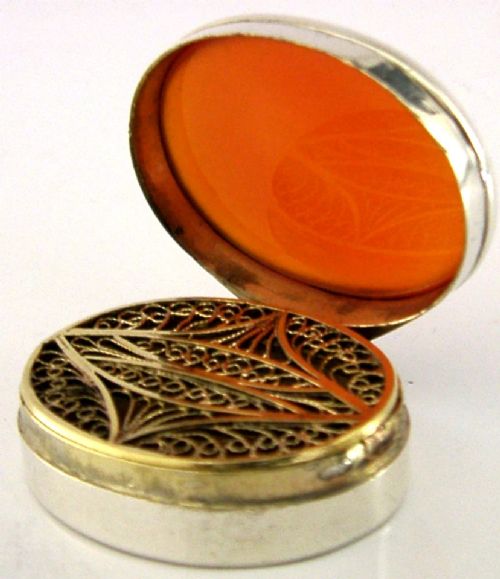
A georgian silver vinaigrette is a small pocket container housing a pierced inner grille, designed to hold a sponge soaked in aromatic vinegar.
Georgian Silver Vinaigrette
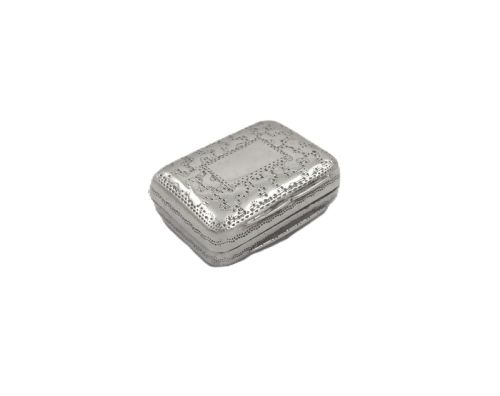
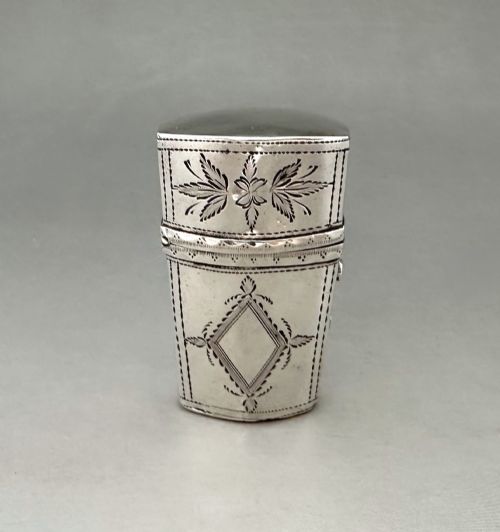
The pieces on this page span the Georgian, William IV, and Victorian periods, with origins in English and Scottish assay offices. Birmingham makers produced a substantial portion of these small boxes, alongside examples originating from London and Edinburgh.
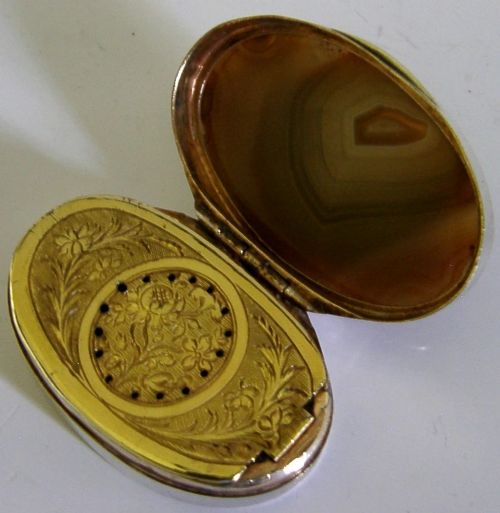
Most examples house a hinged or removable internal grill pierced with floral, geometric, or foliate patterns. Beneath this silver or silver-gilt grille sits a small piece of sponge intended to retain the aromatic liquid.
Variations in quality
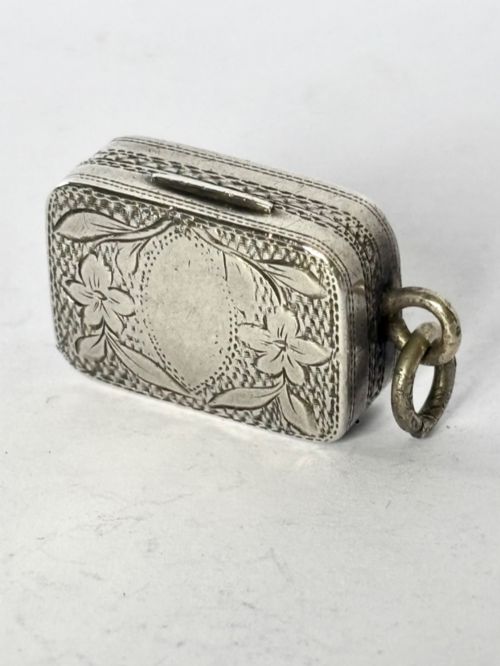
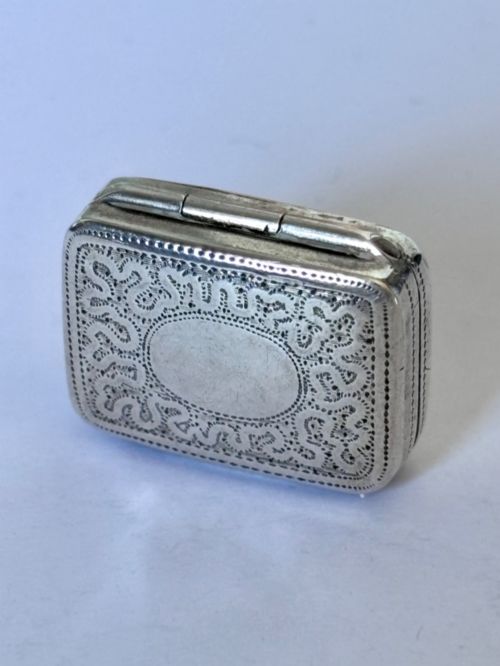
Quality rests heavily on the crispness of the exterior engraving and the complexity of the internal grille. A finely worked grille featuring detailed foliage or figural elements elevates a piece above standard geometric piercings.
The incorporation of decorative hardstones like agate or lapis lazuli panels adds distinction, as does unusual novelty form such as an articulated fish or a valise. The clarity of the full hallmarks stamped on the interior rim or bezel also contributes significantly to the standing of an individual box.
Georgian Silver Vinaigrette Retail Price Guide 2026
Typical asking prices for georgian silver vinaigrette among the pieces listed under this phrase on Sellingantiques today, from the lower quarter to the upper quarter. They describe what is for sale here now, not the wider market.
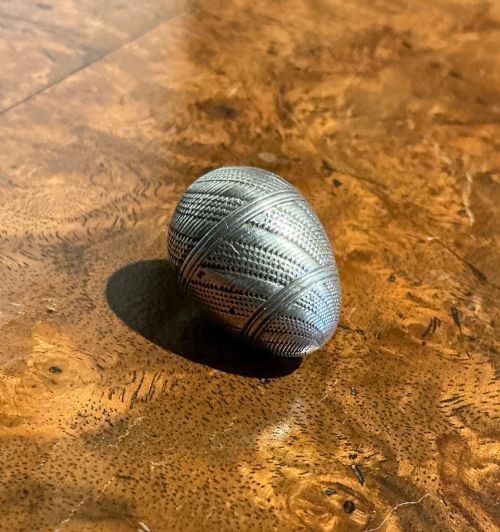
Objects catalogued under this term encompass standard rectangular boxes alongside novelty forms shaped like fish, eggs, handbags, and nutmeg graters.
Samuel Pemberton·Thomas Johnson·Nathaniel Mills·John Bettridge·Joseph Willmore·Reily and Storer·Thomas Shaw·Joseph Taylor·Thomas Parker
The Georgian Silver Vinaigrette Glossary
- Vinaigrette
- A small hinged box containing a perforated internal grille and a sponge soaked in scented vinegar. These portable containers were carried in pockets or handbags during the eighteenth and nineteenth centuries.
- Grille
- The pierced internal plate fitted inside a vinaigrette to hold the sponge in place while allowing vapours to diffuse. They are frequently gilded and ornamented with floral or scrollwork piercings.
- Silver-gilt
- Sterling silver that has been coated with a thin layer of gold. This treatment prevented the acidic vinegar from tarnishing and corroding the interior of the box.
- Bright-cut engraving
- A surface decoration technique using faceted cuts made with a V-shaped graving tool to catch the light. It creates sharp, geometric patterns across the silver panels.
- Assay office
- An official body responsible for testing the purity of precious metals and stamping items with hallmarks. Towns such as Birmingham, London, and Edinburgh operated distinct offices.
Georgian Silver Vinaigrette: Frequently Asked Questions
What was a georgian silver vinaigrette used for?
These containers held a sponge soaked in perfumed vinegar or aromatic compounds. Owners lifted them to their faces to counter unpleasant street odours or to ward off faintness in crowded rooms.
Because sanitation standards were different, carrying a personal scent was both a practical necessity and a social habit. The pierced grille allowed the aroma to diffuse steadily when the lid was opened.
How do I identify the maker and date?
Makers stamped their initials or names alongside assay office marks, standard marks, and date letters directly onto the silver. You will typically find these tiny punches located on the interior rim, the inside of the lid, or on the back of the grille.
Matching these stamped symbols against official hallmarking records reveals the exact town, silversmith, and year of manufacture. Many pieces from this era originated in Birmingham and London workshops.
Are all vinaigrettes made of solid silver?
While the exterior framework and base consist of sterling silver, many examples feature an interior coating of gold gilt. This thin layer of gold protected the underlying silver from chemical erosion caused by acidic vinegar.
Some boxes also incorporate decorative elements made from organic materials or minerals, including cowrie shells, agate, lapis lazuli, and leather cases.
How should I clean a silver vinaigrette?
Careful dusting with a soft cloth is usually sufficient for maintaining the exterior without removing the fine engraving or the aged patina. Avoid liquid polishes that can seep into hinges or damage delicate internal gilding and hardstone panels.
If the piece retains an original sponge, keep moisture away from it to preserve the historical fabric of the interior. Professional guidance is recommended if deeper cleaning becomes necessary.