
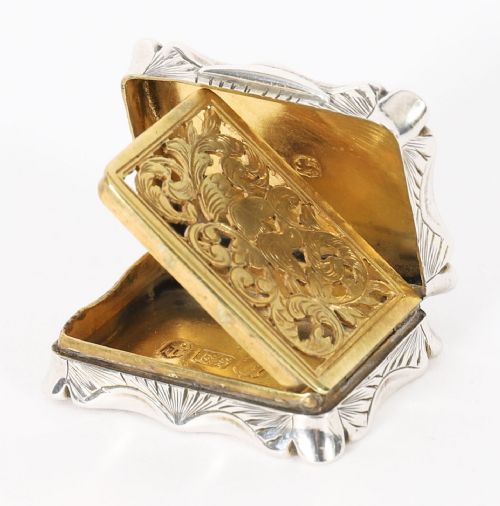


Antique Smelling Salts Box
An antique smelling salts box is a small receptacle designed to hold volatile aromatics, offering both functional relief and portable luxury.
Identifying these boxes
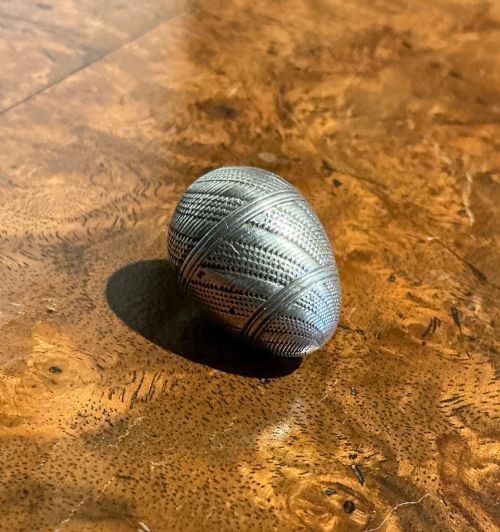
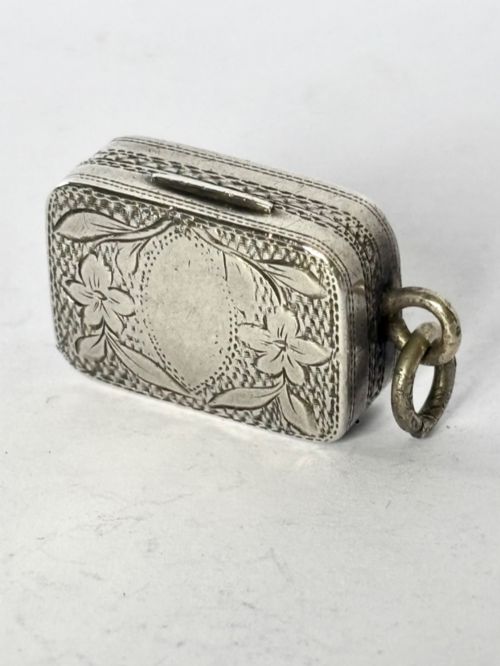
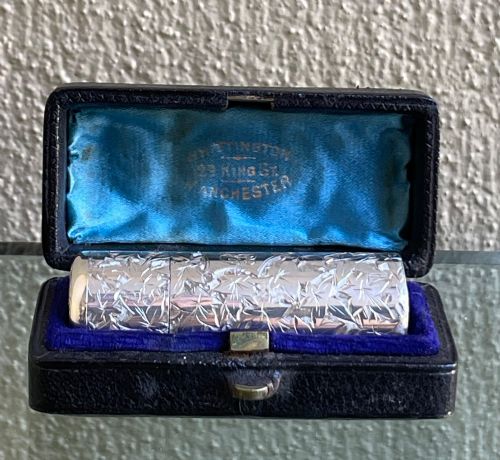
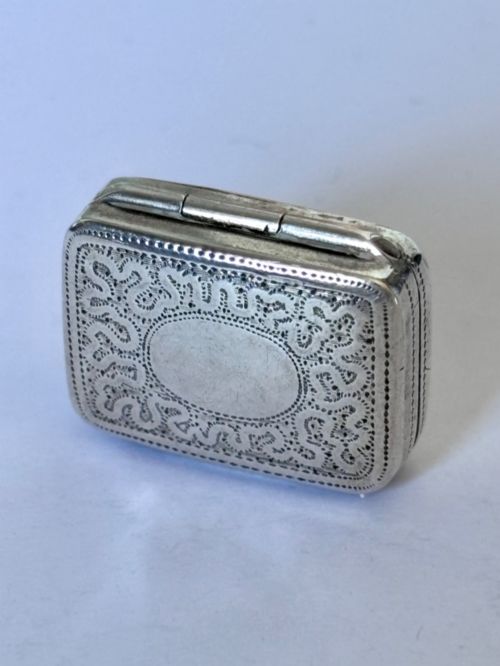
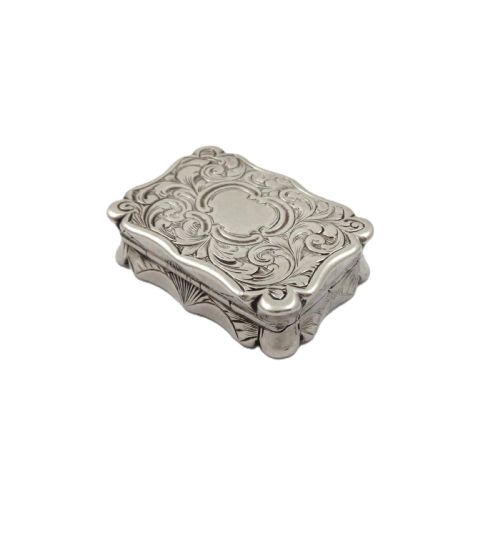
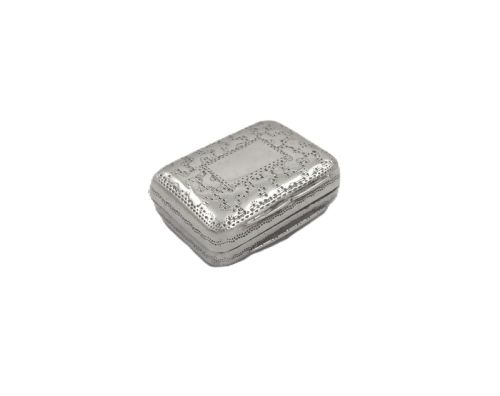
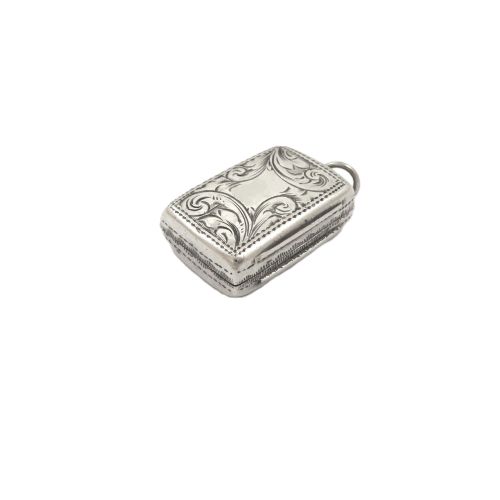
An antique smelling salts box is primarily encountered in the form of a vinaigrette or small silver box designed for personal carriage. These pieces originate from the Georgian and nineteenth-century periods, capturing an era when aromatic vinegars were essential for reviving spirits.
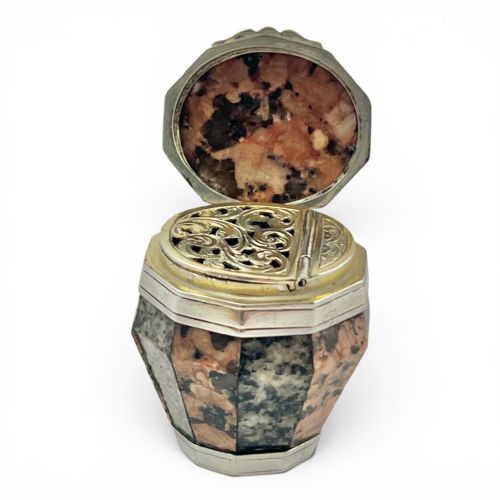
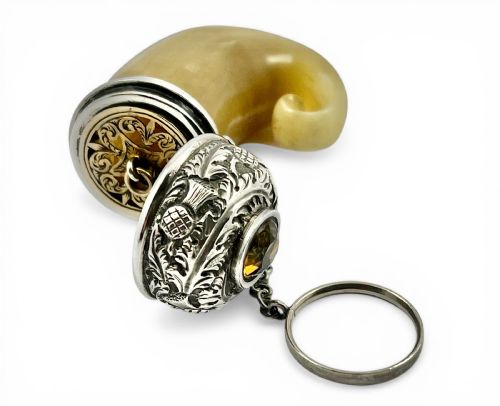
Within these pages, buyers encounter both standard sterling silver examples and specialised items such as mourning vinaigrettes and agate-inset boxes. Each piece reflects the specific decorative conventions of its manufacturing year, from eighteen hundred onwards.
Materials and construction
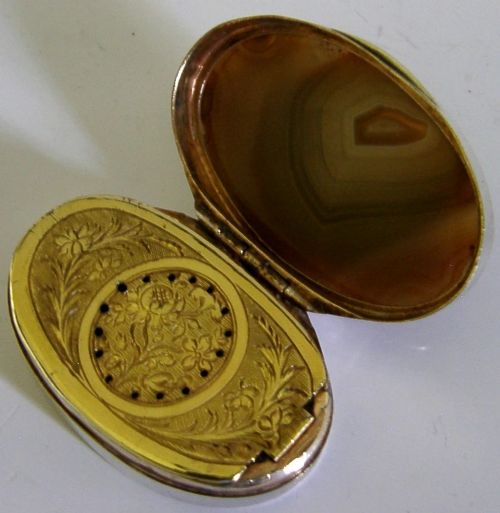
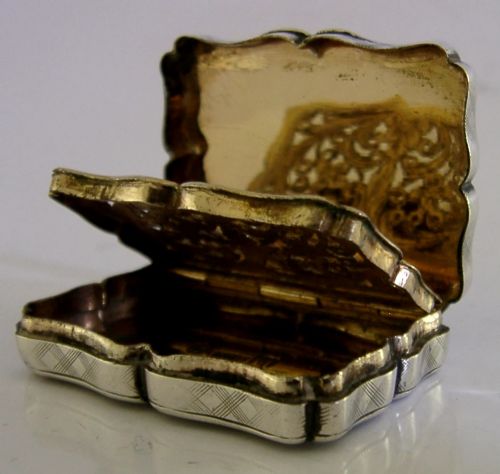
Silversmiths constructed these boxes using sterling silver, frequently applying gold gilt to the interior surfaces to protect the metal from the corrosive nature of the aromatic vinegar. Agate panels were expertly set into lids, while eighteen-carat gold was utilised for specialised mourning pieces.
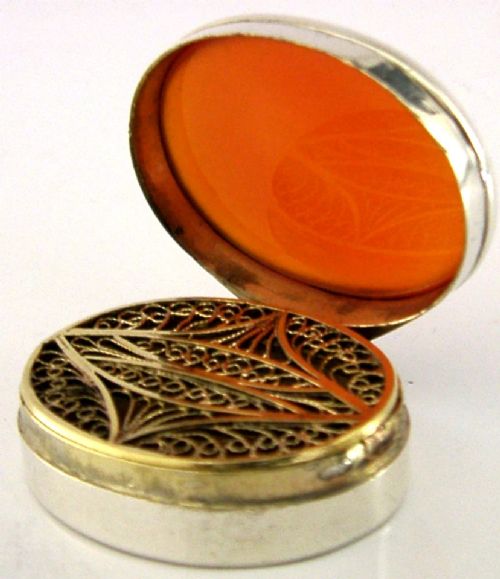
Internal grilles were pierced, engraved, or filigreed to allow the scent of the soaked sponge within to escape while keeping the solid contents contained. Engraving and chasing decorated the exterior bodies, executed by silversmiths operating in various British assay towns.
Retail Price Guide 2026
Typical UK retail prices for smelling salts box, calculated from the Sellingantiques database of over a million retail prices indexed since 2003. This retail price guide relies exclusively on Sellingantiques data; no external sources or auction records are used, so the figures do not describe the wider market.
Listings feature items from the Georgian and nineteenth-century periods, utilising sterling silver, gold, glass, and agate.
Assessing the range
Quality in these boxes rests upon the crispness of the exterior chasing and the intricacy of the internal grille piercing. Superior examples display precise hallmarks, tight hinge closures, and flawless integration of decorative stone panels such as agate.
The presence of precious metals like eighteen-carat gold or complete silver gilt interiors elevates certain pieces above standard sterling silver versions. Furthermore, documented makers add a level of historical distinction that distinguishes ordinary items from exceptional collector pieces.
Thomas Johnson·Edward Smith·Jacob Amyand·John Bettridge
The Antique Smelling Salts Box Glossary
- Vinaigrette
- A small box containing a sponge soaked in aromatic vinegar. These containers served the same reviving purpose as traditional smelling salts.
- Silver gilt
- Silver covered with a thin layer of gold. This technique prevented the acidic vinegar from tarnishing and corroding the interior metal.
- Agate
- A crystalline rock variety frequently used for decorative panels in box lids. Its natural banding patterns made each stone lid unique.
- Mourning vinaigrette
- A specialised box created to commemorate a deceased person. These pieces often incorporated dark stones or specific commemorative motifs.
- Grille
- The pierced internal plate fitted beneath the lid of a vinaigrette. This component allowed vapours to disperse while holding the saturated sponge in place.
Frequently Asked Questions
How did people use vinaigrettes?
Users opened the exterior lid to expose a pierced internal grille through which the aromatic vapours escaped.
The pungent scent helped revive individuals experiencing dizziness in crowded or poorly ventilated spaces.
What materials are common in these boxes?
Sterling silver and silver gilt are the predominant materials found in these historical receptacles.
Some examples also incorporate gold, glass, and polished agate panels set into the lids.
How do I identify the period of a box?
Makers marked their work with hallmarking stamps that indicate the assay office, date letter, and silversmith's initials.
Comparing these stamps against official records reveals the exact year and city of manufacture.