


Birmingham Silver Vinaigrette
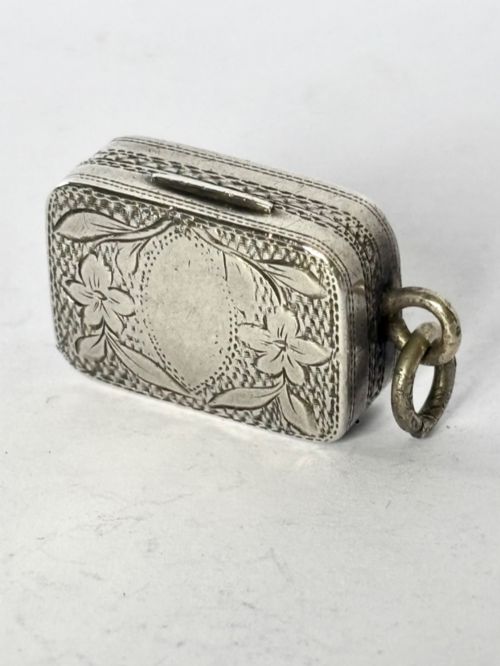
A birmingham silver vinaigrette is a small pocket box made to hold a sponge soaked in aromatic vinegar.
Understanding the Birmingham Silver Vinaigrette
A birmingham silver vinaigrette is a small pocket box designed to hold a sponge soaked in aromatic vinegar. These pieces date from the Georgian and 19th Century periods, originating from Birmingham makers.
The selection includes standard box forms alongside miniature examples and novelty shapes such as books, cornucopias, and valises. Most examples combine sterling silver with silver gilt or gold vermeil interiors.
Materials and Techniques
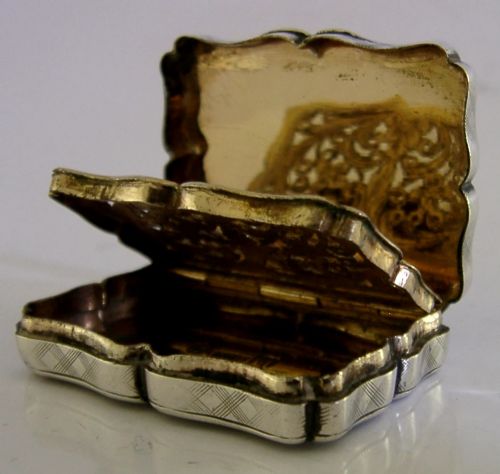
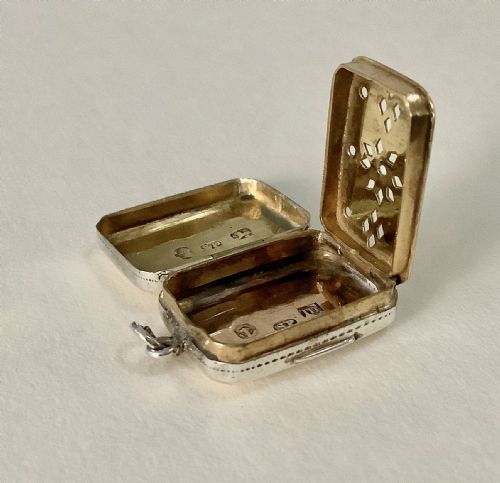
Silversmiths constructed these boxes using sterling silver, frequently applying silver gilt or gold vermeil to the interior surfaces to protect the metal from the corrosive nature of vinegar. Some variants incorporate agate or glass alongside the silver work.
Interior pierced grills were cast or pierced with ornate feather, foliate, and bubble designs to allow the scent to escape while holding the sponge in place.
Listings feature sterling silver, silver gilt, and gold vermeil across Georgian and 19th Century periods.
Distinctions in Quality
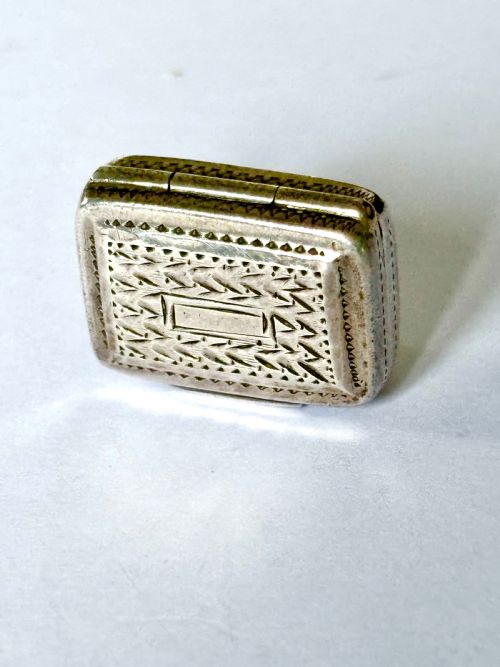
Quality rests on the crispness of the exterior chasing and the intricacy of the internal pierced grill work. Plain designs rely entirely on clean proportions and substantial gauge silver, while decorated pieces depend on the depth of the foliate or bubble motifs.
The reputation of the maker also dictates the standard, with specific silversmiths known for exceptional execution in miniature or novelty formats such as book shapes and curved ovals.
John Bettridge·David Pettifer·Edward Smith·Nathaniel Mills·William Simpson·Wardell And Kempson·Samuel Pemberton·John Shaw·Postans And Tye·T Simpson And Son·Hilliard And Thomason·Alfred Taylor·Colen Hewer Cheshire·Thomas Shaw·Joseph Willmore·Joseph Taylor·John Lawrence And Co·Thomas Willmore·Taylor And Perry·Thomas Parker·Deakin And Nephew·Ledsam And Vale
The Birmingham Silver Vinaigrette Glossary
- Vinaigrette
- A small hinged box containing a perforated grill and a sponge soaked in vinegar for freshening the air. These portable containers were essential personal accessories in earlier centuries.
- Silver Gilt
- Sterling silver that has been coated with a thin layer of gold on the surface. This technique prevents the acidic vinegar from tarnishing and corroding the silver interior.
- Grill
- The internal pierced or engraved plate fitted inside the box to hold the sponge in place. These internal grilles often feature elaborate floral or geometric patterns.
- Agate
- A decorative quartz variety sometimes set into the lids of these boxes. It adds natural stone patterning to the exterior of the silver container.
Frequently Asked Questions
How were these boxes used?
Owners carried them in pockets or reticules to ward off unpleasant odours in crowded public spaces. Opening the outer lid released the fragrance through the pierced internal grill.
The sponge inside stayed damp with vinegar until replenishment was required.
How do I date a piece?
Dating relies on the hallmarks stamped into the silver, which record the assay office anchor for Birmingham alongside date letters and maker marks. Stylistic shifts also help place items in the Georgian or 19th Century periods.
Maker marks connect specific pieces to documented workshops active in those decades.
What materials are used?
The primary material is sterling silver, often paired with silver gilt or gold vermeil interiors to resist acid corrosion. Some examples incorporate decorative stones like agate or glass elements.
Internal grills are likewise formed from silver gilt to match the interior.