

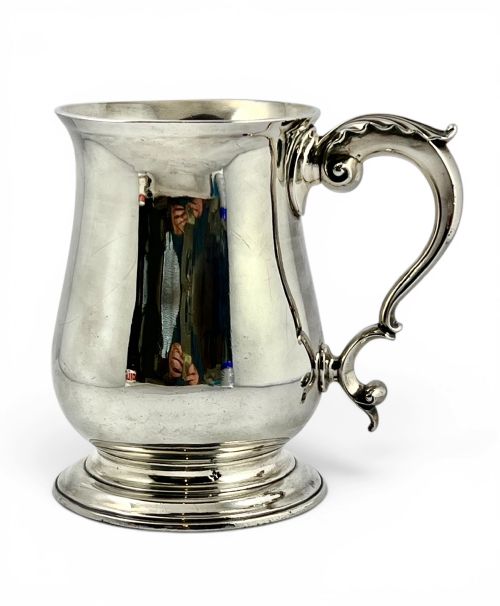


Georgian Silver Beer Mug
A georgian silver beer mug brings substantial weight and practical utility to the table, offering a tangible link to eighteenth-century drinking customs.
Georgian Silver Beer Mug
A georgian silver beer mug encompasses sturdy drinking vessels and tankards produced primarily during the eighteenth and early nineteenth centuries. These drinkware items range from small half-pint vessels to large quart tankards designed for heavy use.
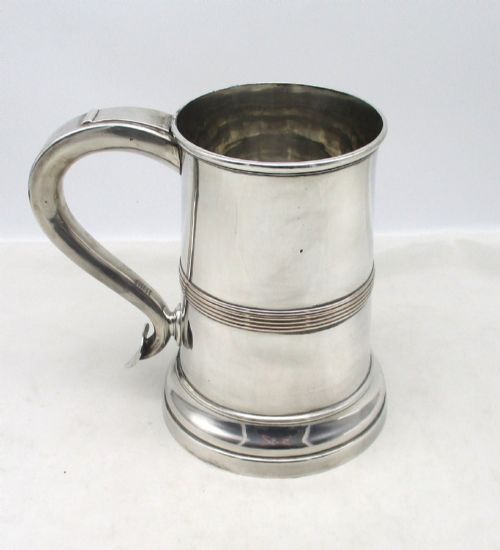
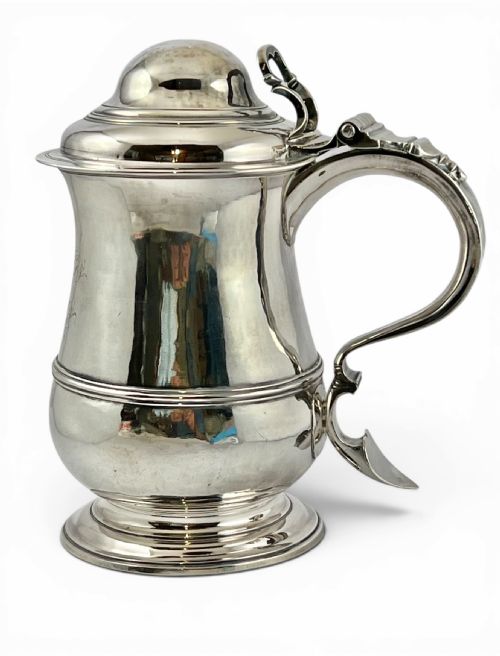
The versions most commonly met include solid sterling silver examples alongside durable Old Sheffield Plate pieces. Formats span plain cylindrical mugs, baluster shapes with scroll handles, and lidded tankards featuring hinged covers.
Origins stretch across major silver assay centres such as London and Newcastle, reflecting diverse regional manufacturing practices of the period. Makers utilised durable construction methods to withstand regular daily consumption of ale and beer.
How they were made
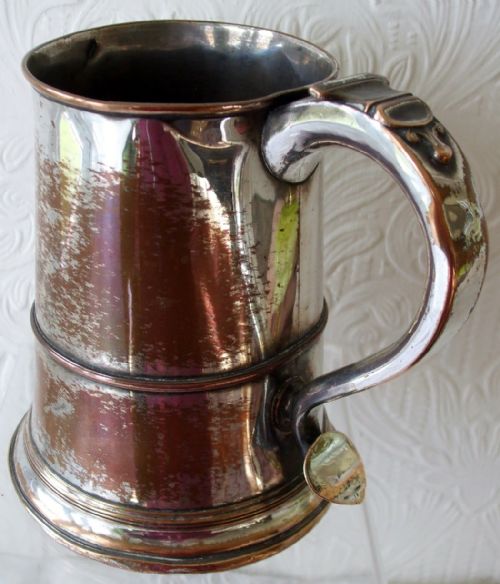
Silversmiths and manufacturers utilised sterling silver, copper, and Old Sheffield Plate to construct these substantial vessels. Old Sheffield Plate combined a layer of silver fused to a copper core, providing a durable alternative to solid silver.
Forming the body required hammering sheet metal or casting solid silver, followed by soldering handles and reinforcing rims. Guild standards and assay office marks stamped onto sterling silver verified metal purity and origin.
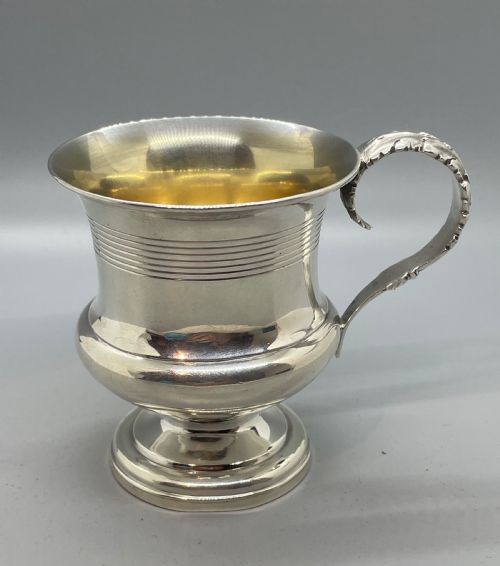
Some small half-pint mugs were made specifically for children as christening gifts.
What varies in quality
The distinction between standard examples and top-tier pieces rests on the weight of the metal and the clarity of the maker marks. Solid sterling silver vessels with crisp hallmarks command greater regard than plated variants or worn pieces.
Proportion and decorative restraint dictate the visual success of the piece, particularly on baluster profiles and reeded bands. Clean joins at the handle and tight fitting on lidded tankards separate superior workshop output from simpler production.
John Payne·William Grundy·Richard Morton·Emes & Barnard·Frederick Brasted·Gabriel Sleath·Shaw & Priest·John Langlands I
The Georgian Silver Beer Mug Glossary
- Sterling Silver
- An alloy consisting of 92.5 percent silver and 7.5 percent other metals, typically copper. This standard metal composition provided the necessary durability for functional drinking vessels.
- Old Sheffield Plate
- A composite material made by fusing a thin sheet of silver onto a thicker copper base. It offered the appearance of solid silver at a lower production cost.
- Tankard
- A large, tall drinking vessel featuring a single handle and occasionally a hinged lid. They were historically used for serving and consuming beer.
- Baluster
- A curved, vase-like architectural profile often seen on the bodies of eighteenth-century mugs. This contour provided an ergonomic grip for the hand.
- Assay Office
- An official body responsible for testing the purity of precious metals and stamping them with hallmarks. Common locations include London and Newcastle.
Georgian Silver Beer Mug: Frequently Asked Questions
What is the difference between a mug and a tankard?
A mug generally describes an open-topped vessel meant for drinking, while a tankard typically includes a hinged lid and thumbpiece. Both terms appear across eighteenth-century barware and drinkware descriptions.
Tankards often provided larger capacities, such as pint or quart sizes, to keep ale covered between draughts.
How do I identify a Georgian silver mug?
Examine the vessel for official hallmarks stamped into the metal, which indicate the assay office, standard, and date letter. Georgian pieces date from the reigns of the Georges, spanning from the early eighteenth century into the early nineteenth century.
Stylistic cues like baluster bodies, scroll handles, and reeded bands further point toward this distinct era.
Can I use these antique mugs for drinking beer today?
Solid silver and Old Sheffield Plate mugs remain physically capable of holding liquids, though many collectors treat them primarily as display pieces. Regular use requires careful hand washing to preserve the historic metal surfaces.
Avoid abrasive cleaners that might wear away thin silver plating or soften stamped hallmarks.
What is Old Sheffield Plate?
Old Sheffield Plate is an early composite material created by fusing silver to a copper core before shaping the metal. This technique emerged in the eighteenth century as a practical method for producing high-end tableware.
Close inspection often reveals subtle lines where the underlying copper shows through areas of wear.