

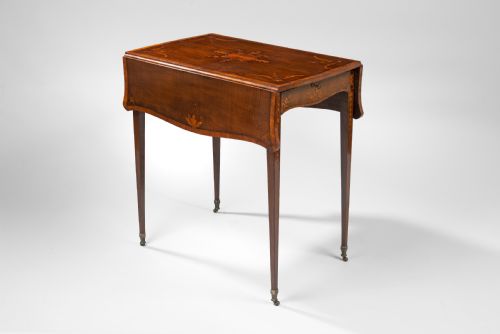

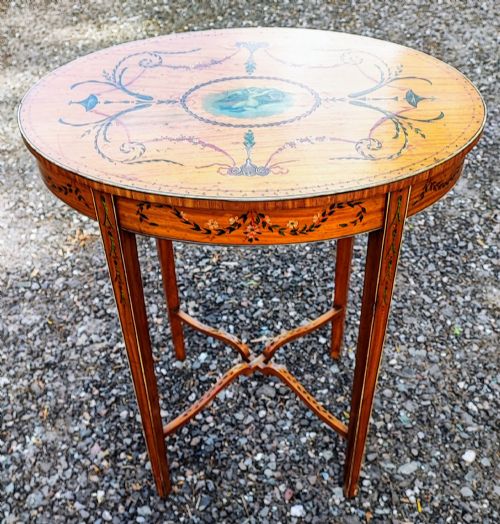


Georgian Satinwood Occasional Table
A georgian satinwood occasional table brings together pale timber and classical design, offering a versatile surface for a lamp or a book.
Georgian Satinwood Occasional Table
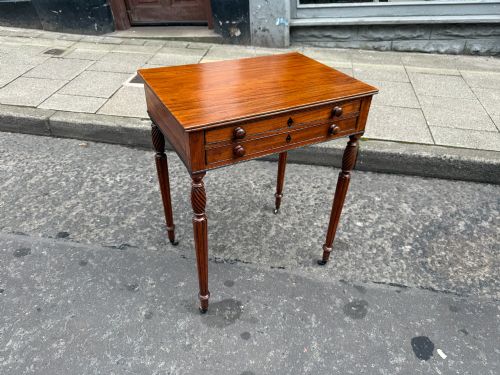
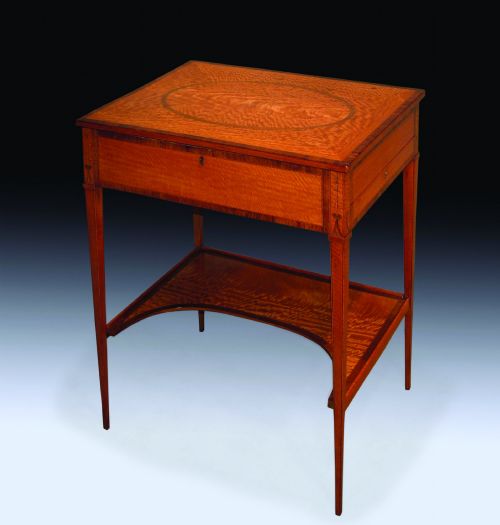
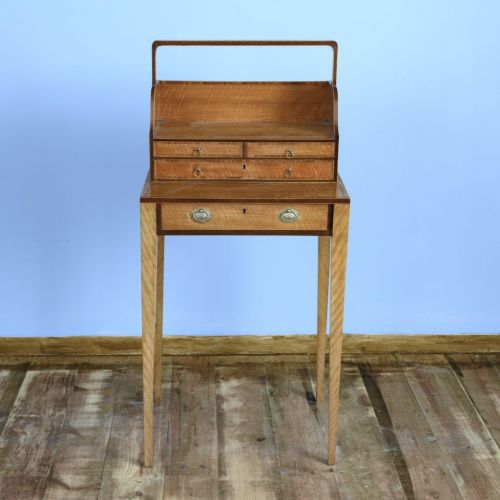
A georgian satinwood occasional table is a small, movable piece designed for light domestic use in the principal rooms of a house. When you search for this phrase, you encounter forms that served specific daily purposes, including Pembroke tables with drop leaves, small tripod stands, and delicate writing desks. The pieces span several periods, reaching from the eighteenth century through the Regency era and into later Edwardian revivals.
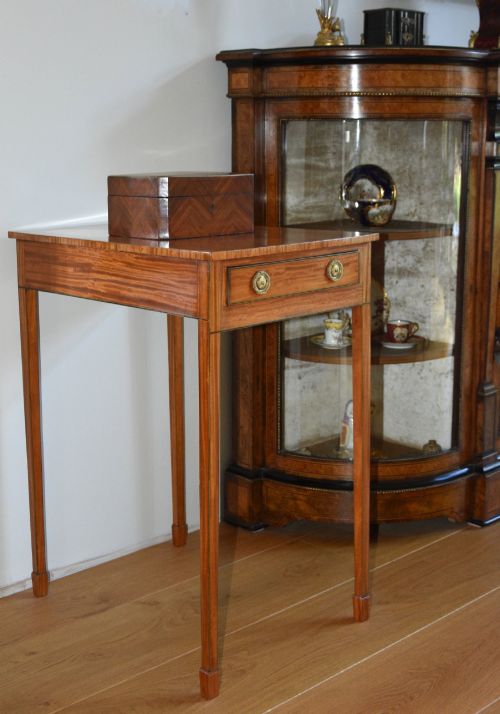
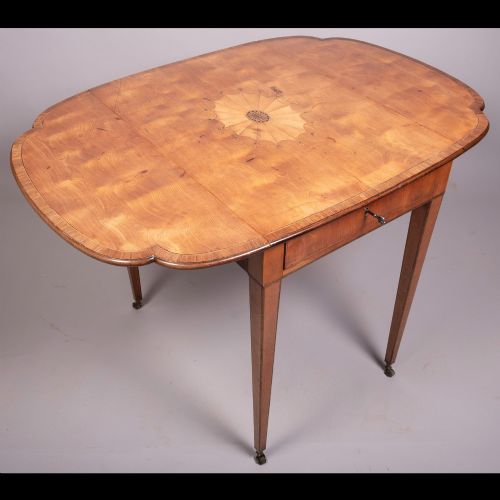
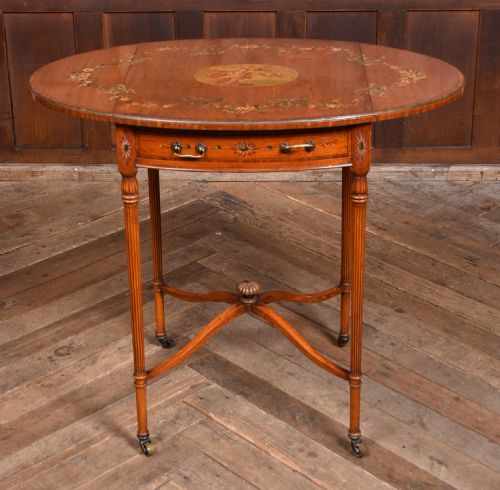
The most common examples you meet on this page are Pembroke tables and compact side stands featuring satinwood veneers and banded borders. These tables often incorporate drawers for sewing or writing, supported by slender tapering legs. While many date directly to the Georgian and Regency periods, others belong to the Sheraton Revival of the late nineteenth and early twentieth centuries, mirroring earlier proportions and decorative schemes.
How They Were Made
Cabinet makers constructed these pieces using native timbers such as mahogany or pine as a stable carcase, onto which they applied finely figured satinwood veneers. This pale, lustrous wood provided a smooth canvas for intricate timber inlay, bandings of rosewood, kingwood, or harewood, and delicate painted details. Boxwood stringing frequently outlined the edges of table tops and drawer fronts to create crisp geometric contrasts.
Workmanship relied on traditional joinery techniques, including dovetails for drawer construction and tenon joints for the underframe. Drop-leaf actions depended on hinged rule joints and swing brackets to support the folding flaps. Many surfaces also received detailed marquetry, floral motifs, or classical urns composed of various dyed and natural woods.
Listings feature satinwood combined with mahogany, rosewood, and boxwood across periods spanning the eighteenth century to the Edwardian era.
What Varies in Quality
Quality in a georgian satinwood occasional table rests primarily on the selection of the veneers and the precision of the timber inlay. Finer examples display symmetrical grain patterns and tightly fitted bandings that follow the contours of the top without lifting or shrinking. The crispness of the painted decoration or marquetry separates master cabinet work from standard commercial production.
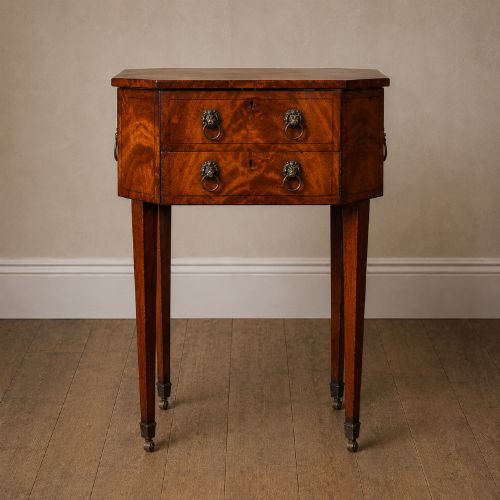
Structural refinement also dictates the grade of the piece, visible in the slenderness of the legs, the tight fit of drawer joints, and the retention of original brass handles or lion mask mounts. Later revival pieces vary widely, with the best capturing the lightness and proportion of the eighteenth century, while lesser examples rely on heavier frames and printed rather than hand-painted details.
Donald Ross·Gillows·Williamson
The Georgian Satinwood Occasional Table Glossary
- Satinwood
- A hard, dense tropical timber prized for its golden-yellow colour and natural sheen. It was widely used as a veneer on fine eighteenth and nineteenth-century furniture.
- Pembroke Table
- A small table equipped with two hinged drop leaves on opposing sides. It often includes one or two small drawers and stands on four legs.
- Marquetry
- The art of applying decorative pieces of veneer to a structure to form intricate pictorial designs or patterns. It uses contrasting woods, tinted timbers, and shell.
- Stringing
- A thin, narrow strip of contrasting wood inlaid into the surface of furniture to form delicate borders or outlines. It is commonly found in boxwood or ebony.
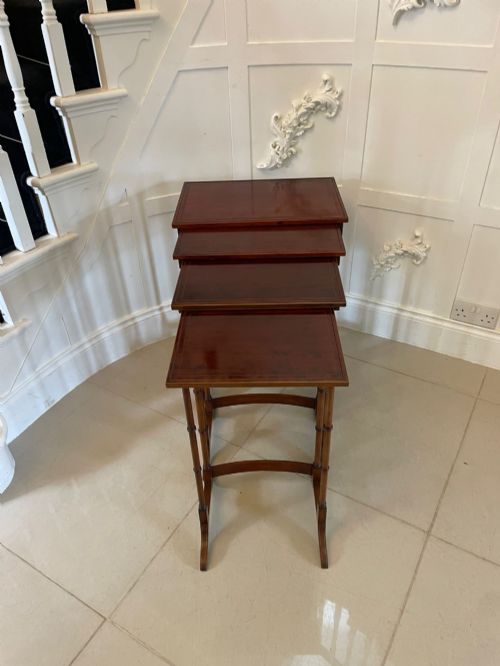
- Quartetto
- A set of four graduating tables designed to stack neatly beneath one another. They became particularly popular during the Sheraton Revival period.
Georgian Satinwood Occasional Table: Frequently Asked Questions
What is a pembroke table used for?
A Pembroke table served as a versatile breakfast, writing, or occasional table that could easily be tucked away against a wall. Raising the drop leaves expanded the surface area when needed for dining or letter writing.
In daily use, the small drawer held stationery, sewing implements, or personal items, making it a functional piece for sitting rooms and bedrooms.
How do I spot a sheraton revival table?
Sheraton Revival pieces date from the late nineteenth and early twentieth centuries rather than the Georgian period. They emulate the lighter proportions, satinwood veneers, and classical motifs popularised in the eighteenth century.
Close inspection of the secondary woods, internal construction methods, and screw types helps distinguish these later interpretations from genuine Georgian antiques.
How do I care for satinwood?
Satinwood benefits from being kept away from direct sunlight and steady sources of heat to prevent the veneer from drying and lifting. Regular dusting with a soft, dry cloth maintains the natural lustre of the polished surface.
Avoid using modern silicone sprays or heavy waxes, applying instead a traditional microcrystalline wax very sparingly when the timber appears dry.