

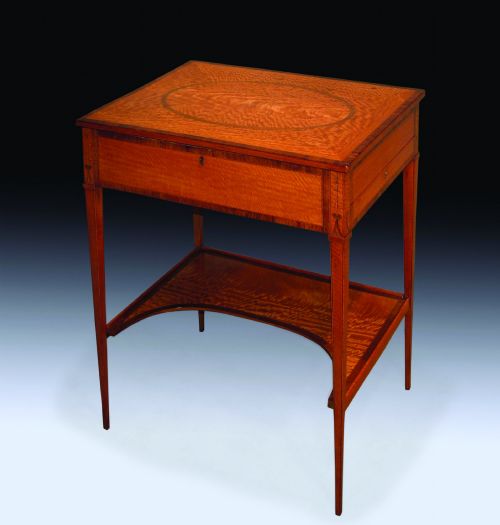


Georgian Inlay Work Table
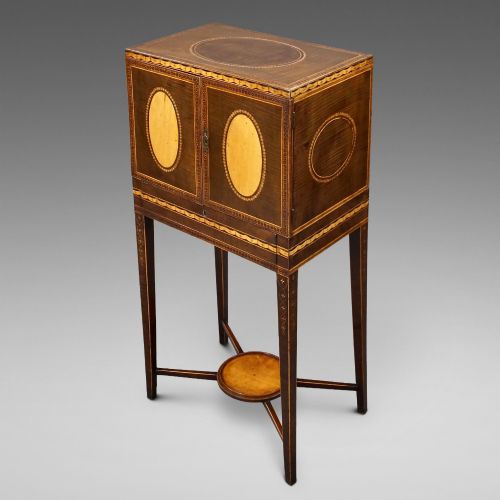
A georgian inlay work table brings refined mahogany, satinwood and rosewood surfaces together with hidden compartments designed for needlework and correspondence.
Georgian Inlay Work Table
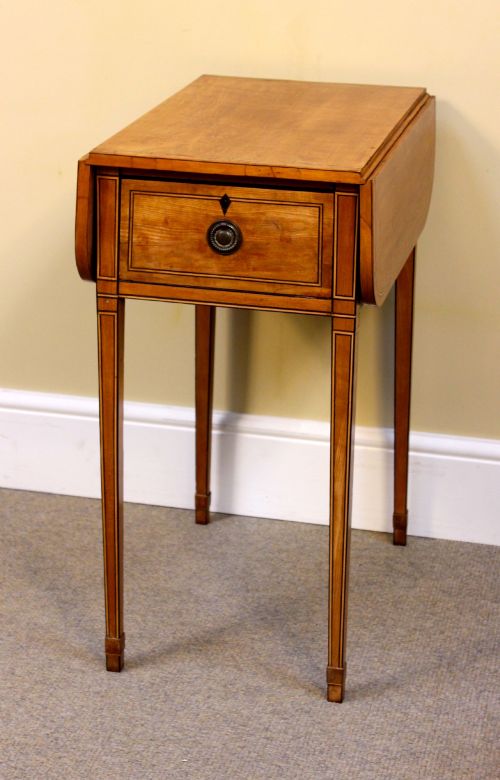
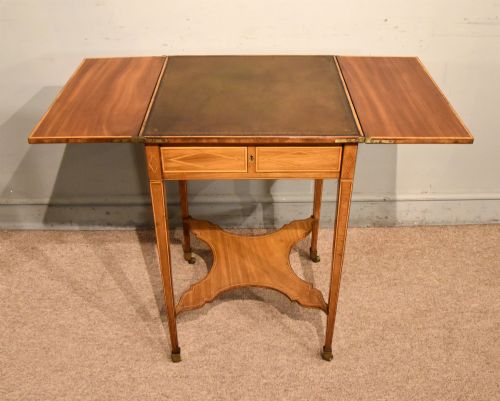
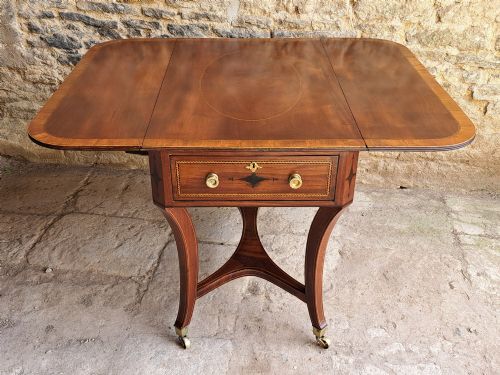
Buyers seeking a georgian inlay work table encounter pieces intended for domestic needlework, sewing and writing, originating primarily from the Georgian, Regency and Edwardian eras. These furnishings often take the form of drop leaf sewing tables, occasional pieces, or combination games tables equipped with secret rising compartments.
The materials and styles span Sheraton, George III and Regency designs, utilising mahogany, satinwood, rosewood and harewood enhanced by intricate contrasting stringing and banding. Such tables bridge the gap between decorative household furniture and practical utility for the home.
Materials and Construction
Cabinetmakers constructed these tables using solid timber frames of mahogany or rosewood, frequently faced with fine veneers of satinwood, harewood or yew wood. Complex inlay work utilised boxwood and ebony stringing to create geometric or floral motifs along table edges and drawer fronts.
Brass fittings, drop handles and occasional brass inlay details were integrated into the design, particularly during the Regency period. Drop leaves and multi-compartment interiors required precise joinery to ensure smooth movement in daily use.
Some work tables hide secret rising compartments designed specifically to keep private embroidery projects safe from prying eyes.
Distinctions in Quality
Quality rests upon the selection and matching of timber veneers, the precision of the contrasting inlay work, and the structural integrity of the moving parts inside the sewing compartments. Superior examples maintain crisp geometric alignment in the wood grain and stringing without lifting or warping.
Design sophistication also separates standard utilitarian pieces from high-status items, notably in the inclusion of secret compartments, fine turning on the legs, and attribution to known workshops.
Gillows of Lancaster·John MaClean·Wilkinson Leicester·Barrett London
The Georgian Inlay Work Table Glossary
- Inlay
- A technique where pieces of contrasting wood, such as satinwood or boxwood, are inserted into a recessed solid wood matrix to form a decorative pattern. This creates flat, smooth ornamental surfaces on tabletops and drawers.
- Stringing
- Thin, narrow lines of contrasting timber inlaid into the surface of furniture to outline panels and borders. It provides delicate linear framing for mahogany and rosewood pieces.
- Drop leaf
- A hinged flap on the side of a table that can be raised to extend the surface area or lowered when space is limited. These leaves are commonly supported by pivoting wooden brackets.
- Satinwood
- A durable, highly polished timber prized for its lustrous golden-yellow appearance and smooth grain. It frequently serves as a decorative veneer on classical tables.
- Rosewood
- A dense, heavy timber featuring dark brown grain patterns set against a reddish-purple background. It was heavily utilised during the Regency period for high-status cabinet work.
Georgian Inlay Work Table: Frequently Asked Questions
What is a georgian inlay work table used for?
These tables were originally created for domestic needlework, sewing, and light correspondence, incorporating internal wells, drawers, and secret compartments to hold threads, fabrics, and writing materials.
Today, they function well as decorative side tables, lamp tables, or occasional desks in living spaces where surface area and subtle storage are both required.
How do I identify a Regency period table?
Regency pieces often incorporate darker timbers such as rosewood alongside striking brass inlay or ebony stringing, reflecting the neoclassical design influences of the early nineteenth century.
They frequently feature distinctive leg turning, such as reeded or sabre legs, setting them apart from the lighter satinwood and mahogany aesthetic of earlier George III styles.
What is Sheraton style inlay?
Sheraton style furniture relies on classical geometry, clean lines, and symmetrical veneering using contrasting woods like satinwood, harewood, and boxwood stringing.
Tables from this design tradition prioritise refined elegance, frequently displaying delicate floral or banded motifs rather than heavy carving.
How should I care for an antique wood table?
Antique timber surfaces benefit from stable room temperatures and protection from direct sunlight, which can fade delicate satinwood and rosewood veneers over time.
Occasional application of appropriate microcrystalline wax helps preserve the polished finish without sealing moisture into the aged timber grain.