




Georgian Pottery Jug
A georgian pottery jug brings tangible history to your table, offering tactile creamware, pearlware, and transfer-printed earthenware from a century of master potters.

Georgian Pottery Jug
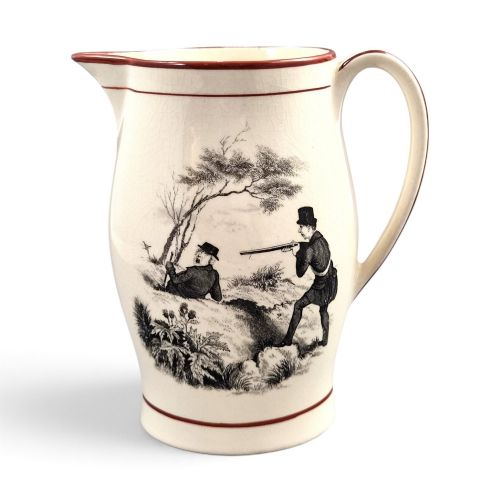
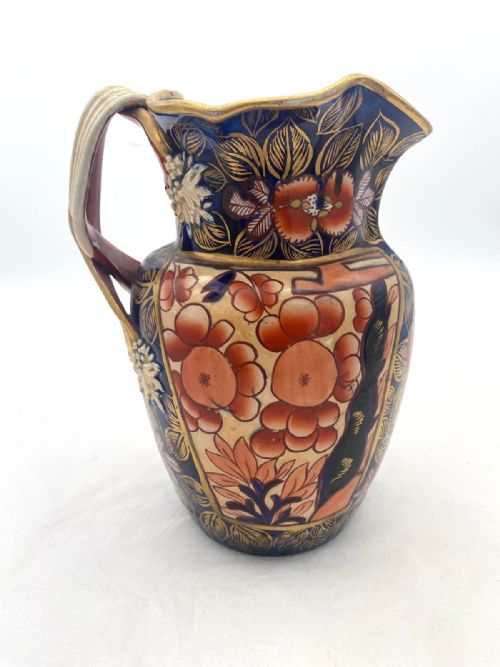
A georgian pottery jug encompasses practical vessels and decorative pitchers made across the eighteenth and nineteenth centuries, including creamware, pearlware, and ironstone examples. These pieces served diverse domestic functions, from pouring ale and milk to housing water at the family table.
Buyers will most frequently encounter earthenware jugs from Staffordshire potteries, often decorated with transfer printing, lustre finishes, or hand-painted scenes. Forms range from utilitarian one-gallon vessels and dairy creamers to characterful toby jugs and figural cow creamers.
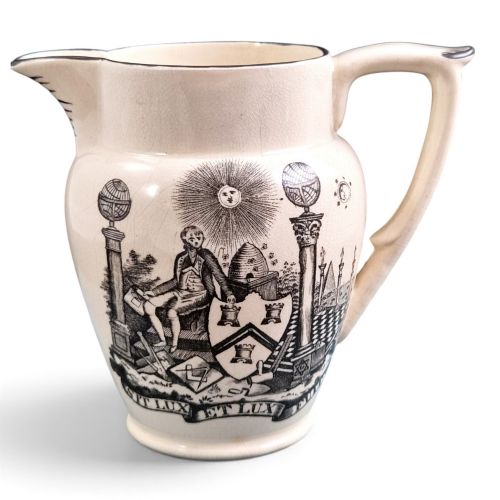
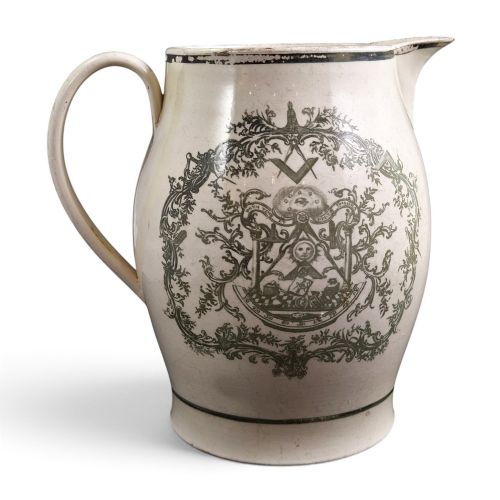
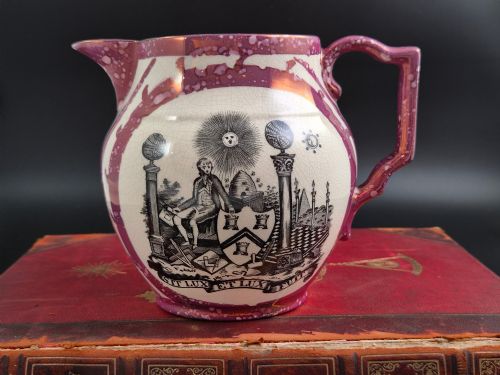
The selection bridges simple country slipware and refined neoclassical creamware, reflecting the daily life, maritime themes, and Masonic allegiances of the period. Every piece bears the distinct potting characteristics of English regional factories working before the mid-nineteenth century.
How They Were Made
Potters shaped these vessels using earthenware and stoneware bodies, frequently employing creamware and pearlware formulas developed to achieve lighter, smoother surfaces. Cabbage leaf moulding and relief designs added texture before the application of lead glazes.
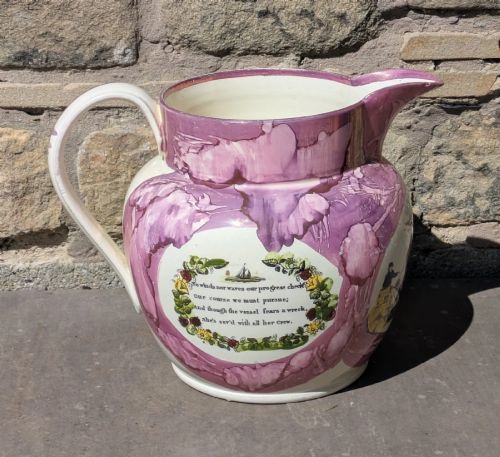
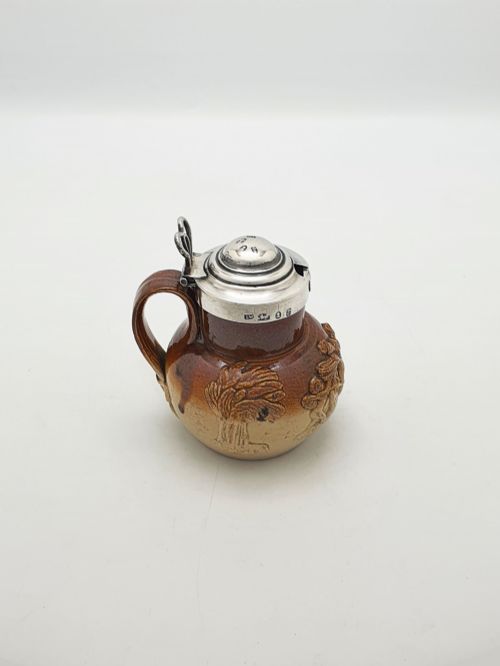
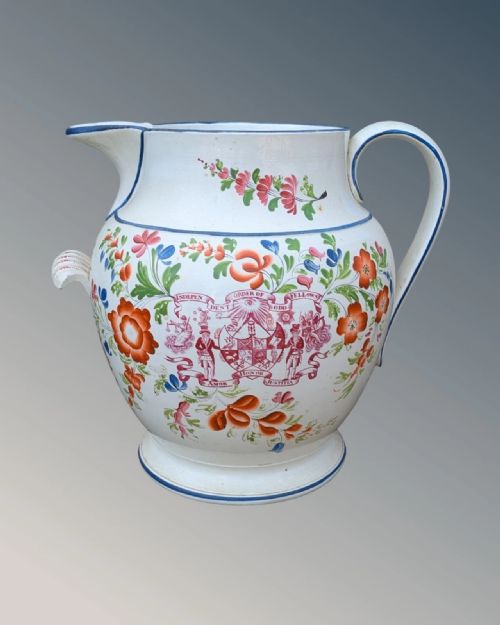
Decoration relied heavily on black, blue, and purple transfer printing to depict scenes, alongside metallic lustre finishes that imparted a reflective sheen. Certain pieces incorporated fitted sterling silver collars, hinged lids, or silver-plated mounts.
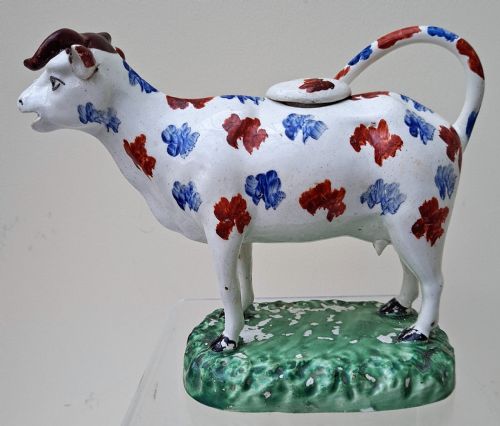
A cow-shaped jug with a milkmaid perched on the base is designed to let you pour cream directly from the animal's mouth.
What Varies in Quality
Quality rests upon the crispness of the moulded relief and the clarity of the transfer-printed design, where sharper details distinguish superior pieces from softer impressions. The complexity of the glaze, particularly in multi-coloured enamels and rich lustre applications, marks the distinction between standard domestic wares and higher-status productions.
The integration of precious metal mounts, such as hallmarked sterling silver collars, signals a finer original commission. Condition and the preservation of delicate spouts and handles further separate everyday surviving pots from well-kept display examples.
Leeds Pottery·Wedgwood·Mayer and Newbold·John Rogers and Son
The Georgian Pottery Jug Glossary
- Creamware
- A fine earthenware body with a pale yellowish straw-coloured glaze, perfected by Yorkshire and Staffordshire potters during the eighteenth century.
- Pearlware
- An refined earthenware introduced in the late eighteenth century featuring a bluish glaze that pooled in recesses to create a whiter overall appearance.
- Transfer print
- A decorative technique where an engraved copperplate transfers an inked design onto paper, which is then pressed onto the ceramic body prior to glazing.
- Lustreware
- Pottery finished with a metallic glaze that produces an iridescent or reflective sheen, commonly found in pink or copper tones on nineteenth-century jugs.
- Toby jug
- A pottery jug modelled in the shape of a seated, stout eighteenth-century person holding a mug of beer and a pipe.
- Slipware
- Pottery decorated by trailing liquid clay over a contrasting clay body before firing and glazing.
Georgian Pottery Jug: Frequently Asked Questions
Can I use these jugs for serving drinks?
While many historical pieces were originally made for ale, water, or milk, centuries of use can cause hairline cracks or compromise the historic glaze. It is wiser to treat them as decorative objects rather than functional tableware.
If you do use them for liquid, avoid hot beverages and acidic liquids that might react with old earthenware bodies and lead glazes.
How do I tell creamware from pearlware?
Examine the tone of the glaze under natural light to distinguish between the two primary ceramic bodies. Creamware displays a warm, pale yellow hue reminiscent of butter.
Pearlware incorporates a small amount of cobalt in the glaze, causing it to pool with a distinct bluish tint in crevices, handles, and around the base.
What is a frog mug?
A frog mug is a drinking vessel featuring a small ceramic frog modelled inside the base, positioned to surprise the drinker as the liquid level lowers. They were popular novelty items in British taverns during the Georgian period.
These pieces often included humorous inscriptions or Masonic emblems alongside the interior amphibian.