



Georgian Oak Tilt Table
A georgian oak tilt table is a compact pedestal piece designed for easy storage, bringing sturdy utility and rich timber grain to sitting rooms.
Georgian Oak Tilt Table
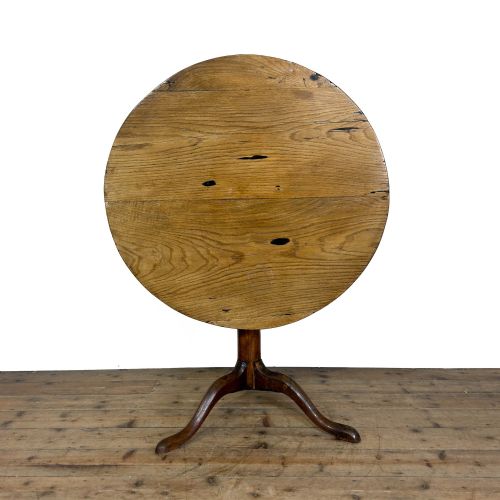
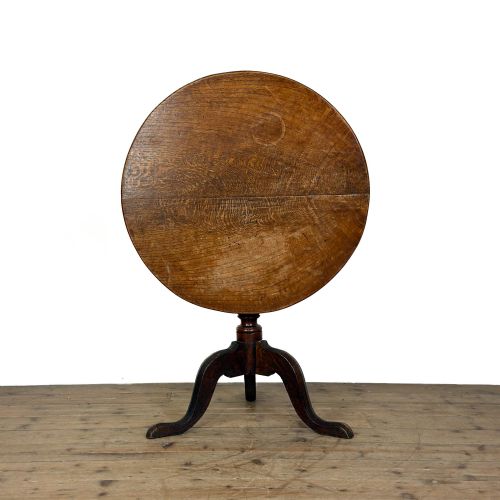
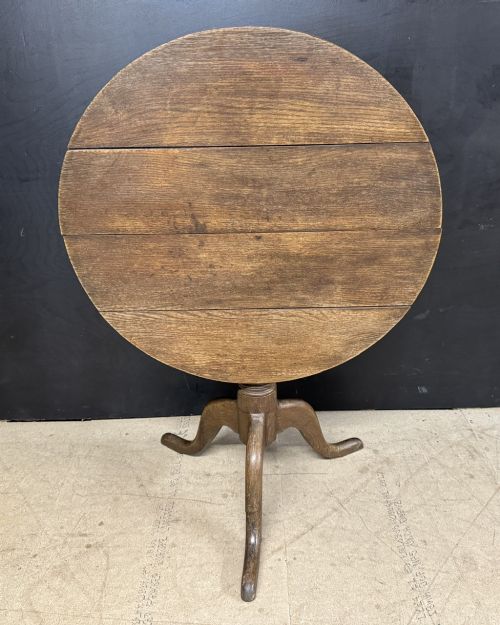
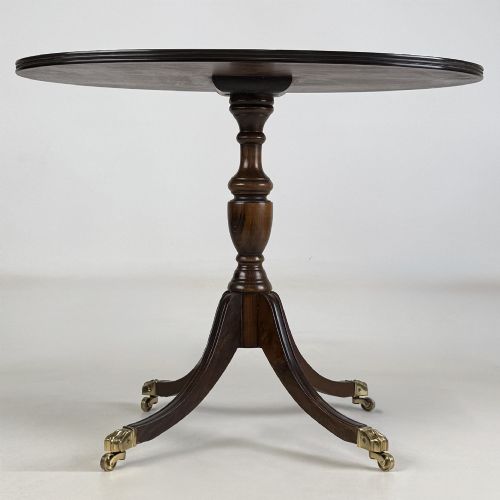
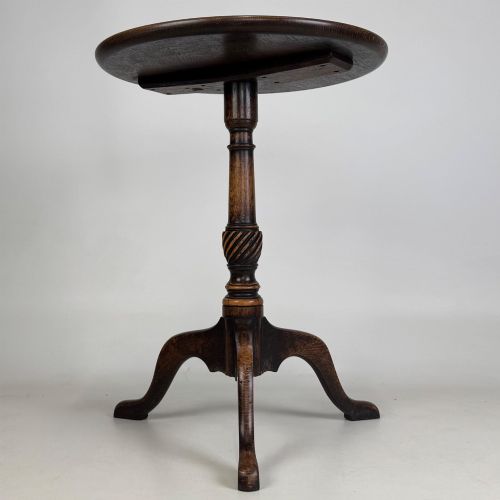
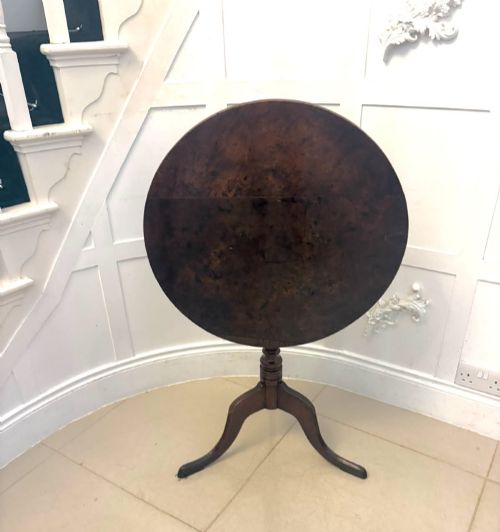
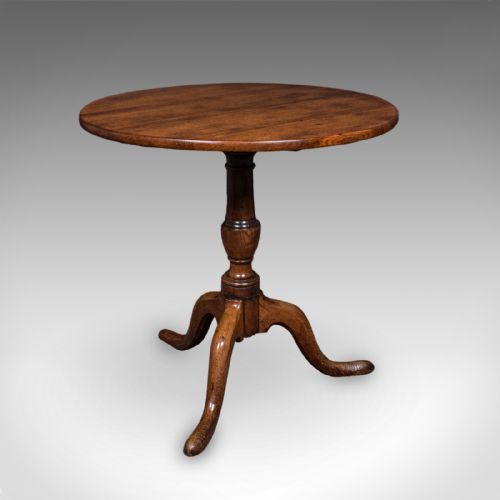
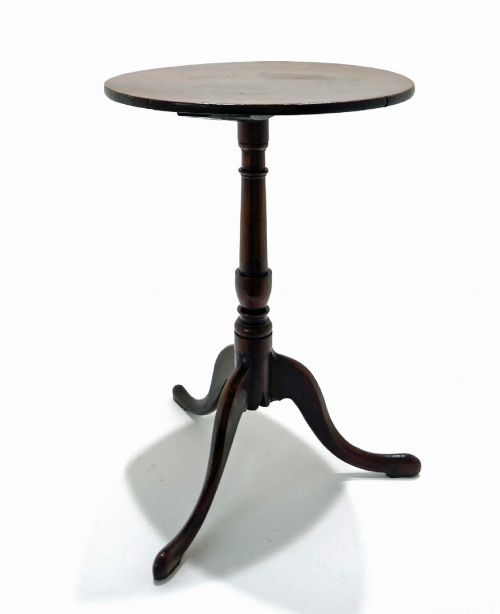
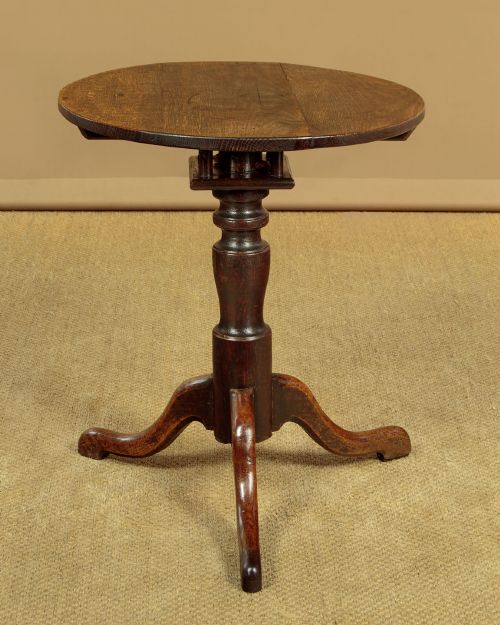
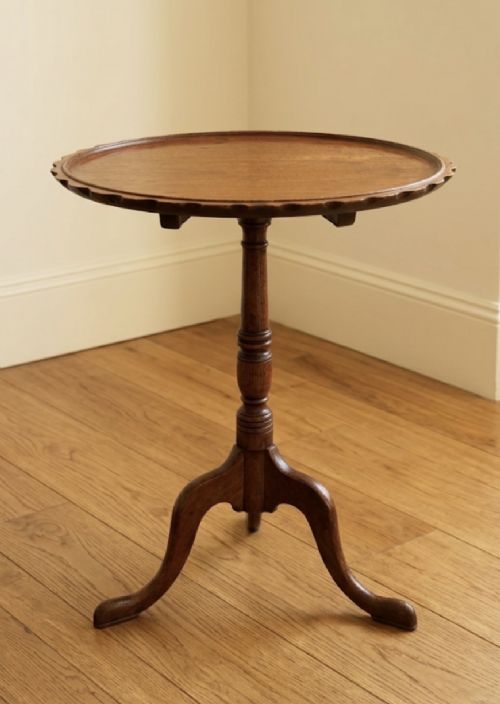
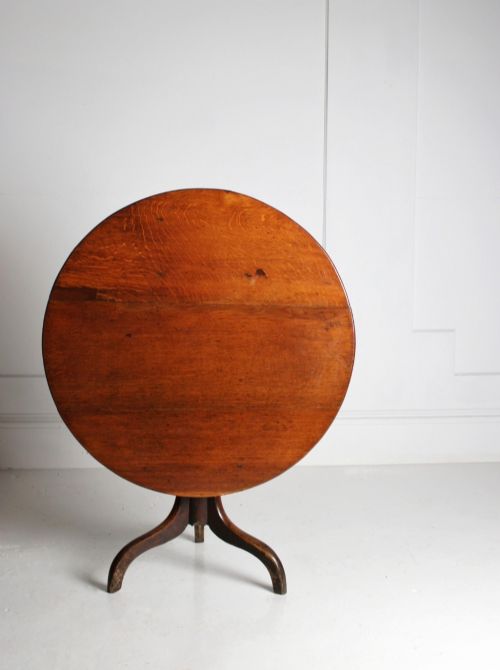
A georgian oak tilt table brings together a solid circular or oval top, a pivoting mechanism known as a birdcage, and a three-legged pedestal base. These practical pieces served historically for dining, writing, or holding lamps before tilting upright against a wall when not in use.
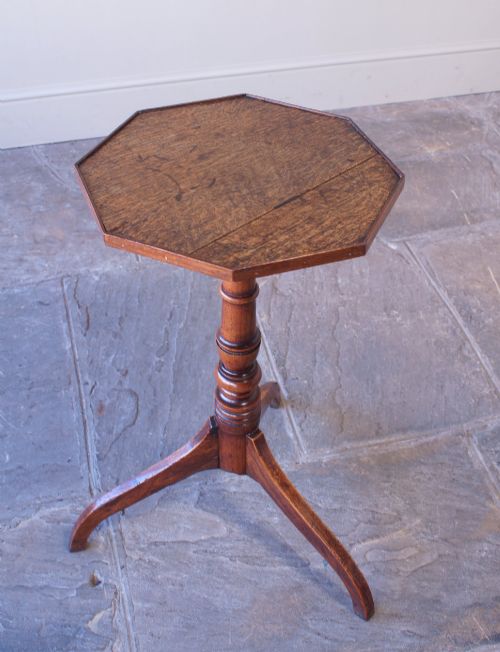
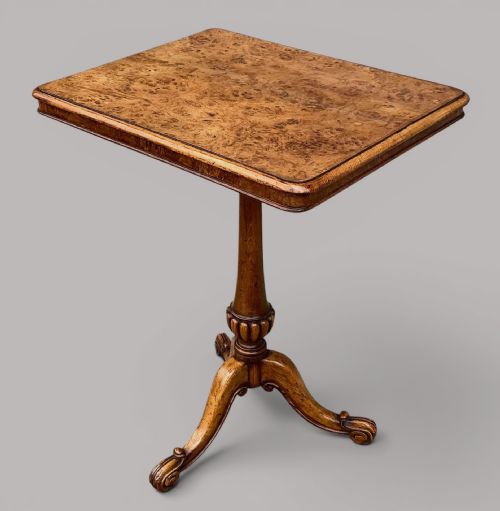
The examples gathered here span from vernacular country pieces dated around the mid-eighteenth century to later nineteenth-century interpretations. Most instances rely on sturdy oak timbers, occasionally paired with elm, beech, or burr oak veneers to add visual depth to the surface.
Materials and construction
Cabinet makers utilised dense native hardwoods, turning slender central columns on lathes and shaping tripod legs to provide stable support without encumbering floor space. The tilting mechanism often incorporates iron or brass catches and hinges that allow the tabletop to swing ninety degrees vertical.
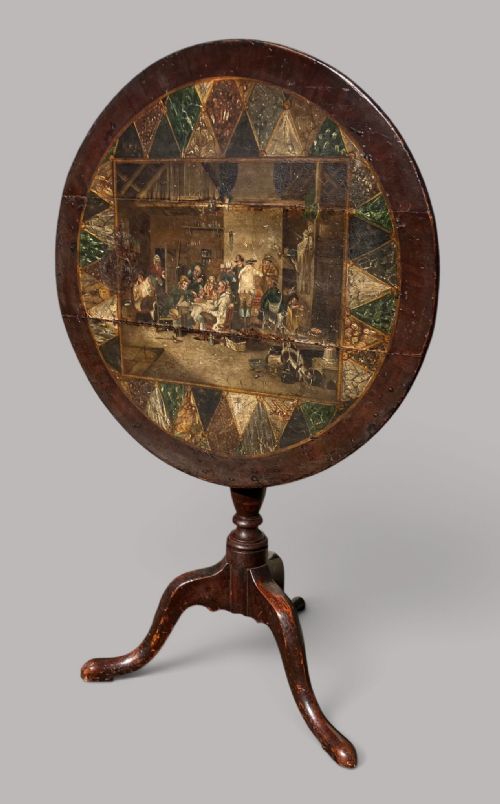
Surfaces range from plain timber boards showing natural medullary rays to decorative burr oak veneers and inlaid borders. Certain examples retain traces of original paintwork, showing how utilitarian furniture was sometimes finished for domestic spaces.
Georgian Oak Tilt Table Retail Price Guide 2026
Typical asking prices for georgian oak tilt table among the pieces listed under this phrase on Sellingantiques today, from the lower quarter to the upper quarter. They describe what is for sale here now, not the wider market.
Country makers occasionally left whimsical tool marks and naive paint finishes on these tables, ensuring every piece tells a distinct domestic story.
Quality and proportion
The distinction between standard domestic pieces and finer works rests in the balance of the proportions and the turning of the central pedestal. Slender columns and well-shaped cabriole legs ending in pad feet provide a lighter silhouette than heavier, plain turnings.
Surface preservation determines the character of the timber, with patinated wax finishes and unblemished grain patterns preferred over heavy restoration. The tightness of the tilt mechanism and the alignment of the catch also indicate the precision of the original construction.
The Georgian Oak Tilt Table Glossary
- Tilt top table
- A table with a hinged top that rotates to a vertical position when not in use. This clever space-saving design allowed eighteenth-century households to clear rooms quickly.
- Birdcage
- A timber framework beneath the tabletop that enables the surface both to tilt and to revolve. It consists of small upright spindles connecting two parallel plates.
- Tripod base
- A three-legged support structure attached to a central pedestal. This configuration ensures the table remains steady on uneven floorboards.
- Vernacular
- Furniture made by local country craftsmen for everyday domestic use rather than high-style metropolitan workshops. These pieces often display regional quirks and honest construction.
- Medullary rays
- Flakes or ribbon-like markings visible across quartersawn oak timber. Cabinet makers prized this natural figure for its distinctive appearance.
Georgian Oak Tilt Table: Frequently Asked Questions
What is a birdcage mechanism?
The birdcage is a small wooden assembly fixed beneath the table surface that allows the top to pivot and rotate independently of the central column. This clever engineering solved the problem of bulky furniture in smaller eighteenth-century rooms.
When locked flat, the mechanism provides a stable eating or writing surface. When released, the top swings vertically to flat against the pedestal for storage.
How were tilt tables used?
These pieces functioned as versatile furniture for dining, tea-drinking, and reading by candlelight. Their lightweight construction meant servants could move them around the house as needed.
At the end of the evening, the tops were tilted upright and the tables pushed against the perimeter of the room to create open floor space for dancing or sleeping quarters.
How do I spot an 18th-century piece?
Eighteenth-century examples typically display hand-turned columns, pegged joinery, and boards with subtle shrinkage and wear consistent with age. The timber surfaces show deep wax patination built up over generations.
Look underneath the tabletop to examine the pivot blocks and fastening methods, as later nineteenth-century revival pieces often employed machine-cut screws and standardised hardware.
How do I care for oak furniture?
Maintain the timber by applying a traditional beeswax polish sparingly and buffing it with a soft cloth to nourish the grain. Avoid placing these tables near direct heat sources or strong sunlight, which can dry out the oak and cause wood shrinkage.
Take care when operating the tilt mechanism to support the weight of the heavy top, preventing sudden strain on the pivot pins and hinges.