
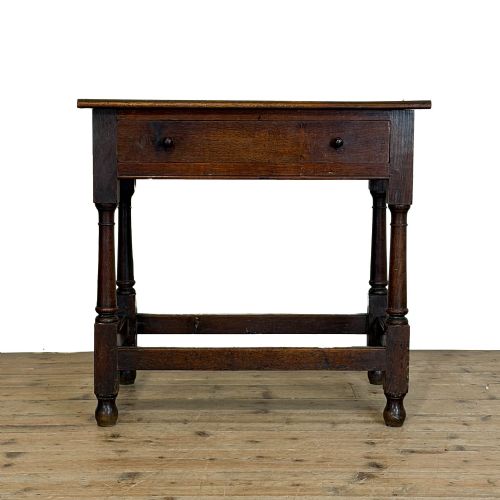
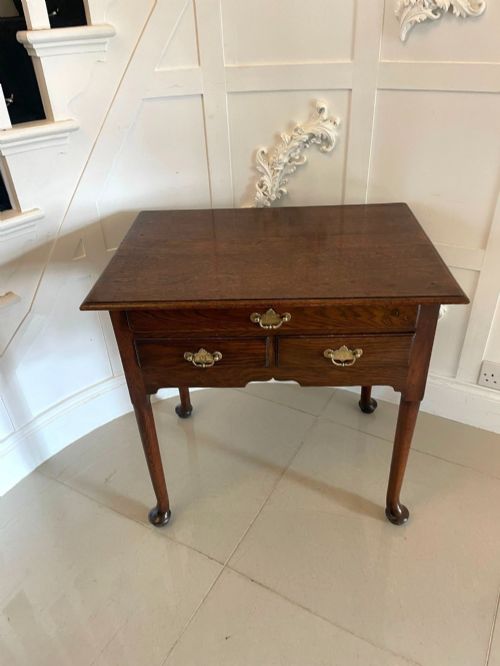
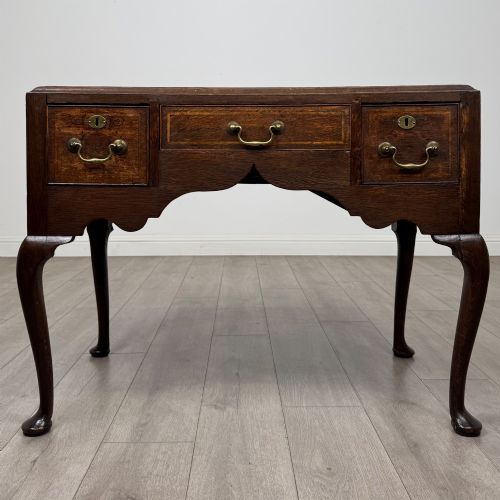
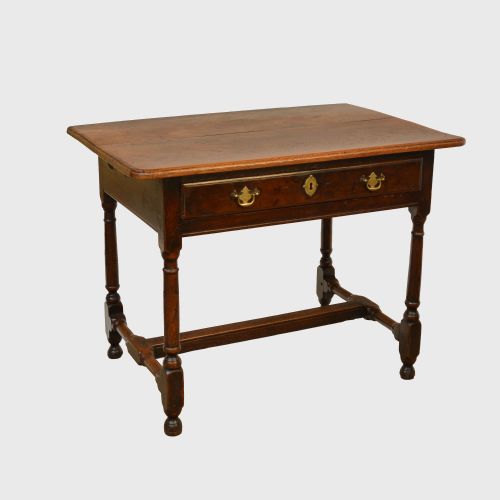
Georgian Oak Lowboy Desk
A georgian oak lowboy desk brings compact, practical surface space and concealed drawer storage to a room without crowding the floor plan.

Georgian Oak Lowboy Desk
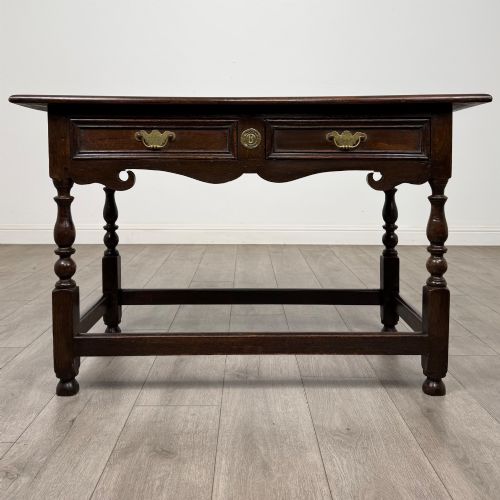
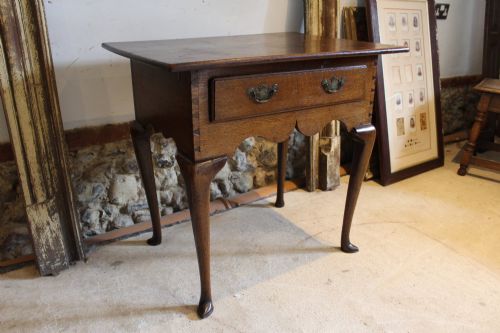
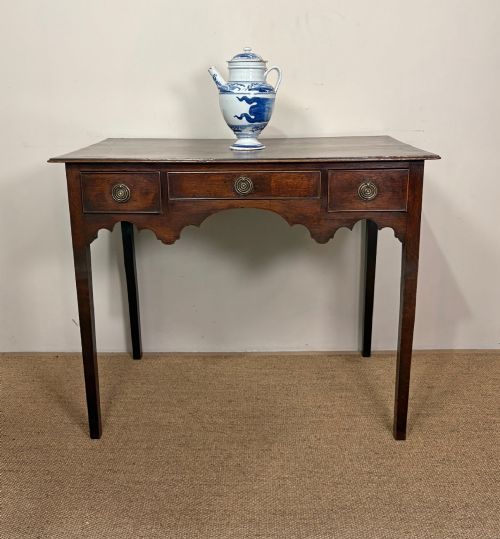
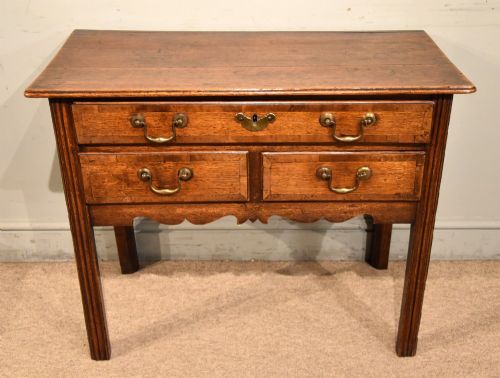
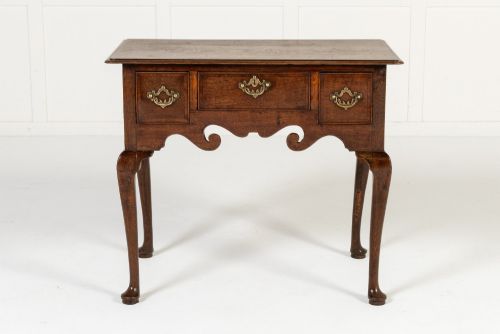
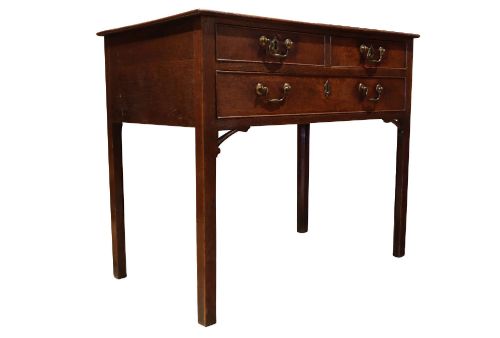
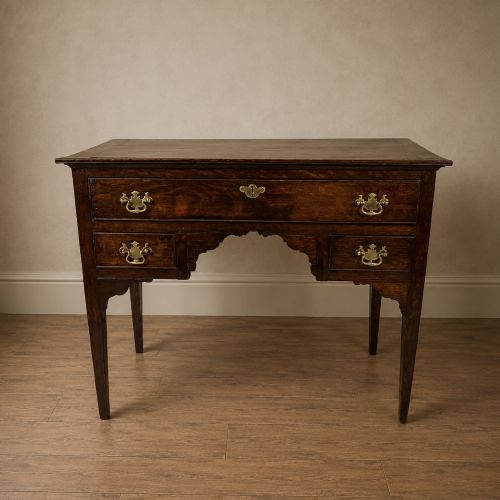
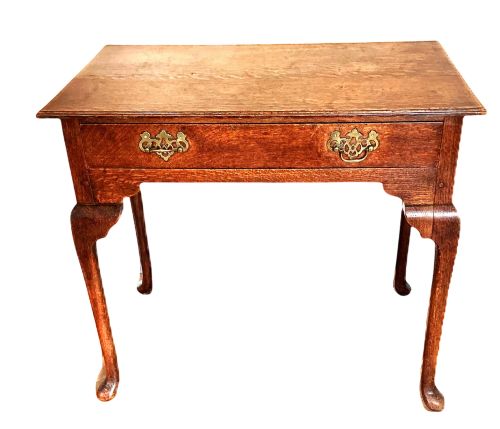
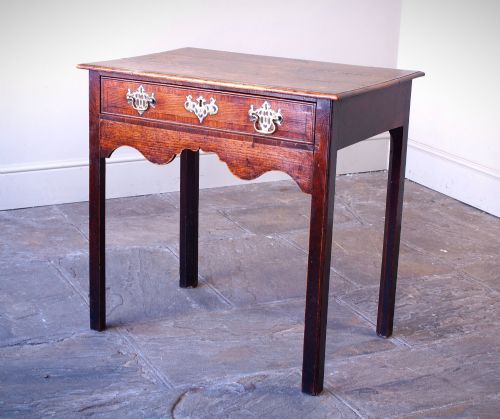
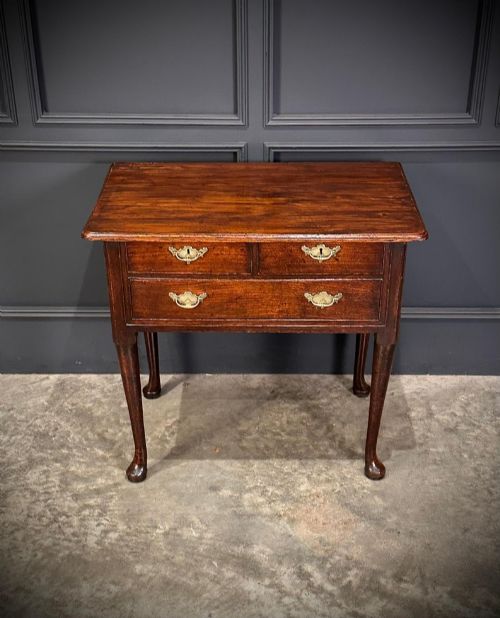
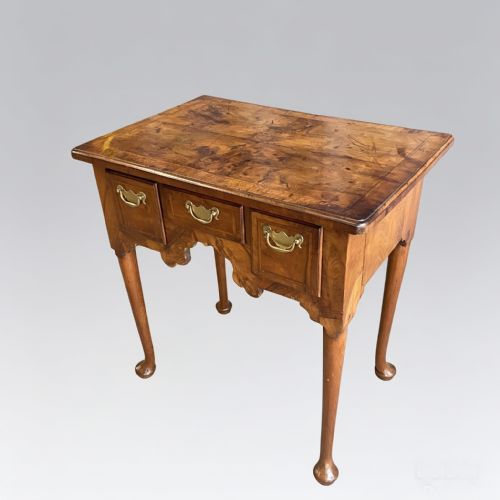
When you search for a georgian oak lowboy desk, you are looking at low-standing tables designed for grooming, writing or general side storage, most frequently encountered in sturdy oak from the eighteenth century. These pieces combine a tabletop with one to three drawers beneath, supported by slender legs that give the form a light appearance despite the dense timber.
The pieces on this page span the periods from Queen Anne and George I through George II and George III, alongside later nineteenth century revivals and twentieth century reproductions. While many are designated simply as side tables or dressing tables in the listings, their proportions remain consistent with traditional lowboy forms used across English and Welsh country houses.
What Varies in Quality
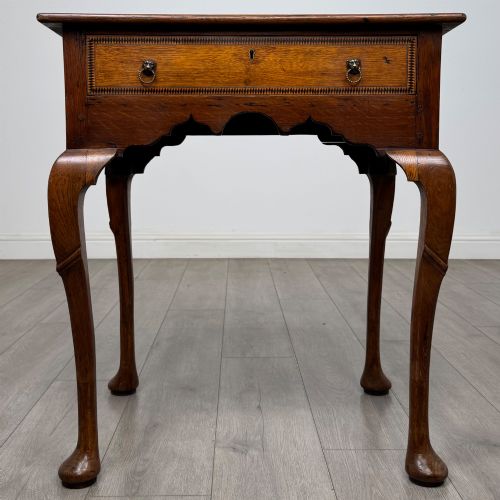
The distinction between standard utility pieces and finer examples rests on the crispness of the timber preparation and the subtlety of decorative details such as feather banding, shaped aprons or cross-banding. Tables featuring multiple working drawers or rarer secondary timbers like walnut and yew represent a higher level of workshop output.
Structural integrity and the survival of original brass hardware, drawer linings and legs without excessive timber replacement determine the enduring standing of an individual piece. Country-made variants often display simpler, heavier construction compared to pieces commissioned for formal Georgian interiors.
Some country makers thoughtfully included hidden side drawers to keep secret letters safe from prying eyes.
The Georgian Oak Lowboy Desk Glossary
- Lowboy
- A small table with one or more drawers, standing on four legs, typically used as a dressing table or writing desk during the eighteenth century.
- Side table
- A flat-topped table designed to stand against a wall, frequently sharing form and dimensions with lowboys.
- Feather banding
- A decorative inlay technique where thin strips of veneer are laid in a herringbone pattern around drawer edges.
- Dovetail
- A joint formed by interlocking wedge-shaped fingers, commonly used to construct sturdy drawer boxes.
- Escutcheon
- A protective plate surrounding a keyhole, usually cast in brass.
Georgian Oak Lowboy Desk: Frequently Asked Questions
What was a lowboy desk used for?
These tables served multiple domestic purposes, acting as compact writing desks, dressing tables for personal grooming, or side tables for holding lamps and correspondence.
Their modest height and built-in drawers made them versatile additions to bedchambers, parlours and halls where larger desks would not fit.
How do I date a georgian oak lowboy?
Dating relies on observing construction methods, timber choices and stylistic details such as leg shape and apron design. Pieces from the early eighteenth century under Queen Anne or George I often feature cabriole legs, while later George III examples lean toward straight, square legs.
Examining the dovetailing inside the drawers and the wear patterns on the wood helps confirm whether a piece dates to the eighteenth century or represents a later nineteenth century revival.
Are all lowboys made of oak?
While oak is the dominant timber seen across these listings, makers also utilised walnut, mahogany, fruitwood, elm and yew, sometimes combining multiple woods within a single piece.
Secondary woods often appear inside drawer construction or as decorative veneers on the primary top surface.
How do I fit a lowboy into a modern room?
A lowboy works well as a slim hallway console, a compact dressing table in a bedroom, or a dedicated writing surface beneath a window.
Its shallow depth allows it to sit flush against walls without obstructing walkways, while the drawers provide discreet storage for small everyday items.