
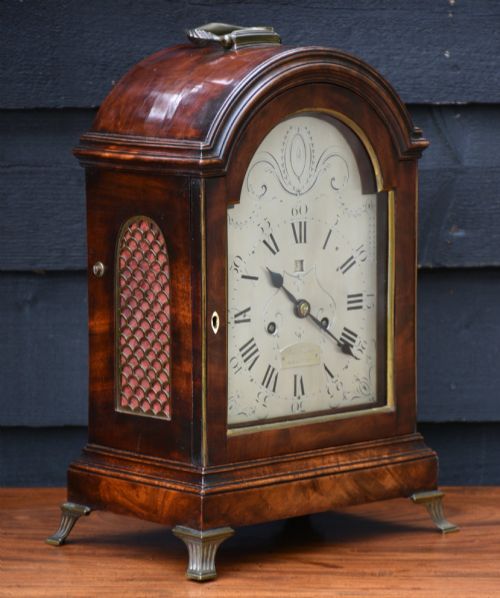
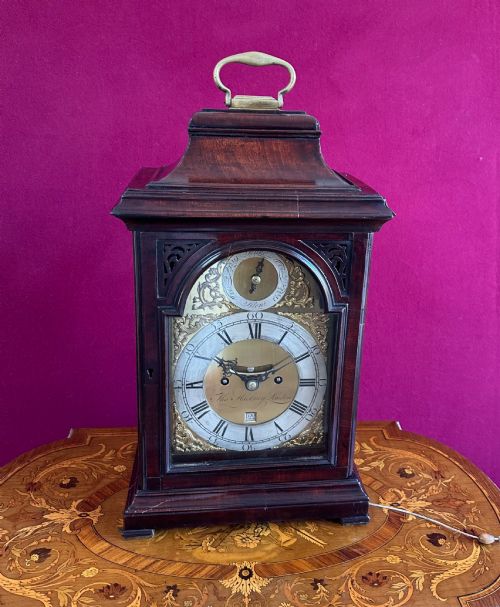
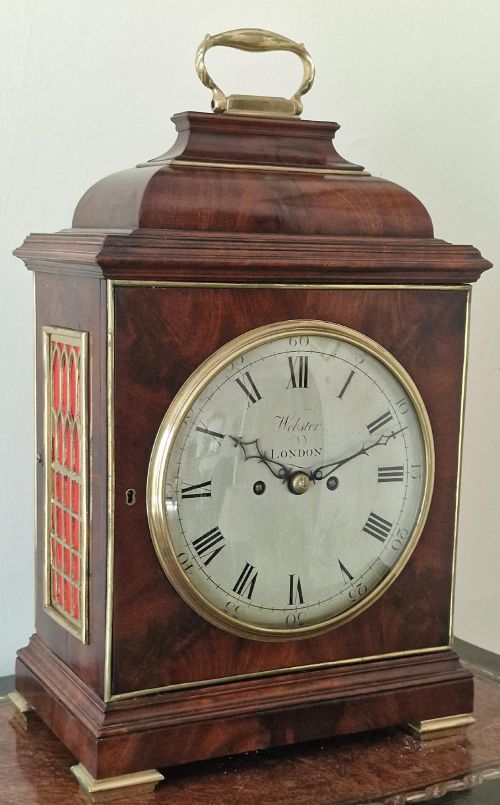

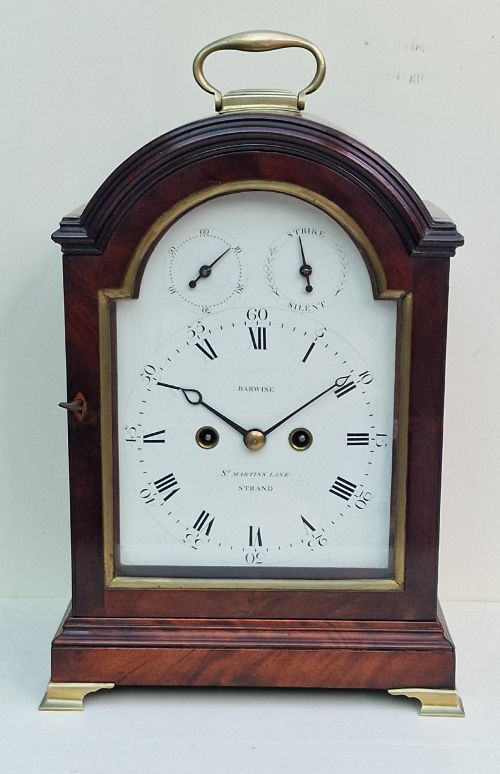



Georgian Mahogany Mantel Clock
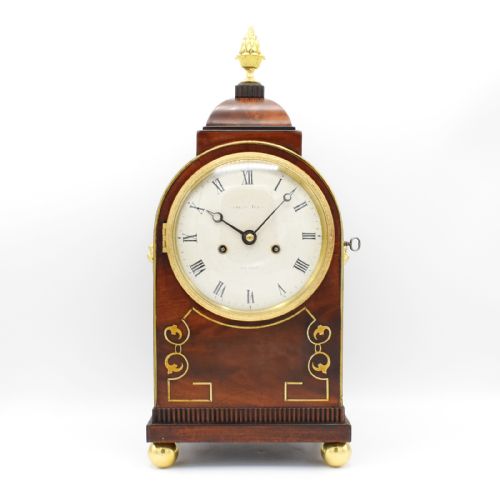
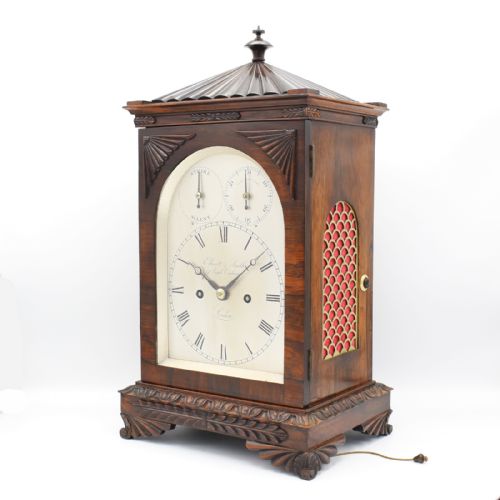
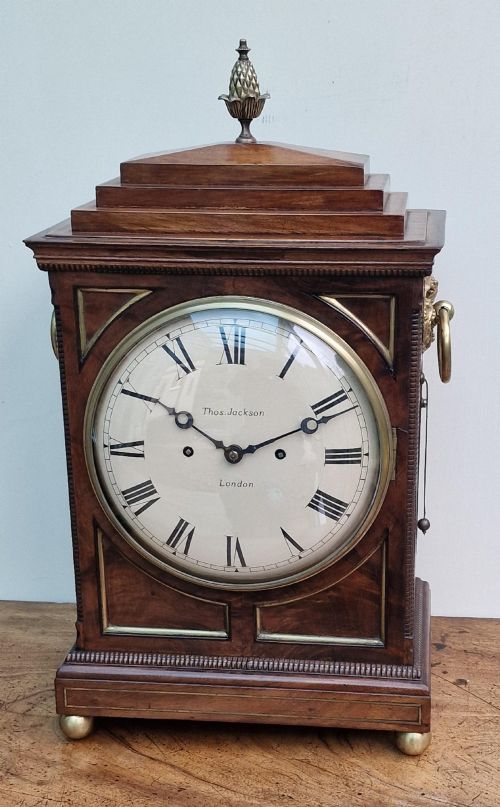
A georgian mahogany mantel clock brings heavy cabinet timber and precision brass movement together on a bracket or shelf.

Georgian Mahogany Mantel Clock
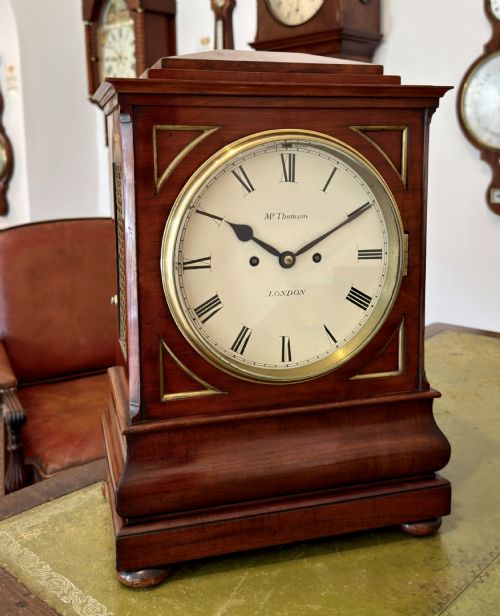
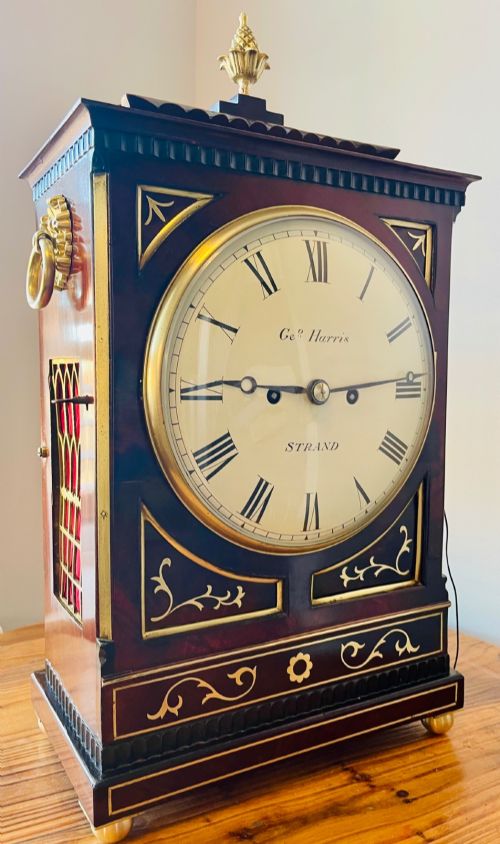
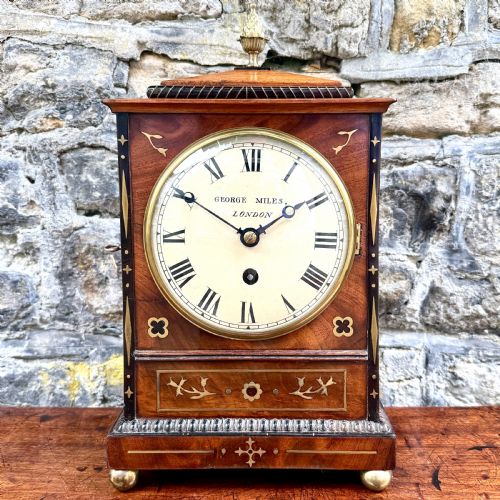
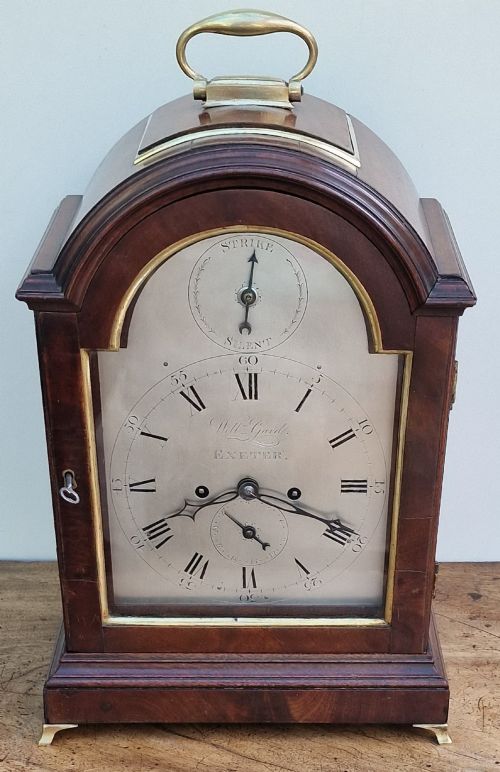
A georgian mahogany mantel clock sits within the bracket and table clock category, featuring cabinet timber built to house precision timepieces. Buyers searching for a georgian mahogany mantel clock will find forms ranging from simple library timepieces to elaborate musical bracket clocks.
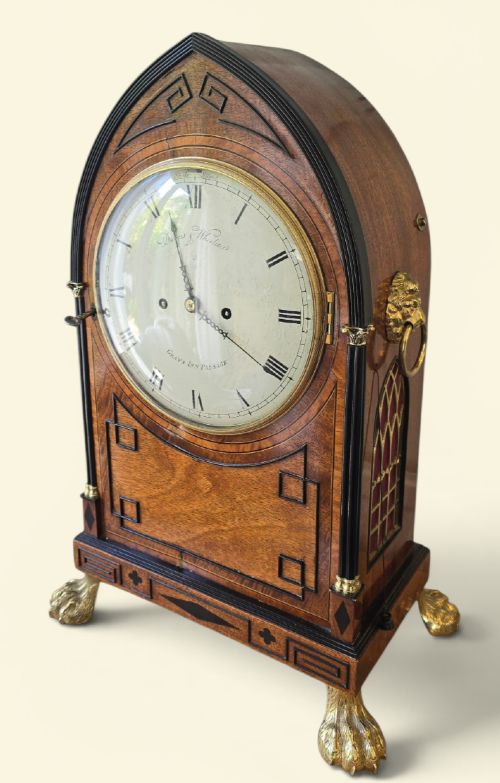
The pieces on this page span the Georgian, Regency and Victorian periods, with many examples originating from London makers. Architectural shapes such as the lancet top, single pad top and balloon case appear frequently across the listings.
Movements vary from standard 8-day fusee mechanisms to verge escapements and striking systems. Most examples employ mahogany cabinets complemented by brass mounts, silvered metal dials and glass viewing panels.
How they were made
Cabinetmakers constructed the architectural cases using solid and veneered mahogany, occasionally incorporating contrasting ebony inlay or brass stringing. Dial faces typically combined enamel or silvered metal with delicate steel hands behind glazed doors.
Internal movements relied on brass gears and steel arbors driven by fusee or spring-driven mechanisms. Complex examples added striking trains, musical cylinders or verge escapements housed within robust wooden frames.
Listings feature mahogany, brass, glass, enamel, ebony, silk, silvered metal and steel across Georgian and Regency periods.
What varies in quality
The refinement of the cabinetmaker's joinery and the sophistication of the internal movement dictate the standing of a piece. Fine execution shows in crisp brass inlay, well-proportioned architectural cases and signed movements by noted makers.
Subtlety in dial engraving and the integration of specialised complications such as musical barrels or repeating mechanisms separate standard timepieces from exceptional examples.
Thomson of London·William Gard Exeter·Webster London·Mappin & Webb·Barwise London·Charles Pratt London·Ellicott & Smith·Thomas Jackson London·Bush of London·Desbois & Wheeler·L. Vick of Stroud·Webster Cornhill London·Francis Perigal London·Thomas Moss·Cording of London·Hyde of Salisbury·Hampson & Son·Wilkinson Leicester·Barrett London·Paul Philip Barraud
The Georgian Mahogany Mantel Clock Glossary
- Fusee
- A conical pulley used in clock movements to maintain even driving force as the mainspring unwinds. This mechanism ensures consistent timekeeping throughout the running cycle.
- Verge escapement
- An early type of clock escapement controlled by a balance wheel or foliot. It creates the characteristic ticking rhythm in older movements.
- Lancet top
- An architectural case design featuring a pointed, arched upper profile resembling a gothic window. This shape was popular during the Regency period.
- Silvered dial
- A metal clock face treated with a silver solution to produce a matte, reflective finish. Graduations and maker signatures are typically engraved and blackened upon this surface.
Georgian Mahogany Mantel Clock: Frequently Asked Questions
What is a fusee movement?
A fusee movement uses a conical pulley to equalize the pull of the mainspring as it winds down.
This clever mechanical device ensures the clock delivers steady power to the gear train for accurate timekeeping.
How do I wind the clock?
Winding requires a matching key inserted into the dial winding holes to tension the mainspring.
Careful rotation engages the fusee or barrel mechanism without over-tightening the spring.
Where were these clocks placed?
These clocks were designed to sit on brackets, tables or mantelpieces in principal rooms of the house.
Their portable nature allowed owners to move them easily between libraries, halls and drawing rooms.
How do I identify a Regency case?
Regency cases often feature architectural silhouettes, brass inlay and bold mahogany grains.
Distinctive top profiles like the lancet shape help distinguish this era from earlier Georgian designs.