
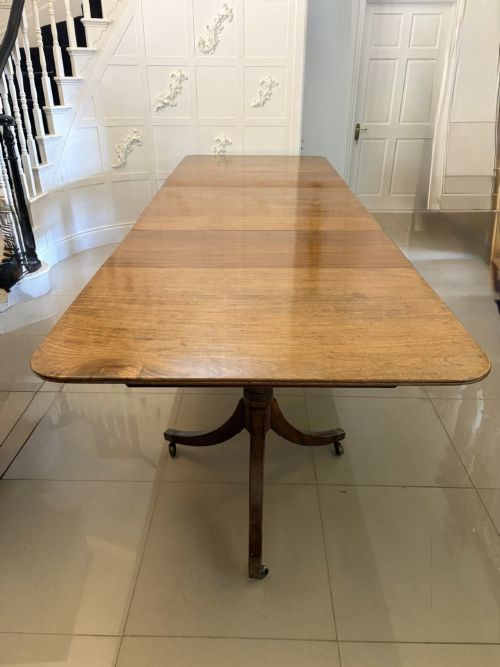

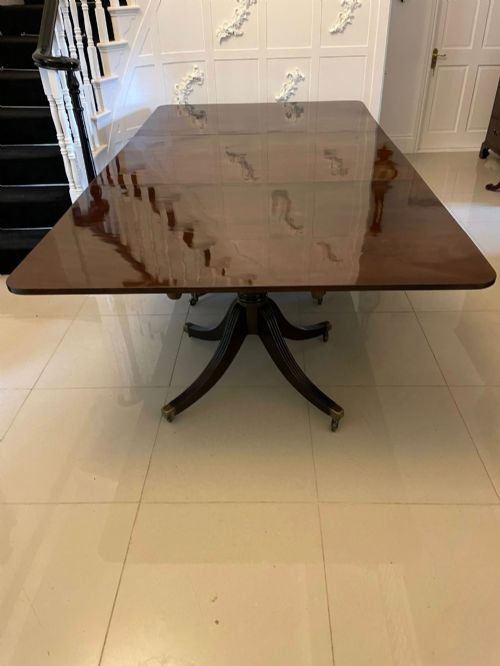
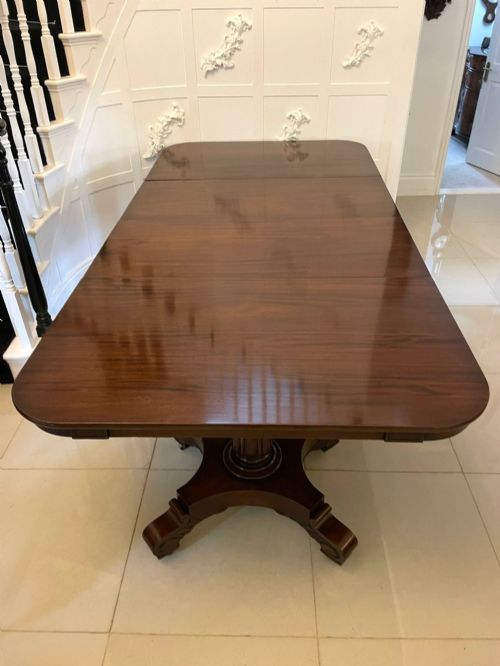
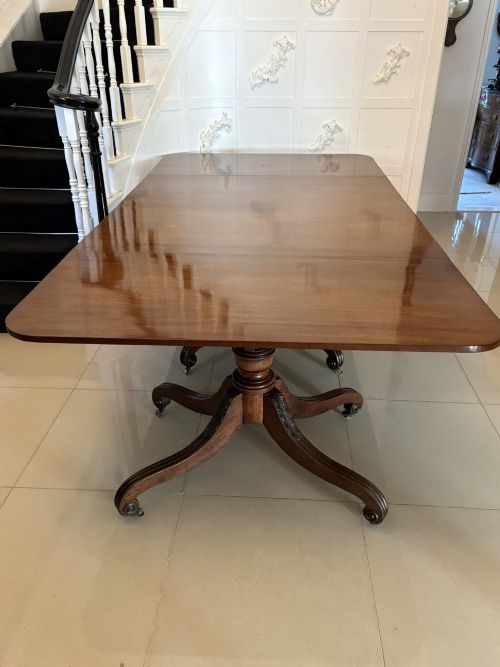
Georgian Mahogany Conference Table
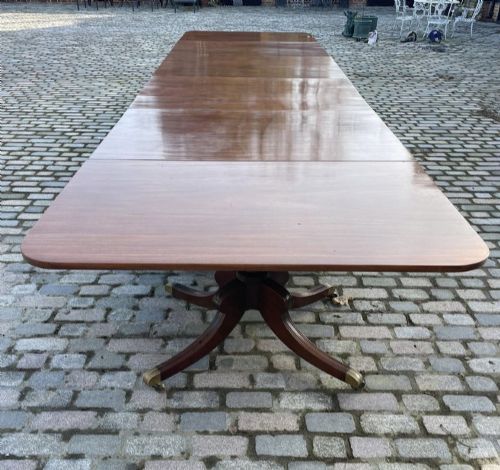
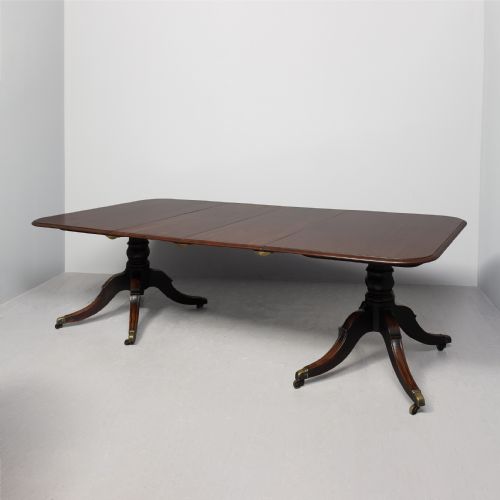
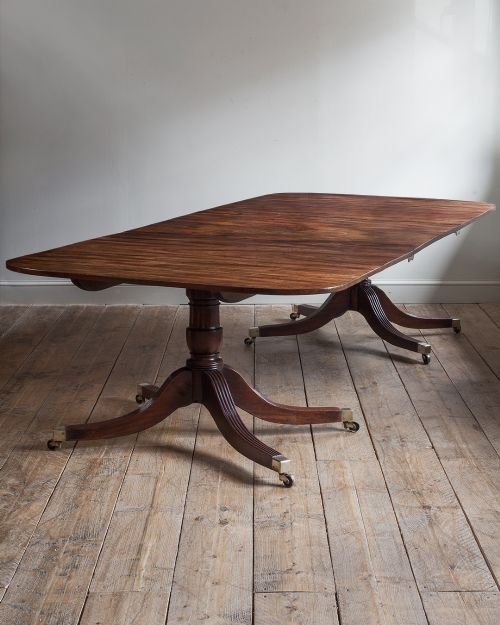
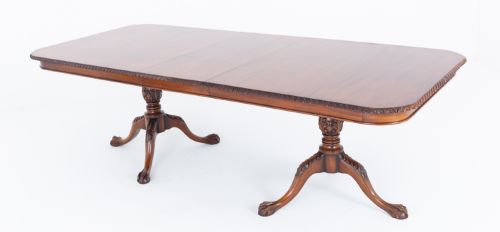
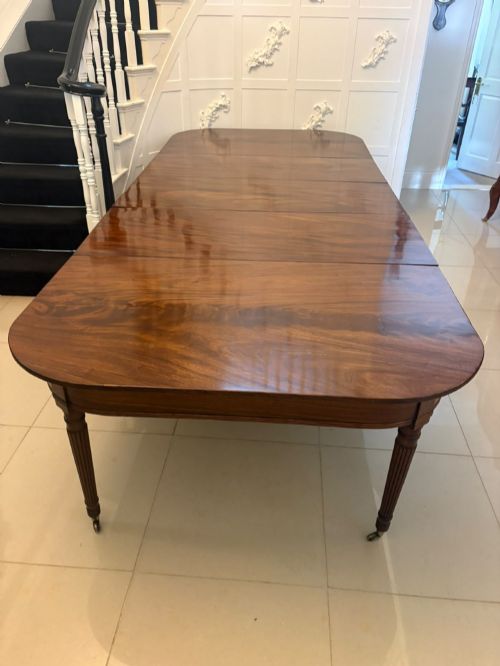
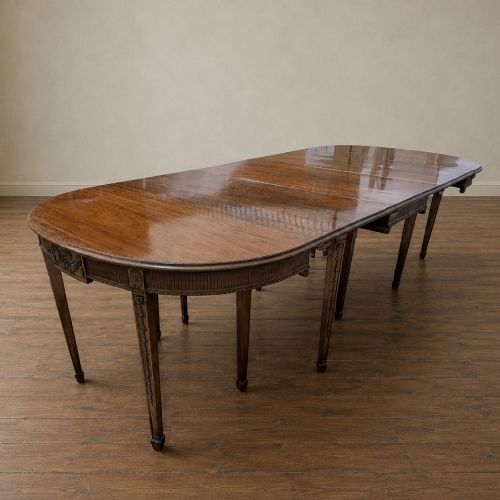
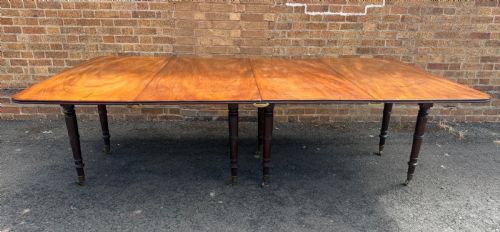
These large timber boards set upon pedestals provide the grand scale needed for a georgian mahogany conference table.
Georgian Mahogany Conference Table
A georgian mahogany conference table serves large gatherings through extendable dining formats featuring multiple pedestals and removable leaves. The examples found here span the eighteenth century, the regency period, and later revival eras.
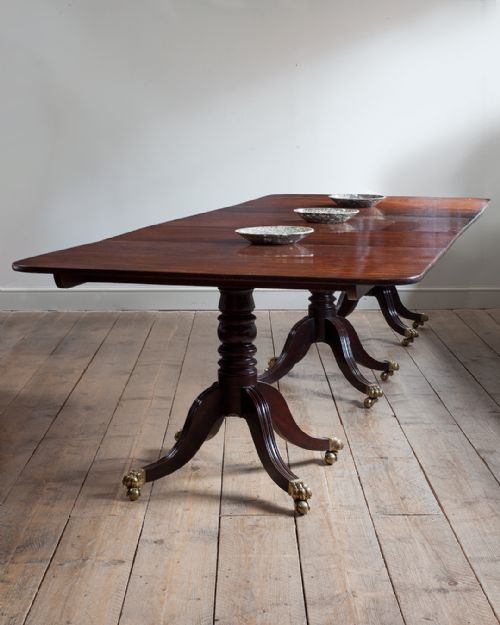
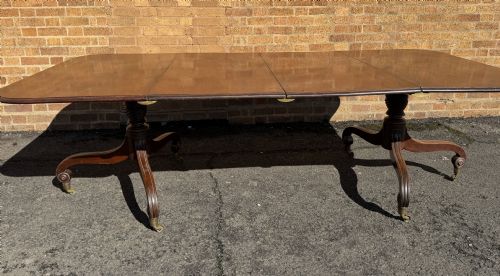
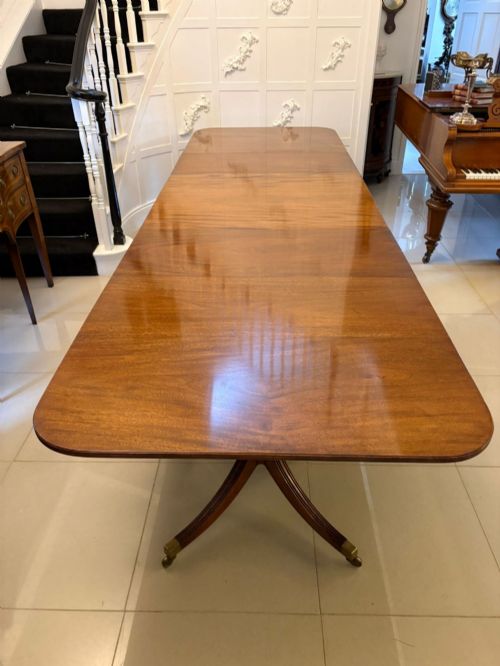
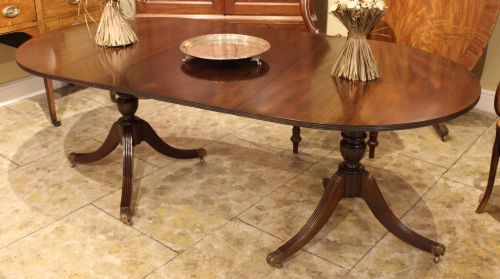
Most pieces utilise twin or triple pedestal configurations with D-ends, allowing sections to separate or join according to the space required. These constructions accommodate seating arrangements ranging from ten to over twenty people.
Materials and Construction
Cabinetmakers built these tables using solid timber and figured veneers, often selecting Cuban flame mahogany or plum pudding varieties for the top surfaces. Brass castors support the pedestals, allowing smooth movement across floors.
Extending mechanisms rely on internal runners and drop-in leaves that secure with brass clips or wooden pins. Pedestals feature turned pillars rising from reeded or splayed legs.
Listings span the eighteenth century through to the twentieth century, incorporating George III, George IV, Regency, and Edwardian periods.
Standard and Craftsmanship
Superior examples display dense timber figure and balanced proportions across all extended sections, matching grain patterns from the main top to the additional leaves. Cabinetmakers paid careful attention to the turning of the pillars and the stability of the pedestal bases.
Lesser pieces show simpler timber selection and less refined joinery where the leaves meet the central frames. The thickness of the top boards and the weight of the brass mountings also distinguish workshop standards.
Gillows·Robert Adam
The Georgian Mahogany Conference Table Glossary
- Pedestal
- A central support column, usually resting on three or four splayed legs, that holds up the table top.
- D-End
- A table end shaped in a semicircle, which often detaches to form a console or joins with other sections to create a long oval.
- Leaf
- A removable timber panel inserted into the centre of an extending table to increase its length.
- Cuban Mahogany
- A dense, dark timber prized for rich grain patterns and durability, commonly utilised in high-grade cabinetwork.
- Reeded
- Decorated with parallel convex mouldings carved directly into the wooden legs or pillars.
Georgian Mahogany Conference Table: Frequently Asked Questions
How do I extend a pedestal table?
The top sections pull apart along internal wooden runners to create a gap in the centre. Drop-in leaves slide into this space and secure with catches underneath.
Once locked in position, the pedestals distribute the weight evenly across the floor.
Can I remove leaves for daily use?
Extra leaves lift out easily when smaller seating capacities are required. The D-ends then push back together to form a compact twin pedestal format.
Store the spare leaves flat in a dry room to prevent warping.
What seats ten people comfortably?
Twin pedestal formats generally measure sufficient length to accommodate ten to twelve chairs without crowding. Three-pillar variants extend further for larger gatherings.
Leg placement on multi-pedestal tables prevents guests from hitting their knees.
How do I identify a regency table?
Regency pieces often display classical motifs, reeded edge details, and brass paw castors on splayed legs. The timber selection emphasises rich figuration.
Proportions remain restrained and balanced across both twin and triple pillar layouts.