
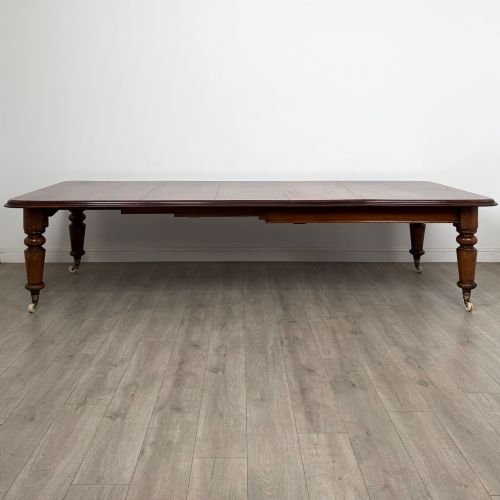
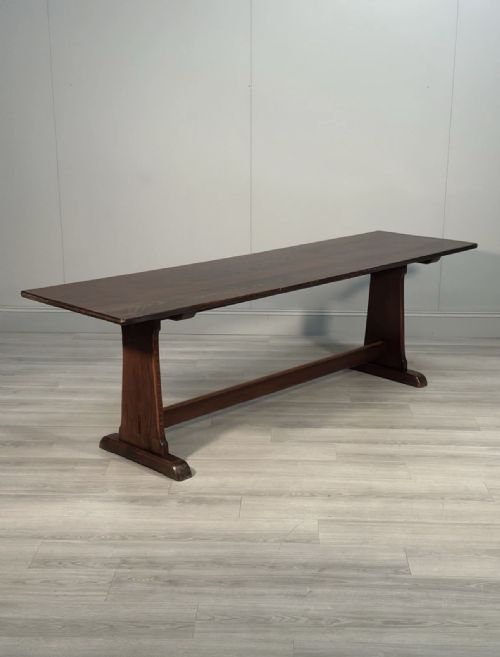


Dark Wood Banquet Table
These substantial dark wood banquet table examples span Georgian, Regency and Victorian eras, offering generous seating for formal dining rooms.
Dark Wood Banquet Table
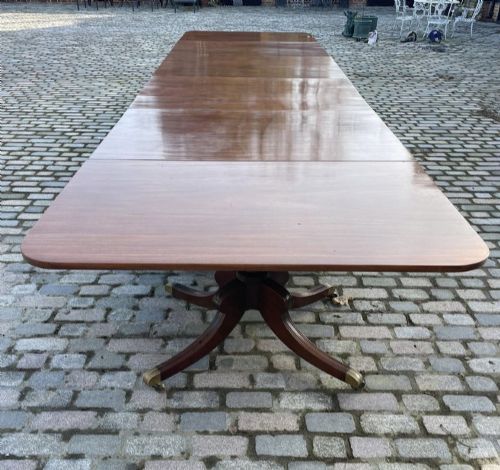
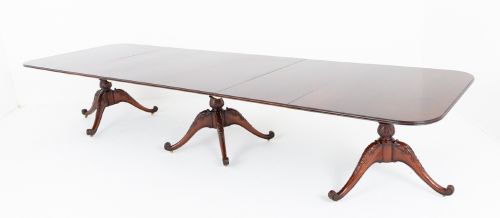
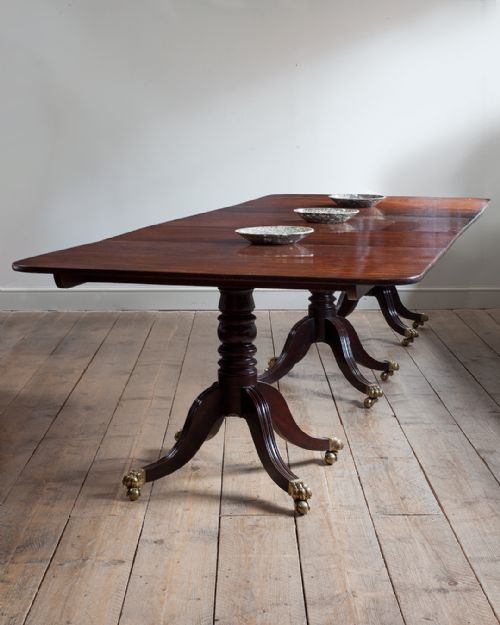
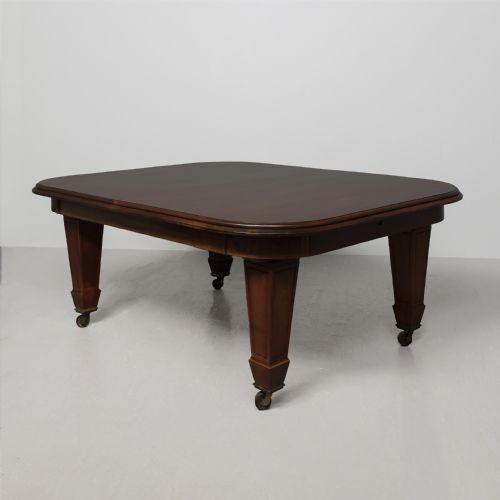
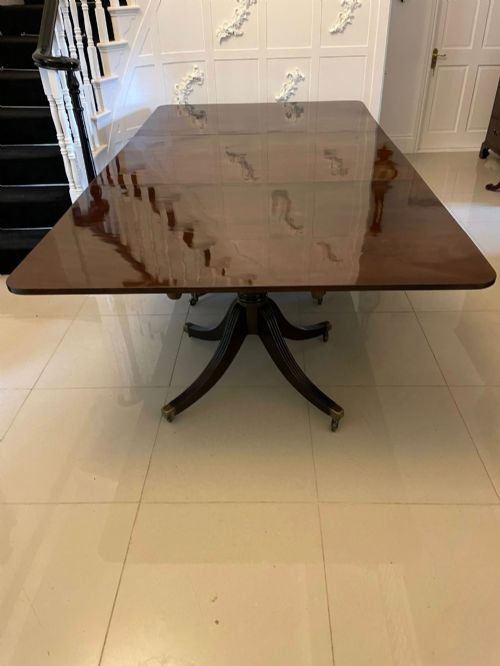
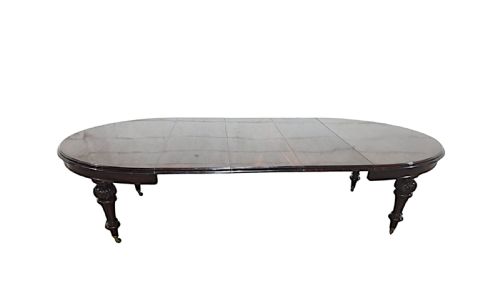
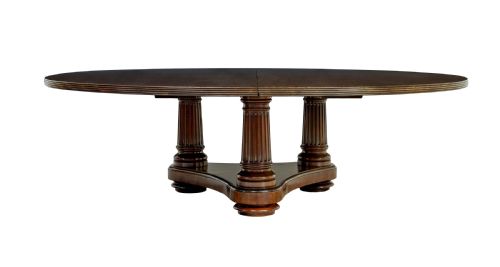
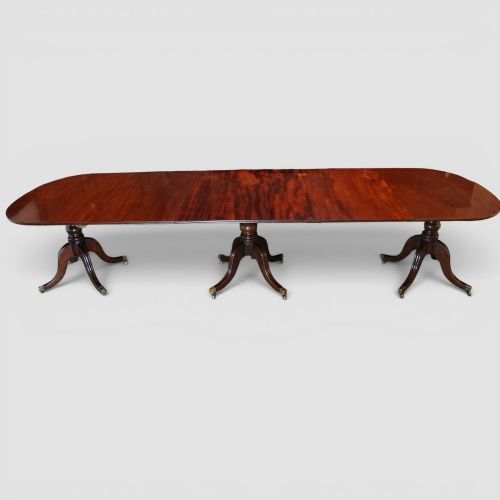
A dark wood banquet table serves large gatherings, frequently appearing in forms like the extending dining table with multiple pillars or leaves. These pieces originate primarily from the Georgian, Regency, and Victorian periods, constructed to accommodate numerous guests for formal meals.
The dominant material across these listings is mahogany, often specified as Cuban mahogany or figured mahogany, alongside oak, walnut, and rosewood. Tables range from twin and triple pedestal configurations to substantial refectory and D-end designs.
Buyers seeking a dark wood banquet table encounter extending mechanisms with original leaves, massive multi-pillar formats, and styles spanning William IV through to Arts and Crafts and later revivals. Proportions run from seating twelve up to grand formats handling twenty or more diners.
How they were made
Cabinet makers utilised dense timbers such as mahogany, Cuban mahogany, oak, and walnut, frequently selecting figured grain for prominent surfaces. Solid sections paired with turned pillars and pedestals to support extended lengths.
Extending systems integrated mechanical leaves and pillar supports, sometimes incorporating brass castors and bronze feet for mobility on large frames.
Listings feature mahogany, oak, walnut, and rosewood across Georgian, Regency, and Victorian periods.
What varies in quality
The selection of timber grain, particularly figured mahogany or Cuban mahogany, distinguishes high-grade tables from standard pieces. Rich figuring and consistent colour across added leaves indicate superior material choice by the cabinet maker.
Construction complexity also marks the range, separating simple multi-leg formats from sophisticated multi-pedestal extending designs with imperial actions. Refined turning on pillars and integration of original leaves demonstrate higher workshop standards.
Gillows·Waring and Gillow·William and Gibton
The Dark Wood Banquet Table Glossary
- Pedestal table
- A table supported by one or more central columns rather than standard corner legs. These pillars often rest on brass castors.
- Extending dining table
- A table equipped with a mechanism and extra leaves to increase surface length. This design accommodates large gatherings.
- D-end
- A table form featuring semi-circular ends that detach or fold. These sections often combine with central leaves to form long dining surfaces.
- Refectory table
- A long, narrow dining table traditionally used in communal halls. Examples in the evidence utilise solid oak and military styling.
- Imperial action
- A specialised extending mechanism used by makers to expand large dining tables smoothly. It supports multiple leaves on substantial pillars.
Dark Wood Banquet Table: Frequently Asked Questions
How do I seat twenty people?
Tables of grand proportions, such as multi-pedestal examples with several original leaves, provide the necessary length for large gatherings.
Configurations featuring five or six pillars and extending mechanisms allow hosts to expand the surface safely.
What is Cuban mahogany?
Cuban mahogany is a dense, durable timber prized in the nineteenth century for its rich grain patterns and deep colouration.
Cabinet makers selected this wood for high-end dining tables destined for formal reception rooms.
How do pedestals work?
Pedestals provide central support beneath large dining surfaces, distributing weight evenly across pillars and feet.
Multi-pedestal arrangements allow extending tables to maintain stability when additional leaves insert into the centre.
Are leaves original?
Original leaves match the timber species, grain direction, and patina of the main table sections.
Listings specify when extra leaves belong to the original construction of the extending mechanism.