
Regency Conference Table
A regency conference table offers substantial proportion and adaptable seating, serving large gatherings through modular pedestal bases and removable leaves.
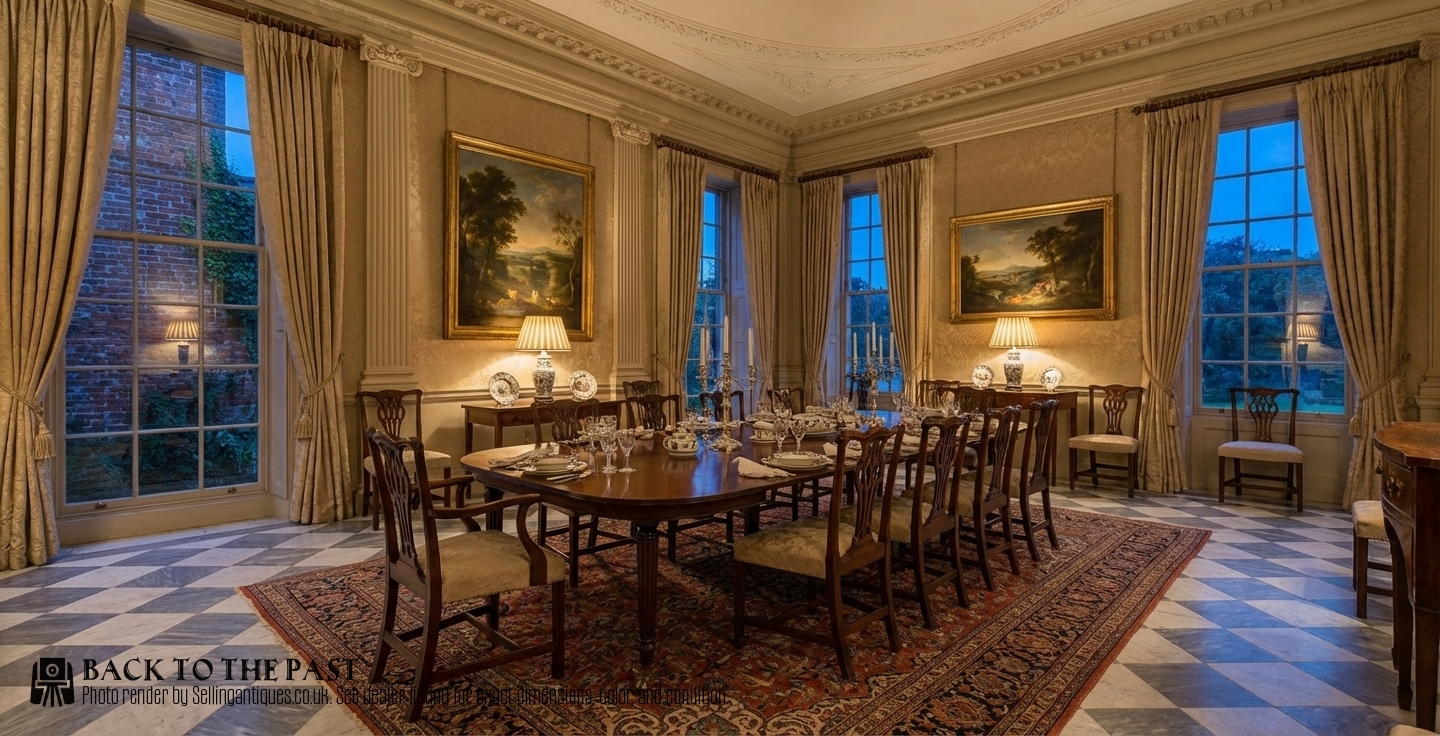
Regency Conference Table
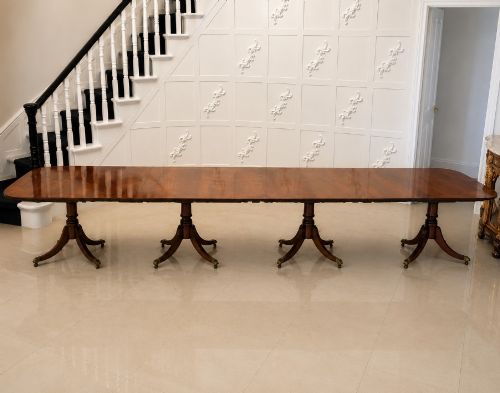
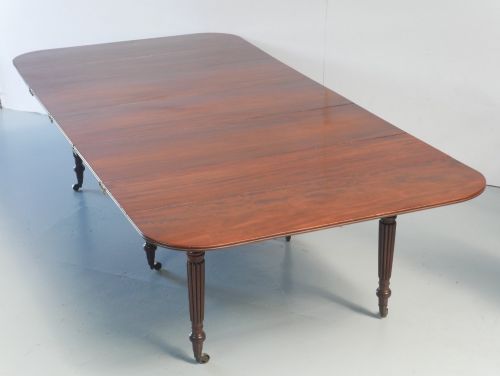
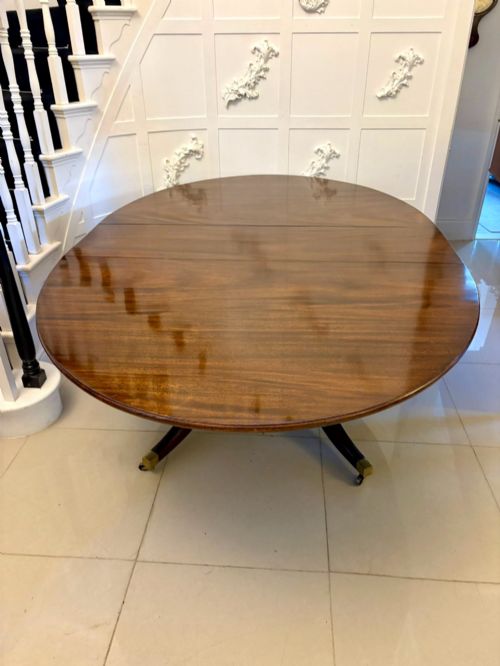
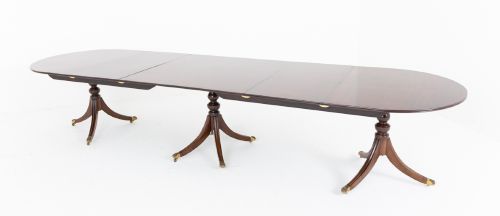
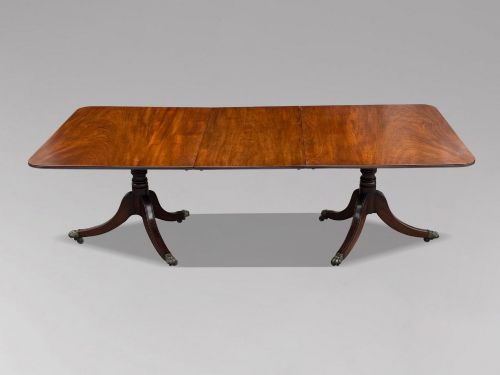
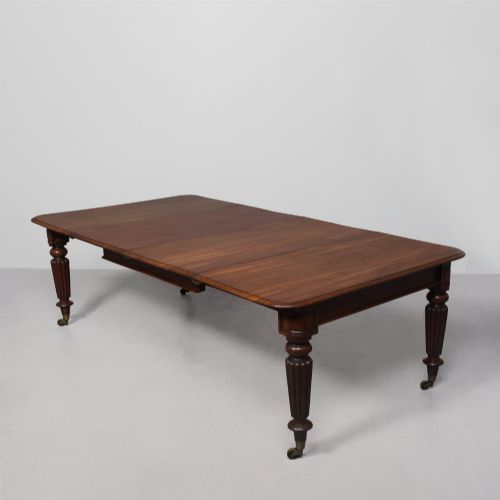
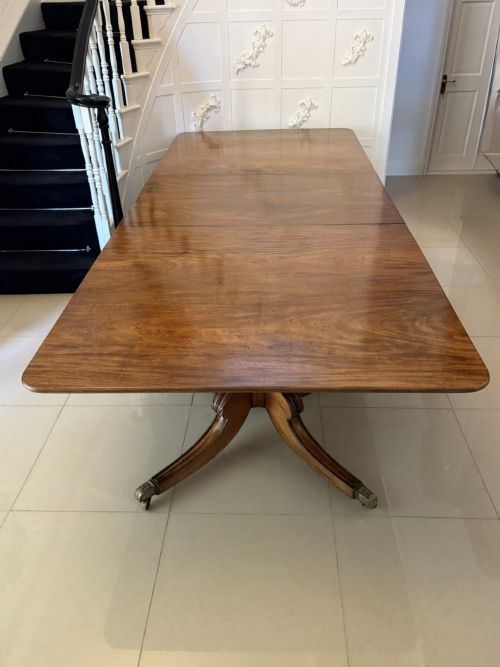
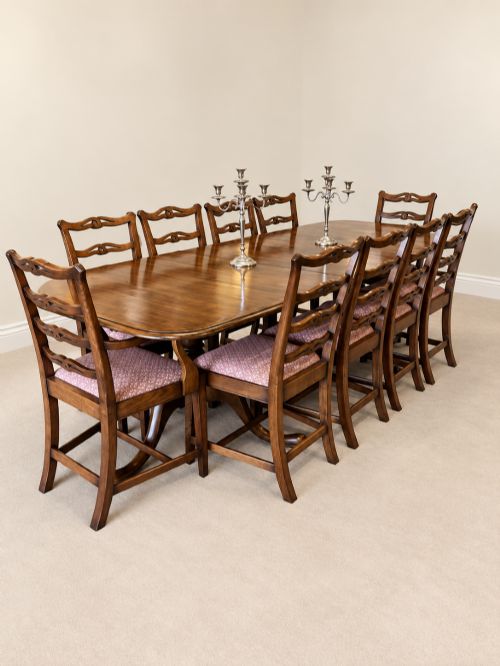
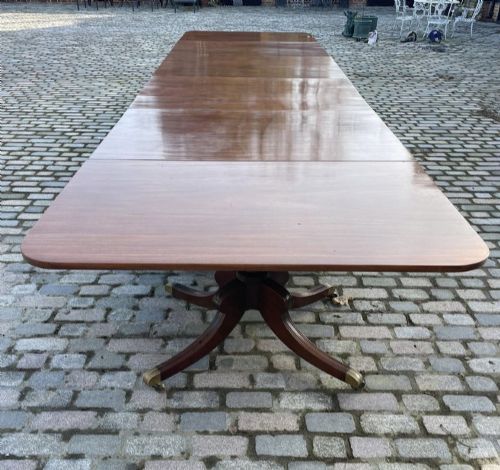
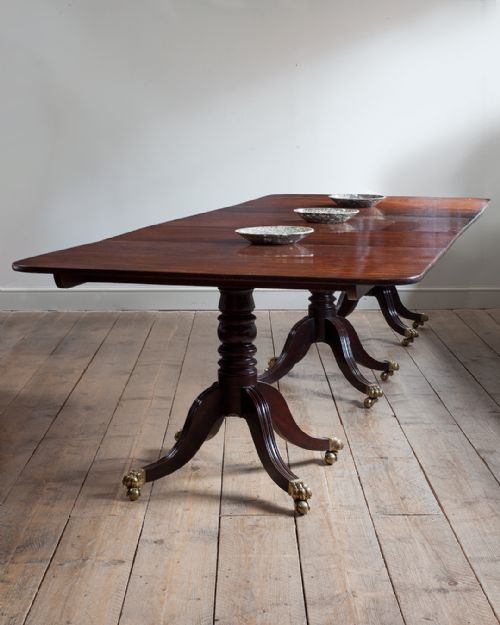
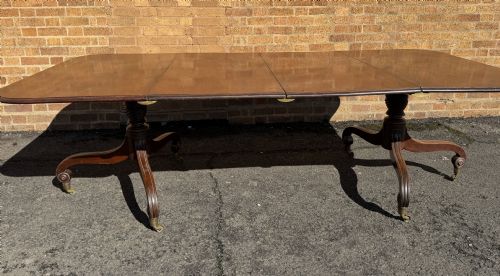
When you search for a regency conference table, you are examining large timber dining and boardroom surfaces supported by multiple pedestals. These tables range from twin-pillar setups to massive four-pillar configurations designed to seat upwards of twenty people.
The pieces on this page span the original Georgian and Regency eras alongside later Revival periods from the early twentieth century. Most examples utilise modular leaves and robust pedestal columns to accommodate variable capacities.
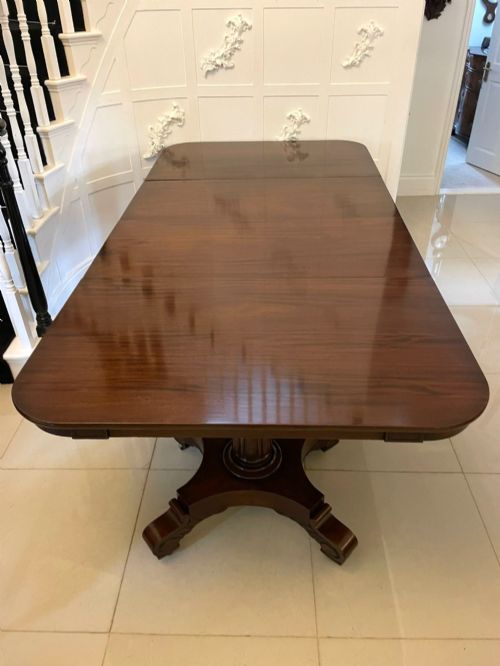
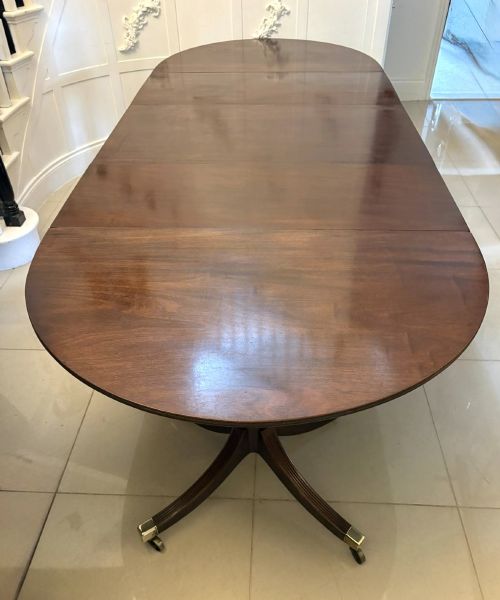
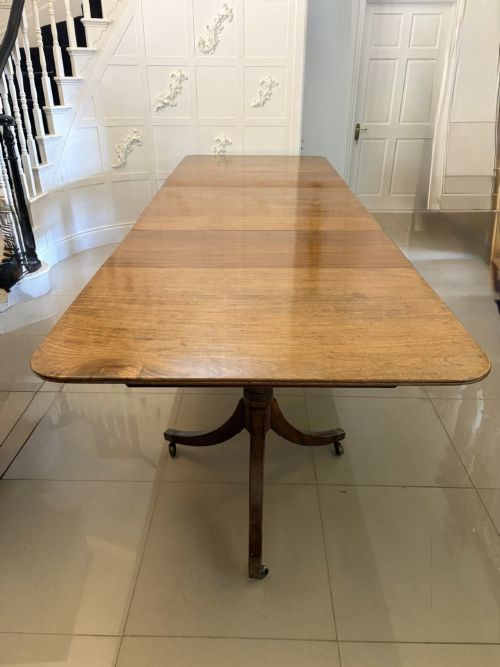
Form follows function in these designs, often presenting as long rectangular surfaces with rounded ends or D-section ends that divide for versatility. They bridge the gap between domestic dining and formal commercial use.
How They Were Made
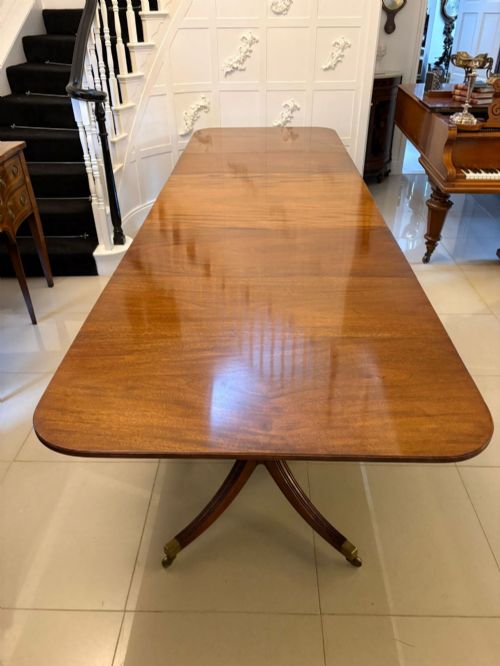
Cabinetmakers constructed these tables primarily from solid mahogany and figured mahogany, occasionally utilising Cuban mahogany or Spanish mahogany for superior grain patterns. Brass components, including cast feet and connecting clips, provide functional articulation and structural support.
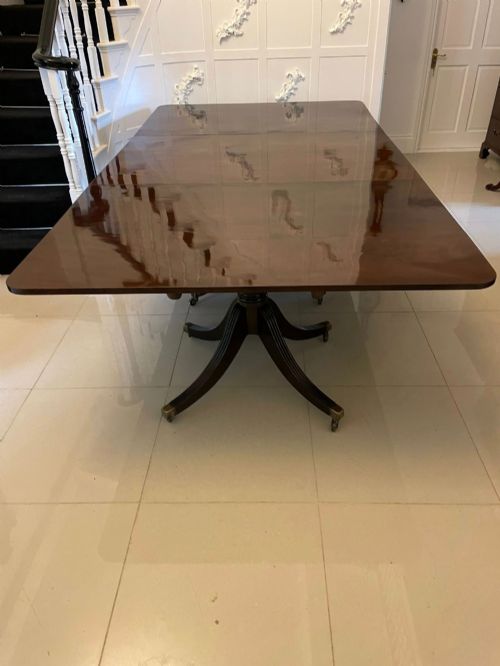
The engineering relies on pedestal bases fitted with reeded legs that terminate in castors for mobility. Removable leaves insert into the central framework, allowing the table length to alter according to the immediate requirement.
Some twenty-eight seater tables require careful route planning just to fit through the boardroom door.
What Varies in Quality
Quality reveals itself in the selection of timber figures and the precision of the pedestal turning. Superior examples display dense, richly figured mahogany veneers or solid boards paired with crisp reeding on the legs.
The smoothness of the extending mechanism and the stability of the pillar joints dictate the structural integrity. Master workshops applied careful attention to the brass castors and the flush alignment of the removable leaves.
Gillows·Whytock & Reid
The Regency Conference Table Glossary
- Pedestal
- A central support column resting on splayed legs, allowing legroom around the perimeter of the table.
- D-End
- A table end shaped in a semi-circle that can stand alone or join to a central section with leaves inserted.
- Reeded
- A decorative moulding consisting of parallel convex strips carved directly into the timber legs.
- Extending
- A mechanical arrangement using removable leaves and runners to lengthen the main surface.
Regency Conference Table: Frequently Asked Questions
How many people can a large table seat?
These tables scale from twin-pillar setups seating eight to ten individuals up to four-pillar formats accommodating over twenty.
Additional leaves expand the framework to meet specific capacity demands during large assemblies.
Are the leaves removable for storage?
Most multi-pillar designs incorporate drop-in leaves that lift out easily when a shorter footprint is desired.
This modular construction allows the table to adapt quickly between compact daily use and extended gatherings.
How do I distinguish original Regency from Revival pieces?
Original pieces date from the early nineteenth century and show period-specific timber patination and hand-cut joinery.
Revival versions appeared around the early twentieth century, replicating the earlier proportions with contemporary workshop methods.
What maintenance does mahogany require?
Regular dusting with a dry cloth keeps the polished surface clean while preserving the natural timber sheen.
Applying occasional appropriate wax feeds the wood and protects the figured grain from excessive dryness.