


Georgian Mahogany Cheval Glass
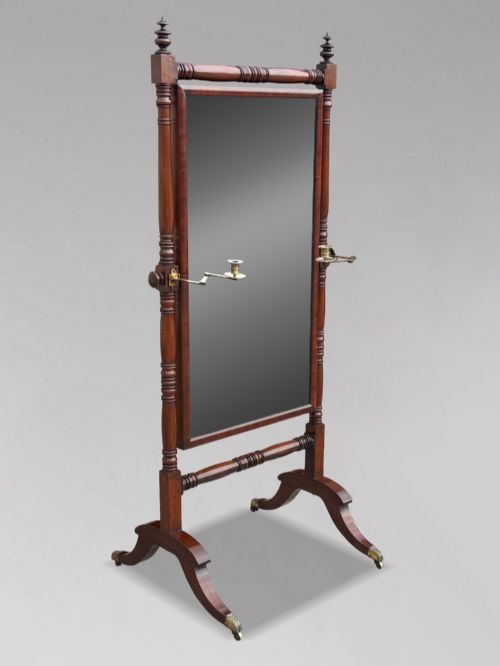
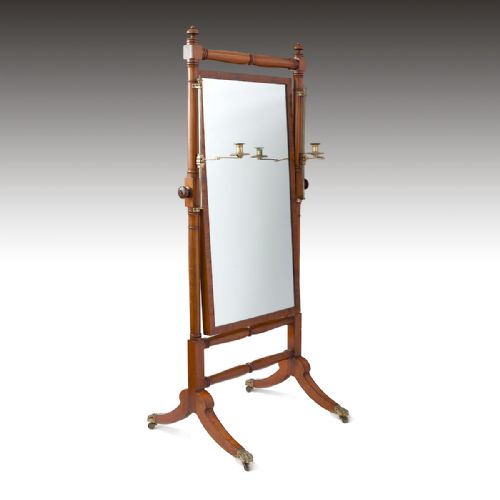
A georgian mahogany cheval glass is a freestanding floor mirror designed for full-length reflection, offering elegance and practicality to a dressing room.
Georgian Mahogany Cheval Glass
A georgian mahogany cheval glass stands on a sturdy frame with four legs, allowing the mirror plate to tilt back and forth on pivots.
Buyers frequently encounter pieces dating from the Georgian, Regency, and Victorian periods, alongside later interpretations made in the Georgian style.
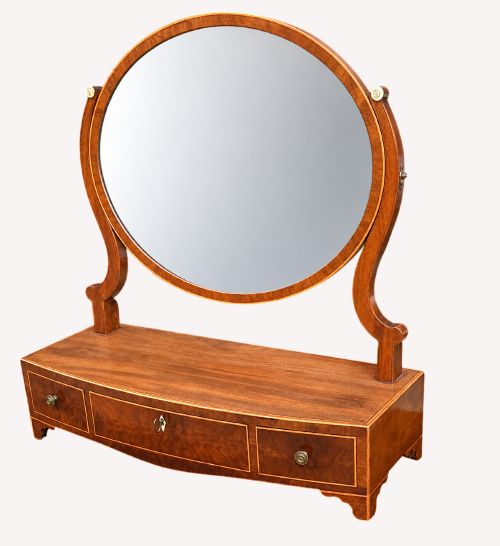
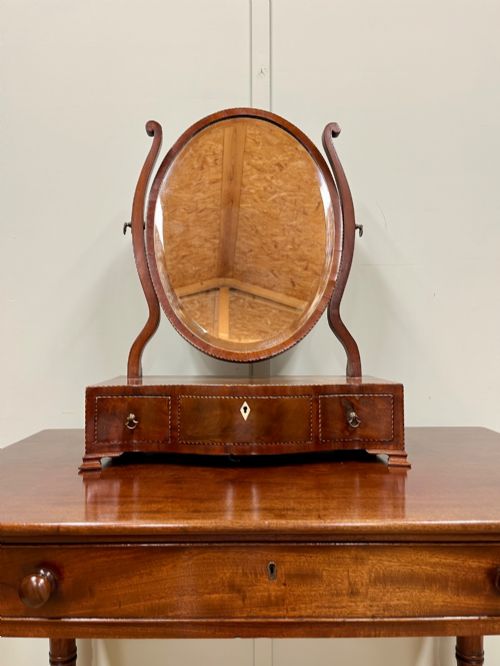
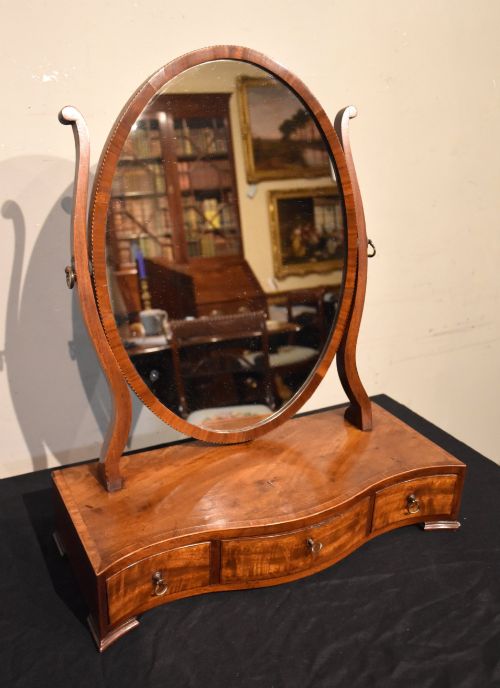
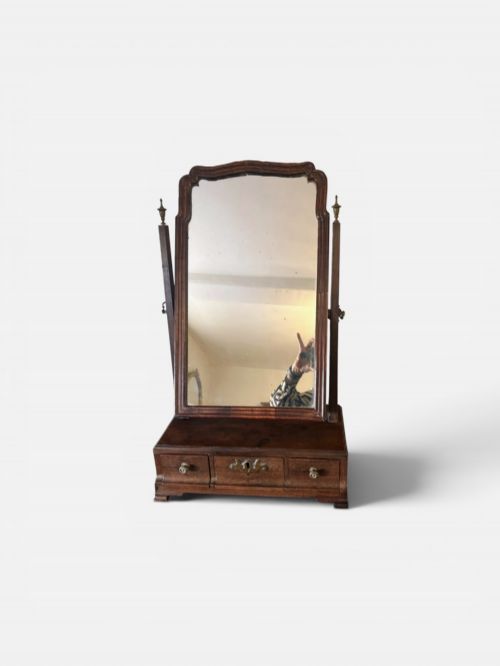
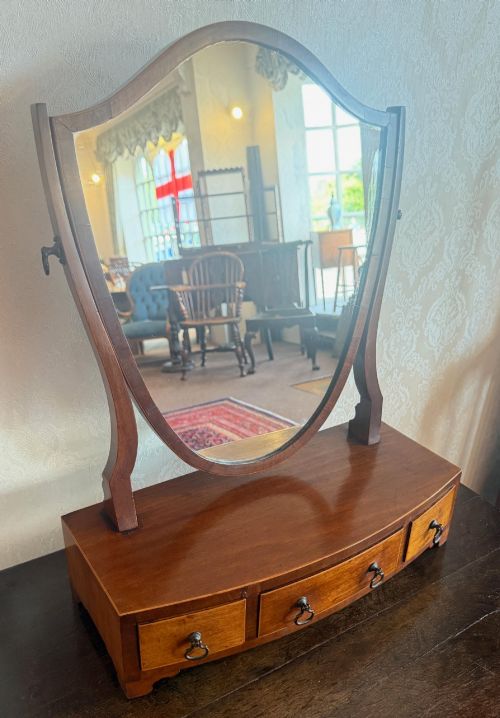
While many examples are full-length floor mirrors designed for dressing rooms, related forms include smaller table mirrors, toilet mirrors, and dressing mirrors that sit atop furniture.
Materials and construction
Frames are fashioned from solid and veneered mahogany, frequently accented with boxwood inlay, satinwood details, bone, or Dutch marquetry.
Hardware incorporates brass for castors, pivots, and candle arms, while mercury silvered mirror glass is set within the adjustable swinging frame.
Giltwood elements appear on select frames, complementing the rich grain and deep red-brown tones of the primary timber.
Some tall swinging mirrors incorporate small brass candle arms, designed to illuminate the user during evening dressing routines.
Distinctions in quality and execution
Finely executed pieces display crisp joinery, balanced proportions, and careful timber selection that highlights the natural figuring of the mahogany.
The sophistication of the brass mounts, the subtlety of any boxwood or satinwood inlay, and the retention of original mirror glass distinguish superior examples.
Gillow·Gillows
The Georgian Mahogany Cheval Glass Glossary
- Cheval glass
- A large freestanding full-length mirror mounted on a pivoted frame between four upright pillars. This design allows the glass to swing freely to various angles.
- Toilet mirror
- A smaller dressing mirror designed to sit on a table, chest of drawers, or dressing bureau. These often feature small drawers built into the base.
- Marquetry
- Decorative veneer work arranged in intricate patterns using contrasting woods like satinwood and boxwood. It creates pictorial or geometric designs across the surface.
- Pivots
- The metal pins or screws fitted to the sides of the mirror frame that secure it to the upright supports. They enable the glass to tilt.
- Serpentine
- A curved shape featuring a convex centre flanked by two concave curves. This contour is frequently seen along the base or drawer fronts of dressing mirrors.
Georgian Mahogany Cheval Glass: Frequently Asked Questions
What is a cheval glass?
A cheval glass is a tall, freestanding mirror supported by a framework with legs and pivots. It allows a person to view their entire outfit.
These mirrors date back to the Georgian and Regency eras, evolving as essential furniture for bedrooms and dressing rooms.
How do I use a cheval glass?
Place the freestanding mirror in a bedroom, dressing room, or hallway where natural light assists with reflection. The pivoted frame tilts to angle the glass as needed.
Ensure the floor is even so the four-legged frame remains stable while adjusting the mirror plate.
How do I date a Georgian mirror?
Examine the timber, construction methods, and secondary woods used within the frame. Georgian and Regency pieces often feature hand-cut dovetails and older brass hardware.
Stylistic cues such as boxwood inlay, serpentine fronts, and turned uprights also help assign a piece to the eighteenth or nineteenth century.
What is the difference between a cheval mirror and a toilet mirror?
A cheval mirror is a full-length floor-standing glass designed to show the complete figure. It stands independently on its own four legs.
A toilet mirror is much smaller and intended to rest on top of a dressing table, chest, or bureau, often incorporating small storage drawers in the base.