
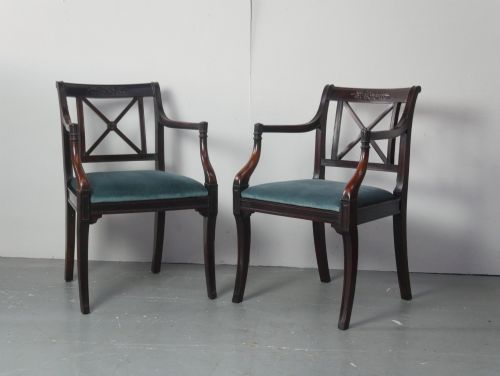
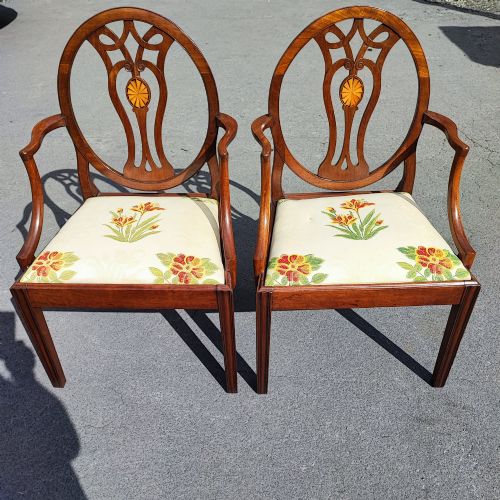
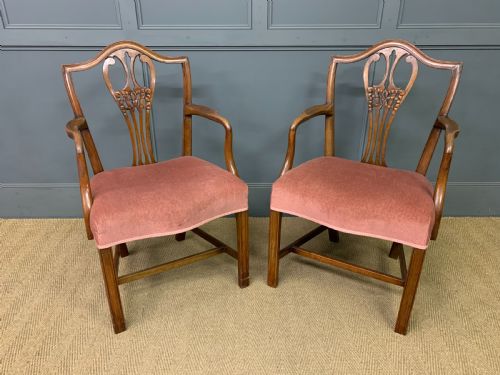
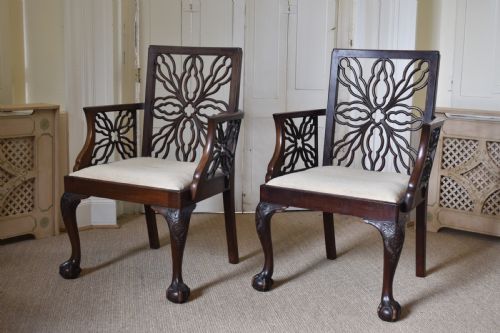

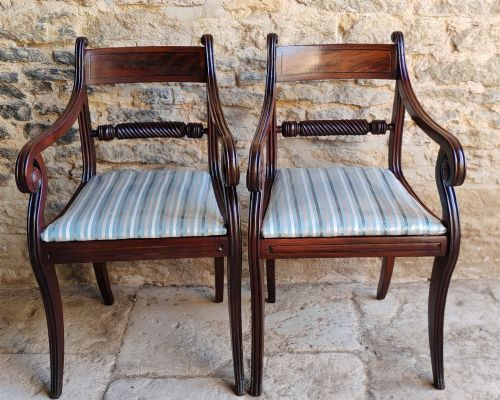

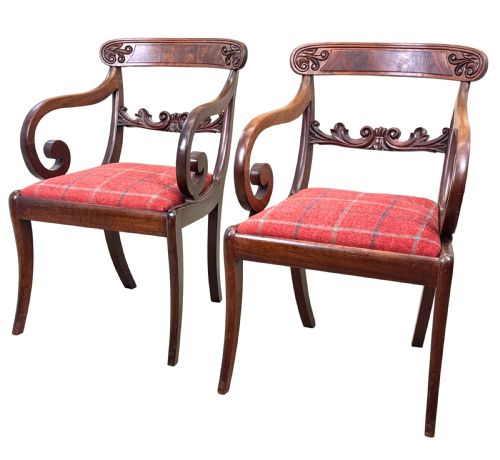
Georgian Mahogany Carver Pair
A georgian mahogany carver pair brings matched seating to a dining table or desk, offering sturdy arm support shaped by cabinet-makers of the eighteenth and nineteenth centuries.
Georgian Mahogany Carver Pair
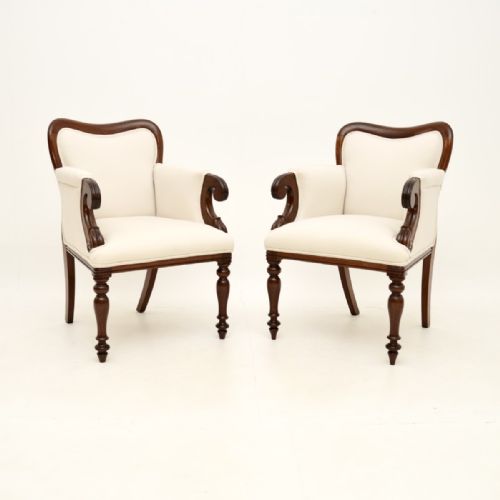
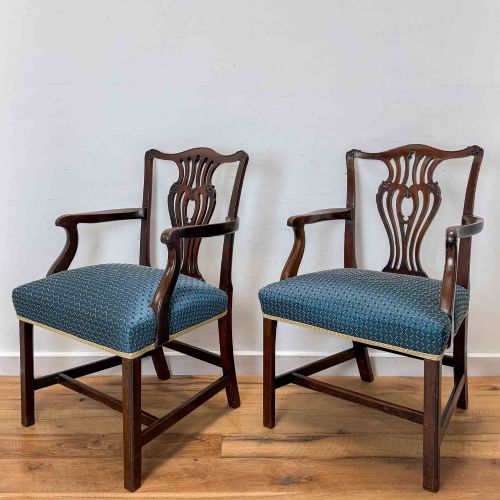
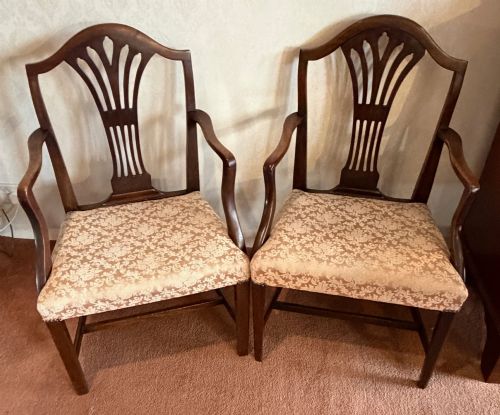
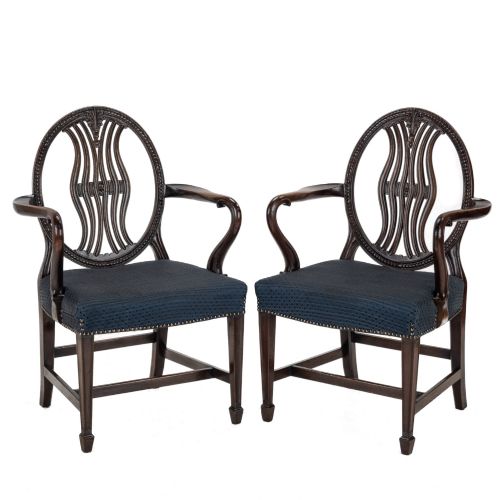
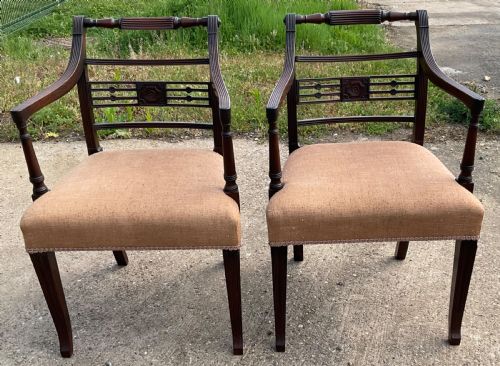
A georgian mahogany carver pair consists of two matching armchairs designed for the heads of a dining table or for use at a partner desk. These pieces appear across various periods, including original eighteenth-century workshops alongside later nineteenth-century revivals in Regency and Chippendale styles.
The inventory shows open armchairs, elbow chairs, and library desk chairs sharing substantial mahogany frames. Buyers frequently encounter revival interpretations from around nineteen hundred alongside genuine pieces dating back to the late seventeen-hundreds.
Materials and Construction
The primary material across these pieces is mahogany, often paired with secondary woods and finished with drop-in or fixed seats upholstered in leather, fabric, velvet, or damask. Cabinet-makers utilised brass studs to secure leather upholstery edges on library and desk variants.
Joinery methods rely on mortise and tenon frames designed to bear weight through decades of use. Decorative elements include inlaid satinwood details and hand-carved motifs reflecting Sheraton, Hepplewhite, and Chippendale influences.
Listings span the eighteenth, nineteenth, and twentieth centuries, incorporating Georgian, Regency, and revival periods built from solid mahogany.
Evaluating Construction and Proportion
Superior examples demonstrate crisp carving along the splats and arm terminals, whereas lesser pieces show softer moulded details or later machine finishing. The weight and grain density of the mahogany timber also dictate the caliber of the build.
Original matching frames retain structural integrity without excessive reinforcement at the joints. The harmony of the pair depends on identical proportions and consistent colour in the wood across both chairs.
The Georgian Mahogany Carver Pair Glossary
- Carver
- An armchair with wooden armrests, historically placed at the head of a dining table. These chairs provide wider seats and greater back support than standard side chairs.
- Elbow chair
- An alternative term for an open armchair, referencing the prominent arm supports. Such chairs functioned in libraries, morning rooms, and offices.
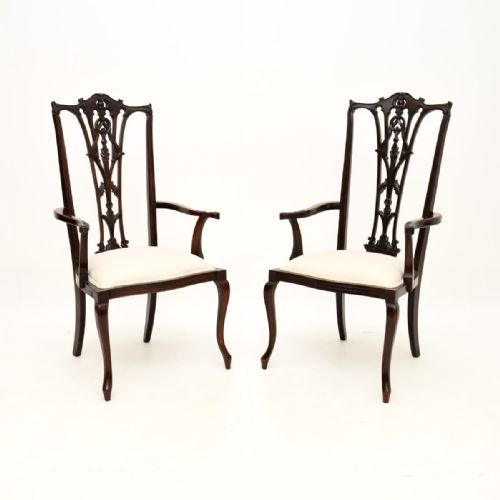
- Splat
- The vertical wooden slat placed in the centre of an armchair back. Master craftsmen pierced and carved these components to distinguish different regional and period styles.
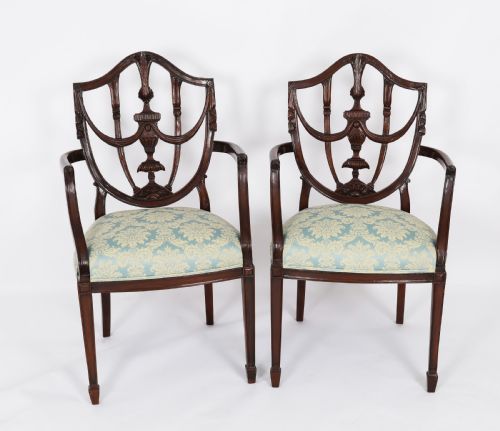
- Shield back
- A chair back shaped in the outline of a heraldic shield, commonly associated with eighteenth-century designer George Hepplewhite. This design lightened the visual weight of heavy timber frames.
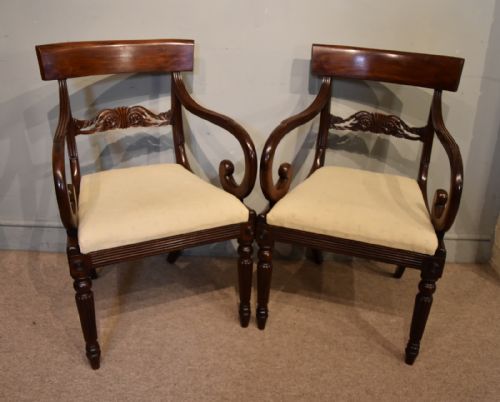
- Bar-back
- A horizontal top rail spanning the width of the chair back, frequently seen on Regency dining armchairs. The curved timber follows the contour of the sitter's back.
Georgian Mahogany Carver Pair: Frequently Asked Questions
What is the difference between a carver and a dining chair?
A carver includes supportive armrests designed for comfortable seating during long meals, whereas standard dining chairs lack arms to allow closer placement along the table rails. Both types were typically manufactured as matching suites for formal dining rooms.
In historical settings, the carver chairs stood at the head and foot of the table for the hosts. Surviving pairs preserved today usually originated from larger dining sets.
How do I distinguish original Georgian pieces from later revivals?
Original pieces display period joinery techniques, timber oxidation, and wear patterns consistent with late eighteenth or early nineteenth-century use. Revival pieces manufactured around nineteen hundred often feature machine-cut elements and cleaner factory finishes.
Examining the underside of the seat frame reveals tool marks and wood maturity that help establish the true decade of manufacture.
Where were these chairs used in a historic home?
These armchairs served multiple domestic functions in formal drawing rooms, libraries, and private studies. Desk variants supported estate management and correspondence.
Matching pairs allowed symmetrical placement flanking a fireplace, window, or bureau bookcase when not pulled up to a dining table.
How should I care for antique mahogany and leather upholstery?
Maintaining these chairs requires stable room humidity to prevent timber shrinkage and leather desiccation. Periodic application of microcrystalline wax protects the polished mahogany surface.
Avoid placing antique seating in direct sunlight to prevent fading of the timber colour and degradation of original fabric or leather upholstery.